The first compliance question a food-service buyer asks is not about price or tooling — it is which certificate applies to the destination market. A white PP storage bin moulded for a US distributor and the same bin shipped to a German wholesaler may be physically identical, yet the paperwork behind them is not. Getting this wrong stalls shipments at customs and fails customer audits. This guide compares LFGB and FDA food-contact requirements for plastic bins, basins and trays, and lists the documents to demand before you sign a purchase order.
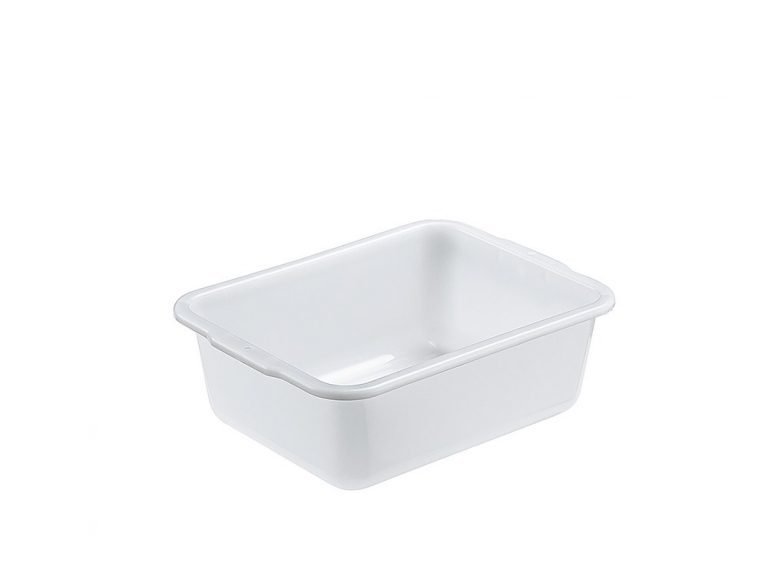
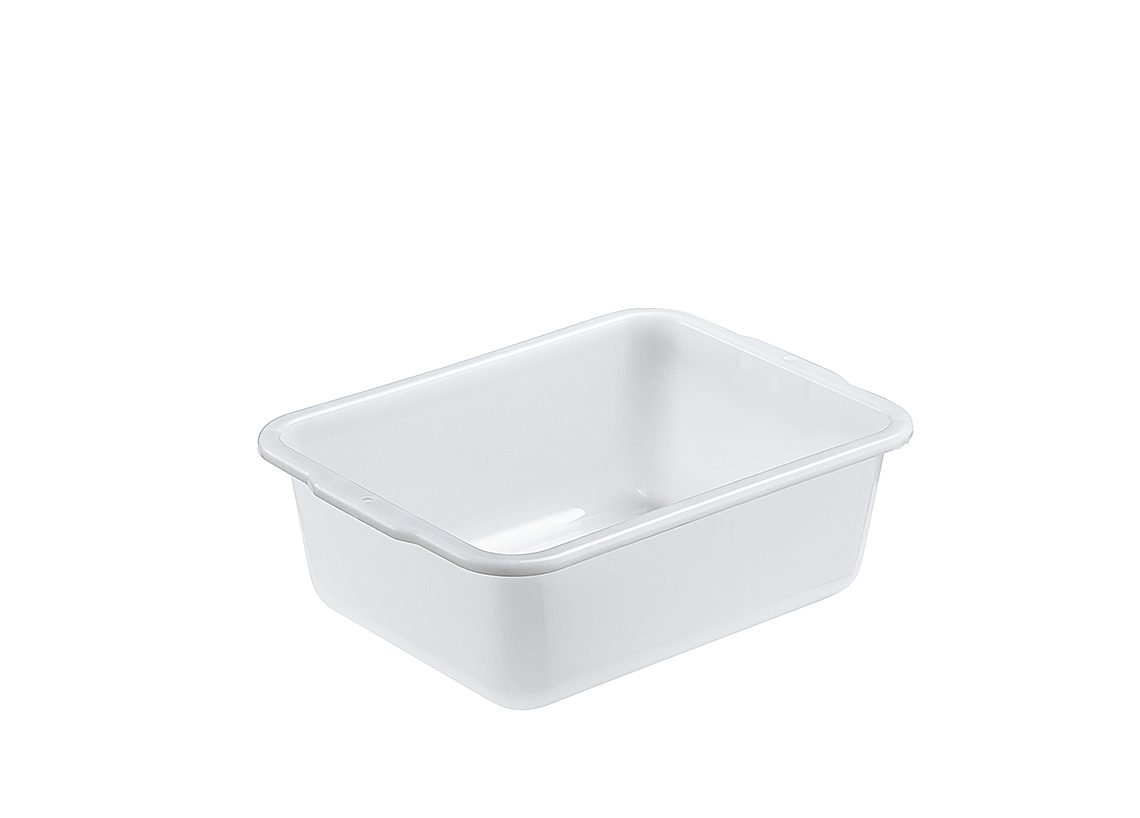
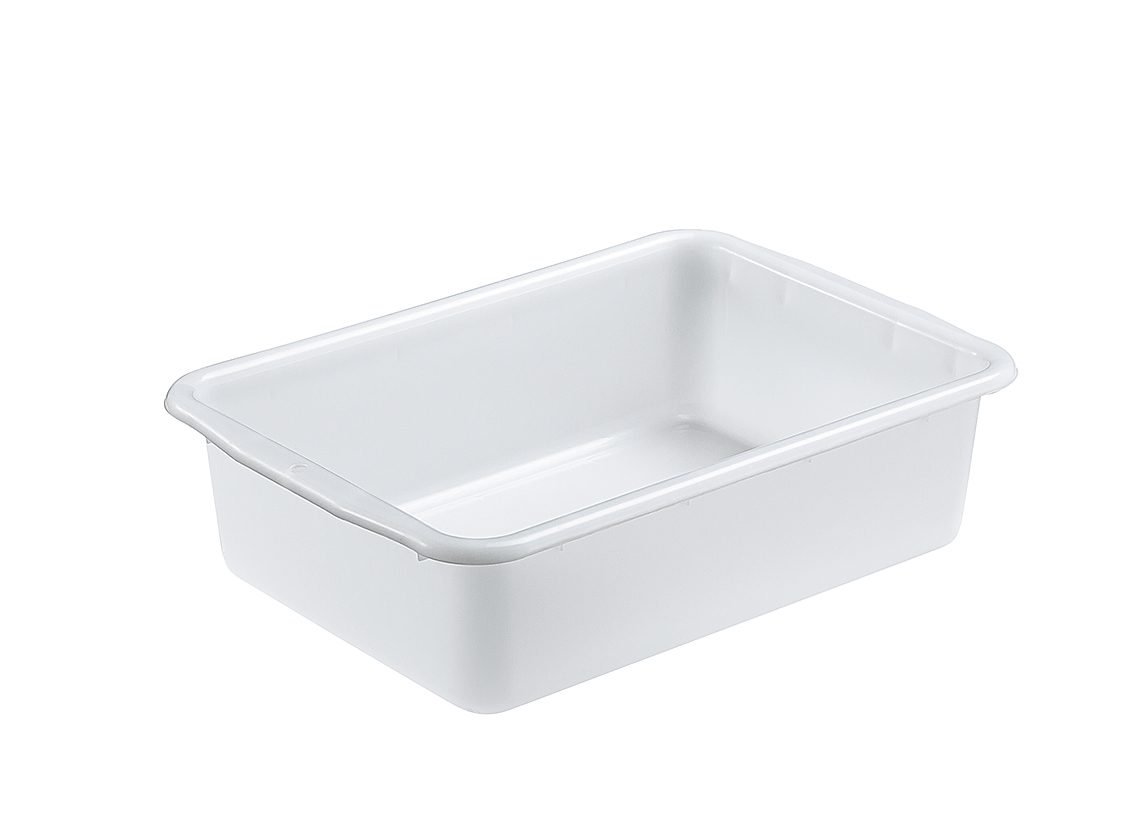
Buyers comparing the 8312, 8313 and 8316 food-contact range will notice the product itself does not change between markets. What changes is the test standard referenced in the documentation: FDA 21 CFR for the United States, Regulation (EU) 10/2011 with LFGB testing for Germany and much of Europe, and GB 4806 for the domestic Chinese market. One mould, several paper trails — this is why any serious supplier asks for the destination country first.
What the United States market asks
The US system is formulation-based. FDA 21 CFR 174 to 186 enumerate the resins and additives permitted for food contact; polypropylene falls under 21 CFR 177.1520 (olefin polymers). There is no pre-market approval certificate for a finished bin — compliance is demonstrated by formulation. A supplier declares that the product is moulded from a PP grade whose ingredients appear on the permitted list, usually backed by the resin manufacturer’s letter and a certificate of analysis. US buyers typically ask for an FDA compliance letter referencing 21 CFR 177.1520 plus the resin grade name. That combination satisfies most distributor onboarding checks and vendor audit questionnaires.
LFGB and the EU framework: test the finished article
Europe works the opposite way. The framework is Regulation (EC) 1935/2004, and for plastics the specific measure is Regulation (EU) 10/2011, which sets an overall migration limit of 10 mg/dm² plus specific migration limits for individual substances. LFGB — the German Food and Feed Code — layers stricter requirements on top, most famously the sensory test: the product must not transfer odour or taste to food. Products that pass carry the familiar knife-and-fork symbol. Because LFGB-oriented testing measures the moulded part rather than the resin recipe, it is widely treated as the stricter benchmark; buyers in the Gulf and other export markets increasingly accept an LFGB-based report even where a US-style letter would formally suffice.
| Requirement | FDA (US) | LFGB + EU 10/2011 |
|---|---|---|
| What is tested | Resin formulation | The finished moulded article |
| Key document | 21 CFR 177.1520 compliance letter | DoC + migration test report |
| Extra check | Resin COA | Sensory (odour/taste) test |
Where GB 4806 fits
Buyers sourcing from China should also know GB 4806, the Chinese national standard series for food-contact materials — GB 4806.7 covers plastics. A factory can test the same mould against GB 4806 for domestic sales and against EU 10/2011 or FDA for export. When a supplier sends a test report, check which standard it references: a GB-only report will not satisfy a European or American audit, and vice versa.
The documents to demand before the PO
Whichever market you ship to, three documents form the audit-ready file. First, a Declaration of Compliance naming the supplier, the product and the regulations covered. Second, a third-party migration test report from an accredited laboratory, issued within the last two years and referencing the moulded article — not just the resin pellet. Third, the resin manufacturer’s certificate for the PP grade used. Ask for these before the purchase order, not after production; retrofitting compliance documents onto shipped goods is where most food-service importers get burned.
How LSY supports multi-market food-contact orders
LSY Plastic has injection-moulded food-contact products in Foshan for over 35 years, with the mould workshop and material selection handled in-house on Japan-imported presses. The 8312, 8313 and 8316 bins are moulded in virgin PP grades suited to food service, and production samples can be couriered for destination-market testing before a container is booked. For a structured walkthrough of FDA, EU 10/2011 and supplier document requests, see the food-grade plastic certifications guide; for format selection by kitchen workflow, see the commercial food storage basins buying guide.
Frequently asked questions
Can we receive samples for compliance testing before ordering a full container?
Yes. Samples of the 8312/8313/8316 range are provided at cost price — including for laboratory migration or sensory testing — so the certification file can be completed before production starts.
Do you ship small trial quantities overseas?
Overseas orders are shipped as full container load (FCL) only. Sample shipments for lab testing are arranged separately by courier.
Is there a minimum order quantity?
There is no MOQ for orders delivered within China. Export orders move in full containers, with unit pricing quoted against the destination port.