Australian buyers searching plastic pallet manufacturers australia or plastic pallet dimensions australia are usually solving a specific problem, and it is rarely just unit price. Australia runs a pallet footprint the rest of the world does not, enforces the strictest biosecurity regime on imported wood packaging anywhere, and — for goods of Chinese origin — applies a free trade agreement that most importers under-use. This page covers all three.
The 1165 x 1165 footprint: why Australia is different
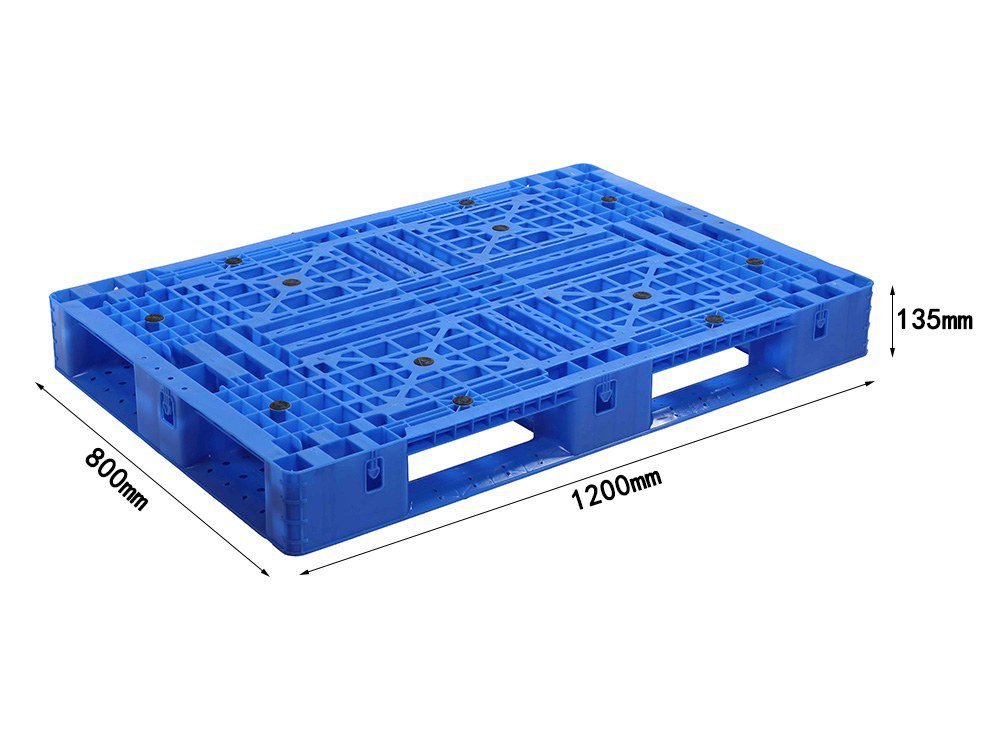
Most of the world runs on 1200 x 1000 mm or the Euro 1200 x 800 mm. Australia’s standard general-purpose pallet is 1165 x 1165 mm, a square footprint that traces back to the country’s rail wagon dimensions — the pallet was designed so that two of them sat efficiently in a rail wagon of the era, and the standard persisted because the installed base of racking, handling equipment and warehousing was built around it.
What this means if you are importing:
- Confirm your racking before you order. If your racking was built for 1165 x 1165, a 1200 x 1000 pallet may not sit safely on the beams. This is a safety question, not a convenience one.
- Export-oriented operations differ. Facilities shipping to Europe or Asia frequently run 1200 x 1000 or 1200 x 800 instead. Know which system your goods actually flow through.
- We tool to the footprint you specify. A square 1165 pallet is not a trimmed-down 1200 — the deck, the stringers and the load path are designed for the footprint from the start.
For the full comparison of footprints and what each suits, see plastic pallet sizes and dimensions.
ISPM 15: the strongest argument for plastic in this market
Australia enforces strict biosecurity requirements on imported wooden packaging — pallets, crates, dunnage and any wood used to brace or support cargo. Wood packaging must be treated to the ISPM 15 standard (heat treatment or fumigation) and bear the compliant mark, and non-compliant wood packaging is a well-documented cause of delayed clearance, mandatory re-treatment at the importer’s cost, or re-export of the consignment.
Plastic pallets are not wood packaging and fall outside these requirements. For importers running regular lanes, this is the single largest operational argument for plastic:
- No treatment certificate to chase, no mark to verify, no re-treatment risk at the border.
- No failure mode from a supplier who shipped you a marked pallet without valid treatment.
- Consistent tare weight, which matters when you are planning container payload.
If you currently import on wood and have never had a problem, you have been lucky or your freight forwarder has been careful. The cost of one failed consignment usually exceeds the price difference on a container of plastic pallets.
ChAFTA: the duty advantage most importers leave on the table
Under the China-Australia Free Trade Agreement, a large proportion of goods of Chinese origin enter Australia at zero tariff. The catch is that the preference is not automatic — it has to be claimed, and it has to be supported by origin documentation.
- Confirm the tariff classification for your product and check the applicable rate of duty under ChAFTA rather than the general rate.
- Make sure your supplier can issue the origin documentation your broker needs. Ask before you order, not after the vessel sails.
- GST applies on import and is recoverable for registered businesses, but it is cash flow you need to fund up front.
Your customs broker should confirm the current treatment for your specific commodity code — do not assume a blanket exemption.
Product by product
Pallets
Confirm the footprint first, then the rating. Three numbers matter and they are not interchangeable: static load (sitting on the floor), dynamic load (being moved by a forklift or pallet jack) and racking load (supported only at the edges on beams). A pallet that only ever sits on the floor does not need a racking rating, and paying for one is wasted resin. Full detail: static, dynamic and racking load capacity.
Also decide whether you need a lip or a flat deck, and whether the pallet will run on an automated conveyor or ASRS — automation has flatness and stiffness requirements that general-purpose pallets do not meet.
Crates
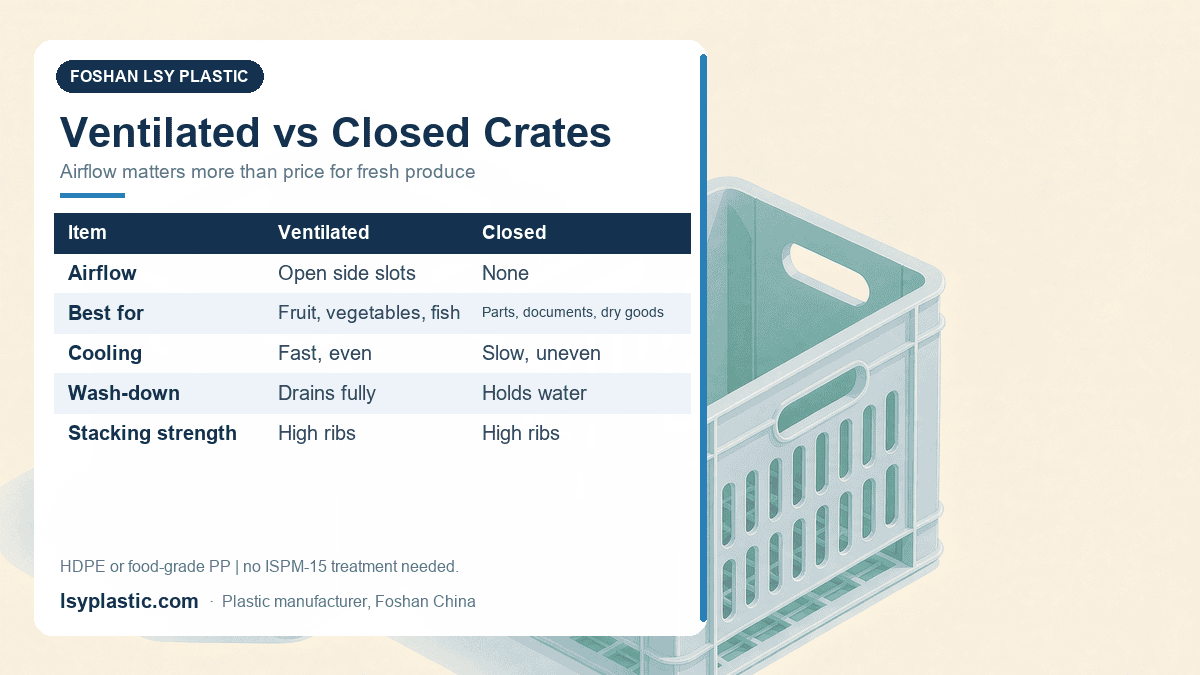
Plastic crate australia and collapsible plastic crates australia searches usually come from produce handling, cold chain and third-party logistics. Australian labour costs are high, which changes the economics: a collapsible crate that costs more per unit but cuts return-freight volume and speeds up handling frequently wins on total cost. Vented designs suit produce and use less resin at the same footprint; solid walls suit hardware and parts. See collapsible versus rigid crates and how to choose industrial plastic crates.
Storage boxes and containers
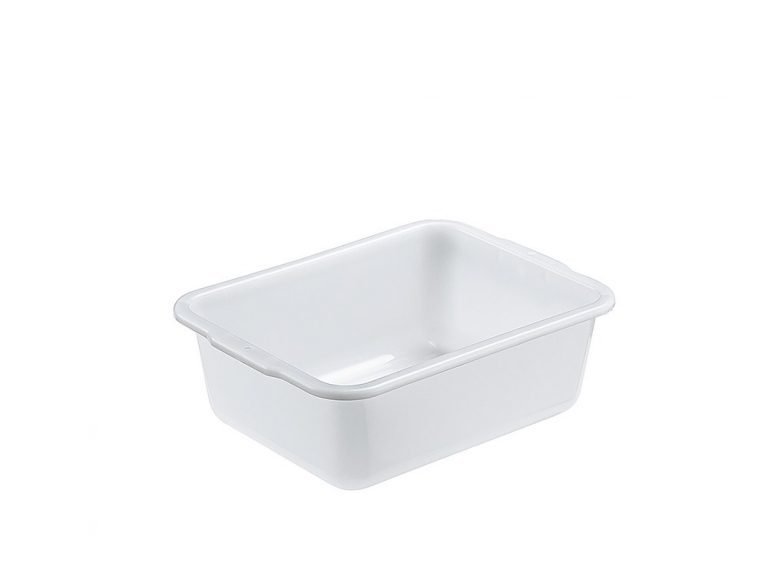
Plastic storage containers australia and plastic food storage containers australia — for food contact, hold a supplier declaration naming the specific resin and application. For general storage, the specification questions are whether it nests or stacks, whether it needs a lid, and whether it will be used outdoors. Australian UV is severe; anything stored or used outside needs a UV stabiliser package specified by name.
Hotel luggage trolleys
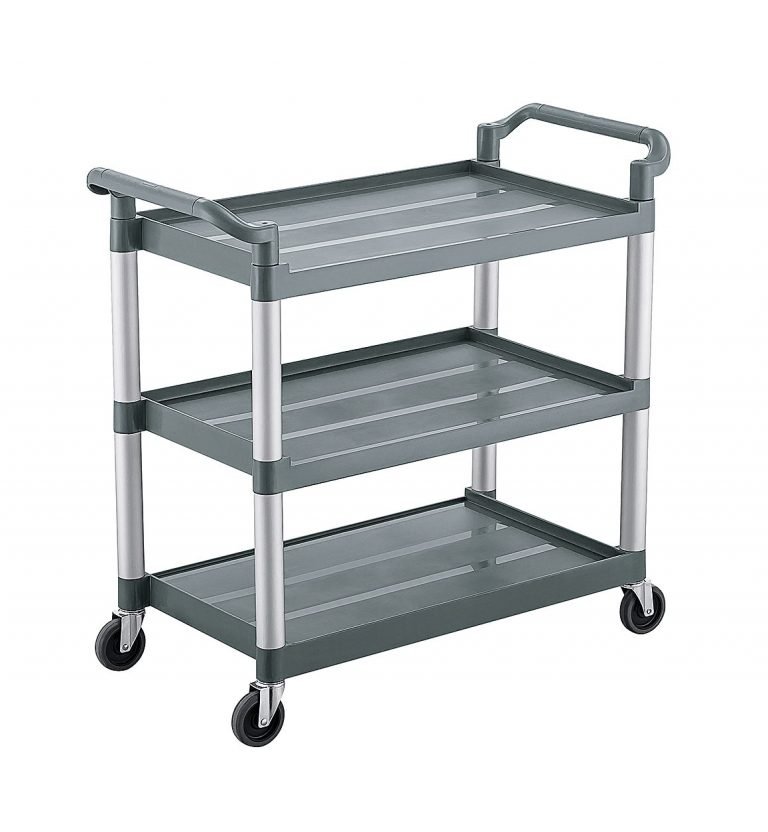
Hotel luggage trolley australia comes from the hospitality side, where the failure points are consistent: castors before frames, and frame joints before shelves. Specify the castor by its load rating and its wheel material — a trolley that is hard to push on carpet generates complaints long before it breaks. Ask what the castors are rated to and whether spares are available.
Clearance and landed cost
- Ports. Melbourne handles the largest container volume, with Port Botany (Sydney), Brisbane, Fremantle and Adelaide serving their regions. Choose based on the inland leg to your warehouse, not port fees.
- Biosecurity. Beyond wood packaging, be aware that contamination risk — soil, plant matter, insect residue — is taken seriously. Clean, new mouldings shipped in sealed containers present minimal risk; used or previously shipped goods do not.
- Duty and GST. Confirm the ChAFTA rate for your code, and fund the GST up front even though it is recoverable.
- Freight. China to Australia is a comparatively short lane. That makes container utilisation even more important relative to total cost — a design that nests or folds will often beat a cheaper unit that does not.
Comparing two quotes
- Get the shot weight in grams. Two products with identical external dimensions can differ by 40% in weight.
- Get the resin named — PP or HDPE, virgin or blend — plus confirmation of UV stabiliser for outdoor use.
- Get pieces per 40HQ. A lower unit price that ships fewer pieces is not cheaper landed.
- Get all three load ratings stated separately: static, dynamic and racking.
- Get the same Incoterm from all suppliers.
FAQ
Why is the Australian standard pallet square?
The 1165 x 1165 mm footprint was designed around rail wagon dimensions so that two pallets fit efficiently, and the standard persisted because the installed base of racking and handling equipment was built around it. It is unusual globally, which is why imported pallets sized for other markets cause problems here.
Do plastic pallets need ISPM 15 treatment?
No. ISPM 15 applies to wood packaging material. Plastic pallets fall outside the requirement, which removes the treatment certificate, the compliance mark and the risk of re-treatment or re-export at the border.
Is duty actually zero under ChAFTA?
A large proportion of goods of Chinese origin enter at zero tariff under ChAFTA, but the preference must be claimed and supported by origin documentation. Have your broker confirm the rate for your specific commodity code and make sure your supplier can provide the paperwork.
Should I buy collapsible crates?
In Australia, often yes. High labour and freight costs mean the savings from return-freight volume and faster handling frequently outweigh the higher unit cost. Model it on your actual trip count rather than assuming.
Ordering notes
- Export orders ship full container load (FCL). We do not split containers for export.
- Samples are charged at cost and credited against a confirmed order. For racking applications, a sample is the cheapest way to confirm beam fit before you commit to a container.
- Standard sizes are already tooled; a 1165 x 1165 pallet is an existing tool, not a new one. A genuinely new dimension carries a tooling charge.
Importing to other markets
The same product families ship to these markets. Freight, clearance and specification notes differ by destination: