Reusable plastic storage crates are transforming warehouse cost optimization by cutting logistics expenses up to 30%.
Meta Description: Cut warehouse costs 30% with reusable plastic storage crates. FDA-certified, durable solutions from FOSHAN LINGSHANGYING. Get your custom quote today!
Managing warehouse logistics costs feels like fighting a losing battle. Cardboard boxes collapse after 3 uses, wooden crates splinter and contaminate products, and disposable packaging creates endless waste streams.
FOSHAN LINGSHANGYING’s reusable plastic storage crates have helped 100+ overseas logistics operations cut material costs by 30% while meeting FDA and LFGB food safety standards. This proves that sustainable choices drive bottom-line results.
Why Traditional Warehouse Packaging Drains Your Budget
The Hidden Cost of Disposable Materials
Most warehouse managers only see the upfront price tag. However, disposable packaging creates cascading expenses that multiply over time.
Single-use cardboard boxes last 2-5 cycles before structural failure. At $3-8 per box, a 10,000-unit monthly operation spends $36,000-96,000 annually just replacing damaged containers.
In addition, labor costs for constant repacking burn even more cash on this endless treadmill.
Durability Failures That Disrupt Operations
Wooden crates seem sturdy until humidity warps the boards. Splinters damage products, moisture breeds contamination, and inconsistent sizing creates stacking nightmares.
One European 3PL provider switched to heavy-duty plastic crates for warehouse use after wooden containers caused $47,000 in product damage claims within six months.
As a result, the plastic upgrade paid for itself in 14 months through eliminated replacement costs alone.
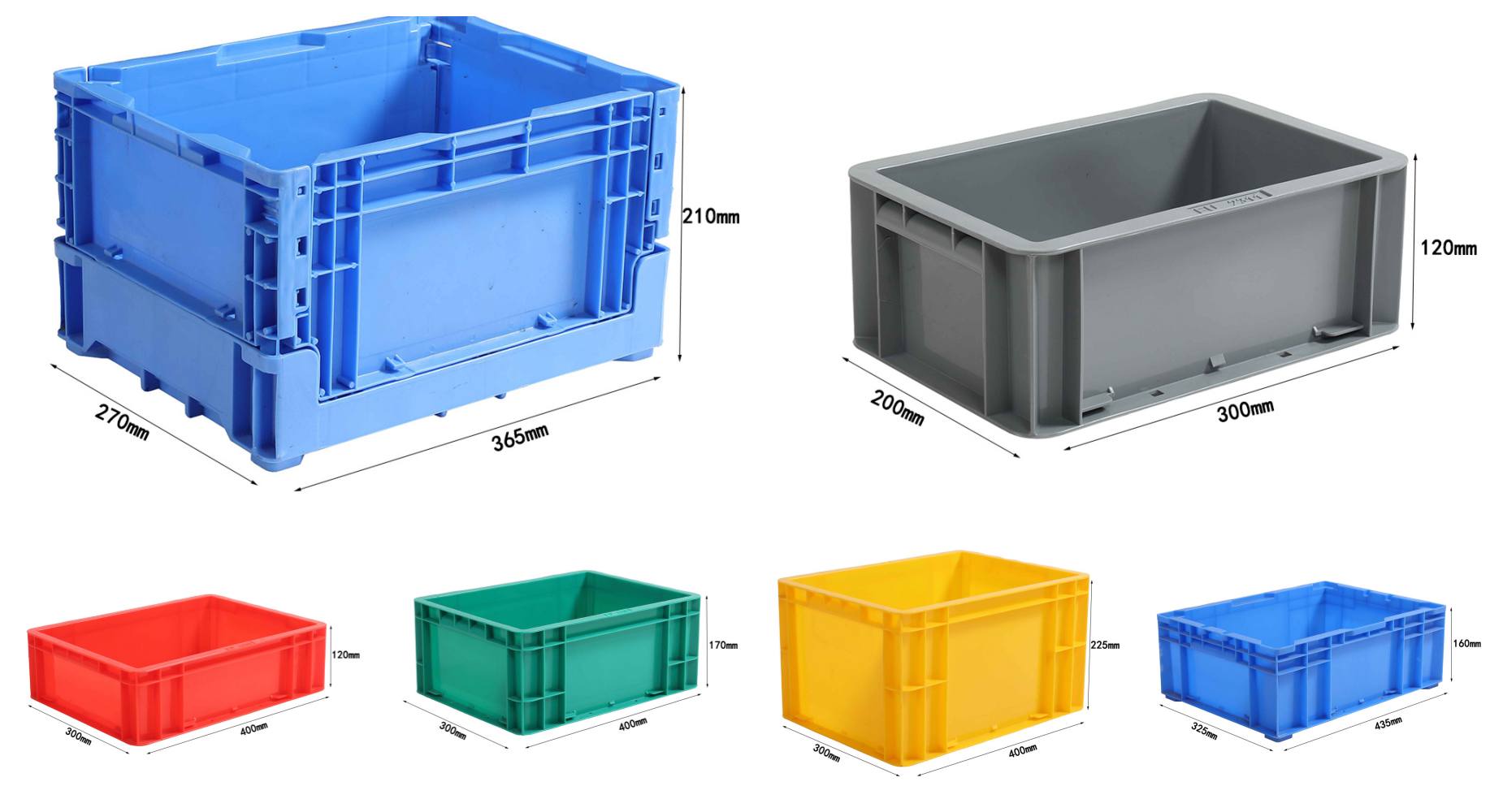
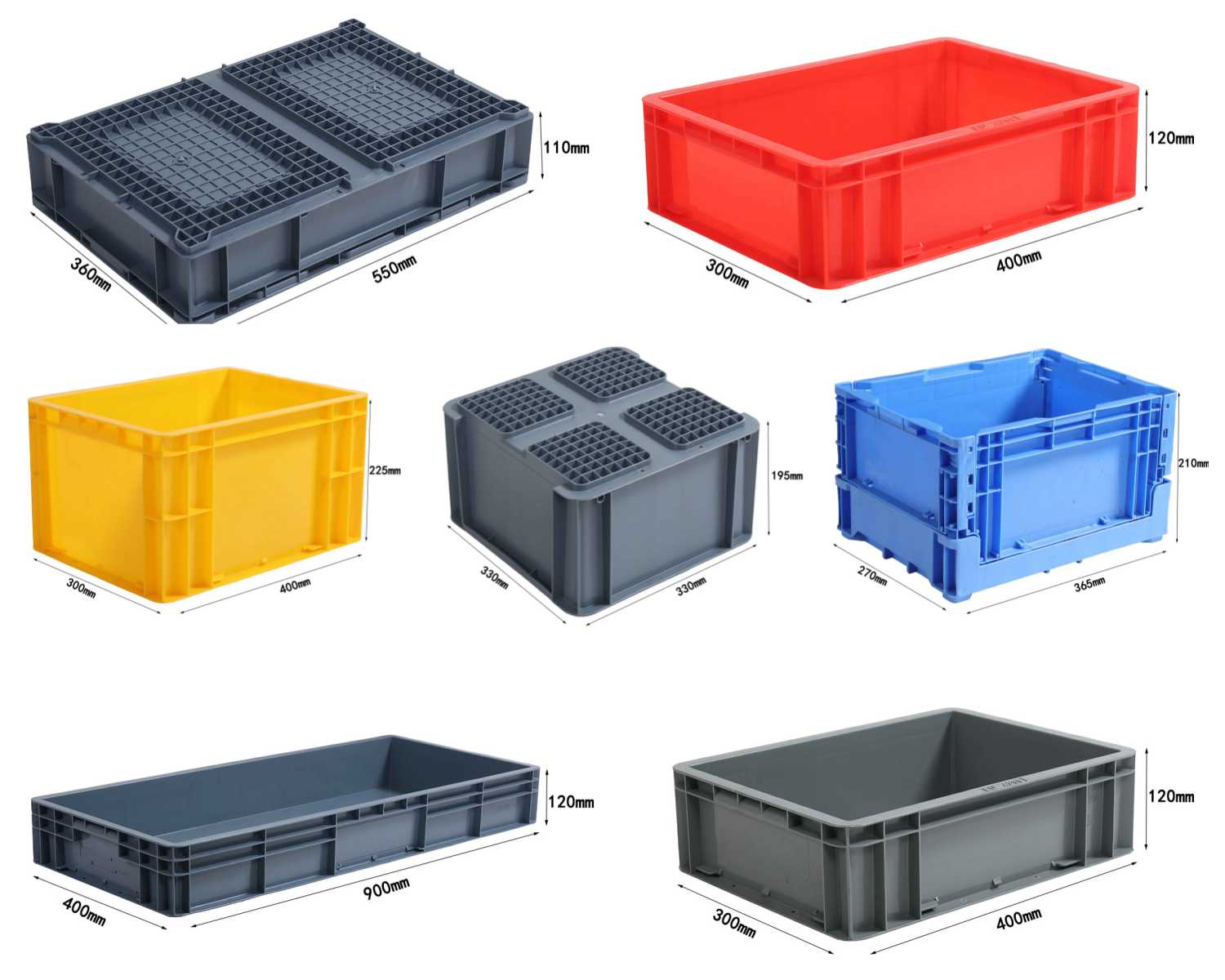
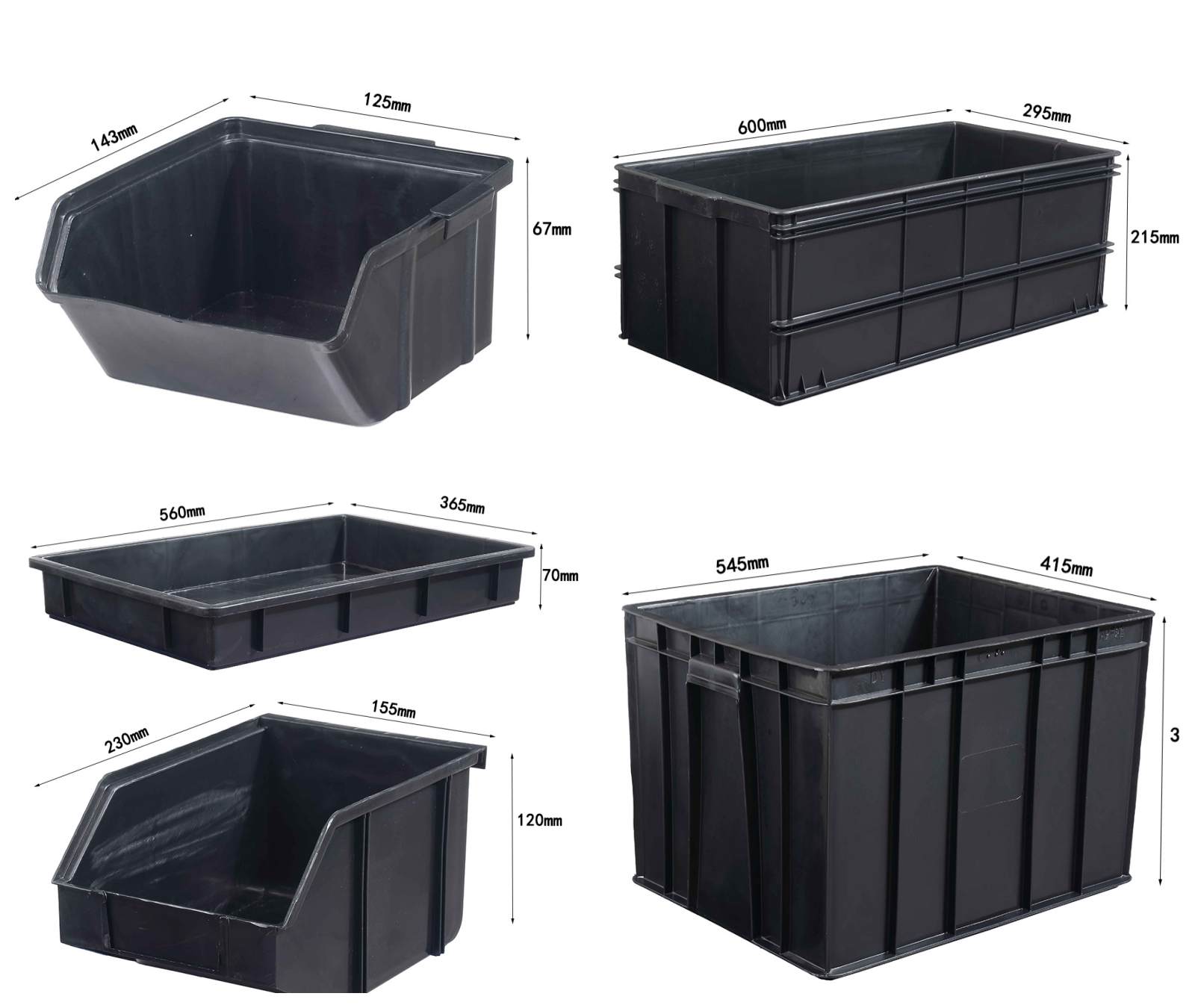
Compliance Risks With Non-Certified Materials
Food-grade supply chains face strict regulations. Cardboard absorbs moisture and bacteria. Meanwhile, untreated wood harbors pests that trigger customs rejections.
Food-grade plastic crates for supply chain operations meet FDA 21 CFR 177.1520 and LFGB standards. Therefore, contamination risks that could shut down entire shipments are completely eliminated.
The 30% Cost Reduction Formula: Real Numbers From Real Operations
Lifecycle Cost Analysis: 5-Year Comparison
30% Savings Breakdown with Reusable Plastic Storage Crates
Reusable Plastic Storage Crates ROI Calculation
Our reusable plastic storage crates for long-term use effectively cut warehouse operating costs by up to 30%.
Let’s break down actual expenses for a mid-sized warehouse moving 50,000 units monthly:
Cardboard boxes:
- Initial cost: $4 per box × 50,000 = $200,000/year
- Average lifespan: 3 uses
- 5-year total: $1,000,000
Labor for disposal/replacement:
- Additional $85,000 over 5 years
Reusable plastic storage crates:
- Initial investment: $18 per crate × 50,000 = $900,000
- Lifespan: 10+ years (60+ cycles)
- 5-year replacement: 15% = $135,000
- Maintenance: $12,000
Total savings: $338,000 (31.7% reduction)
[Image ALT: Heavy-duty plastic crate for warehouse stacked in distribution center showing cost efficiency]
Beyond Material Costs: Operational Efficiency Gains
Cost reduction extends far beyond purchasing. In fact, the real value emerges when you examine operational improvements:
Storage optimization:
- Standardized dimensions increase storage density by 22%
- Ergonomic grips reduce loading time by 18 seconds per unit
Product protection:
- Impact-resistant walls cut product loss by 40%
- Washable surfaces eliminate contamination downtime
A Canadian logistics provider using stackable plastic storage bins for logistics reported 2,400 additional pallet positions in the same warehouse footprint.
This was equivalent to avoiding a $180,000 facility expansion.
Environmental Compliance as Cost Avoidance
Disposal fees for cardboard waste average $75-120 per ton. Consequently, a 50,000-unit operation generates 180 tons of packaging waste annually.
Switching to reusable systems eliminates $13,500-21,600 in annual disposal costs. Furthermore, this meets ESG reporting requirements that increasingly influence B2B contracts.
The 3-Step Selection Guide for Maximum ROI
Step 1: Match Load Capacity to Actual Usage
Not all plastic crates handle the same weight. For this reason, mismatched specs cause premature failure.
FOSHAN LINGSHANGYING offers three tiers:
- Light-duty (15-25 kg): Retail distribution, e-commerce fulfillment
- Medium-duty (25-50 kg): General warehouse storage, cross-docking
- Heavy-duty (50-80 kg): Industrial parts, bulk food ingredients
First, conduct a 30-day audit of your heaviest 20% of loads. Then select crates rated 25% above your maximum observed weight for safety margin.
Step 2: Prioritize Ventilation vs. Solid Walls
Product type dictates design. Therefore, understanding your inventory characteristics becomes crucial:
Ventilated crates (perforated walls):
- Fresh produce requiring airflow
- Automotive parts needing moisture escape
- Reduces condensation-related damage by 65%
Solid-wall crates:
- Small components (prevents loss through gaps)
- Confidential documents
- Liquids or powders requiring containment
A UK cold chain operator reduced spoilage by 43% after switching to ventilated designs for berry transport. This saved $89,000 in the first year alone.
Step 3: Verify Food-Grade Certification for Compliance
If your supply chain touches consumables, non-certified containers create liability. Specifically, look for:
- FDA 21 CFR 177.1520 approval (U.S. market)
- LFGB certification (European Union)
- ISO 9001 manufacturing (quality consistency)
FOSHAN LINGSHANGYING provides full certification documentation with every order. As a result, customs delays that cost $1,200-3,500 per rejected shipment are completely eliminated.
Real-World Applications: Where Reusable Crates Deliver Maximum Value
Third-Party Logistics (3PL) Multi-Client Operations
3PL providers juggle dozens of clients with different products. In contrast, standardized reusable plastic storage crates create operational consistency across diverse inventory types.
Key benefits:
- Universal stacking reduces training time for temporary workers
- Color-coding options separate client inventory without labels
- Nested storage when empty saves 75% return shipping space
[Image ALT: Stackable plastic storage bin for logistics in 3PL warehouse showing nested configuration]
Cold Chain and Food Distribution
Temperature-controlled environments demand materials that withstand thermal cycling without cracking. As a result, material selection becomes critical for operational continuity.
FOSHAN LINGSHANGYING’s HDPE crates maintain structural integrity from -40°C to 80°C.
A Scandinavian seafood distributor eliminated 100% of cold-weather container failures after switching from polypropylene alternatives.
E-Commerce Fulfillment Centers
High-velocity picking requires containers that move fast without breaking. Moreover, worker safety considerations drive design requirements.
Smooth interior walls prevent snagging. Reinforced corners survive conveyor impacts.
One Asian e-commerce giant reduced picker injury reports by 28% after upgrading to ergonomic plastic bins with integrated handles.
Automotive Parts Supply Chain
Metal components demand impact resistance and oil/chemical tolerance. In addition, traceability requirements necessitate durable identification systems.
Automotive-grade plastic crates resist hydraulic fluid, cutting oil, and battery acid.
A Detroit parts supplier eliminated $34,000 in annual container replacement costs while meeting IATF 16949 quality standards.
Why FOSHAN LINGSHANGYING Outperforms Generic Suppliers
Factory-Direct Pricing Without Middleman Markup
Most importers pay 40-60% premiums through distributors. In contrast, direct manufacturer relationships cut costs while improving customization speed.
FOSHAN LINGSHANGYING’s Guangdong facility produces 500,000 units monthly with 15-day custom mold turnaround—half the industry average.
Factory-specific performance data:
- Maximum load capacity: 80 kg per crate (tested to 100 kg burst strength)
- Production capacity: 16,000+ units daily across 12 injection molding lines
- Custom mold development: 12-15 days from design approval to first sample
- Quality control: 100% dimensional inspection using automated CMM systems
Proven Track Record With Global Logistics Brands
Over 100 overseas clients across 28 countries trust FOSHAN LINGSHANGYING for industrial-grade durability. We manufacture reinforced commercial carts and reusable storage crates, serving brands like BYD, OPPO, and vivo.
Our solutions meet:
- DHL-compatible modular sizing
- FedEx distribution center approvals
- Amazon fulfillment center compliance
Complete Certification Portfolio
Our reusable plastic storage crates pass strict food safety standards with full FDA & SGS certification.
- FDA food contact compliance certificates
- LFGB test reports from German labs
- ISO 9001:2015 quality management verification
- SGS inspection reports for export
Customization Capabilities That Solve Unique Challenges
RFID-Enabled Reusable Plastic Storage Crates for Smart Inventory
Standard products fit 80% of needs. However, the remaining 20% require modifications:
- Custom dimensions for automated storage systems
- RFID tag integration for inventory tracking
- Company logo embossing for brand protection
- Specialty colors for visual management systems
Minimum order quantities start at 500 units for custom projects—accessible for mid-sized operations.
Frequently Asked Questions
How long do reusable plastic storage crates actually last in heavy-use environments?
FOSHAN LINGSHANGYING’s heavy-duty models withstand 60-100 cycles in typical warehouse conditions. Clients report 8-12 years of service with proper maintenance. We offer free structural integrity testing for high-volume users.
Can plastic crates handle freezer temperatures without becoming brittle?
Yes, when manufactured from HDPE. Our crates maintain flexibility down to -40°C per ASTM D746 standards. In contrast, polypropylene alternatives crack below -20°C. We provide thermal performance data sheets with every quote.
What’s the break-even point compared to cardboard boxes?
Most operations reach break-even in 18-24 months based on current packaging costs, usage cycles, and disposal fees. Furthermore, high-turnover operations (30+ cycles/year) break even in under 12 months. We provide customized ROI calculators.
Do you offer trial quantities before committing to large orders?
Yes. First-time clients can order sample sets (10-50 units) at near-wholesale pricing. We also provide CAD files and dimensional drawings for pre-purchase integration planning. Many clients start with one product line before expanding.
How does customization affect lead times and minimum orders?
Standard products ship within 7-10 days. Custom colors add 5 days (500-unit minimum). New mold designs require 15-20 days (2,000-unit minimum). However, we maintain common mold templates that reduce custom timelines by 40%.
Julie | LSY Plastic (30 Years Factory)
We manufacture reinforced commercial carts & reusable storage crates, serving brands like BYD, OPPO, vivo.
30 years expertise + Industrial-grade durability + Factory Direct
🔗 Web: https://lsyplastic.com/
📱 WhatsApp: +86 193 1105 9570
Make the Switch That Pays for Itself
Warehouse cost optimization isn’t about cutting corners. Instead, it’s about investing in systems that compound savings over time.
Reusable plastic storage crates transform packaging from a recurring expense into a capital asset that delivers returns for a decade. This directly solves the disposable packaging waste problem that drains budgets year after year.
FOSHAN LINGSHANGYING’s combination of food-grade certifications, factory-direct pricing, and proven durability creates the foundation for sustainable logistics operations.
Our clients don’t just save 30% on material costs. Ultimately, they gain operational consistency, regulatory compliance, and competitive advantages that cardboard boxes can never provide.
The question isn’t whether reusable plastic storage crates work. It’s whether you can afford to keep burning budget on disposable alternatives.
Contact FOSHAN LINGSHANGYING for a custom plastic storage crate quote today! Our engineering team will analyze your specific requirements and provide detailed ROI projections based on your current packaging spend.
Julie | LSY Plastic (30 Years Factory)
We manufacture reinforced commercial carts & reusable storage crates, serving brands like BYD, OPPO, vivo.
30 years expertise + Industrial-grade durability + Factory Direct
🔗 Web: https://lsyplastic.com/
📱 WhatsApp: +86 193 1105 9570
What’s your biggest packaging cost challenge—share your experience below and let’s compare solutions.