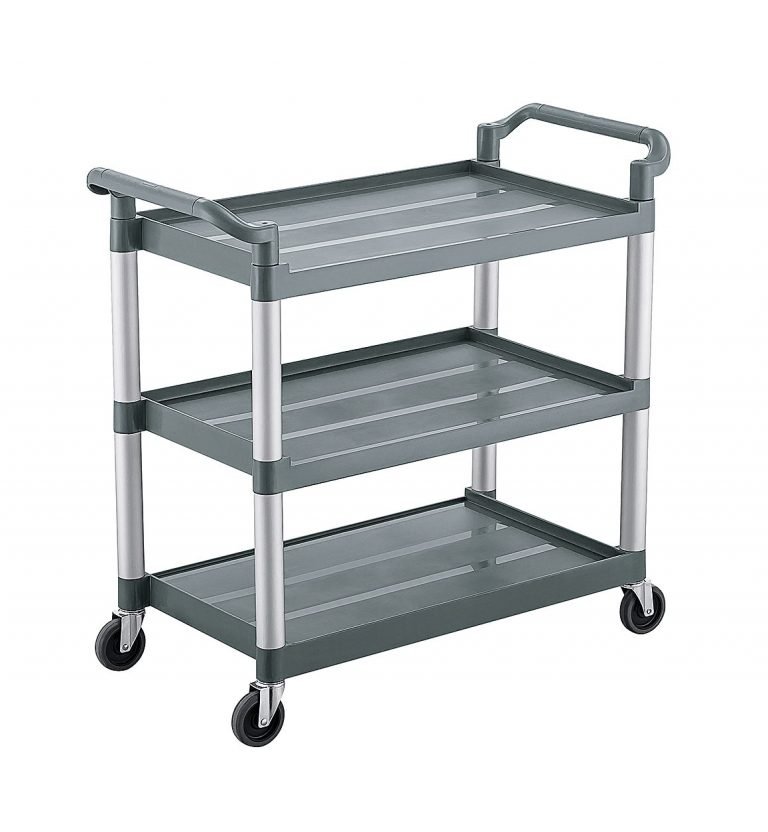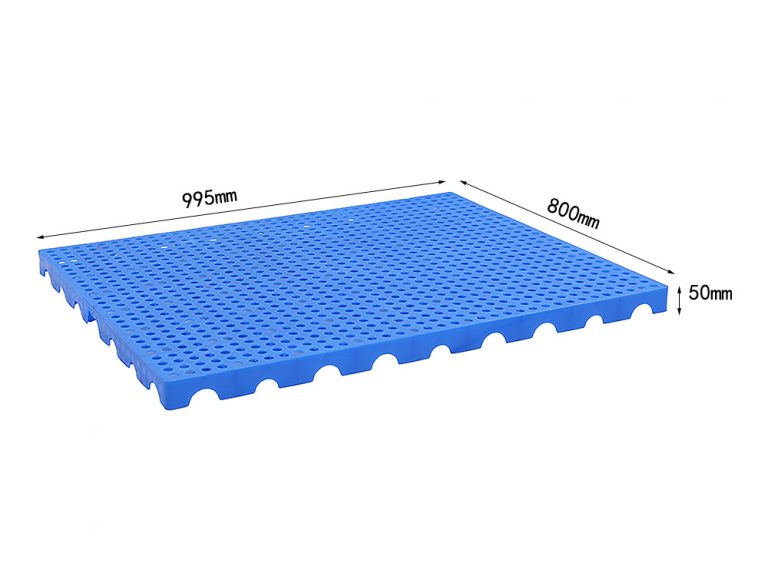
The smallest inventory in an electronics plant causes the most expensive static failures. Reels get opened at the bench, ICs are sorted into whatever plastic tub is within reach, and a surface that reads as clean can still be an insulator holding a charged layer a few millimetres from a unprotected lead frame. Getting ESD parts storage right is a workstation problem before it is a warehouse problem, and the container catalogue that solves it is more specific than most buyers expect.
1. Permanent conductivity, not a coating
Every bin in a static-safe parts programme should be injection-moulded from carbon-filled conductive polypropylene, so the conductive network runs through the wall rather than sitting on it. That is what keeps surface resistance in the 104–106 Ω range after months of abrasion, solvent wipes and parts sliding across the rim. A sprayed-on anti-static coating does the opposite: it reads well on day one and drifts high as it wears, which is exactly the failure an auditor catches. Under ANSI/ESD S20.20 and IEC 61340-5-1, storage containers used inside an EPA are part of the grounding chain, so the resistance figure belongs on the quotation, not in a brochure sentence.
2. Sloping picking bins for line-side picking
Where an operator picks parts many times an hour, the geometry of the bin matters as much as its resistance. Sloping-front picking bins — sometimes called hopper or slanted bins — drop the front wall low enough that contents stay visible and reachable even when bins are stacked three high. The practical details to specify:
- Rear hanging lip so the same bin either stacks on the bench or hangs on a standard louvered panel above it, which doubles capacity without new furniture.
- Integrated label slots on the face for ID cards or barcode inserts, so Kanban lanes stay auditable without taping labels to a conductive surface.
- Stack stability with a square footprint that does not walk when the lower bin is pulled forward.
These bins suit screws, connectors, resistors and DIP components picked by hand during SMT changeovers and manual assembly. For the full series with sizes and mounting options, see the ESD parts bins and conductive sloping boxes product page.
3. F-series parts bins with separator columns
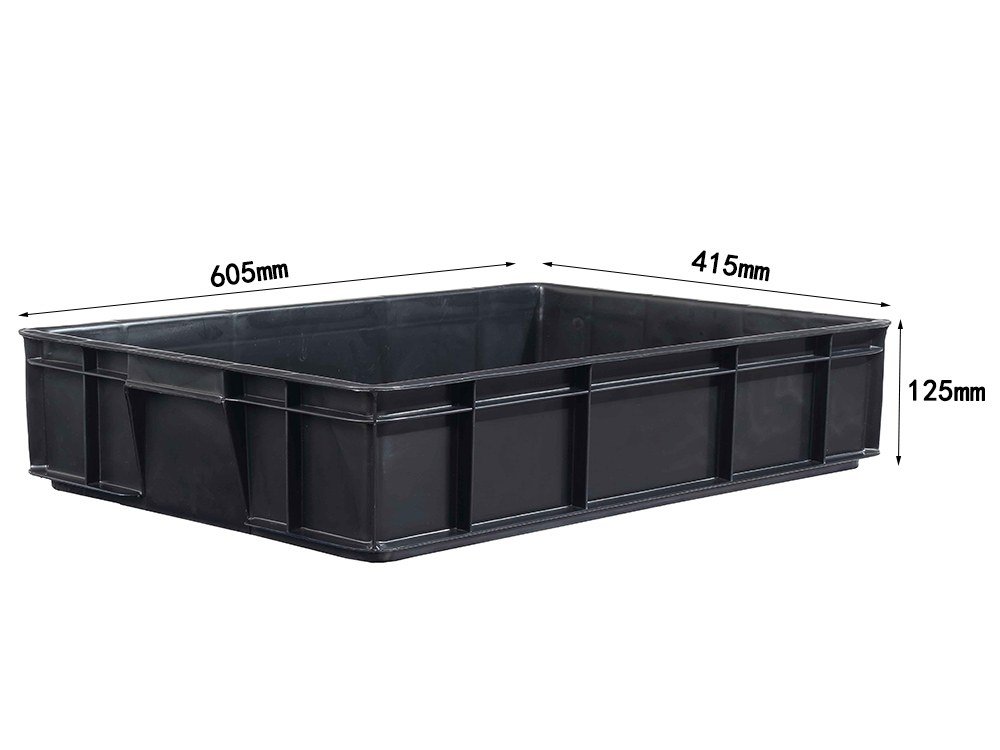
When one bin has to hold several part numbers at once, the divider system is the specification that decides it. The F-series parts bins accept separator columns that slot across the interior, so a single container becomes a fixed-grid sorting tray:
- F1 — 255×150×117 mm outer, takes 4 separator columns.
- F3 — 335×200×140 mm, 4 columns.
- F5 — 455×294×168 mm, 4 columns.
- F6 — 510×345×185 mm, 6 columns.
The riser pillars on the F-series also create vertical clearance between stacked bins, so an operator can reach in without lifting the upper bin off. Match the column count to your reel widths before ordering — a 4-column layout that fights a 330 mm reel becomes a divider that gets removed and lost.
4. Flat bins, oblique bins and the rest of the bench series
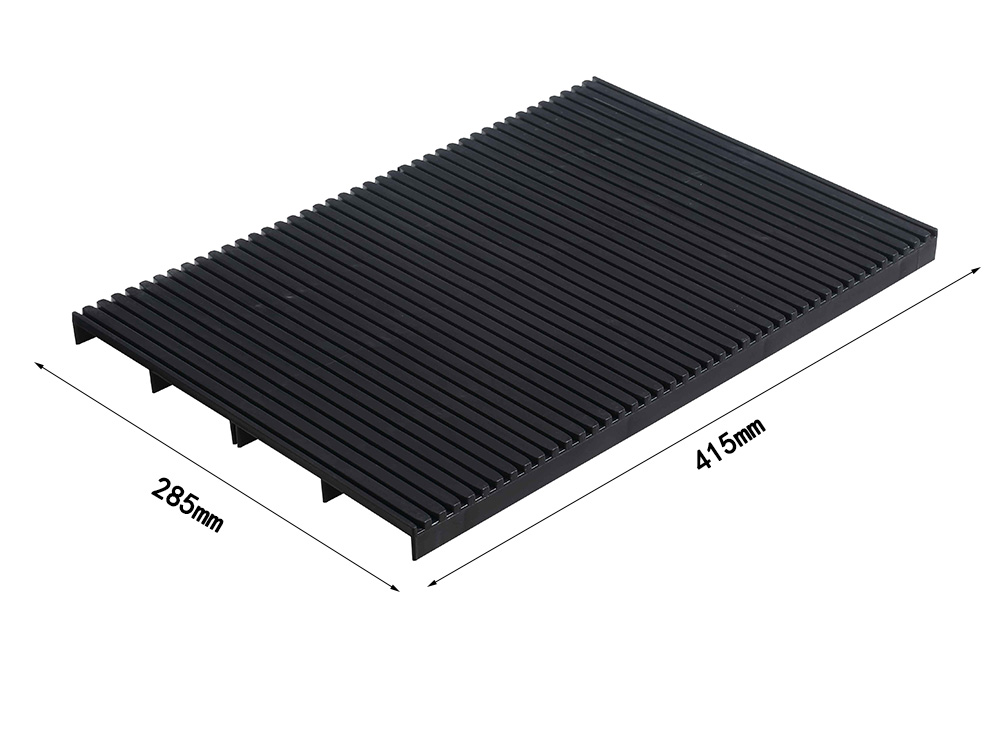
Around the picking bins sit two simpler families that finish out a workstation. Flat bins run from the 01 model at 152×96×55 mm up to the 04 at 305×205×85 mm — shallow, open trays for parts in process. Oblique (tilted-mouth) bins run from 95×102×50 mm to the deep 005 model at 230×155×120 mm for higher part counts in the same bench footprint. Dedicated ESD battery boxes (250×180 mm to 415×282 mm families, including high-foot versions) and electrical slot boards close the range, so battery packs and wired sub-assemblies do not end up back in ordinary totes. The complete model tables are listed on the ESD conductive component storage bins page.
5. Divided trays and long containers for awkward parts
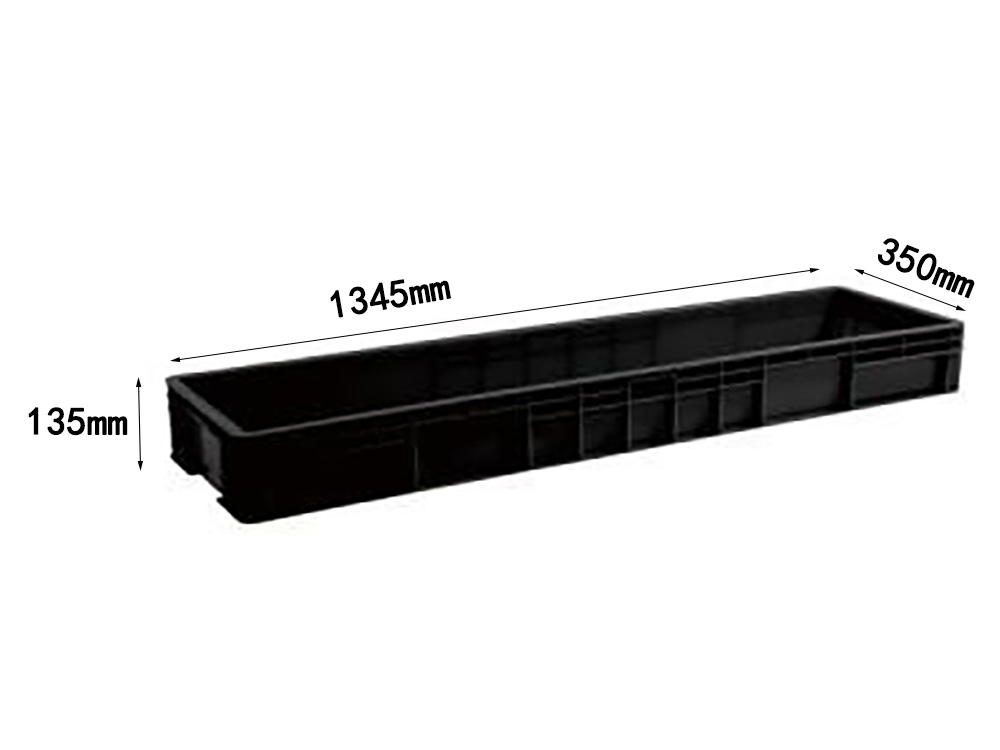
Two specialty shapes solve the cases standard bins cannot. The 8-grid square tray has fixed internal dividers moulded into the body, preventing part-to-part contact during transport without loose foam inserts that shed debris onto contacts — the natural kitting tray for sorted sets. At the other extreme, the 40# lamp box offers an internal length over 1.3 metres for LED tubes, antennas, guide rails and long shafts that must not be bent. Both are moulded from the same high-impact conductive PP at 104–106 Ω, so specialty shape never means relaxed protection.
6. A short buying checklist
- Moulded conductive PP with stated surface resistance 104–106 Ω, not a coating.
- Batch or model resistance test data supplied with the quotation.
- Divider count matched to actual reel and part widths.
- Label slots and louvered-panel compatibility for Kanban lines.
- Specialty trays (divided, long) ordered alongside bins so the whole flow stays inside the EPA.
Small parts spend more time in human hands than anything else in the plant, which is why their containers deserve their own specification line. For how these bins fit the wider system of totes, pallets and shielding, read the ESD containers hub guide, and use the component-bin and sloping-box product pages above to pull exact model tables before you request a quotation.