A well-equipped hotel banquet service cart should include chafing dish frames with fuel holders or electric warmers, serving utensils, stacked plates and bowls, cutlery organizers, insulated food pan covers, and a waste collection bin on the bottom shelf. The cart layout should follow a top-down service flow: hot food on top, plates in the middle, and storage and waste at the bottom, enabling servers to work efficiently during banquet service.
Banquet service carts are the backbone of hotel catering operations, supporting everything from wedding receptions to corporate conferences. A properly configured cart speeds up service, maintains food temperature, and reduces server fatigue. This guide covers the essential equipment, optimal cart layout, selection criteria, and buffet setup best practices for hotel banquet operations.
Essential Banquet Cart Equipment Checklist
Below is a comprehensive equipment checklist for a standard hotel banquet service cart:
| Equipment Category | Items | Quantity (per cart) |
|---|---|---|
| Food Holding | Chafing dish frames (full-size), fuel cans (sterno), electric warming bases | 2-4 frames |
| Food Pans | Full-size GN 1/1 pans, half-size GN 1/2 pans, perforated pans for draining | 4-8 pans |
| Serving | Serving spoons, ladles, tongs, spatulas, serving forks | 4-8 per item |
| Dinnerware | Dinner plates, salad plates, soup bowls, dessert plates | 15-25 per type |
| Cutlery | Forks, knives, spoons, napkin-wrapped sets | 25 sets |
| Glassware | Water glasses, wine glasses, champagne flutes | 15-20 per type |
| Condiments | 2-4 per item | |
| Cleaning | Cloth napkins, sanitizing spray, waste bin liners | As needed |
Cart Layout and Service Flow Optimization
The layout of your banquet cart directly impacts service speed and food safety. A well-organized cart follows a top-down service flow that mirrors how a server works during plating and serving.
Top Shelf: Food Service Zone
The top shelf holds chafing dishes and food pans. This is where hot food is maintained at 60C (140F) minimum and cold food at 4C (40F) or below. Arrange dishes so that the main protein is nearest to the server’s dominant hand, followed by sides and sauces. Leave a 15 cm clearance between chafing dishes for safe lid lifting and fuel can replacement.
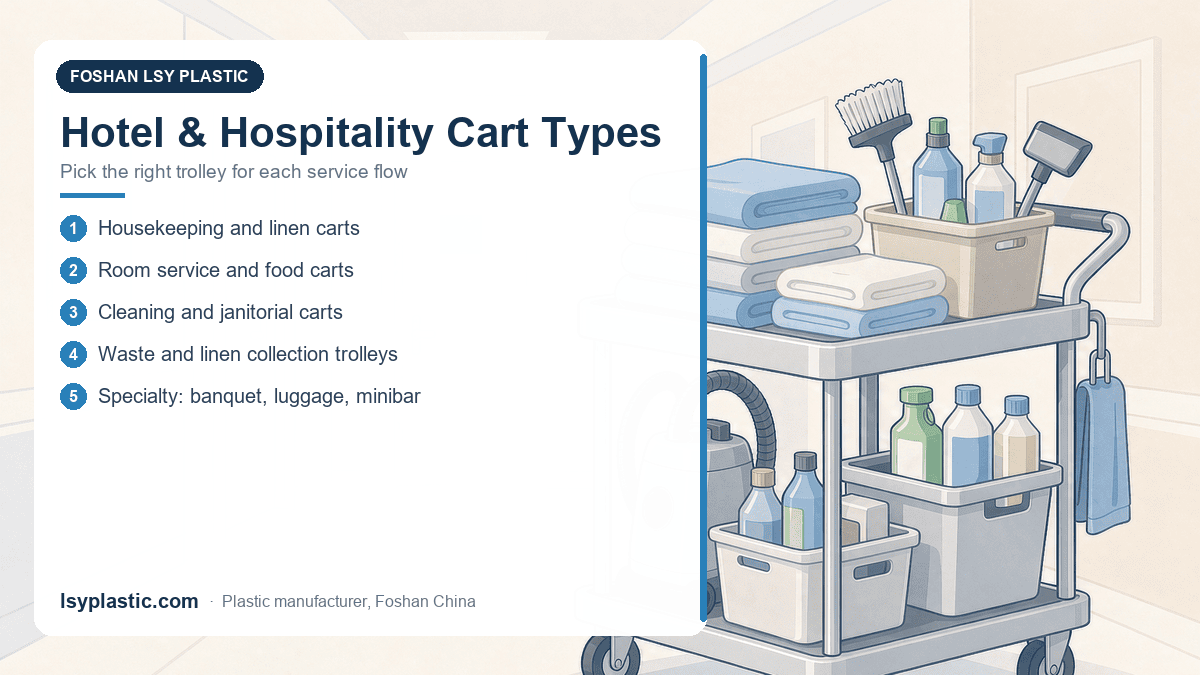
Middle Shelf: Plates and Bowls
The middle shelf stores dinnerware within easy reach. Stack plates in groups of 5-8 with felt separators to prevent chipping. Position bowls behind plates and glassware to the side. This arrangement allows servers to plate efficiently without reaching across hot dishes.
Bottom Shelf: Storage and Waste
The bottom shelf holds backup supplies (extra napkins, cutlery, condiments) and a waste bin for used items. A waste bin on the bottom shelf prevents servers from leaving the service line to dispose of waste, reducing service delays by up to 15%.
Choosing the Right Banquet Cart for Your Hotel
Heated vs Unheated Carts
Heated banquet carts use built-in electric heating elements to maintain food temperature during transport and holding. These are essential for large venues where food must travel from the kitchen to distant ballrooms. Unheated carts rely on chafing dish fuel (sterno) and are suitable for shorter transport distances and smaller events.
| Feature | Heated Cart | Unheated Cart |
|---|---|---|
| Temperature Maintenance | 65-85C (built-in) | Relies on sterno fuel |
| Best For | Large venues, long transport | Small events, short distances |
| Power Requirement | 220V or 110V outlet | None (fuel-based) |
| Cost | Higher initial investment | Lower, but ongoing fuel cost |
Size and Capacity
Banquet carts typically come in two standard sizes:
- Standard size (800x600mm shelf): Holds 2 full-size chafing dishes and serves 25-50 guests per trip
- Large size (900x700mm shelf): Holds 3-4 full-size chafing dishes and serves 50-100 guests per trip
Choose cart size based on your typical event scale. For hotels hosting 200+ guest banquets, large carts reduce the number of trips between kitchen and ballroom, improving service speed.
Mobility and Casters
Banquet carts must move smoothly across carpeted ballrooms, tiled corridors, and thresholds. Choose carts with 125-150 mm diameter swivel casters with brake locks. Larger wheels roll more easily over uneven surfaces and thresholds. For detailed caster selection, see our hotel trolley wheel selection guide.
Buffet Setup Best Practices
Flow and Traffic Management
Position buffet carts to create a natural flow from entry to exit. Guests should move in one direction, starting with plates, then hot dishes, sides, cold items, and finally desserts. This prevents bottlenecks and cross-traffic. Allow at least 90 cm clearance between buffet cart and guest queue.
Temperature Monitoring
Use probe thermometers to verify food temperatures every 30 minutes during service. Hot food must remain above 60C (140F) and cold food below 4C (40F). If temperatures drop, replace fuel cans or switch to fresh hot food pans from the kitchen.
Hygiene and Food Safety Standards
- Provide sneeze guards or dome covers for all open food pans
- Place hand sanitizer stations at the buffet entry
- Replace serving utensils every 2 hours or after any contamination
- Use separate utensils for each dish to prevent allergen cross-contamination
- Label all dishes, especially those containing common allergens (nuts, dairy, gluten)
Safety and Maintenance
Banquet cart safety extends beyond food handling to include cart maintenance and ergonomics:
- Inspect casters weekly for wear and replace cracked or seized wheels immediately
- Check electric heating elements quarterly for proper function
- Sanitize cart surfaces before and after each event with a 200 ppm chlorine solution
- Do not overload – respect the manufacturer’s rated capacity (typically 150-300 kg)
- Always engage caster brakes when the cart is stationary during service
For more on hotel cart organization, see our hotel housekeeping cart organization guide and room service cart features guide.
Conclusion
A properly equipped hotel banquet service cart transforms food service efficiency. By following a top-down layout – hot food on top, plates in the middle, storage and waste at the bottom – servers work faster, food stays at safe temperatures longer, and guest satisfaction improves. Whether you choose heated or unheated carts depends on your venue size and transport distance, but both require careful equipment planning, regular maintenance, and strict food safety practices.
LSY Plastic manufactures hotel service carts, banquet carts, and housekeeping trolleys designed for the demands of hospitality operations. With models including 8002, 8005, and 922 series food service carts, we provide solutions for every hotel operation. Contact us on WhatsApp at +86 19311059570 or email fstyx01@lsyplastic.com for product catalogs and OEM customization.
Visit our Hotel Hospitality Carts Hub for more guides on hotel equipment.
Sourcing hotel service carts? See our Restaurant & Room Service Carts line for the sizes and materials discussed above.
Frequently Asked Questions
What should a banquet service cart carry?
Chafing dish frames or electric warmers, serving utensils, stacked plates and bowls, cutlery organisers, insulated pan covers and a waste bin on the bottom shelf. Arrange them so servers can work efficiently without extra trips.
How should the cart be laid out for service flow?
Follow a top-down flow: hot food and warmers on top, plates and bowls in the middle, and storage plus waste at the bottom. Grouping the most-used items at hand height speeds banquet service and reduces staff movement.
How do I choose the right banquet cart?
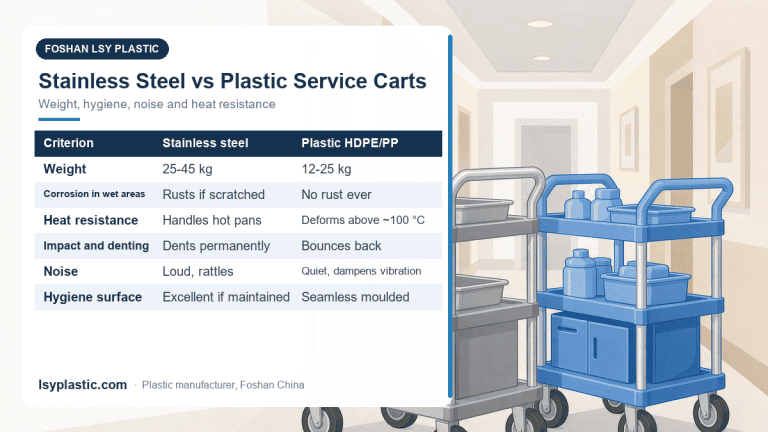
Match shelf count and size to your banquet covers and to your door and lift widths, choose sturdy locking casters for full loads, and pick a heat-resistant, easy-wipe material. Plastic composite carts are lighter and rust-free.
How do I keep a banquet cart hygienic?
Wipe surfaces after every event, wash shelves and bins regularly, keep hot and cold items separated, and inspect casters and fixings. A clean, well-maintained cart supports food-safety standards. LSY moulds banquet and service carts; no MOQ for domestic orders, overseas orders ship FCL.