Choosing the right ESD plastic pallet is critical for any electronics manufacturer or semiconductor logistics operation. A single electrostatic discharge (ESD) event can destroy sensitive components worth thousands of dollars, making antistatic protection at every supply chain stage non-negotiable. This guide explains what to look for when selecting ESD pallets, from surface resistance ratings to grounding compatibility.
Not sure which footprint fits your racks or containers? Our standard plastic pallet sizes guide lists every common dimension in one table.
What Is an ESD Plastic Pallet?
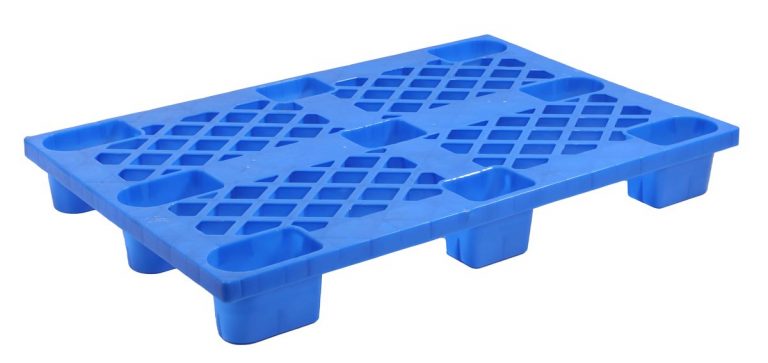
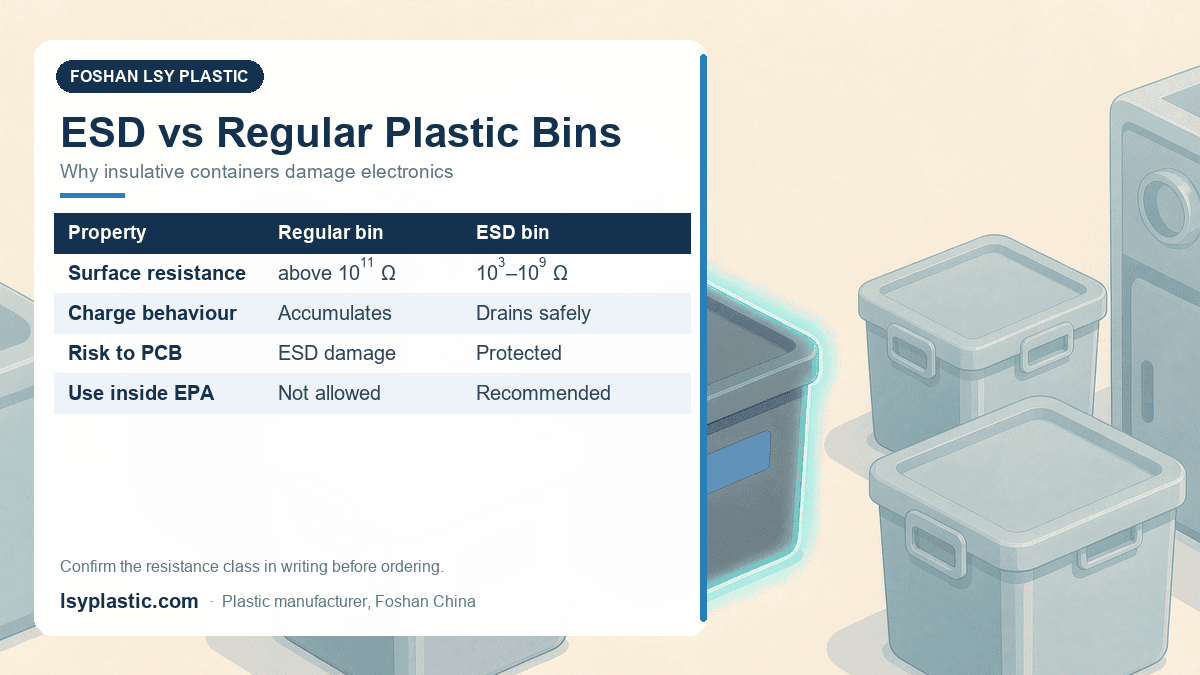
An ESD (electrostatic discharge) plastic pallet is a specialized logistics platform made from conductive or static-dissipative materials. Unlike standard HDPE pallets, ESD pallets control static buildup and safely channel electrical charges away from sensitive electronic components.
These pallets are essential for transporting:
- Printed circuit boards (PCBs)
- Semiconductor wafers and chips
- LED modules and displays
- Medical electronics
- Automotive control units
Surface Resistance: The Key Specification
The most important metric when evaluating an ESD plastic pallet is surface resistance, measured in ohms per square (Ω/sq). Different resistance ranges serve different purposes:
| Resistance Range | Classification | Best Use Case |
|---|---|---|
| 10⁴ – 10⁶ Ω/sq | Conductive | High-risk environments, explosive atmospheres |
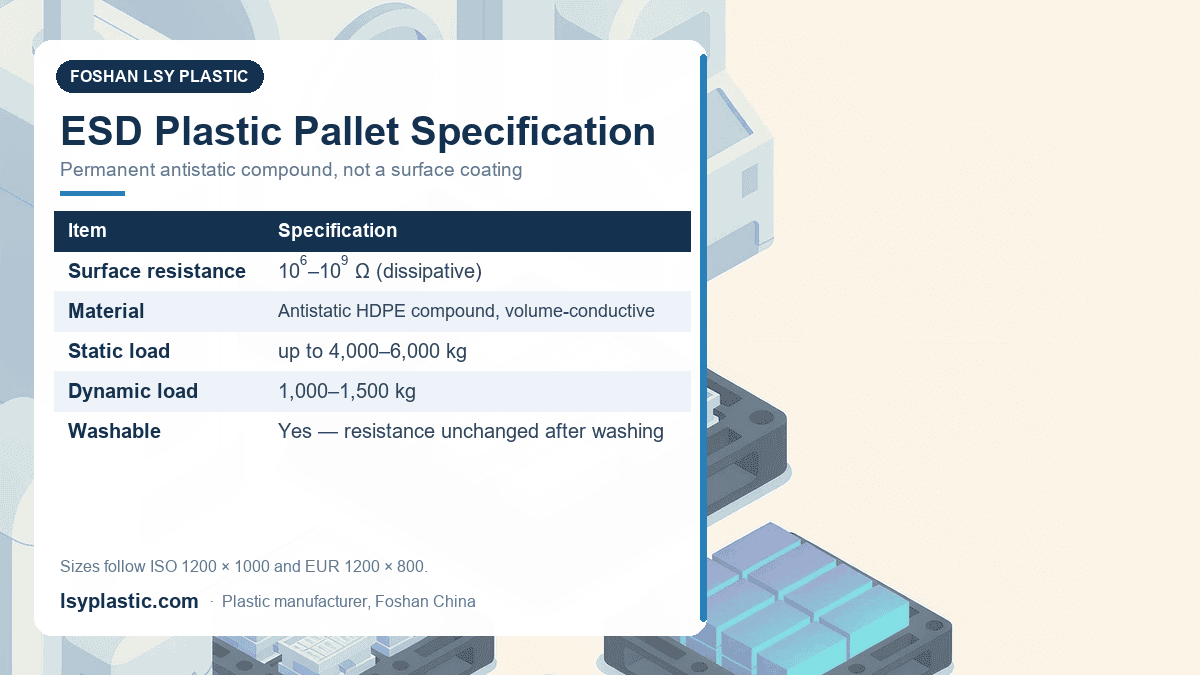
| 10⁶ – 10⁹ Ω/sq | Static-dissipative | General electronics manufacturing and transport |
| 10⁹ – 10¹² Ω/sq | Antistatic | Low-sensitivity components, short-term storage |
| >10¹² Ω/sq | Insulative | Not suitable for ESD applications |
For most electronics logistics operations, static-dissipative pallets (10⁶ – 10⁹ Ω/sq) offer the best balance of protection and safety. Conductive pallets are preferred in cleanrooms and explosive environments where rapid charge dissipation is required.
Material Options: Carbon-Filled vs. Coated
ESD pallets are manufactured using two primary methods:
Carbon-Filled Conductive Polymers
Carbon powder, carbon fiber or carbon nanotubes are blended into polypropylene (PP) or polyethylene (PE) resin. This creates a permanently conductive material that cannot wear off or wash away. Carbon-filled pallets typically last 5–7 years and maintain consistent resistance throughout their service life.
Surface-Coated or Sprayed Coatings
Standard plastic pallets are treated with antistatic sprays or dip coatings. While cheaper initially, these coatings degrade with handling, cleaning chemicals and UV exposure. Resistance values can drift outside the safe range within 12–18 months, creating compliance risks.
Recommendation: For long-term reliability and audit compliance, choose carbon-filled conductive pallets over coated alternatives.
Size and Load Capacity Considerations
ESD pallets must match both your product dimensions and your handling equipment. Common configurations include:
| Dimension (mm) | Style | Dynamic Load | Typical Use |
|---|---|---|---|
| 1200 × 1000 | Standard EU/Asia | 1000–1500 kg | General component transport |
| 1200 × 800 | Euro standard | 1000–1200 kg | Automotive electronics |
| 1100 × 1100 | Asia standard | 800–1200 kg | Semiconductor wafer boxes |
| 600 × 400 | Half-size / quarter | 200–400 kg | Small-batch PCB assembly |
Always verify that the pallet’s dynamic load rating exceeds your heaviest loaded container weight by at least 25% to account for impact forces during forklift handling.
Grounding and Compatibility
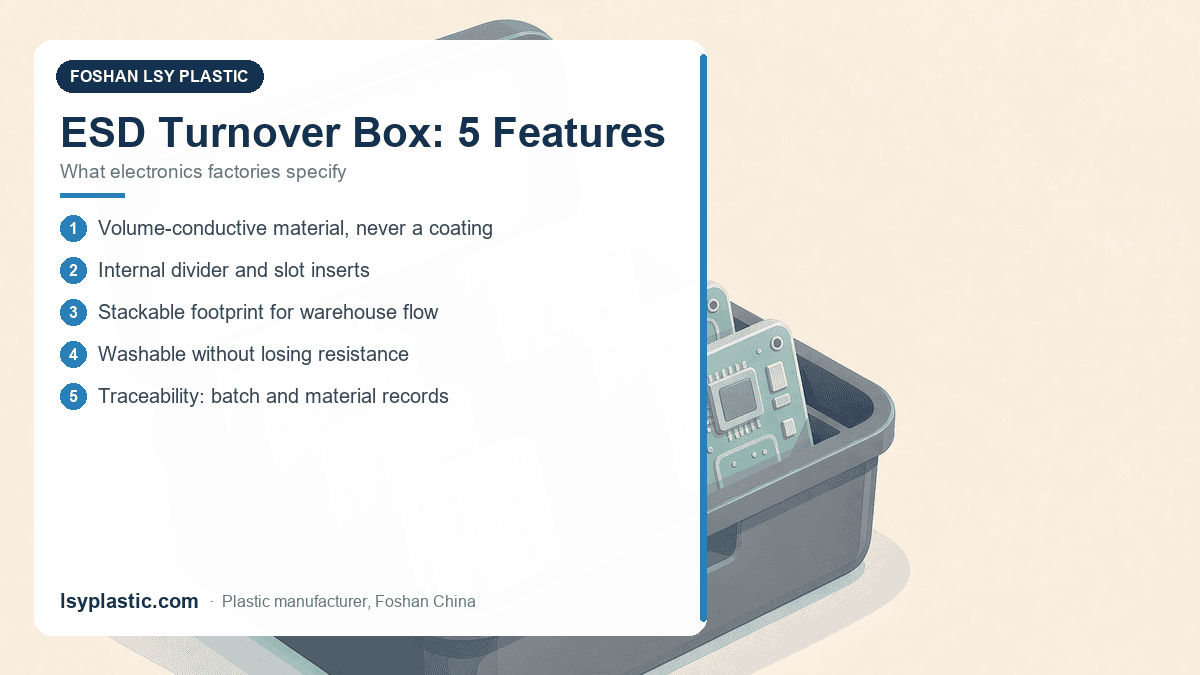
Effective ESD protection requires a complete grounding path. Look for pallets with:
- Metal grounding tabs or chains for connection to grounded shelving
- Compatibility with ESD floor mats and wrist-strap systems
- Stackable designs that maintain grounding contact when nested
- Smooth surfaces that do not trap conductive debris or dust
If you operate an EPA (ESD Protected Area), confirm that your pallet supplier can provide third-party test reports verifying surface resistance, volume resistance and decay time according to IEC 61340-5-1 or ANSI/ESD S20.20 standards.
Industry Standards and Compliance
Reputable ESD pallet manufacturers should provide:
- Material test certificates with resistance values
- RoHS and REACH compliance documentation
- ISO 9001 quality management certification
- Traceability of carbon content batch records
For electronics exporters, pallets meeting ESD container standards ensure that your entire logistics chain maintains protected status from factory floor to customer receiving dock.
Cost Comparison: ESD vs. Standard Pallets
ESD pallets typically cost 2.5–4× more than standard HDPE pallets due to carbon filler material and specialized molding requirements. However, the cost of a single ESD failure often exceeds the price difference:
| Item | Standard Pallet | ESD Pallet |
|---|---|---|
| Unit Price (USD) | $15–30 | $40–90 |
| Service Life | 5–7 years | 5–7 years |
| ESD Protection | None | 10⁶–10⁹ Ω/sq |
| Typical Failure Cost | N/A | $500–50,000+ per incident |
For operations handling components valued above $200 per unit, ESD pallets deliver immediate return on investment through damage prevention.
Maintenance and Testing
Even carbon-filled ESD pallets require periodic verification. Establish a testing schedule:
- Monthly: Visual inspection for cracks, carbon exposure and contamination
- Quarterly: Surface resistance spot-checks with a megohmmeter
- Annually: Full audit against ANSI/ESD S20.20 requirements
- On damage: Immediate testing or replacement if structural integrity is compromised
Summary: Checklist for Buyers
Before placing an ESD pallet order, confirm:
- Surface resistance matches your EPA requirements (10⁶–10⁹ Ω/sq for most electronics)
- Material is carbon-filled, not surface-coated
- Dimensions fit your racks, conveyors and forklifts
- Dynamic load rating has 25% safety margin
- Grounding features match your facility setup
- Supplier provides IEC/ANSI test certificates
- Batch traceability and RoHS compliance are documented
If you are sourcing plastic pallets from China, request samples for resistance testing before committing to bulk orders. Reputable manufacturers will provide free samples for qualification testing.
Related reading: How Long Do Plastic Pallets Last? and HDPE vs PP Pallets: Material Comparison.
Need ESD Pallets for Your Electronics Operation?
FOSHAN LSY Plastic manufactures carbon-filled conductive pallets with surface resistance from 10⁴ to 10⁹ Ω/sq, tested to IEC 61340-5-1 standards. We supply electronics manufacturers in Shenzhen, Dongguan and for export to Southeast Asia and the Middle East. Contact us on WhatsApp +86 19311059570 or email fstyx01@lsyplastic.com for samples and a tailored quotation.
Need reliable ESD containers and pallets? Browse the ESD & Anti-Static Industrial collection and request a quote.
Frequently Asked Questions
What is an ESD plastic pallet?
A pallet moulded with conductive or dissipative material to control static charge, protecting sensitive electronics during storage and transport. It provides a controlled surface resistance rather than an insulating plastic surface.
What surface resistance do ESD pallets need?
Match to risk: conductive pallets run about 10^3 to 10^5 ohms, and dissipative about 10^5 to 10^11 ohms. Define the band your process requires and ask for test data for the model you order.
Carbon-filled or coated ESD pallets?
Carbon-filled material is conductive throughout and does not lose protection with wear; coated pallets can lose it as the coating wears. For permanent ESD performance, choose carbon-filled.
How do I verify and maintain ESD pallets?
Test surface resistance on receipt and periodically, and confirm grounding compatibility with your system. LSY moulds carbon-filled ESD pallets; no MOQ for domestic orders, overseas orders ship FCL.