Every importer knows the cardboard carton routine: buy them, pack them, ship them, throw them away. In a single shipment cycle a carton is used once. A plastic crate, by contrast, is an asset that can do 100–300 trips over 5–10 years. That is the whole argument for switching — and this guide lays out the numbers so you can decide whether reusable plastic packaging makes sense for your product lines.
For a full breakdown of crate types, sizes and load ratings, see our industrial plastic crates guide.
Cost Per Trip: The Math That Decides It
A standard cardboard carton costs roughly USD 0.60–2.00 depending on size and board weight, and it is used once. A comparable plastic crate costs USD 5–15 at wholesale, but it makes 100–300 round trips before retirement. Even at 100 trips, a USD 10 crate costs USD 0.10 per trip — one tenth of a cheap carton — before counting what you save on re-purchasing, labor and damage.
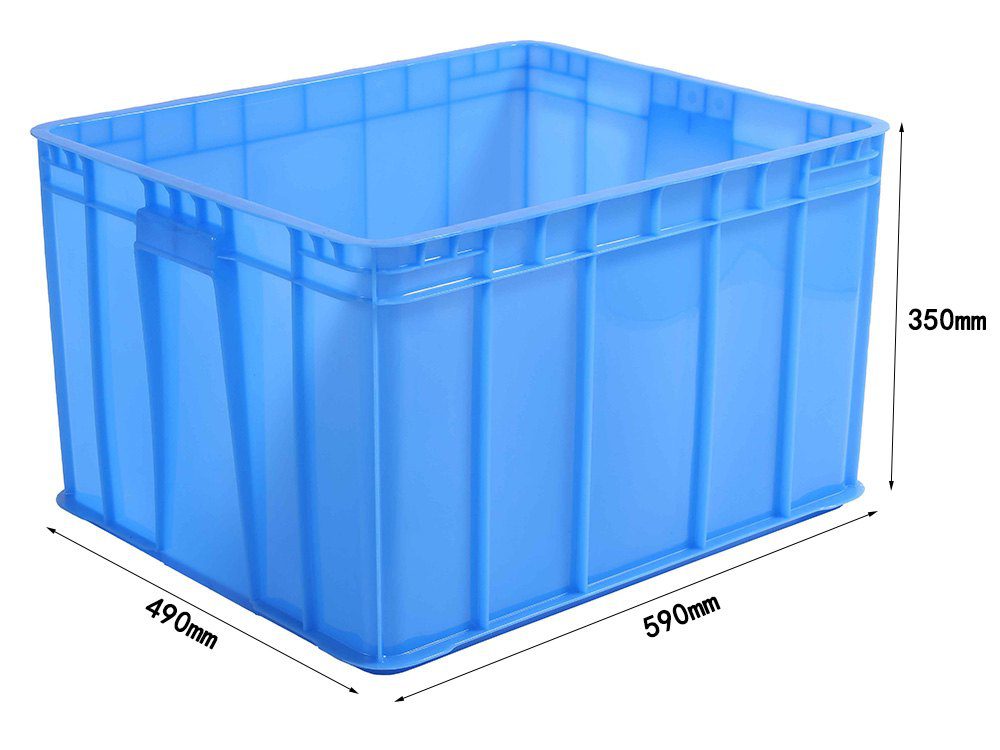
For a distributor moving 10,000 cartons a month, the paper cost alone is USD 6,000–20,000 every month. The equivalent plastic crates wholesale fleet is a capital purchase that pays for itself within the first 6–18 months.
Moisture, Cold Chains and Product Damage
- Wet strength. Cardboard loses most of its strength when it gets wet or humid. In reefer containers, cold-store corridors and rainy port yards, the bottom cartons in a stack collapse under load. HDPE crates do not absorb water — they stay rigid in a 2 °C cold store or a 40 °C warehouse.
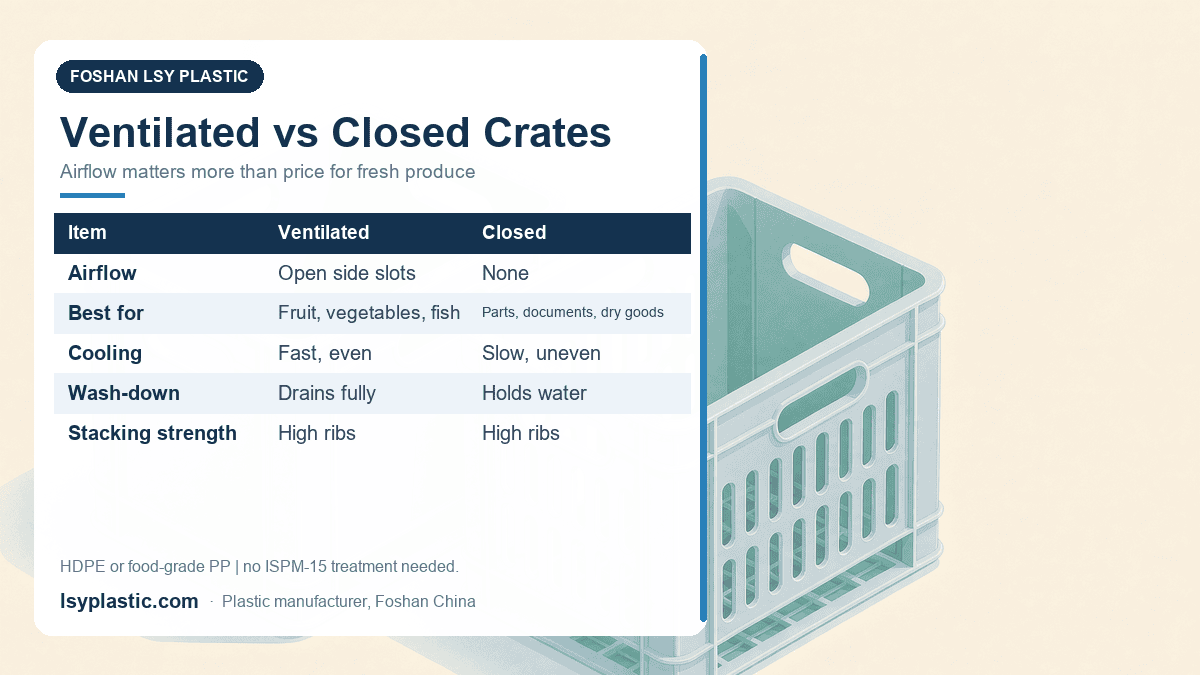
- Condensation. Moving goods from a hot quayside into a cold store creates condensation. Crates with ventilated walls let air move and moisture escape, protecting fruit, vegetables and other respiration-sensitive products.
- Pest and hygiene. Cardboard attracts insects, absorbs spills and cannot be cleaned. Food-grade HDPE crates can be washed with hot water and detergent between uses — a requirement in most food-safety audits.
The FAO estimates that roughly one-third of all food produced is lost or wasted, and in fresh produce poor packaging is a major contributor. Switching to ventilated reusable crates is one of the most direct fixes an importer can make. See the FAO’s food loss and waste work for the broader picture.
Stacking, Nesting and Container Economics
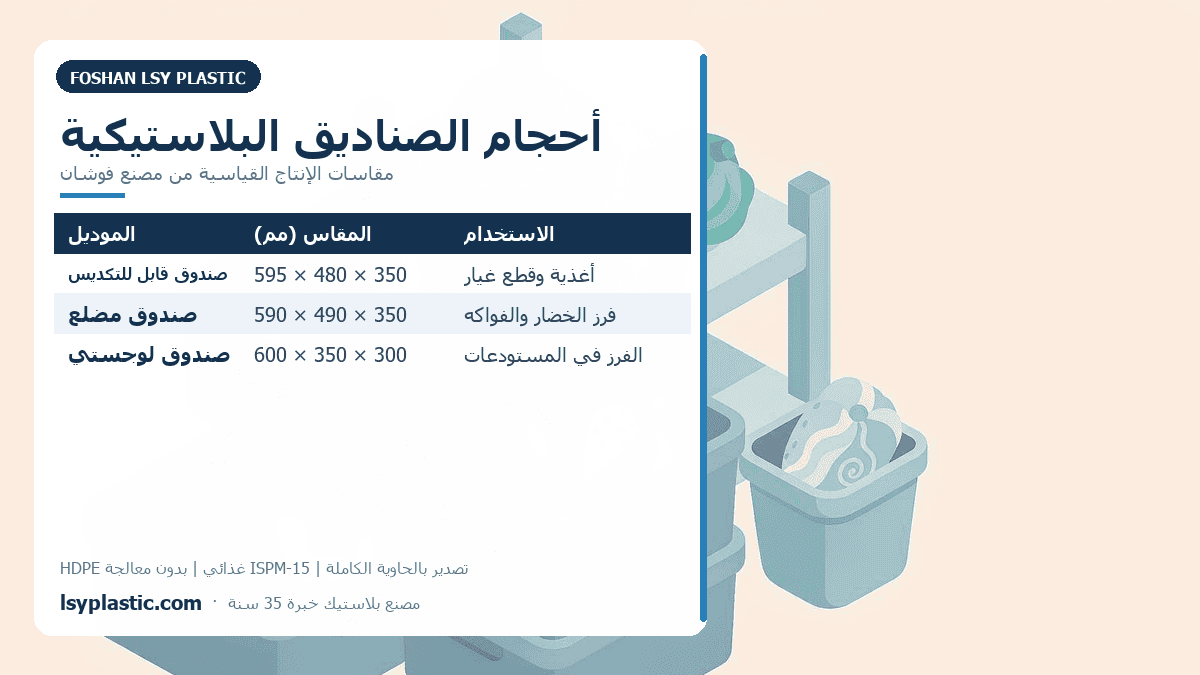
- Stacking strength. A filled large crate can weigh 300–400 kg. Quality crates are engineered to stack 5–8 high with ribbed sidewalls and reinforced corners, so the cube of your container and trucks is used properly.
- Nesting. Empty crates that nest reduce return-transport volume by 60–70%. That makes one-way export and round-trip pooling far cheaper than the crate price alone suggests.
- Container loading. Because crates are dimensionally consistent, loading plans are repeatable: you know exactly how many fit a 40ft container and you can plan the same cube every time. Carton dimensions vary by batch, which quietly eats into your utilization.
When Cardboard Is Still the Right Call
Plastic crates are not always better. Keep cartons for one-way export to small buyers, point-of-sale display packaging, and low-value products where return logistics do not exist. Many importers run a hybrid system: plastic crates for the core wholesale volume, cartons for retail display packs and one-off orders.
Fleet Sizing and Return Logistics
Before you order, size the fleet from your peak weekly volume divided by the trips each crate makes per week, plus a 10–15% spare allowance for cleaning, damage and loss. If crates travel one-way to customers, plan the return leg: nestable crates keep the return cube small, and molded-in logos help your fleet come home. A supplier who sells plastic crates wholesale can usually model fleet size and container needs with you before you commit.
What to Ask a Plastic Crate Supplier
- MOQ. Typical wholesale MOQs for standard crates are 1,000–3,000 pieces per size; mixed sizes in one container are usually acceptable.
- Lead time. Standard production runs 30–45 days after deposit, plus sea freight. Confirm dates in writing before paying.
- Food-grade resin. Ask for food-contact certificates if the crates will touch food directly.
- Customization. Molded-in colors and logos help you keep a fleet from disappearing — ask about options at the start, not after production.
- Certificates. ISO 9001 and third-party inspection (SGS or similar) protect you at customs and with your own customers.
FAQ
- How many trips does a plastic crate really last? With normal handling, 100–300 round trips over 5–10 years is realistic for HDPE crates. Heavy abuse lowers the number; pooling systems push it higher.
- Do I need ventilated crates for everything? No. Ventilated sides help produce and products that respire or trap heat. Dense, dry goods and non-food items are fine with solid-wall crates.
Buy Factory Direct
LSY Plastic manufactures plastic crates, bins and containers on injection-molding lines with food-grade HDPE options, for export to 30+ countries. See our crates and food containers range and our about page to understand who you are buying from, or start from the lsyplastic.com homepage.
Comparing crate suppliers and plastic pallet wholesale suppliers at the same time? WhatsApp our export team at +86 193 1105 9570 with your volumes and we will send a quote within 24 hours.