
Every exporter asks the same question: cheap pallets for the trip out, or good pallets that come back? The wrong answer either burns money on overbuilt pallets you never see again, or wrecks a cargo of goods on pallets too light for the journey. Here is the decision framework.
Choosing between footprints? Our plastic pallet sizes and dimensions guide compares the main standards side by side.
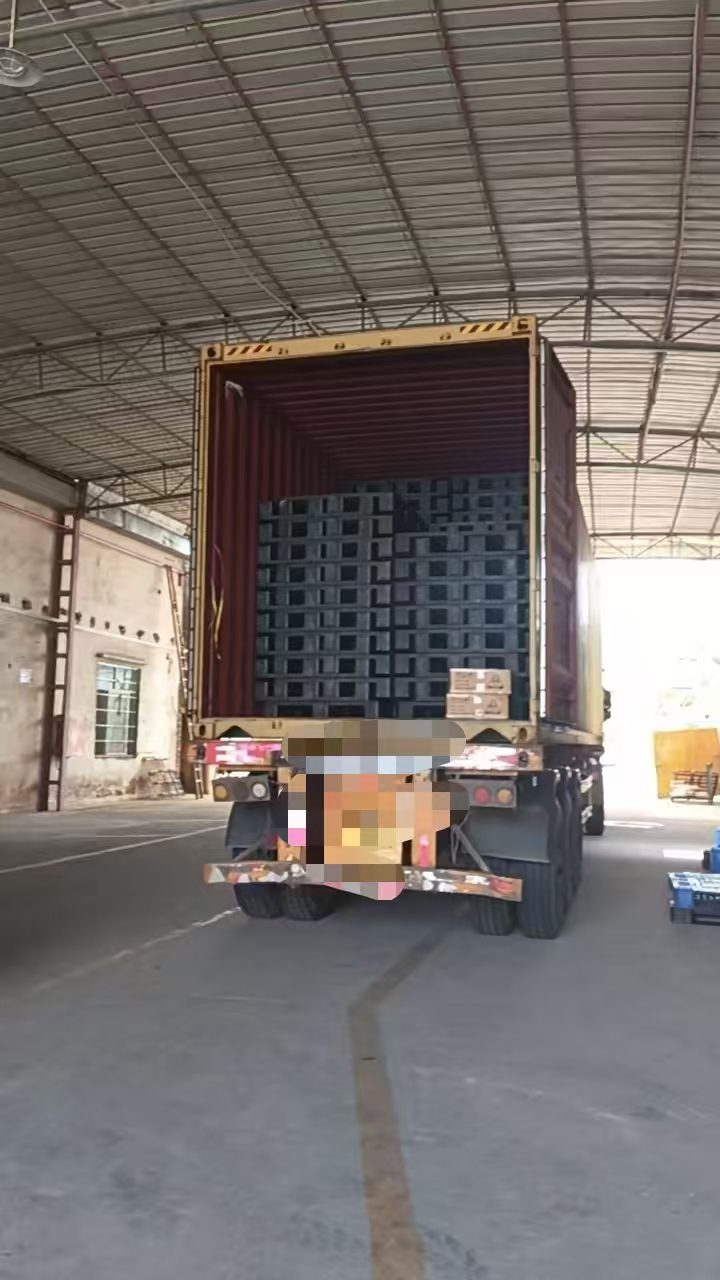
The core trade-off: cost per trip vs trips per pallet
| Factor | One-way export pallet | Reusable HDPE pallet |
|---|---|---|
| Unit price | Low | 2-3× higher |
| Design life | 1-3 trips | 50-100+ trips |
| Typical weight | 4-8 kg | 10-20 kg |
| Racking safe? | No | Often yes (check rating) |
| Storage when empty | Nestable — 3:1 ratio | Stackable — 2:1 ratio |
| Best fit | Open-loop export | Closed loop / pooling |
The math is simple once you know your return rate. At 0% return, one-way wins outright. At 100% return, a reusable pallet breaks even after roughly its third or fourth round trip. Between those poles, count how many pallets physically come back — in most export programs the honest answer is under 20%, which is why one-way dominates container shipping.
Why plastic one-way pallets are replacing wood
Wooden expendable pallets are cheap until the paperwork starts:
- No ISPM-15 — plastic is exempt from heat treatment, fumigation, stamps and border inspection holds. See our material guide for the HDPE/PP choice behind export grades.
- Weight consistency — every plastic pallet weighs the same, so container load plans hold; wood varies 20-30% by moisture.
- No nails, no splinters — goods and handlers both arrive in better condition.
- Moisture and mould proof — relevant for food, pharma and paper goods; wooden pallets are a documented mould vector in long sea transits.
What a good one-way pallet must still survive
“Single trip” does not mean fragile. A sea container journey includes forklift handling at both ends, 20+ days of stacking load, and possibly a cross-dock. Specify:
- Dynamic load ≥ 500 kg for cartonized goods (understand the difference from static load in our load rating guide)
- Four-way forklift entry — two-way pallets slow every touch in the chain
- Nestable or rackable design — nestable saves warehouse space before loading; see the stackable-versus-nesting comparison in our pooling cost model
- Colour coding — many exporters run one-way in grey or black to visually separate expendable stock from returnable fleet
When reusable still wins
Choose reusable heavy-duty pallets when: the loop closes (your own DCs), you rent into a pool, cargo exceeds one-way dynamic ratings, or the pallet itself enters racking — light pallets must never enter warehouse racking, a point we detail in the racking compatibility guide.
Decision checklist
- Do more than 30% of pallets come back? → reusable
- Sea export with no return logistics? → one-way nestable
- Strict quarantine destination (AU/NZ/EU)? → plastic, skip ISPM-15 entirely
- Pallets enter racking at destination? → reusable, rated for racking
- Buying by container load? → standardize one footprint across both classes
LSY Plastic moulds both classes — nestable one-way export pallets and heavy-duty reusable HDPE pallets — in export-grade HDPE, shipped full container. For a cost comparison on your volumes, contact us: WhatsApp +86 19311059570, email fstyx01@lsyplastic.com.