Buyers read a minimum order quantity as a negotiating position: ask for less, expect the supplier to concede. Sometimes they do, and the unit price rises to compensate. Understanding why the number exists turns that conversation from haggling into a discussion about which cost you are actually willing to pay for.
The fixed costs that create an MOQ
| Cost | What it is | Behaviour |
|---|---|---|
| Mould changeover | Pulling one tool, setting the next, aligning, water, clamping | Fixed per run — hours, independent of quantity |
| Material changeover and purge | Clearing the barrel of the previous resin or colour | Fixed per run; larger on big machines |
| Start-up scrap | Shots before the process stabilises: short shots, flash, colour streak | Fixed number of parts, say 30-200 |
| Process qualification | First-piece inspection, dimension check, sign-off | Fixed per run |
| Packing and documentation | Order picking, labelling, export paperwork | Mostly fixed per shipment |
| Freight documentation | Booking, customs documentation, container stuffing | Fixed per shipment |
Add those up and the pattern is obvious: a run of 500 and a run of 50,000 carry roughly the same set-up cost. Spread over 500 units it might be a meaningful percentage of unit price; spread over 50,000 it disappears.

The arithmetic, plainly
Take a simplified case. Fixed set-up costs come to the equivalent of 400 units of margin. On an order of 50,000 that is 0.8% of the run and invisible. On an order of 400 it is 100% of the margin and the job loses money. The supplier’s MOQ is usually set somewhere near the quantity where the fixed cost becomes an acceptable percentage — not where it becomes zero.
Machine size moves the number. Changeover on a 2500T machine takes longer and purges more material than on a 180T machine, so large-part programmes carry higher practical minimums than small parts.
Four ways to lower the quantity without raising the price
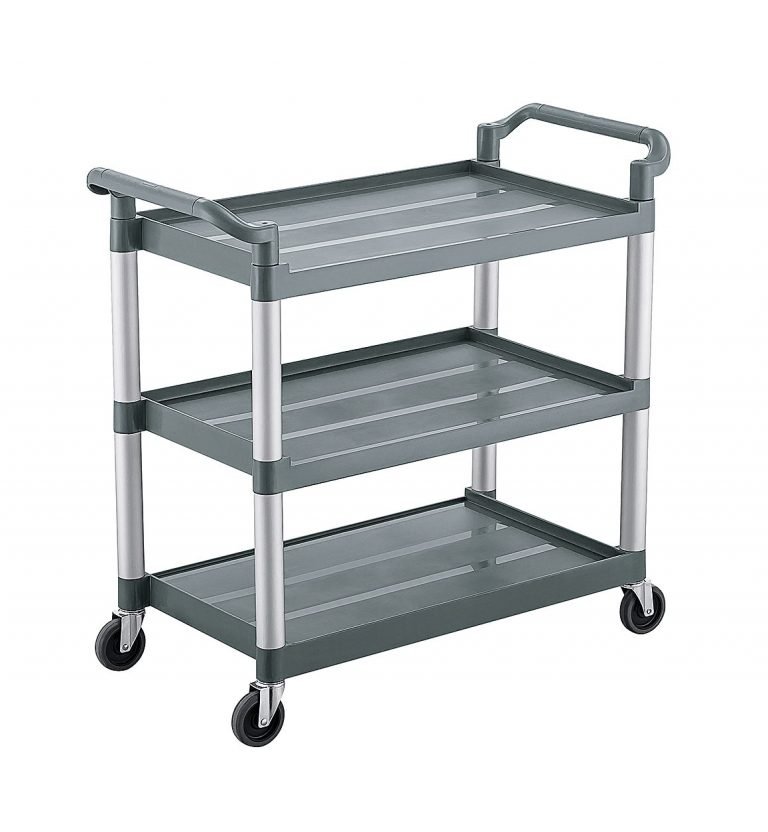
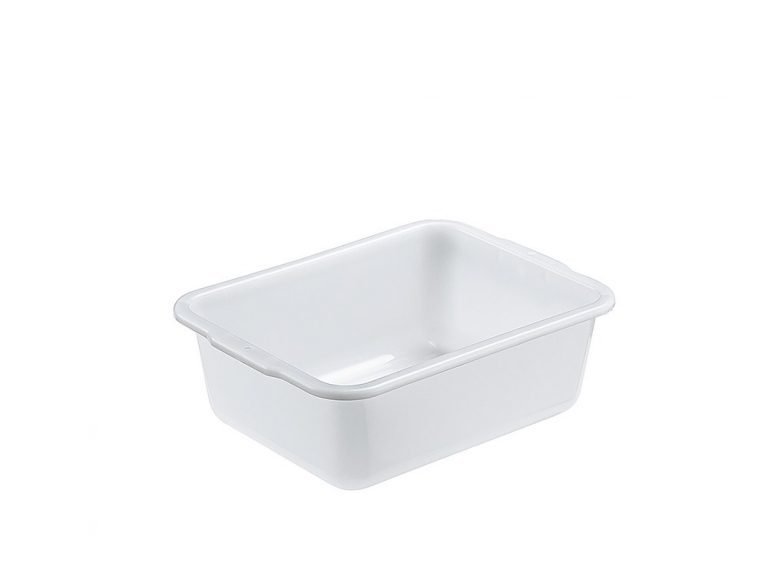
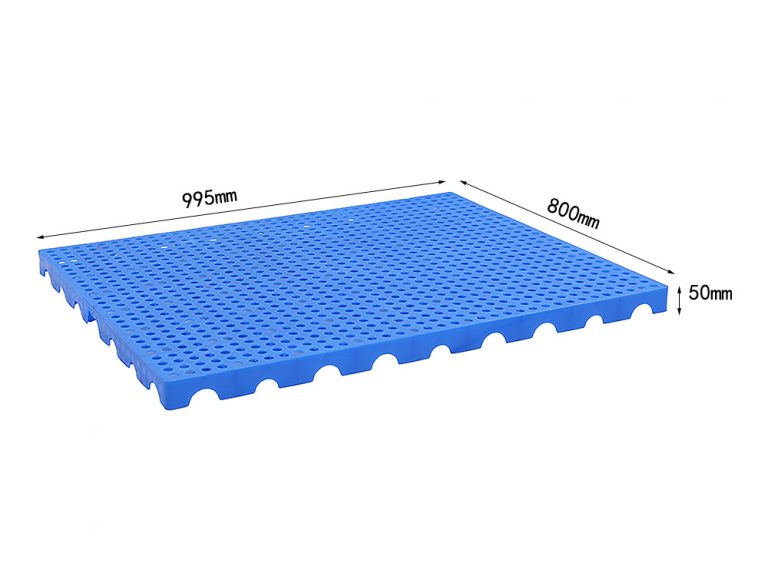
- Use an existing tool. The largest single lever. A standard crate, pallet or bin from existing tooling avoids tooling cost entirely and usually carries a much lower minimum because the tool is already set up routinely.
- Accept a standard colour. Custom colour means a purge and a colour-matching run. Stock colours run in scheduled batches, and joining a scheduled batch costs far less than starting one.
- Consolidate into fewer, larger orders. Two orders of 5,000 carry two set-ups. One of 10,000 carries one.
- Ask about a shared run. If the factory is already moulding that product in that colour, your quantity may be added to a scheduled production slot at little extra cost.

What a genuine factory will tell you
An honest answer names the reason. “The tool is not amortised yet” means a tooling contribution is being recovered per unit — negotiable if you pay the tooling outright. “Colour changeover costs X” means the minimum is about the purge, solvable by taking a stock colour. “The machine is booked in 30,000-shot blocks” means the constraint is scheduling.
What is not a real reason is a round number with no explanation behind it. Ask which cost drives it and you will usually get a specific answer, because the person quoting knows exactly which line item makes small runs uneconomic.
FOSHAN LSY Plastic runs 180T to 2500T machines with in-house tooling. Export orders ship as full container loads; domestic Chinese orders carry no minimum quantity. Samples are charged at cost rather than given away, because a moulded sample consumes the same machine time and material as a production unit.
FAQ
Why can’t I just order 100 units?
You usually can — at a unit price that covers the set-up. Changeover, purge, start-up scrap and inspection cost the same whether the run is 100 or 10,000, so spread over 100 units they dominate the price. The MOQ is the quantity where those fixed costs become a small percentage.
Does MOQ apply to samples?
No. Samples are made outside production minimums, which is why they are charged at cost rather than at production pricing. A moulded sample uses the same machine time and material as a production unit, so it is not free to make.
Will a larger machine mean a higher MOQ?
Generally yes. Changeover and purge on a large machine take longer and waste more material, so the fixed cost per run is higher and the quantity needed to absorb it is larger.
How do I get a lower MOQ without paying more per unit?
Use existing tooling, accept a stock colour, consolidate orders, or ask to be added to a scheduled production run. Each removes a specific fixed cost rather than asking the supplier to absorb it.
Related guides:
Injection Molding Warpage: Causes & How to Control