South African buyers search for plastic bin manufacturers south africa and plastic crate manufacturers south africa for two different reasons. Some want a local moulder for a few hundred units. Some are comparing a container out of Asia against local list prices. This page is for the second case — what the specification has to meet, where the landed cost actually goes, and the checks that separate a real quote from a guess.
Be honest about the comparison first
South Africa has capable domestic moulders, and for small runs or urgent top-ups they will usually win on lead time and freight. Importing makes sense in three situations: your annual volume on one line justifies a meaningful share of a container; you need a size, colour or print run that local stock does not carry; or you want one specification held constant across sites in several countries. If none of those apply, buy local and stop reading.
The other case is re-export. A large share of container volume landed in Durban does not stay in South Africa — it moves on to Botswana, Namibia, Zimbabwe, Zambia and Mozambique. If that is your business, the specification question is different: you care less about local certification and more about stackability, because the goods will be cross-loaded onto trucks and possibly re-handled twice.
Jumbo bins: what South African buyers actually mean
Searches for jumbo plastic bins south africa refer to a size class, not a brand. In South African usage a jumbo bin is a large-capacity lidded storage box — typically from around 50 litres upward, sold for household storage, filing, seasonal clothing and garage use, and in commercial settings for bulk ingredient or linen storage. Three things drive the price at this size:
- Wall and base thickness. At 50 litres and above, a large bin that is thin will bow under load and the lid will stop seating. This is the single most common complaint in the category.
- Lid design. A clip-lid adds material and a second moulding; a loose drop-on lid is cheaper but will not survive being stacked in a truck.
- Clarity. Clear storage boxes south africa is a consistently high-volume search. Clear PP or copolymer lets you see contents but shows scuffing; opaque hides wear. Clarity also constrains the resin you can use, which matters if you want recycled content.
What the specification has to meet
- SABS and municipal tender specifications. Where a tender or a large facilities contract calls for SABS-aligned product, confirm exactly which standard and which clause applies before you order — do not assume a generic “SABS approved” claim covers your use case. For general commercial and industrial resale, SABS certification is usually not mandatory.
- Food contact. Plastic food storage containers south africa is a distinct buying line. Food-contact mouldings should be produced in virgin PP or HDPE with a supplier declaration for the specific resin and application. “Food grade” on a spec sheet is not a declaration.
- UV stabilisation. South African sun is not a rounding factor. Highveld altitude plus strong UV degrades unstabilised polypropylene visibly within a season. Any bin or crate stored or used outdoors needs a UV stabiliser package specified by name, not implied.
- Load deflection, not just load rating. A crate that holds 40 kg on the day it is made may sag permanently after three months in a warm warehouse. Ask for deflection, not just static load.
Product by product
Plastic bins and jumbo bins
Volume, wall thickness, lid type and clarity, in that order of cost impact. Colour-matched bodies across a size range usually carry no premium if you accept standard colours, and colour-coding is standard for waste segregation and for filing systems. For outdoor commercial units see outdoor plastic trash bins 120L and 240L.
Crates and boxes
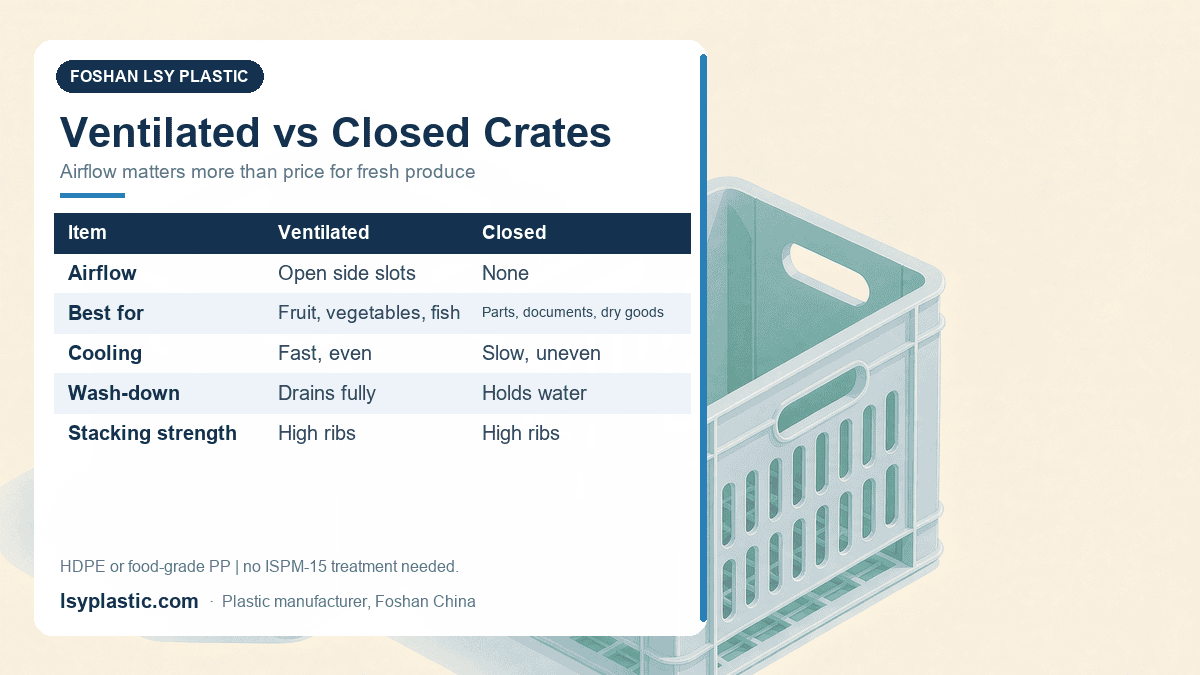
Plastic crate south africa searches split produce from hardware. Vented crates use less resin at the same footprint and suit fruit and vegetables; solid walls suit parts and hardware. Whether they nest, stack or fold determines your freight per piece more than any other single decision — see how to choose industrial plastic crates and containers and collapsible versus rigid crates.
Pallets
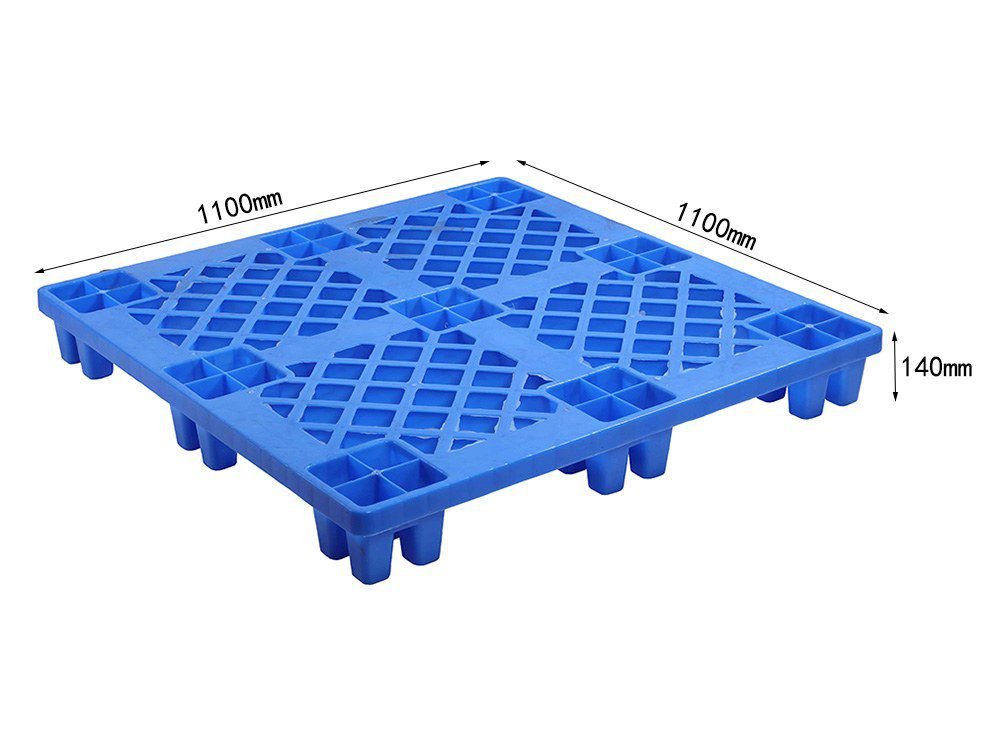
South African warehousing runs largely on the 1200 x 1000 mm footprint, with 1200 x 800 mm common in export-oriented and European-aligned operations. Confirm which one your racking was built around before ordering — the wrong footprint will not sit safely on the beams. Then check whether you need a racking rating at all: a pallet that only ever sits on the floor does not. Full detail: plastic pallet sizes and dimensions and static, dynamic and racking load capacity.
Landed cost: what the invoice does not show
- Incoterm. Confirm whether you are quoted FOB, CFR or CIF. On a full container this is not a rounding difference.
- HS classification and duty. Most plastic transport and packing articles fall in Chapter 39. Your clearing agent should confirm the exact tariff heading, because duty and any applicable anti-dumping provisions are assessed against it.
- VAT. Import VAT applies on the customs value and is recoverable for registered vendors, but it is cash flow you need to fund up front.
- Port and inland. Durban handles the bulk of container volume serving Gauteng, with Cape Town, Ngqura and Richards Bay serving their regions. Durban congestion is a recurring operational problem — build slack into your lead time rather than assuming published transit times.
- Currency. The rand moves. If your selling price is in rand and your purchase is in dollars, a quote valid for 30 days is a different proposition from one valid for 7. Ask which you have.
Comparing two quotes
- Get the shot weight in grams from every supplier. Two bins with identical external dimensions can differ by 40% in weight, and that difference is most of the price gap.
- Get pieces per 40HQ. A lower unit price that ships fewer pieces is not cheaper landed.
- Get the resin grade named, plus whether UV stabiliser is included.
- Get the lid and hinge cycle rating on anything with a moving part.
- Get the same Incoterm and the same validity period from all suppliers.
FAQ
What is a jumbo bin in South African terms?
A large-capacity lidded storage box, generally from about 50 litres upward, used for household storage, filing, seasonal clothing and commercial bulk storage. It is a size class in common local usage, not a specific product or brand.
Do I need SABS certification to import plastic bins?
For general commercial and industrial resale, usually not. Where a municipal tender, a facilities contract or a specific product category calls for SABS alignment, confirm the exact standard and clause before ordering rather than relying on a generic claim.
Which port should I clear through?
Durban for Gauteng and the interior, Cape Town for the Western Cape, Ngqura or Port Elizabeth for the Eastern Cape, Richards Bay for KwaZulu-Natal north. Ask your clearing agent which has the shortest inland leg to your warehouse — that usually decides it more than port fees do.
Why does UV stabiliser matter more here?
High altitude and high UV load degrade unstabilised polypropylene quickly and visibly. Any product stored or used outdoors needs the stabiliser package specified by name in the order, not assumed.
Ordering notes
- Export orders ship full container load (FCL). We do not split containers for export.
- Samples are charged at cost and credited against a confirmed order. For a jumbo bin the sample is the cheapest way to verify wall thickness and lid fit before you commit to a container.
- Standard sizes are already tooled. A genuinely new dimension carries a tooling charge and a longer first lead time.
Importing to other markets
The same product families ship to these markets. Freight, clearance and specification notes differ by destination:
- Plastic crates and hotel trolleys for Kenya
- Waste bins and crates for Nigeria and Ghana
- Plastic pallets and crates for Australia
- Ghana — 240L and 120L waste bin prices, UV-stable resin and Tema port clearance.