Distributors who stack cartons, bottles or bagged goods on a pallet usually separate each layer with a sheet of corrugated board. It is cheap, it is everywhere, and it is one-trip: it sags under the second shift, wicks moisture in a cold room, sheds fibre into food loads and goes to waste at the far end. A plastic layer pad replaces that sheet with a moulded HDPE or PP board that survives hundreds of trips, washes down between loads and comes back for regrind at end of life. Our moulded layer pad guide covers the full range; this article is about what changes when the pad works inside a palletised unit load.
What the pad does inside a pallet load
Between layers of a stacked load the pad has three jobs. It spreads the weight of the upper layer so no carton column punches through the one below. It stops layers from sliding against each other under braking and cornering. And it keeps air moving through the load, which matters for chilled and bagged goods. Corrugated fails all three over time: it compacts, its smooth face lets layers creep, and once damp it loses what little stiffness it had. Moulded pads with feet or ribs keep the gaps open, which is why chilled distribution switched years ago.
Pick the deck surface for the load, not the catalogue
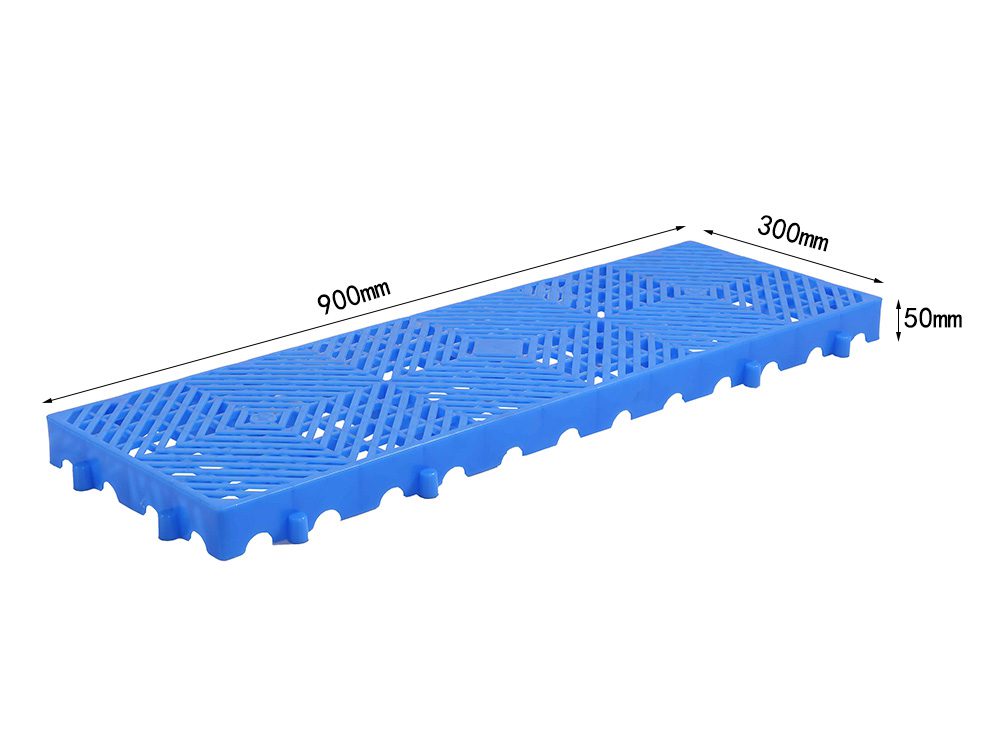
Perforated decks suit layers of bagged or boxed goods that need to breathe — cold rooms and chilled storage in particular. Slatted decks drain and ventilate the most freely and weigh less for the same footprint, which suits wet processing areas, washing stations and anywhere the pad itself gets hosed down. Thickness follows the same logic: 30 mm pads suit light layers where separation and airflow are the point; 50 mm pads give the rigidity and clearance you need when a pallet truck or fork has to pick up the pad itself. Mixed loads follow the same rule we use for stacking crates on pallets — match the deck to the heaviest environment the pad will see, not the average one.
Match the footprint to the layer
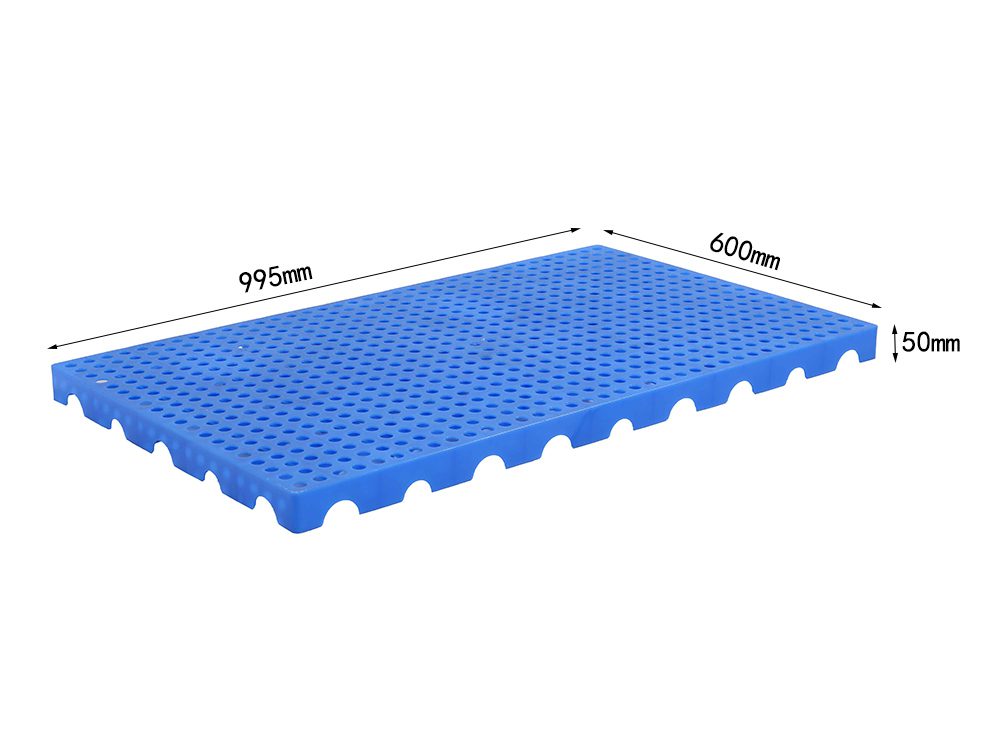
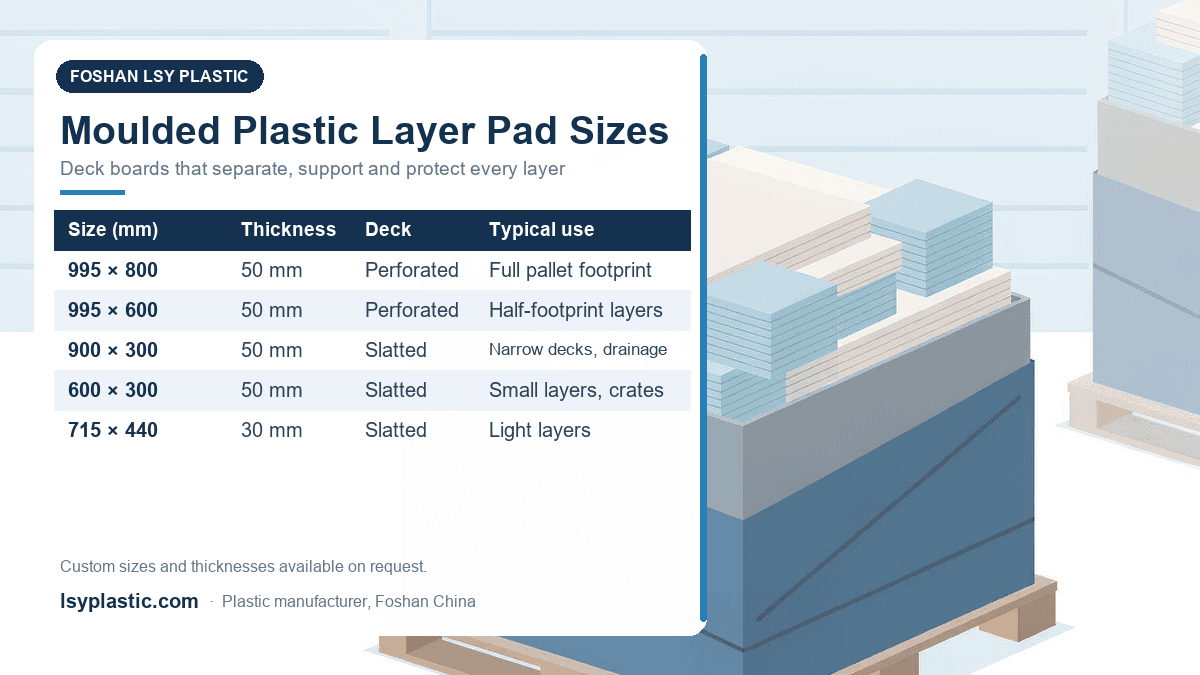
The pad is sized to the layer of goods, not to the pallet deck: it should cover what the layer carries and stay inside the deck so nothing catches a fork tip. Our current moulded range covers 995 × 800 × 50 mm and 995 × 600 × 50 mm perforated decks, plus 900 × 300 × 50 mm, 600 × 300 × 50 mm and 715 × 440 × 30 mm slatted decks. The 995 × 600 is a half-footprint pad for shelving and split loads; the 900 × 300 and 600 × 300 boards work as small layers for crates and trays. Non-standard footprints are tooled to order — send the drawing, the weight per layer and the environment, and the material grade is confirmed rather than guessed.
Cost per trip, not cost per sheet
Corrugated wins the invoice and loses the ledger. It is bought every trip, disposed at the far end, and its failures are charged back as crushed bottom layers and rejected food loads. A moulded pad is bought once, washed — HDPE and PP absorb no water, so pads are hosed down and back in service the same shift — and reused for hundreds of cycles. At end of life it is closed-loop recyclable: worn pads are reground and returned to production. For beverage and poultry crates the same arithmetic is set out in our beverage crate layer pad specs guide; the pallet-load case differs only in pad size, not in the payback logic.
Four lines for the RFQ
- Pad footprint and thickness, and whether a fork or pallet truck picks up the pad itself.
- Load per layer and total stack height, so rigidity is sized against real weight.
- Environment: cold store, steam cleaning or food contact narrow the material and deck options — raise them before tooling.
- Colour for line identification, and any logo embossing.
Samples are supplied at cost price so the deck pattern, thickness and rigidity can be tested against your own load first. Orders inside China carry no minimum quantity and ship by courier or domestic freight; export orders move as full container loads.
FAQ
Can I test a plastic layer pad before ordering a full batch?
Yes. Samples are supplied at cost price rather than free, so you can check the deck pattern, thickness and rigidity against your own load before committing.
What is the minimum order and how is shipping handled?
Orders within China have no minimum order quantity and ship by courier or domestic freight. Export orders ship as full container loads (FCL), which keeps unit freight cost predictable.
Do you make layer pads in sizes other than the standard five?
Yes. Custom footprints, deck patterns, thicknesses and colours are produced on our own tooling. Send the pad size, the weight it must carry and the working environment for a recommendation and lead time.