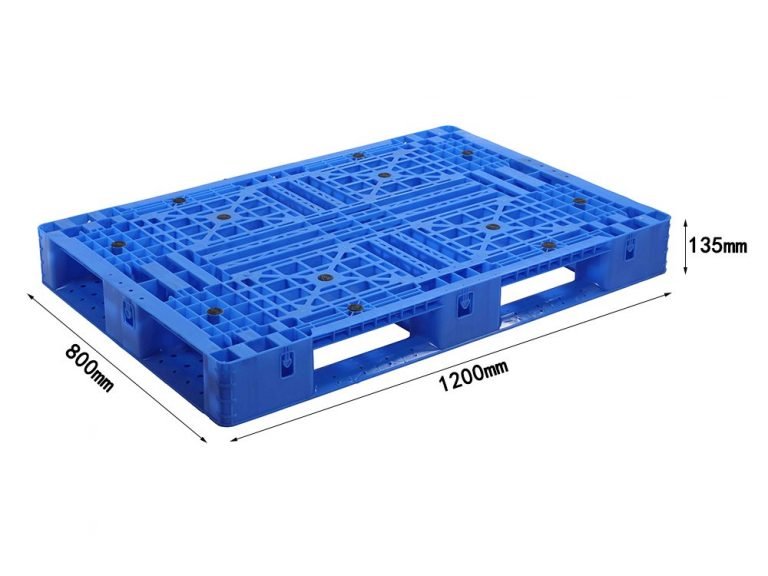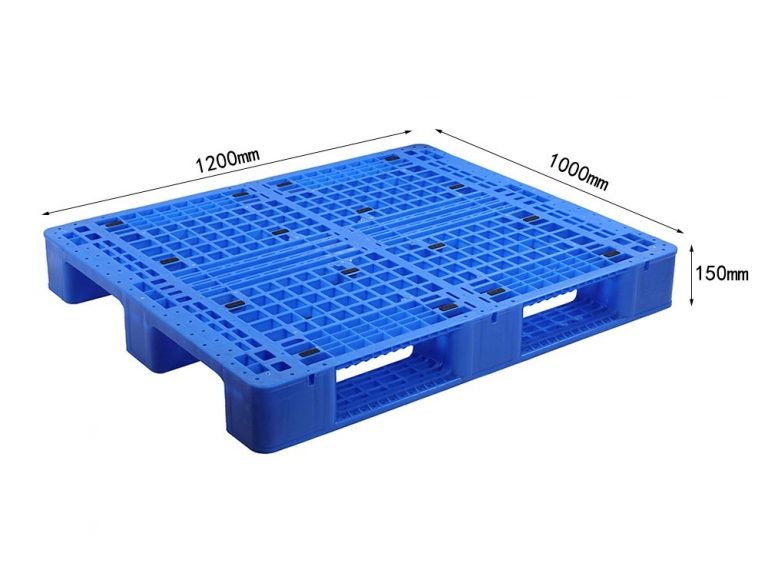
Custom color matching on injection-moulded crates and bins is a masterbatch process: a colour concentrate is dosed into resin at roughly 2–4% by weight, moulded against a physical standard that you approve, and checked on a spectrophotometer against an agreed Delta E tolerance. The three constraints that decide whether your colour is practical are batch size (most factories need 200–500 kg of resin, or about 500–1,000 crates, per colour), the base colour of the resin, and wall thickness — the same masterbatch reads noticeably lighter on a 2 mm wall than on a 4 mm wall.
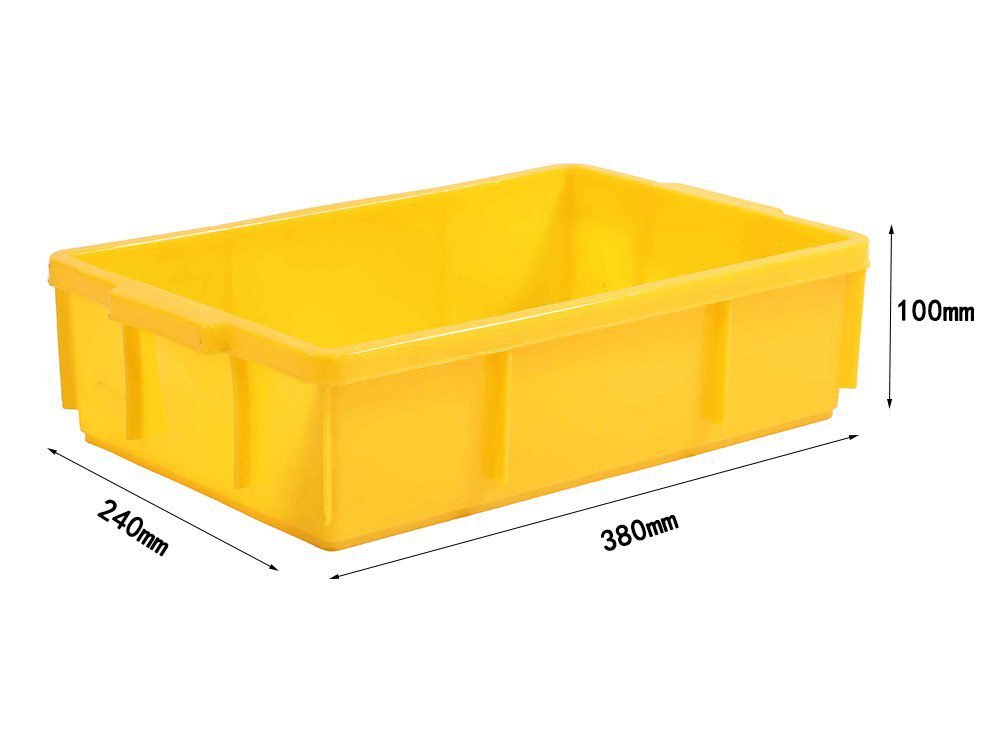
This guide covers what to send a factory so the first shot is close, how to put a colour tolerance into your purchase order, and where the cost steps up — written for importers, distributors and 5S programme owners buying crates, turnover boxes, food storage bins or pallets.
Why buyers ask for custom colour at all
Colour is rarely cosmetic. Four reasons come up repeatedly:
- Brand recognition. Crates travel to customer warehouses; a consistent colour makes them identifiable in a mixed pool.
- Segregation and 5S. Coloured crates separate allergens, raw material from finished goods, or one customer’s returnable stock from another’s — the same logic behind colour-coded plastic crates in warehouse 5S.
- Retailer and 3PL compliance. Some grocery and e-commerce contracts specify colour per product category or client account, following colour-coded crate systems for food safety.
- Batch replacement. New crates must match stock already in circulation, not introduce a second shade.
When standard colours are the better commercial choice
If colour is only aesthetic, standard blue, grey, black, red, yellow, green or white is cheaper and ships from stock. Custom colour adds setup cost, a batch minimum and 7–15 days for development and approval. Buyers needing 200 crates once a year should stay standard; anyone running a colour-coded fleet should specify custom on the first order, because retro-fitting colour across an existing pool costs far more.
The two ways colour gets into a moulded part
Masterbatch dosing
Masterbatch is a pellet concentrate of pigment dispersed in a carrier resin, metered into the hopper at a set percentage and melted with the base resin. It suits crates, bins and pallets because one base resin covers many colours, and the factory can change shade between runs without cleaning out a compounder.
The trade-off is dispersion quality: poor mixing shows up as streaks or darker flow lines near the gate, which is why colour trials should run on the actual mould and machine rather than on a test plaque.
Pre-compounded resin
For tight tolerances or small parts the pigment is compounded into the resin at the pellet stage. Compounding gives better dispersion and repeatability, but each colour becomes a dedicated material purchase with its own minimum — usually 500 kg to 1 tonne. Crates and bins rarely justify it; cup trays and thin-wall parts sometimes do.
Matching to Pantone, RAL or your own sample
A colour code alone is a weak brief. Pantone is a print and coating reference, not a plastic reference, and the same Pantone number moulded in HDPE, PP and ABS gives three different results. Pantone does publish plastic chip standards (Pantone Plastics), which are closer, but the only reliable standard is a physical part in the correct material.
What to send the factory
- A physical sample of the target colour — ideally an existing part in the same resin family, or a Pantone Plastics chip.
- The reference code as a cross-check (Pantone, RAL, or your internal code).
- The resin you intend to use, and whether regrind is allowed in the part.
- Where the colour will be judged: natural daylight, warehouse lighting, or under a customer’s inspection lamp.
- The acceptable tolerance, expressed as Delta E and as a visual limit (“no visible difference to the approved sample under D65”).
Delta E: what “close enough” means
Delta E (ΔE) is the numerical distance between two colours measured by a spectrophotometer. It is the only practical way to put a number in a purchase order.
| Delta E (ΔE*ab) | What it looks like | Typical use |
|---|---|---|
| Under 1.0 | Not distinguishable to the eye | Parts assembled side by side, brand-critical surfaces |
| 1.0 – 2.0 | Very close; visible only in direct comparison | Most custom crate and bin programmes |
| 2.0 – 3.0 | Noticeable to a trained eye, acceptable in isolation | Industrial crates, pallets, non-cosmetic parts |
| Over 3.0 | Clearly a different shade | Reject for any colour-coded system |
Two cautions. ΔE is only meaningful when both readings use the same instrument, geometry and light source — a supplier reading under D65 and a buyer under office fluorescents will never agree. And ΔE does not capture metamerism: two samples can measure identical and still look different under a different lamp.
Five variables that shift the final colour
- Base resin tint. Natural HDPE is slightly translucent and yellowish; black resin is opaque. The same 2% masterbatch on natural and on black gives two different results, and translucent parts look lighter than solid ones.
- Wall thickness. Thicker sections hold more pigment per unit area and read darker and more saturated. A crate with 2.5 mm walls and 6 mm ribs will show both tones on the same part.
- Surface texture. A textured or matte surface scatters light and reads lighter and less glossy than a polished surface. Changing texture mid-project invalidates the approved sample.
- UV stabiliser package. Outdoor bins and pallets need UV stabilisers, and some UV additives shift shade slightly or yellow over time. Specify the UV requirement before the colour trial, not after.
- Regrind ratio. Regrind from coloured scrap is usually darker and less uniform. If the factory runs 10–20% regrind, the colour must be approved with that ratio in the mix.
MOQ and cost per colour
Colour has a fixed cost (masterbatch purchase, dosing setup, trial shots, approval time) and a variable cost (the dosing percentage). The fixed part is what drives the minimum order.
| Production batch per colour | What is realistic | Cost effect |
|---|---|---|
| Under 200 kg resin | Usually not viable; factory will offer the nearest standard colour | — |
| 200 – 500 kg | Possible for small parts; masterbatch may be bought in a small lot at a premium | Highest per-unit colour premium |
| 500 kg – 2 t | Normal custom colour run; one trial round included | Moderate premium |
| Over 2 t, repeat orders | Masterbatch bought in bulk and held for you | Premium close to standard colour |
Approval workflow: five steps
- Brief. Send the physical standard, resin, regrind policy, UV requirement and Delta E tolerance in writing.
- Lab match. The factory prepares a colour plaque or a shot from a similar mould and sends a photo plus the measured reading. Photos are indicative only.
- Physical sample. Couriers a moulded sample from the actual mould. Approve or correct this part, not a photo.
- Signed golden sample. Keep one approved part at the factory and one at your office. Both are the reference for every future run.
- First-article check on the production run. The first carton of the bulk order is measured against the golden sample before the rest ships.
Keeping colour consistent on repeat orders
Colour drift is normal and manageable. Three habits prevent most disputes: hold a golden sample at both ends, record the masterbatch supplier and dosing percentage on the specification, and re-measure the first article of every repeat run. Consolidating from seven shades to three also increases batch size per colour, which lowers the premium.
Frequently Asked Questions
Can I get a custom colour on a first order of 300 crates?
Often yes, if 300 pieces represent 200–500 kg of resin, the batch size most factories need to justify a masterbatch order. Lightweight bins may not reach that minimum, so expect either the nearest standard colour or a premium for a small masterbatch lot.
Is Pantone enough to specify a plastic colour?
Not on its own. Pantone is a print reference; the same code in different resins gives different results. Use Pantone Plastics chips, or better a physical part in the correct resin as the master standard, and write the acceptable Delta E into the order.
Why did my second order arrive a slightly different shade?
Usual causes are a different masterbatch lot, a change in base resin tint, a different regrind ratio, or a different mould temperature. All four are controllable if they are written into the specification and checked on the first article of each run.
Does custom colour affect the strength of a crate?
Pigment loading has little effect at normal dosing levels. Problems come from excessive filler in cheap masterbatch or a high regrind ratio, both of which cut impact strength and shorten service life. Ask for the carrier type and regrind percentage in writing before the trial.
Can you match a colour from a photograph?
No. Camera white balance, screen calibration and lighting all shift the shade, so a photo cannot settle a colour claim. Send a physical part or a Pantone Plastics chip, and use photos only to agree the general direction before the sample is couriered.
Talk to the factory about your colour programme
LSY Plastic injection moulds crates across our turnover box series, plus food storage bins, pallets and hotel service products, at our Foshan plant with in-house mould making and colour trials run on production tooling. Send us your target colour with a physical sample, your annual quantity per colour, and the resin you need — we will confirm batch feasibility, Delta E tolerance and lead time before you commit. Our MOQ, sample and FCL shipping policy covers minimums and how overseas orders ship.
WhatsApp: +86 19311059570 · Email: fstyx01@lsyplastic.com