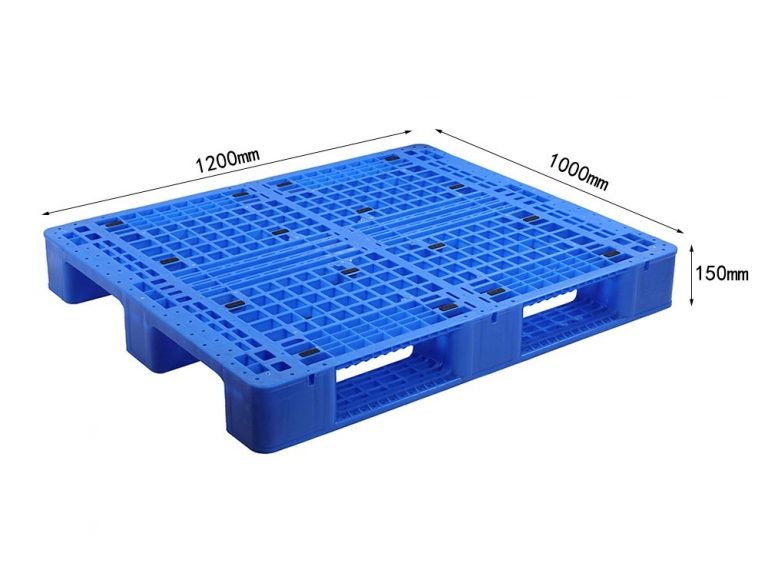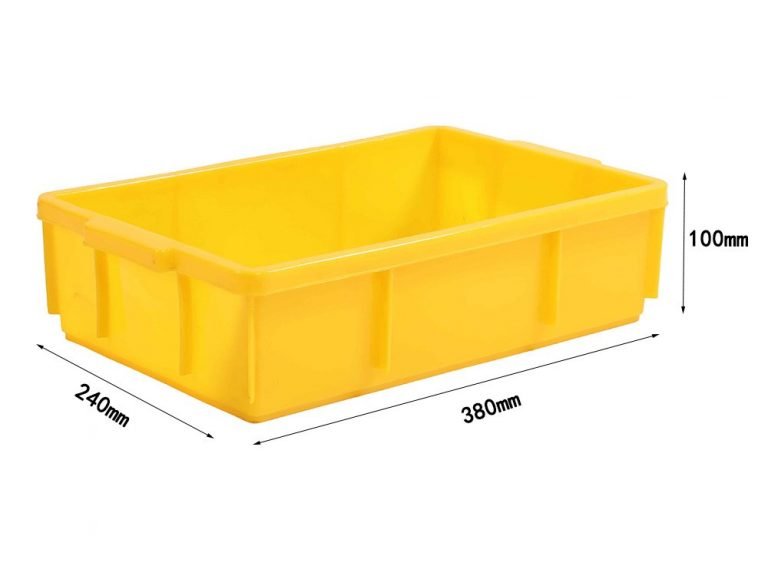
A usable plastic pallet specification has nine lines: size and tolerance, entry type, static, dynamic and racking load ratings, material and grade, target weight, colour, deck and surface type, marking, and documentation with packing. Leave any of them out and every supplier quotes a different product at a different price — so you cannot compare the offers, and the cheapest one usually wins by being lighter, thinner or made from regrind.
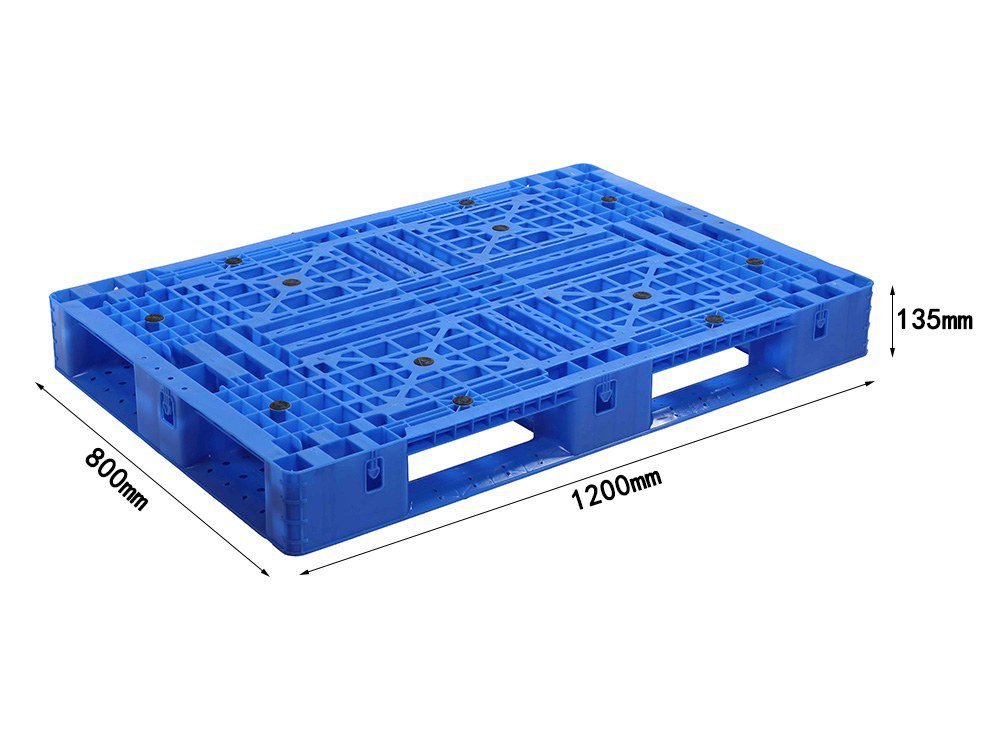
This guide gives the nine lines with worked examples, explains how to write load ratings that suppliers cannot quietly interpret in their favour, and ends with a template you can paste into an email today.
Why a one-line RFQ produces unusable quotes
“Please quote 1,200 × 1,000 mm plastic pallet, quantity 500.” Three suppliers reply with three different pallets: one 8 kg nestable, one 14 kg rackable with steel reinforcement, one 11 kg with a three-runner base. Prices differ by 40% and none of them is wrong, because the brief did not say what the pallet has to do. The buyer then picks on price and discovers at the first racking audit that the pallet deflects beyond the beam span.
Ambiguity is expensive in both directions. Over-specifying costs money on every unit for years; under-specifying costs a rejected container. The nine lines below resolve almost all of it.
The nine specification lines
If the footprint is still open, settle it first with this guide to standard pallet sizes and their uses. Once the size is fixed, the table below is the working version we use in quotations.
| # | Field | Example entry | Why it matters |
|---|---|---|---|
| 1 | Size and tolerance | 1,200 × 1,000 mm, ±3 mm | Determines rack beam fit and container loading; tolerance decides whether it jams in automated conveyors |
| 2 | Entry type | 4-way entry, 2-way usable by pallet truck | Wrong entry blocks your forklift or hand truck entirely |
| 3 | Load ratings | Static 4,000 kg / dynamic 1,500 kg / racking 1,000 kg | Three different numbers; quoting only one is the most common error |
| 4 | Material and grade | Virgin HDPE, MFI 5–8, UV stabilised | HDPE vs PP, virgin vs regrind changes strength, temperature range and price |
| 5 | Target weight | 14 kg ± 0.4 kg | Weight is the easiest proxy for material content — a 10 kg “equivalent” is a different pallet |
| 6 | Colour | Blue, or custom Pantone with ΔE ≤ 2 | Affects batch minimum and price; custom colour needs a physical standard |
| 7 | Deck and surface | Closed deck, smooth top, 5 mm lip | Open vs closed deck changes spill containment, weight and cleanability |
| 8 | Marking | Moulded-in logo, 60 mm, on the underside of the top deck | Moulded-in marking usually needs a mould insert and a minimum order |
| 9 | Documentation and packing | Load test report, material declaration, pallets per 40HQ | Decides whether the goods clear customs and whether freight was costed correctly |
Load ratings: how to state them so quotes are comparable
Plastic pallets carry three independent static, dynamic and racking load ratings, and a supplier who quotes one number is telling you nothing usable.
Static, dynamic and racking
- Static load: the load a pallet carries when it sits on the floor, including the weight of pallets stacked on top. Highest number.
- Dynamic load: the load it carries while being moved by forklift or pallet truck, including acceleration and braking forces. Typically 30–40% of static.
- Racking load: the load it carries spanning two beams with nothing underneath. Lowest number, because the pallet is unsupported in the middle and creeps over time.
Adding the test basis and safety factor
State the standard and the duration. ISO 8611 is the recognised test method for pallets, and a racking rating without a time basis is not a rating at all — a pallet that survives an hour at 1,000 kg may deflect unacceptably after a month. Ask for the deflection limit and the period used, and for the temperature at which the test was run: HDPE loses stiffness above about 40 °C, so a rating measured at 20 °C is optimistic in a hot warehouse.
Material and grade clauses
Four words cover most of the risk: virgin, grade, MFI, UV.
- Virgin or recycled: say which, and if recycled, the type and percentage. “Recycled” alone defaults to factory regrind.
- Resin grade and MFI: melt flow index affects impact strength and moulding behaviour. A wide MFI band lets the factory substitute a cheaper grade.
- UV stabilisation: required for any outdoor or yard use; without it, HDPE chalk and crack within two summers.
- Food contact: if the pallet or its deck touches food, the material must be declared food-grade, and recycled content becomes a compliance question rather than a cost question.
Entry type and handling equipment
Entry type is where specifications silently fail. A 4-way entry pallet can be lifted from all four sides; a 2-way pallet only from two. If your operation uses a wide pallet truck, a hand pallet truck and a reach truck, list all three and the fork dimensions — including fork width and spread — and ask the supplier to confirm compatibility in writing. Also state whether the pallet will be used on conveyors, because roller and chain conveyors need a specific bottom board pattern that a standard pallet does not have.
Marking, branding and colour
Moulded-in logos are the most durable and the least flexible: they require a mould insert, typically add a one-off tooling charge, and cannot be changed without another insert. Silk-screen or hot-stamp marking is cheaper and changeable but wears off in harsh cleaning cycles. Specify the position, size and method, and ask whether the marking sits on a wear surface. Colour follows the same logic as marking: standard colours ship from stock, custom colours carry a batch minimum and 7–15 days of approval time.
Documentation and packing
Ask for four documents with the quotation, not with the shipment: a dimensional drawing, a load test report stating the test standard, a material declaration, and a loading plan showing pallets per 20ft and 40HQ container. The loading plan matters commercially — nesting ratio and stack height can change the freight cost per pallet by 30% or more, and it is far easier to negotiate before you place the order.
A copy-paste RFQ template
- Product: plastic pallet, [size] mm ± [tolerance], [entry type] entry.
- Loads: static [x] kg, dynamic [x] kg, racking [x] kg over [period], tested to ISO 8611.
- Material: [virgin/recycled type] [HDPE/PP], MFI [range], [UV requirement], [food-contact requirement].
- Weight: target [x] kg, acceptable range ±[x] kg.
- Colour: [standard colour / Pantone code with ΔE tolerance], physical standard supplied.
- Deck: [open/closed], [surface finish], [lip or perimeter detail].
- Marking: [method], [size], [position], logo artwork attached.
- Quantity and shipping: [x] pcs per [period], FCL to [port], loading plan requested.
- Documents: drawing, load test report, material declaration, packing list.
- Commercial: sample at cost, tooling charges itemised, quote validity, lead time.
Evaluating the quotes you get back
When offers arrive, normalise them before comparing. Check weight against your target, check that all three load ratings are present, check the material declaration, and calculate landed cost per pallet including the loading plan — not price per unit. A pallet that is 2 kg lighter but loads 20% fewer units per container is usually the more expensive choice.
Frequently Asked Questions
What is the most commonly missed item in a pallet RFQ?
The racking load rating. Buyers state static or dynamic capacity because it is the number on the marketing sheet, then discover during a racking audit that the pallet was never rated for unsupported beam spans. Always ask for all three ratings plus the test standard.
Should I specify weight or load capacity?
Both. Load capacity is what the pallet must do; weight is the quickest way to detect a supplier who plans to use less material. Give a target weight with a tolerance, and treat a significantly lighter offer as a question to ask rather than a saving to bank.
Can one pallet size serve both racking and floor stacking?
Yes, if it is rated for both and you accept the cost of a heavier pallet. A rackable design with reinforcement generally weighs more and costs more than a pure stack-only pallet, so mixed operations often run two SKUs rather than over-specifying every pallet.
How long does a custom moulded-in logo take?
Allow 2–4 weeks for insert manufacture and first-article approval on top of normal production lead time. If you need branding quickly, specify a printed or applied label on the first order and move to a moulded insert on the repeat.
Do I need a sample before placing a container order?
Yes, for any new mould, colour or load rating. Samples are charged at cost rather than supplied free, and testing one pallet at your own facility — the load, the fork entry, the rack span — removes most of the risk from a first full-container order.
Send the specification, get a comparable quote
LSY Plastic moulds HDPE and PP pallets, ESD pallets, crates and hotel service products at our Foshan factory, with in-house mould making for custom sizes and moulded-in branding. Send the nine lines above and we will reply with a drawing, load data and a loading plan — so the comparison is like for like. Background on ratings and sizes sits in our plastic pallet FAQ, and order minimums are set out in the MOQ and FCL shipping policy.
WhatsApp: +86 19311059570 · Email: fstyx01@lsyplastic.com