A vertical lift module (VLM) stores trays in a tall cabinet and delivers each one to an access window with a lifting carriage. For electronics factories it is the densest way to hold high-value stock — bare boards, populated assemblies, finished units waiting for test. But a VLM also multiplies ESD exposure: every tray slides against guides on every retrieve, thousands of cycles a month, and one wrong material turns the whole machine into a tribocharging device. This guide covers the four specs that decide whether a tray is safe to run inside a VLM, based on the conductive and dissipative container range made by FOSHAN LSY Plastic, a 35-year injection moulding source in Foshan, China.
1. Match the resistance class to what rides on the tray
The first spec is surface resistance, and the split is the same one that governs every ESD tray choice. Conductive trays (10³–10⁵ Ω) bleed charge fastest and suit bare boards moving into wave solder or reflow. Static-dissipative trays (10⁶–10⁹ Ω) discharge slowly and are the safer class for populated assemblies and finished units, because they do not dump stored charge into sensitive components. If a VLM mixes bare and populated stock, run dissipative trays throughout and use conductive totes only at the process interface. The full class map is in our ESD containers guide.
2. Footprint discipline: stick to standard modules
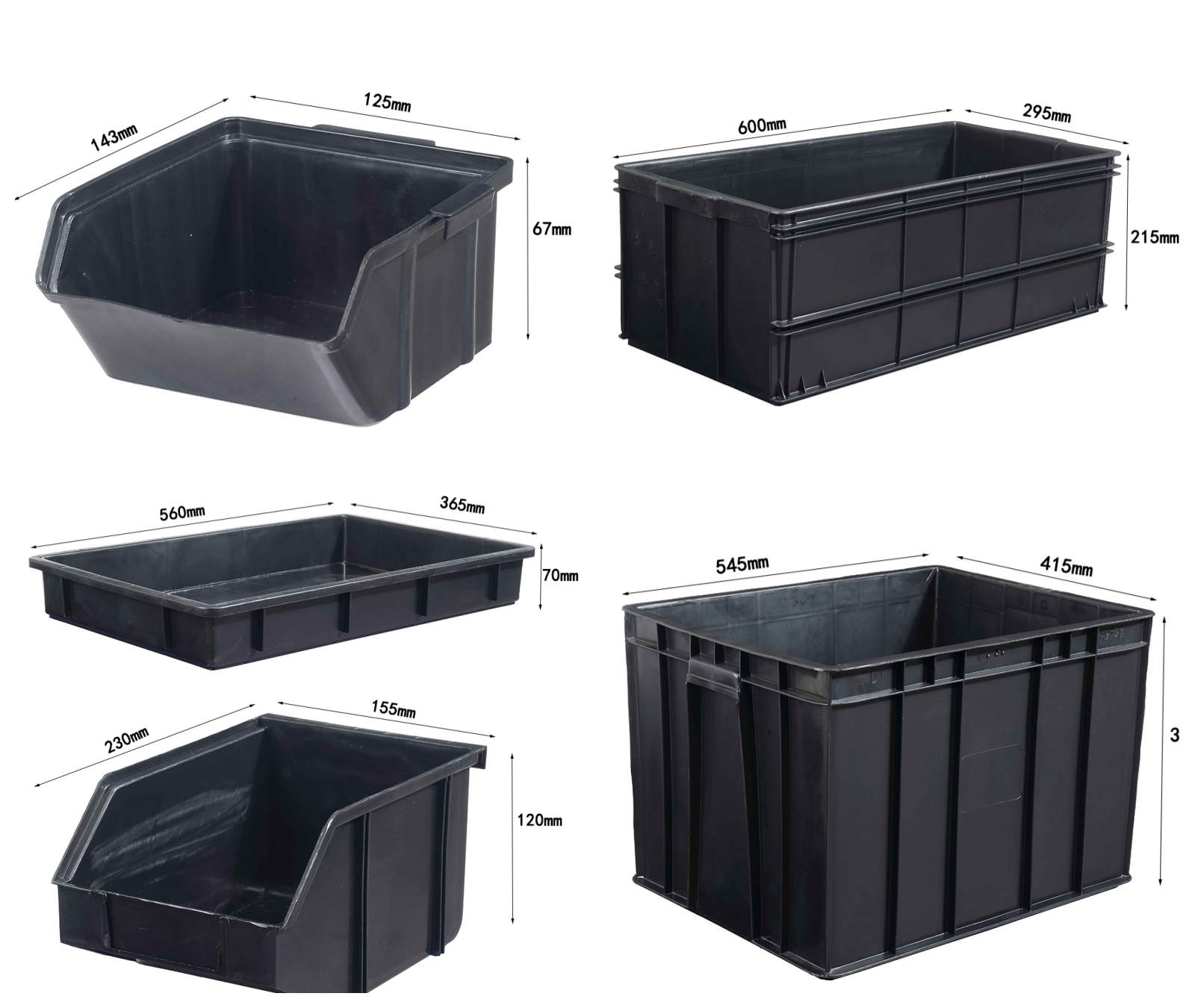
VLM trays are purchased to the machine; the plastic parts that ride on them are not. Standardising on Euro footprints keeps parts interchangeable between the VLM, shelf racks and pallet staging. The common modules are 400 x 300 mm and 600 x 400 mm, with 300 x 200 mm for small components. LSY’s EU-series containers cover exactly these footprints in eight models (EU2311 through EU4633), and they sit square on standard 1200 x 800 and 1200 x 1000 pallets for outbound handling. One footprint across three storage zones means no re-traying between the VLM and the packing line.
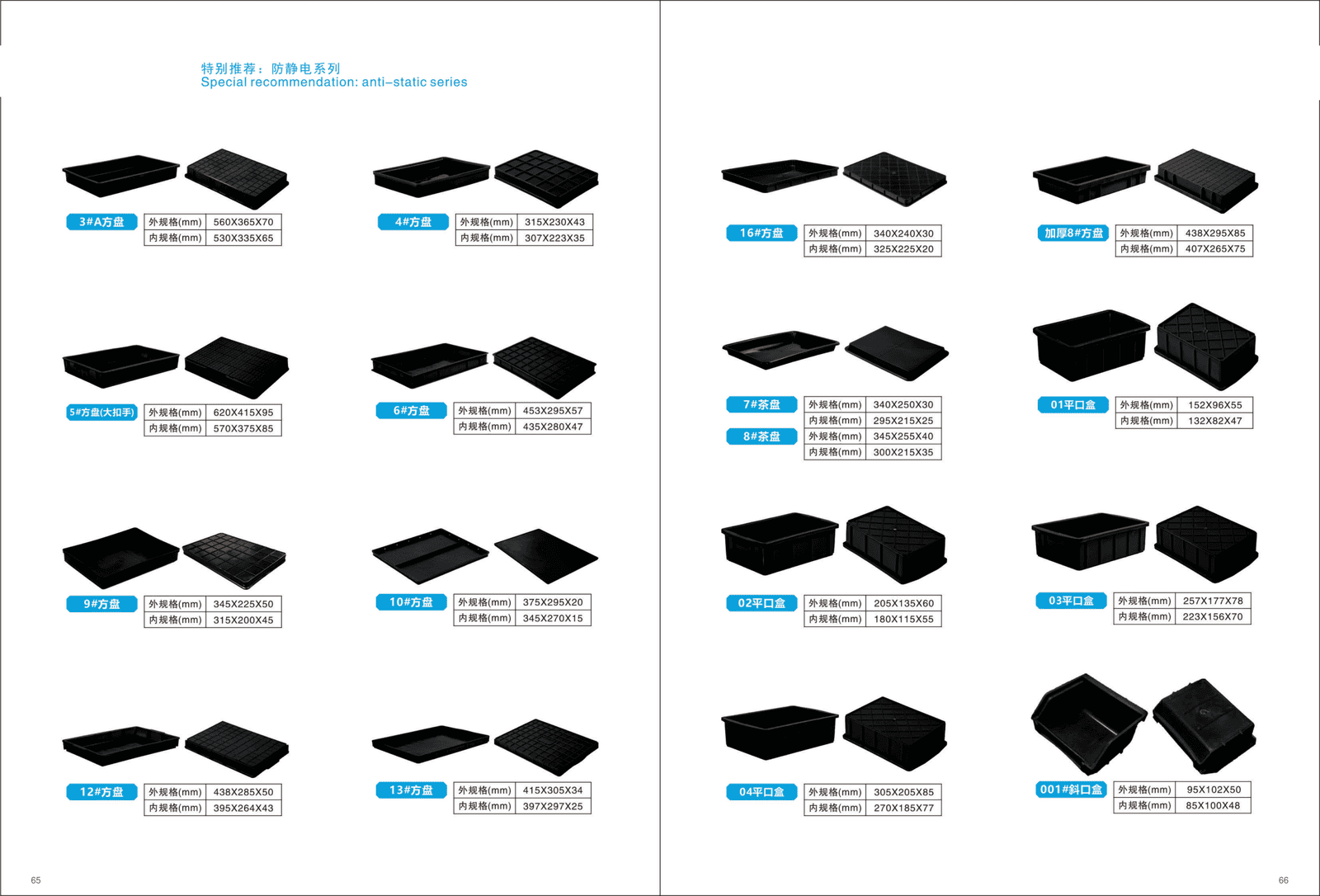
3. Moulded, not coated
Coated (topical) trays lose their surface treatment with washing and sliding — precisely the two things a VLM does thousands of times. Specify injection-moulded conductive or dissipative PP, where the anti-static property is in the material itself, not a film on it. LSY moulds its ESD parts from conductive PP compound in the 10⁴–10⁶ Ω range with the agent distributed through the wall section, so the resistance reading survives wash-downs and years of VLM cycling. Insist on a per-batch resistance report rather than a one-time sample certificate.
4. Dividers and load discipline inside the tray
Inside the VLM, trays are retrieved one at a time, so the unit of handling is the tray, not the shelf. That changes how parts should be packed:
- Dividers: moulded divider sets keep reels, trays of ICs and finished boards from sliding into each other — the main source of triboelectric charge in dense storage.
- Stackability: pick containers with stacking feet so a retrieved tray can be docked on a workbench shelf without a second rack.
- Load: check the VLM manufacturer’s per-tray payload and keep the plastic part weight inside it; heavy-wall moulded containers earn back their weight in lifespan, but the carriage rating is fixed.
- Washability: moulded PP tolerates IPA and deionised water cleaning, which the maintenance schedule of any ESD area requires.
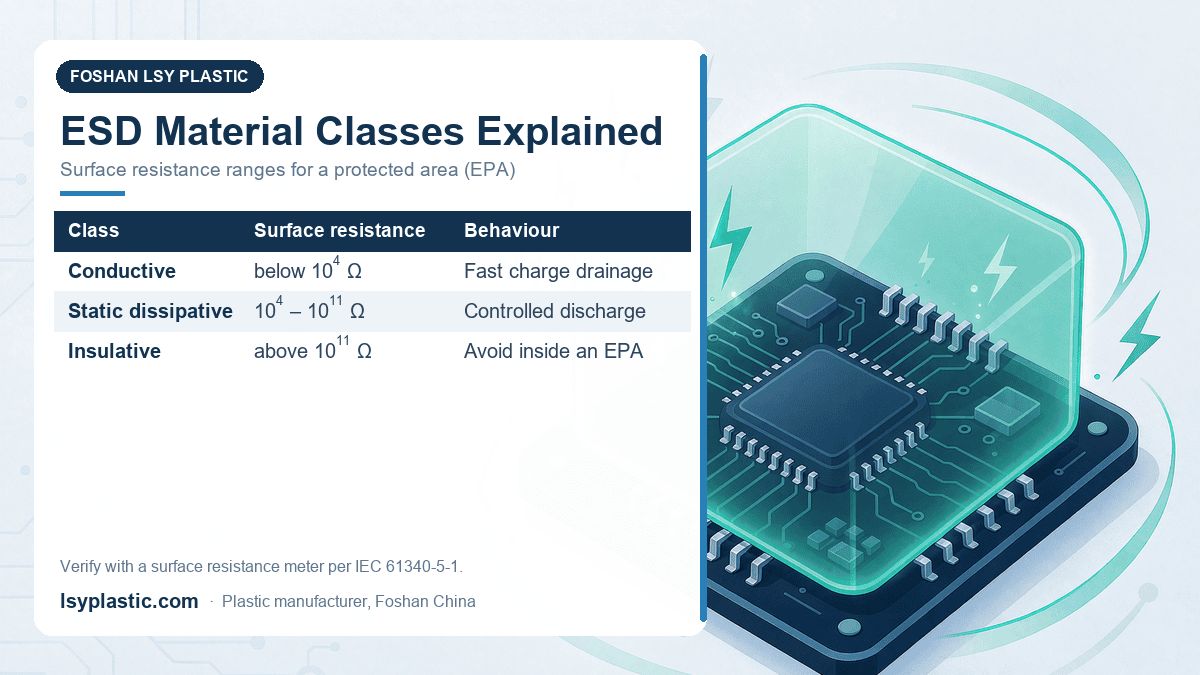
5. Verify, then re-verify
ANSI/ESD S20.20 makes the storage area part of the EPA, and the tray is part of that chain. Verify surface resistance on delivery (STM11.11 test method), then re-test on a schedule — annually at minimum, sooner after any chemical change in the cleaning process. Our ESD tray handling guide covers the five principles that keep trays compliant on the line; VLM storage adds only one rule: the tray must stay compliant inside the machine, not just on the bench.
Sourcing checklist for buyers
- Resistance class documented per batch, measured — not assumed
- Footprints matched to your VLM tray pitch: 300 x 200 / 400 x 300 / 600 x 400 mm
- Moulded conductive/dissipative PP, washable, no topical coating
- Divider sets and lids available for the same container range
- Supplier with in-house moulds so replacements match the original — LSY runs its own tool room and Japan-imported moulding machines (JSW, Mitsubishi), so spare batches reproduce the original part