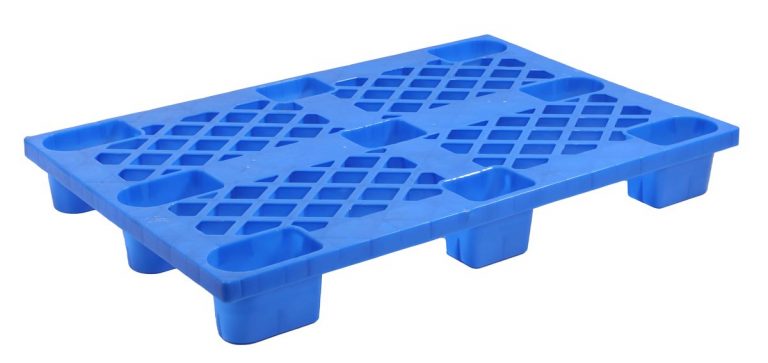
The two most common materials in plastic pallets are HDPE (high-density polyethylene) and PP (polypropylene). Buyers often assume the materials are interchangeable, but they are not. HDPE and PP pallets behave very differently under load, in cold environments, and over time. Choosing the wrong material can shorten pallet life, increase replacement costs, or create safety risks in extreme conditions. This guide compares the two materials head-to-head across strength, temperature, cost, and application fit, so you can match the right plastic to your warehouse.
Dimensions drive everything from container loading to racking — see the complete plastic pallet size chart for reference.
HDPE vs PP at a Glance
| Property | HDPE (High-Density Polyethylene) | PP (Polypropylene) |
|---|---|---|
| Density | 0.94-0.97 g/cm³ | 0.89-0.91 g/cm³ |
| Tensile strength | High (~30 MPa) | Moderate (~25 MPa) |
| Impact resistance (notched) | Excellent, even at low temperatures | Good at room temperature, brittle below 0°C |
| Heat resistance | Continuous to ~80°C | Continuous to ~100°C |
| Cold resistance | Stays tough down to -40°C | Becomes brittle below 0°C |
| Chemical resistance | Excellent (acids, bases, alcohols) | Excellent (acids, bases, but weaker with oxidizers) |
| Stiffness | Moderate flex, more forgiving | Stiffer, less flex under load |
| Recyclability | Resin code 2, widely recycled | Resin code 5, widely recycled |
| Cost per pallet | Slightly higher | Slightly lower |
What Is HDPE and Why Do Pallet Manufacturers Use It?
HDPE is the most common plastic in North American and European pallet manufacturing. Its molecular structure gives it excellent impact resistance, especially at low temperatures, and outstanding chemical resistance to acids, bases, and alcohols. That is why HDPE pallets dominate food, pharmaceutical, and cold-chain applications.
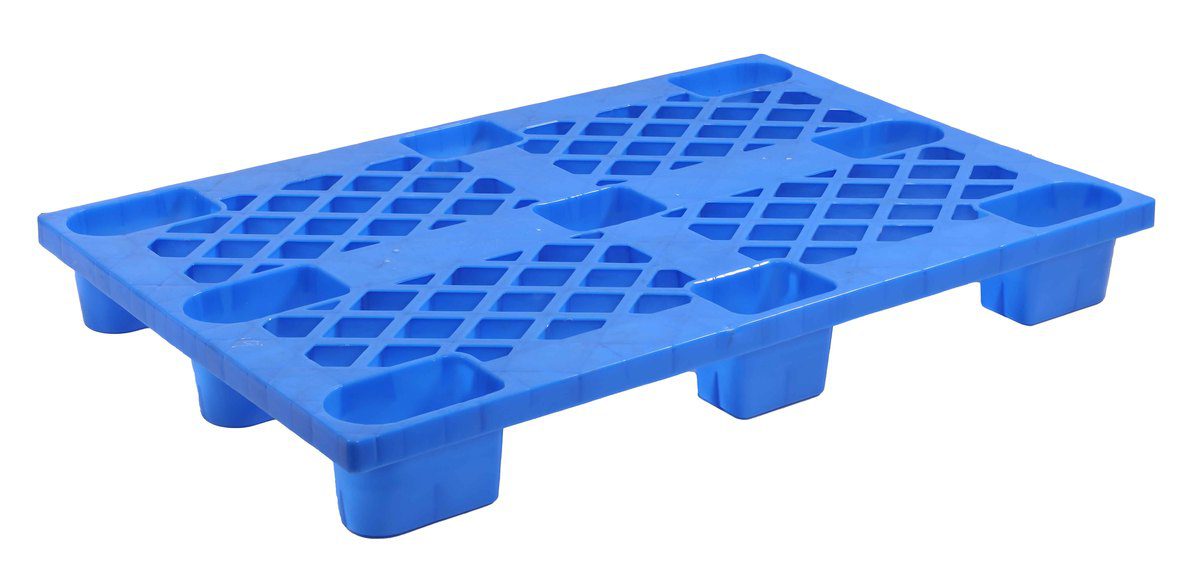
HDPE Pallet Strengths
- Cold storage ready: stays tough at -30°C in blast freezers and refrigerated warehouses.
- Impact resistant: a fork impact or drop does not crack the deck the way it can with PP.
- FDA food-grade compatible: virgin HDPE resin meets FDA 21 CFR and EU 10/2011 standards.
- Chemical resistant: handles cleaning chemicals, sanitizers, and product residue without degradation.
What Is PP and Why Use It for Pallets?
PP is more rigid and stiffer than HDPE. It holds its shape under static load, deflects less under long-term stacking, and tolerates higher heat. PP pallets are common in Asian manufacturing, automotive parts handling, and applications where stiffness matters more than cold toughness.
PP Pallet Strengths
- Heat resistant: keeps shape up to 100°C; ideal for warm warehouses or autoclave-style cleaning.
- Stiffer deck: less flex under sustained load, which is helpful for racking applications.
- Lighter weight: lower density means slightly lighter pallets with the same dimensions.
- Lower cost: resin price is typically 5-15% lower than HDPE, which adds up at fleet scale.
Use Case Recommendations
Choose HDPE Pallets For:
- Cold storage and freezer warehouses: HDPE stays tough where PP would crack.
- Food and pharmaceutical manufacturing: FDA-grade HDPE is the industry standard.
- Outdoor yards and loading docks: better UV resistance and impact tolerance.
- Heavy-impact handling: rough forklift environments where drops are common.
Choose PP Pallets For:
- Hot warehouse environments: above 30°C ambient or near ovens, autoclaves, or heat-seal lines.
- Static long-term stacking: less creep (slow deformation) under sustained load.
- One-way export shipping: lower cost per trip on economical bulk shipments.
- Indoor automotive parts handling: stiff deck transfers load cleanly to racking.
How to Tell HDPE and PP Apart
Virgin HDPE and PP pallets look almost identical at a glance. Three quick tests help identify the material:
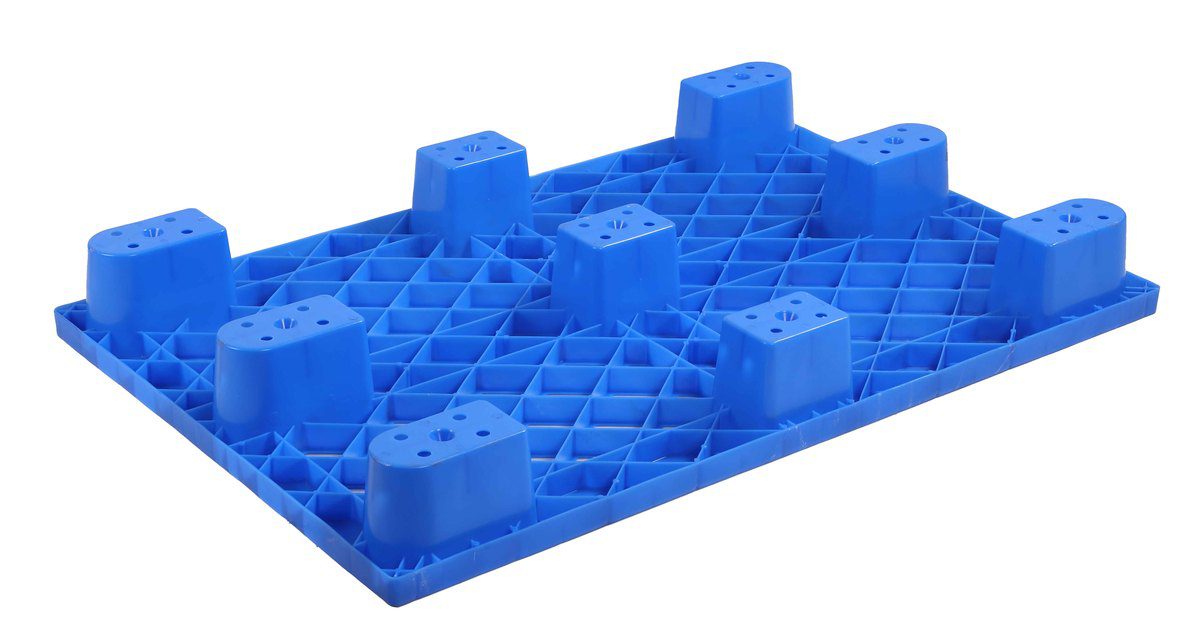
- Check the recycling mark. HDPE carries resin code 2; PP carries resin code 5. Look on the underside or side rim.
- Tap test. HDPE pallets produce a slightly duller, lower-pitched sound; PP pallets ring higher.
- Heat test (carefully). A small sample exposed to a heat gun curls slightly with PP at lower temperature than HDPE. Only perform this if you have scrap material available.
Cost Comparison: Real Numbers
For a standard 1200 x 1000 mm rackable pallet with 1000 kg static load and 500 kg dynamic load, here are realistic 2026 price ranges:
| Specification | HDPE Pallet | PP Pallet |
|---|---|---|
| Virgin resin, lightweight duty | $22-32 | $20-28 |
| Virgin resin, rackable medium duty | $35-55 | $32-50 |
| Virgin resin, heavy duty (1,500 kg+) | $55-85 | $50-75 |
| Recycled-content eco model | $18-28 | $16-24 |
| Food-grade certified (FDA / EU 10/2011) | $45-75 | $42-68 |
The price gap between HDPE and PP pallets is typically 5-15%, with PP slightly cheaper. Over a fleet of 1,000 pallets, that gap can equal $5,000-15,000, but the total cost of ownership calculation should factor in lifespan and replacement frequency in your actual operating environment.
Total Cost of Ownership Example
Suppose you are running a cold storage facility at -25°C with 500 pallets on a 7-year replacement cycle:
- HDPE pallets at $55 each, lasting 7 years in cold storage = annual cost per pallet $7.86.
- PP pallets at $50 each, but only lasting 4 years due to brittle cracking = annual cost per pallet $12.50.
The “cheaper” PP pallet ends up costing 59% more per year because the material does not match the environment. This is the central lesson: match the material to the environment, not just to the unit price.
Myths and Misconceptions
Myth 1: All Plastic Pallets Are the Same
False. Resin grade, additives (UV stabilizer, anti-static, flame retardant), and reinforcement (glass fiber, fillers) all change performance. A virgin HDPE pallet with UV stabilizer outperforms a low-grade recycled PP pallet in nearly every metric except price.
Myth 2: HDPE Is Always Better Than PP
False. HDPE wins in cold and impact; PP wins in heat and stiffness. In a balanced indoor environment, both perform similarly. The “better” material depends entirely on your use case.
Myth 3: Recycled Pallets Are Inferior
Partly false. Modern recycled-content pallets from reputable manufacturers can match virgin performance for many applications, especially non-food warehouse use. For food-grade and pharmaceutical applications, virgin resin is still preferred and is typically required by regulation.
Decision Framework: 5 Questions
- What is the operating temperature range? Below 0°C = HDPE. Above 60°C = PP.
- Is the application food or pharmaceutical? Yes = virgin HDPE with FDA certification.
- Is impact or stiffness more important? Impact = HDPE. Stiffness = PP.
- What is the budget per pallet? Tight = PP economy or recycled HDPE.
- What is the expected lifespan target? 10+ years = HDPE; 4-6 years = PP is acceptable.
For a deeper comparison of plastic pallet construction, see our plastic pallet lifespan guide or the load capacity ratings explainer. Browse the complete plastic pallets hub for buying guides, load capacity charts, and material comparisons.
Need reliable plastic products for your business? LSY Plastic manufactures hotel luggage carts, HDPE & PP pallets, and custom injection-molded parts with 35+ years of OEM experience. Contact us today:
WhatsApp: +86 19311059570
Email: fstyx01@lsyplastic.com
Related reading: plastic pallets hub — pallet sizes, materials, load ratings and export guides.
Need reliable plastic pallets? Browse the Plastic Pallets collection and request a quote.
Frequently Asked Questions
What is the main difference between HDPE and PP pallets?
HDPE is tougher and handles cold and impact, and resists moisture well; PP is stiffer and more heat-resistant. Choose HDPE for freezer, food and impact duty, and PP for racking and warmer ambient loads.
Which material is better for racking?
PP’s higher stiffness usually gives better racking performance, but the pallet’s design (beam runners) matters more than the resin. Always spec the racked load rating for the model you buy, not just the material.
How can I tell HDPE and PP apart?
They look similar. HDPE feels slightly waxy and is less stiff; PP is harder and more rigid. The reliable way is to check the resin datasheet, so ask the supplier to confirm the material named on the specification sheet.
Which material has a better total cost of ownership?
HDPE’s cold-impact durability can reduce breakage and replacement cost in cold chains, while PP’s stiffness may suit warm racked storage. Match the resin to your temperature and load. LSY moulds both and can advise per application.