Short answer: a wooden pallet is cheaper to buy, but a plastic pallet is cheaper to own. Over five years of closed-loop use, plastic typically lands at 40–60% of the true cost of wood once you add repair, replacement, ISPM-15 treatment, rejected shipments and disposal fees — while a one-way export pallet is still often cheaper in wood. The trap is comparing the invoice price instead of the cost per trip. This guide walks through the five-year math with realistic trip counts, the compliance angle buyers forget, and the exact scenarios where wood remains the right answer.
Why the Purchase Price Lies to You
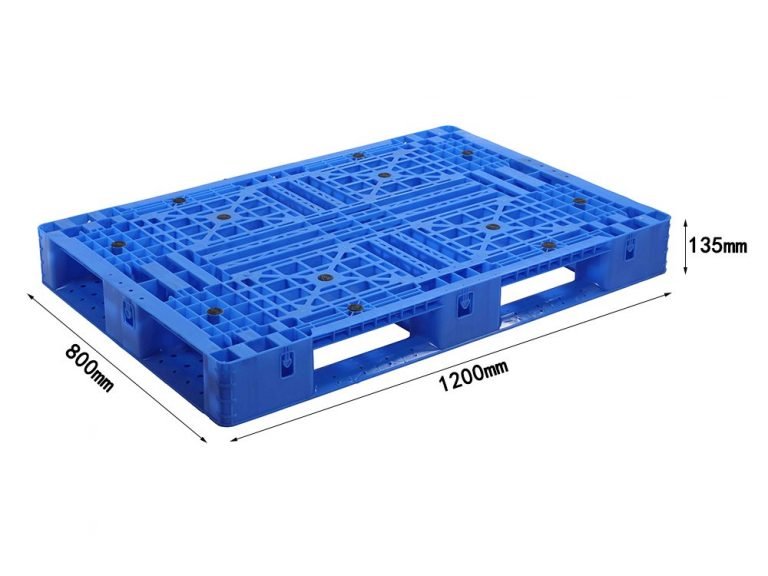
Walk into any pallet negotiation and the numbers look like this: a standard 1200×800 wooden euro-pallet quotes around $10–15, while an equivalent HDPE plastic pallet quotes $35–60 depending on design. On the invoice, wood wins by a factor of three or four, and that comparison ends most evaluations prematurely.
But the invoice price answers the wrong question. The real question is: what does one movement of one pallet cost, over the whole time you will use it? Wood answers that question badly, for reasons that only appear after the first few trips.
The 5-Year Total Cost of Ownership Model
Assume a closed loop: 500 pallets, 12 rotations per year each, five years of use, standard 1200×800 footprint.
| Cost item (5 years) | Wooden pallets | Plastic pallets (HDPE) |
|---|---|---|
| Initial purchase, 500 pcs | $6,000 (at $12) | $22,500 (at $45) |
| Replacements — breakage/rot | $6,500–9,000 (60–100% attrition) | Near zero (5–10% attrition) |
| Nail/staple repair labor | $1,200–2,000 | None |
| ISPM-15 heat treatment per export batch | $0.6–1.2 per pallet per trip | Not required |
| Rejected shipment / product damage | Unbudgeted, recurring | Rare |
| Disposal of damaged units | Recurring fee | Resale value as regrind |
| Estimated 5-year total | $15,000–20,000 | $23,000–25,000 |
| Cost per trip (12/yr × 5 yr) | ~$0.50–0.67 | ~$0.77 |
Notice what actually happens in the table: the gap narrows fast, and two factors close it entirely for most operations. First, trip count — the model above uses 60 trips; push it to 100+ (daily dairy, beverage or pharma loops) and plastic’s cost per trip falls below $0.25 while wood’s repair-and-replace cycle keeps climbing. Second, the heat-treatment line: for exporters, ISPM-15 fees on wood are paid on every single outbound trip, forever, while plastic pays zero.
One more line the table cannot carry: a broken wooden pallet in a pharmaceutical or food shipment can cost more than the whole pallet fleet. Wood splinters, sheds debris and absorbs moisture; plastic does none of those things.
ISPM-15 and Export Compliance: The Tax on Wood
ISPM-15 requires solid wood packaging to be heat-treated or fumigated and stamped, and border authorities enforce it unevenly but unpredictably. A missing or illegible stamp can hold a container at port, trigger re-treatment, or — worst case — send the shipment back. We have seen buyers lose more on one rejected container than they would have saved on wooden pallets for an entire year.
Plastic pallets are exempt from ISPM-15 by definition. No stamps, no certificates, no port risk. For export-focused shippers this alone frequently decides the argument, independent of any durability math.
Trip Counts: Where Plastic Pulls Away
Lifespan in trips, not years, is the honest unit. Industry-experience ranges:
- Softwood one-way pallet: 1–3 trips before repair or disposal.
- Hardwood pallet, well maintained: 10–30 trips with a repair program behind it.
- Molded HDPE pallet: 100–250+ trips, depending on load and handling culture; failure is graceful, not splintering.
The reason is structural. A plastic pallet is one molded part — no nails to loosen, no joints to rack, no moisture to absorb. Its failure mode is wear over years; wood’s failure mode is random breakage that takes the goods down with it.
Hygiene, Weight and Freight — Three Underestimated Lines
Hygiene and washability
Plastic pallets can be pressure-washed or sanitized in a loop; wood absorbs liquids, harbors bacteria in cracks, and is increasingly unwelcome in food, beverage and pharma closed loops for exactly that reason. If your customer audits hygiene, wood loses the audit before durability even comes up.
Weight and freight economics
A standard wooden pallet weighs 20–25 kg; an equivalent HDPE pallet often weighs 17–22 kg with better dimensional consistency. Lighter, precise pallets shave real money on air freight and on weight-limited truck lanes, and consistent dimensions mean automated warehouses stack them without rejects.
Dimensional stability
Wood swells, shrinks and warps with humidity — tolerances drift by centimeters. Plastic holds ±3–5 mm for life, which matters more every year as warehouses automate.
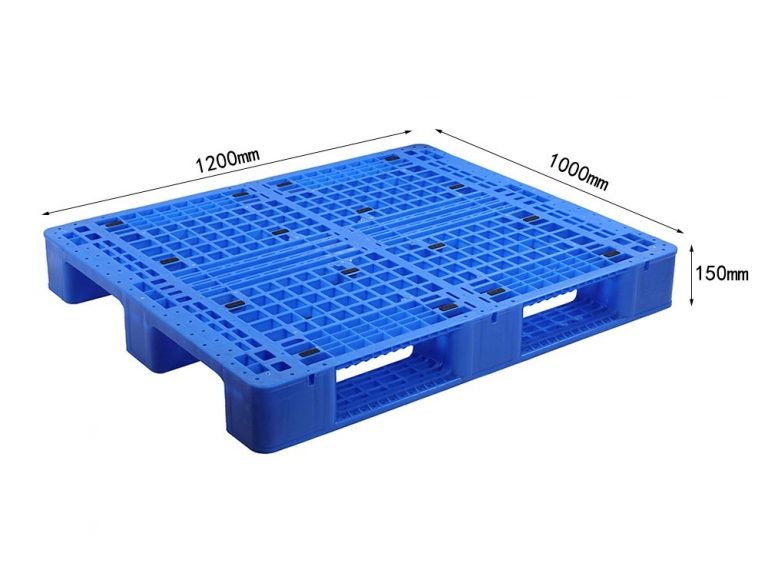
For choosing the footprint itself — 1200×800 vs 1200×1000 vs 1100×1100 — see our plastic pallet dimensions comparison guide, and for protecting loaded pallet faces, plastic layer pads replace corrugated sheets explains a related upgrade that pairs well with this decision.
When Wooden Pallets Are Still the Right Answer
Honesty requires the counter-case. Wood remains correct when:
- The pallet is one-way. Ship it, forget it. At 60 trips needed to justify plastic, a single-trip wooden pallet is simply the cheaper tool.
- Capital is the constraint, not cost. If $22,000 of upfront spend is impossible this quarter, wood’s low entry price buys capacity now — just model the trailing costs honestly.
- Crude, short-haul, low-value loads. Bricks, scrap, firewood — hygiene and precision add nothing.
- Very short horizon. A project lasting months does not give plastic time to amortize.
The failure mode we see most is not choosing wood — it is choosing wood for a loop that will run for years, after evaluating only invoice prices.
Checklist: Deciding With Numbers, Not Habit
- Estimate trips per pallet per year, and multiply by your planning horizon.
- Add ISPM-15 cost per outbound trip if you export on wood.
- Price your actual breakage: pull the repair logs, not a guess.
- Check whether customers or regulators impose hygiene rules that wood cannot pass.
- Confirm rack load and dynamic load ratings for the plastic design you quote — ask for kg, not adjectives.
- Ask the factory for a per-trip cost calculation with your volumes; a good supplier runs it in minutes.
- Consider a mixed fleet: plastic for the closed loop and export lanes, wood for one-way lanes.
Country-specific import requirements often decide the paperwork side — our Australia import guide is a worked example of how destination rules reshape the pallet decision.
FAQ
How many more times can a plastic pallet be reused compared to wood?
A well-maintained hardwood pallet typically survives 10–30 trips with an active repair program, while a molded HDPE pallet commonly reaches 100–250 trips. Over a five-year closed loop, that usually puts plastic’s true cost per trip below wood’s once repairs, replacements and ISPM-15 treatment are added to the wooden side.
Do plastic pallets need ISPM-15 certification for export?
No. ISPM-15 applies to solid wood packaging, so plastic pallets are fully exempt — no heat treatment, no stamps, no fumigation certificates. For exporters, this removes both the recurring per-trip treatment cost and the risk of a container being held or rejected at a border inspection.
Why are plastic pallets more expensive upfront?
They carry the cost of the mold, the virgin HDPE or PP resin, and a one-piece structure that replaces dozens of nailed components. That structure is exactly why plastic survives 100+ trips, washes clean for hygiene loops, and holds dimensional tolerance that wood cannot — the premium buys lifespan and predictability, not just material.
Is a mixed pallet fleet a good strategy?
Often yes. Use plastic on closed loops, automated lines and export lanes where hygiene and ISPM-15 matter, and wood on one-way, low-value or short-horizon lanes. The split gets each material where it is genuinely cheapest, and avoids over-capitalizing the fleet while still cutting total cost per trip.
Want the TCO math run on your own volumes? Send us your pallet count, rotation frequency and destinations — we will return a per-trip cost comparison and a sample quote. WhatsApp: +86 19311059570 · Email: fstyx01@lsyplastic.com · FOSHAN LSY Plastic, HDPE pallet manufacturer since 1988.