
A platform trolley is simple — until you buy the wrong one. The frame looks identical across suppliers; what separates a trolley that runs five years from one that wobbles in six months is three decisions: load rating, deck size, and wheel specification. This guide walks through each with real numbers.
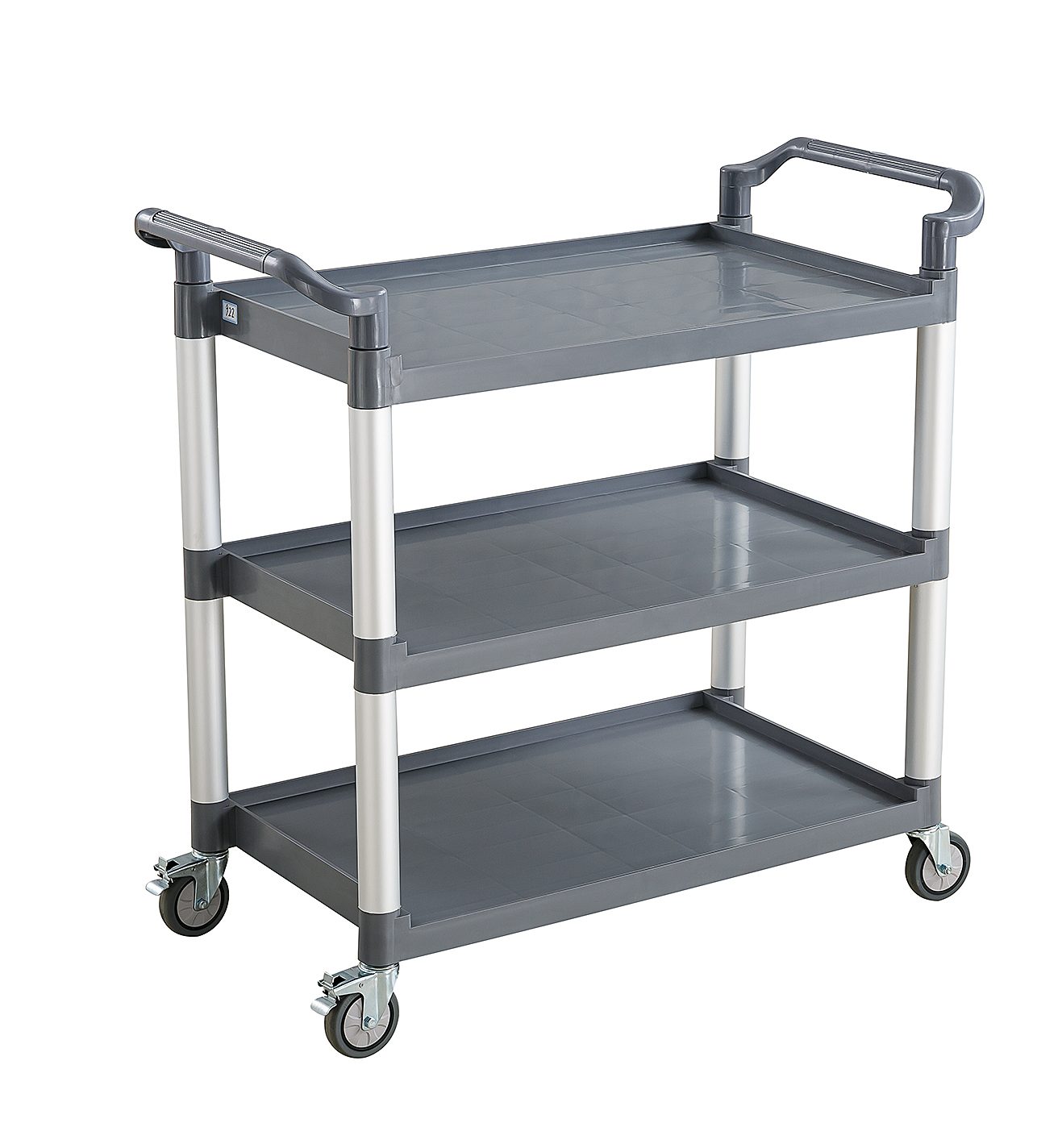
Load capacity: buy for the peak, not the average
The most common buying mistake is matching the trolley rating to the average load. A 200 kg average with a 350 kg Friday peak will destroy a 250 kg trolley. Work from your heaviest recurring load:
| Your peak load | Recommended rating | Typical frame |
|---|---|---|
| 150 kg | 250 kg class | Light platform, 5″ casters |
| 300 kg | 450-500 kg class | Reinforced deck, 6-8″ casters |
| 500 kg+ | 800 kg class | Ribbed HDPE deck on steel frame |
Injection-moulded HDPE decks flex to absorb impact and never rot or splinter like plywood decks. The static versus dynamic load logic we covered for pallets applies here too: a trolley rated 500 kg static may only be rated 350-400 kg rolling.
Deck size: match the footprint, not the door
Measure your most common load first — carton, crate stack, or luggage set — then add 10 cm per side for hand placement and strap routing. Common trap: buying a deck that fits through the door but is too small for the load, forcing two trips that erase the trolley’s purpose.
If you move stackable plastic crates or euro-format boxes, decks sized to 600×800 mm or 800×1200 mm footprints let you build stable loads without overhang. Overhang is the leading cause of load drops in corridors.
Wheels: where trolleys live or die
Wheels are the highest-wear component and the cheapest place to upgrade at purchase:
- Nylon / PP casters — near-indestructible on smooth concrete, noisy and harsh on tile. Best for warehouses and dock work.
- Rubber-tread casters — quiet, floor-friendly, ideal for hotels, hospitals and front-of-house. Slightly lower load per wheel.
- Polyurethane tread — the compromise: high load, moderate noise, resists oil and swarf. Best all-round industrial choice.
- Caster layout — two fixed + two swivel is the stable default; four swivel only for tight-turn spaces like linen rooms.
Wheel diameter is the underrated spec. A 200 mm wheel crosses a dock plate or door threshold almost unnoticed; a 100 mm wheel stops dead and tips the load. For mixed floor conditions, never go below 150 mm on a workhorse trolley.
Handle configuration and fleet logistics
Fixed handles are strongest. Folding or removable handles pay off at fleet scale: empty trolleys nest or stack flat, cutting storage footprint by half and letting a container hold 30-40% more units. If you are importing container loads — as most of our B2B buyers do — folding handles materially change your landed cost per trolley.
Buying checklist
- Peak load + 25-30% headroom = rating to order
- Deck footprint = your load + 10 cm per side
- Wheel material matched to floor (rubber front-of-house, PU industrial, nylon warehouse)
- Minimum 150 mm wheels for threshold-heavy routes
- Folding handle if storage space or container packing matters
- Spare casters quoted with the order — the first thing to wear is the cheapest thing to stock
As the factory we ship platform trolleys in multiple series with interchangeable caster options, and we quote the 922 platform trolley range for full-container export. For sizing help or OEM deck dimensions, contact LSY Plastic — WhatsApp +86 19311059570 or email fstyx01@lsyplastic.com.