
Poultry logistics is the hardest test a plastic crate can take: hot washing, aggressive disinfectants, cold rooms, high-cycle handling and strict hygiene audit — every single day. Equipment that survives here survives anywhere. This guide covers what to specify for farm-to-plant crate systems.
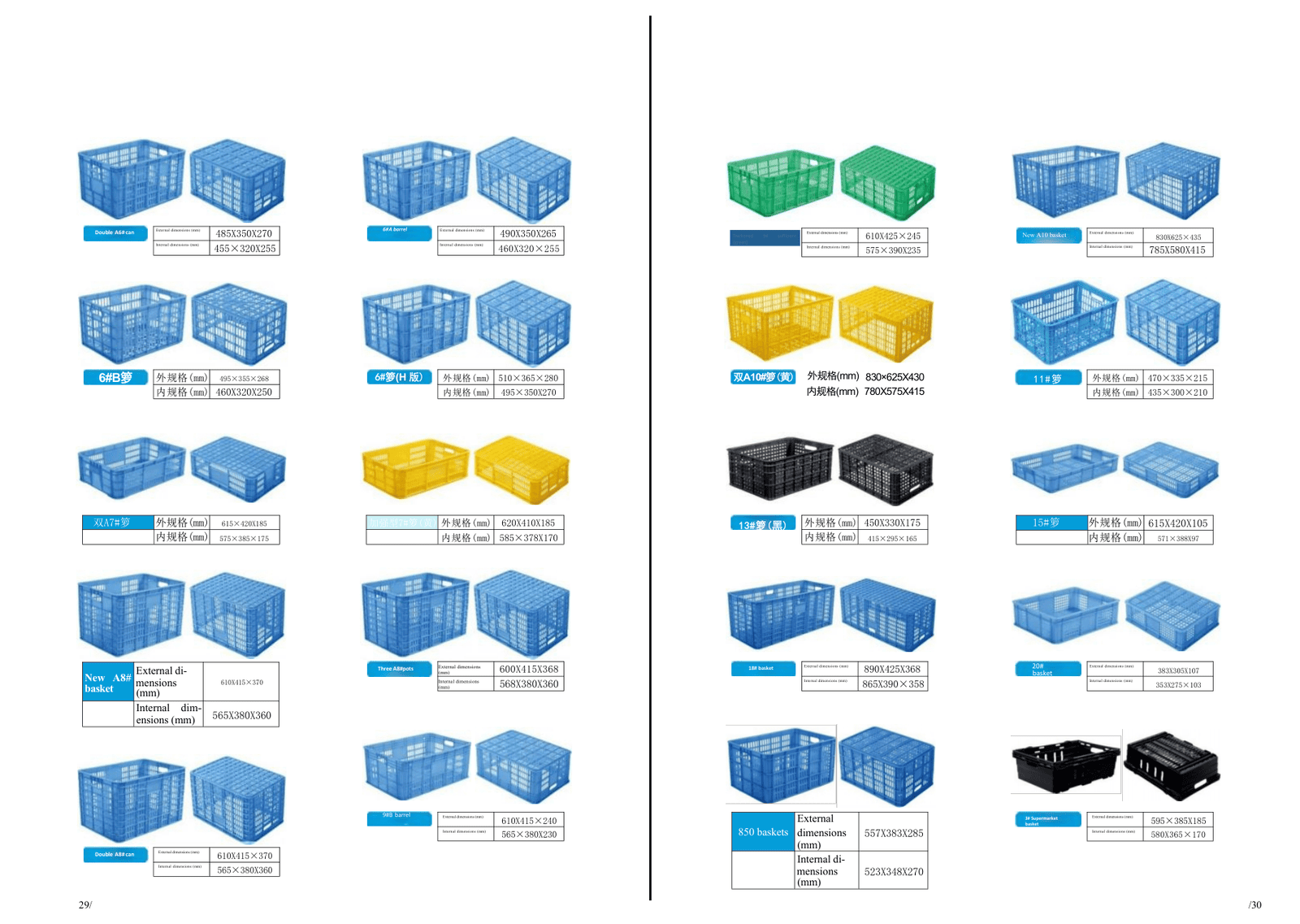
What poultry duty demands from a crate
| Requirement | Why | Spec implication |
|---|---|---|
| Hot wash 55–65 °C | Daily crate washer cycles | Virgin HDPE/PP, not recycled blends |
| Chemical resistance | Detergents, quats, chlorine | HDPE over PP for chlorine duty |
| Non-porous surface | No organic residue retention | Smooth moulded walls, no welds |
| Ventilation | Chilling airflow, live transport | Open-wall or slotted design |
| Cold-room impact | Chill docks at 0–4 °C | Cold-tough grades, drop discipline |
| Nest/stack geometry | Empty return efficiency | Nesting ventilated design |
The wash cycle is the real specification
Most crate failures in poultry operations are wash failures, not load failures:
- Pre-rinse removes solids before they bake on.
- Hot detergent wash at 55–65 °C — this temperature window kills surface bacteria and lifts fat films.
- Rinse removes detergent residue (audit checkpoints test for it).
- Disinfectant stage — chlorine or quat-based.
- Dry and drain — stacked wet crates grow biofilm in the overlap zones.
A crate that warps in the washer fails hygiene even when it “still holds birds”. Budget replacement on wash cycles (typically 300–500 per crate for quality HDPE), not calendar months.
Ventilation geometry and chilling speed
Closed crates insulate their contents; ventilated crates let chilled air reach the product. In blast or room chilling this shows up as hours of shelf life. But ventilation patterns differ — slotted side walls suit processing crates (drainage plus visibility), while open-percentage perforation suits live transport and field crates. Our ventilated crates cold-chain guide covers the airflow physics; poultry applies the same rules with stricter washing on top.
Cold room and dock handling
At chill temperatures plastics stiffen and become impact-brittle. Practical rules: no throwing crates onto dock edges, no prying frozen stacks with forklift tips, and cold-rated grades for anything entering freezers. Pallet choice matters here too — cold-duty pallet guidance is in our cold storage pallet guide, and the same de-rating logic applies to crates.
Fleet sizing: the three-set rule again
Poultry crate fleets follow the same pattern as linen systems: one set in use, one in wash/dry, one staged clean — a cycle factor of three on peak-day throughput, plus 10% damage reserve. Undersized fleets create the worst failure mode in this industry: crates skipping the wash stage because there are none clean left.
Audit checkpoints worth pre-empting
- No cracks or crevices holding residue — quarantine on first crack.
- Legible material grade marking on the crate body (food-contact certification).
- Dedicated colour/label zone if the farm also runs other protein lines.
- Wash temperature logs matched to the crate’s rated range.
Every one of these is cheaper to satisfy at purchase than at audit — specify food-grade virgin material, buy cold-tough grades, and retire crates on crack, not on collapse.