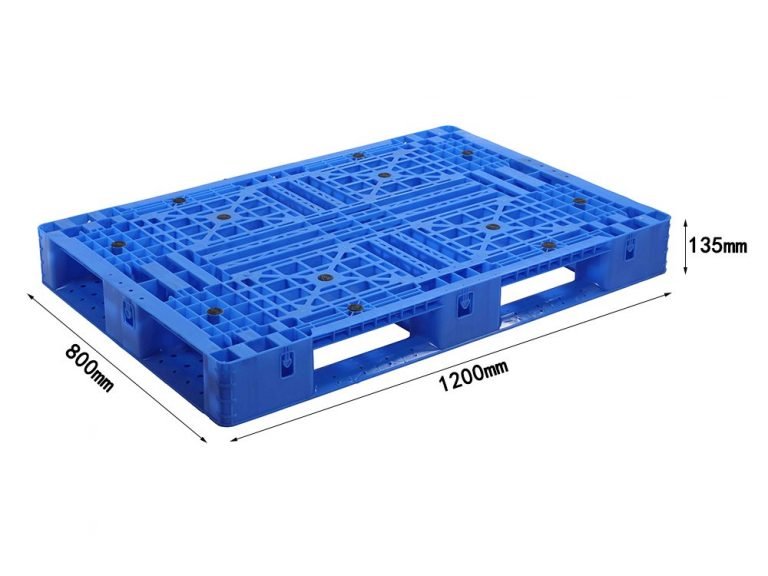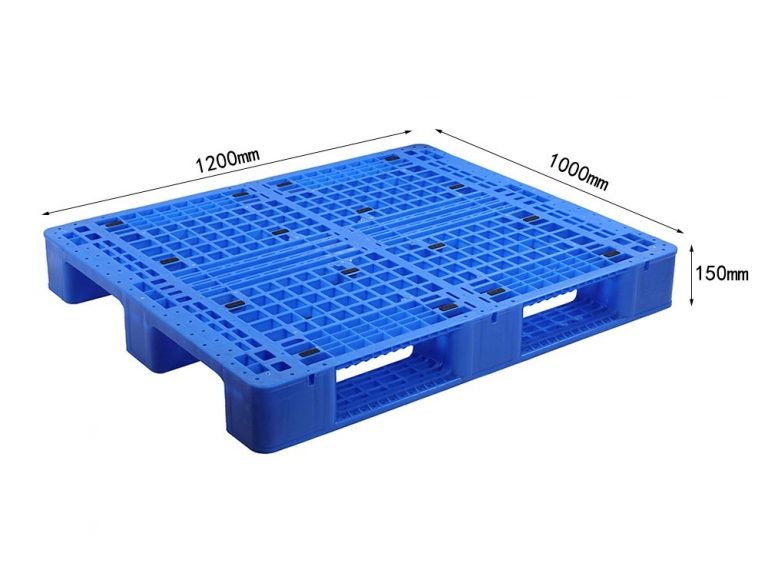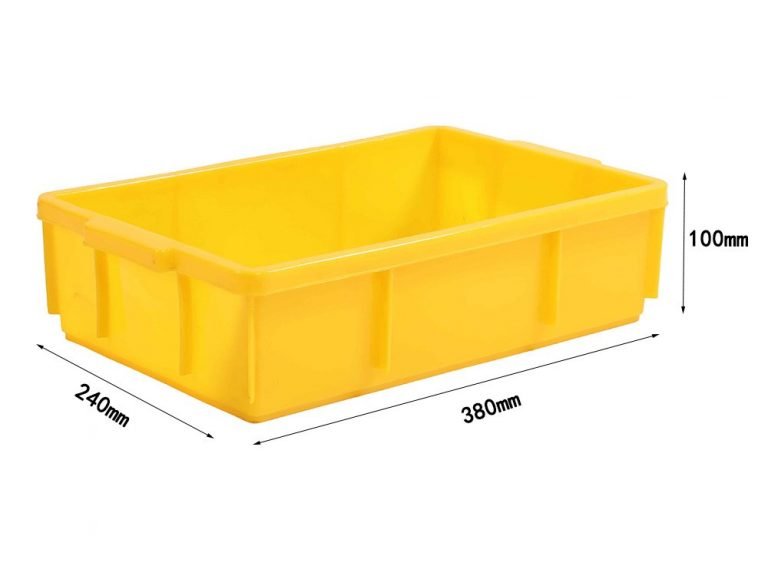
Quick answer: the three footprints that run global logistics are 300×200 mm, 400×300 mm and 600×400 mm — the modular base that divides exactly into the 1200×800 mm EUR pallet and the 1200×1000 mm industrial pallet. Height is the flexible dimension: anything from 120 mm trays to 420 mm deep containers, with 200 mm and 320 mm the most common. Choose footprint by pallet plan and automation, height by product cube and ergonomic lift limits, and confirm the stacking load rating before ordering. This guide walks through each dimension decision so you can standardise your fleet without costly re-orders.
For a full breakdown of container types and sizes, see our industrial plastic crates guide.
The Modular Footprint System Behind Every Euro Container
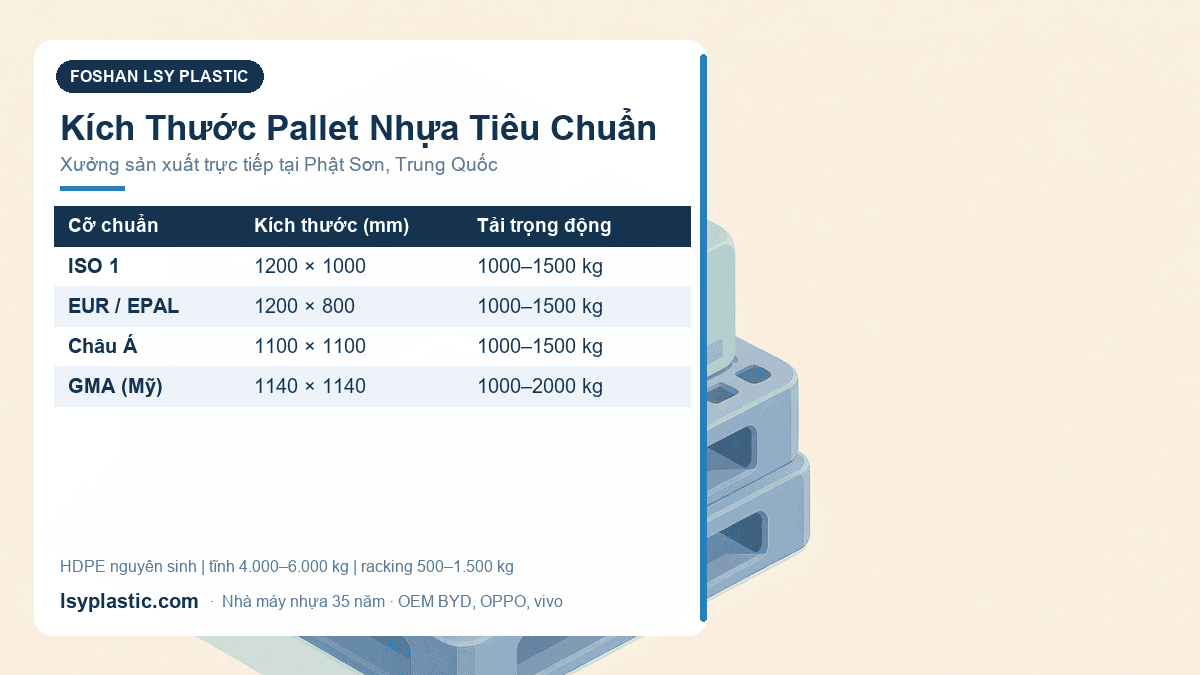
European logistics standardised on one insight: if container footprints divide evenly into pallet faces, nothing on the pallet is wasted and mixed loads lock together without overhang. The result is a strict 2:3:4 module family:
| Footprint (L×W) | Per 1200×800 (EUR) pallet | Per 1200×1000 pallet | Typical contents |
|---|---|---|---|
| 600×400 mm | 4 per layer | 5 per layer | Mixed parts, retail-ready goods, vegetables |
| 400×300 mm | 8 per layer | 10 per layer | Small parts, pharma, meat portions |
| 300×200 mm | 16 per layer | 20 per layer | Small components, electronics, cosmetics |
Note the arithmetic: two 300×200 containers equal one 400×300; two 400×300 equal one 600×400. That is the whole point of the system — a pick line can decant from a 600×400 into 300×200 units without breaking the pallet plan. If your warehouse runs a colour or department coding scheme, footprint standardisation also makes 5S colour-coded crate systems much easier to maintain, because every tote stays interchangeable regardless of colour.
Height Selection: Cube, Ergonomics and the 200 mm Module
Unlike footprints, heights are not rigidly standardised, but the market has converged on practical bands:
| Height band | Common heights | Best for |
|---|---|---|
| Tray | 120–170 mm | Picking totes, shelf storage, lean parts supply |
| Half | 200–230 mm | General order picking; two-stack reaches 400 mm modules |
| Medium | 280–320 mm | Packed goods, kitting, cold store totes |
| Deep | 380–420 mm | Bulk decanting, dense items, garments |
Three rules keep height decisions honest:
- Ergonomic limit: a filled 600×400×420 container can exceed 25 kg. Most occupational guidelines cap one-person lifts at 15–25 kg, so pick depth by filled weight, not product cube alone.
- Pallet height budget: a loaded EUR pallet usually must fit 1600–1800 mm total (pallet + load) for racking and door clearances. A 1440 mm pallet body (6 layers of 240 mm) leaves little margin; calculate layers before ordering.
- Stack pairing: many fleets use two half-heights interchangeable with one medium height so mixed stacks stay level and interlock cleanly.
Load Ratings: What “50 kg” Actually Means
Catalogue load figures are the most misunderstood numbers in container procurement. A properly specified supplier states all three:
| Rating | What it measures | Why it matters |
|---|---|---|
| Dynamic load | Weight the container carries while moved by hand, conveyor or dolly | Governs daily handling safety |
| Static stacking load | Weight a container can support when loaded containers are stacked on it | Governs pallet columns and floor storage |
| Racking load | Weight a container can span across racking bars without bowing | Governs shelf and flow-rack use |
Sourcing These Products? Buy Direct from the Factory
LSY Plastic has been an injection moulding manufacturer in Foshan, China for over 35 years. We supply hotels, restaurants and warehouses worldwide at factory-direct prices, shipped by full container load (FCL).
Buying in volume? For the same quantity, we commit to the best price on the market.
Typical injection-moulded PP euro containers of 600×400 carry 25–50 kg dynamic and stack 200–500 kg statically, depending on wall design and material. Two cautions: stacking ratings assume evenly distributed load — a dense steel block in one corner halves the safe stack; and heavy or hot contents may push you toward HDPE or copolymer grades, the same material logic explained in our automotive turnover box guide for heavier industrial loops.
Open Handgrips, Solid Walls or Vented, and Lids
With footprint and height fixed, the remaining choices are functional:
- Open handgrips vs closed rims: open grips allow gloved handling and grab-hook access; closed rims shed dust and liquids. Wet plants favour closed rims plus external grip bosses.
- Solid vs ventilated walls: solid walls protect against dust and moisture and wash clean; ventilated walls cut weight, allow airflow for fresh produce and let water drain. Never mix solid and vented units in one automated stack without checking nesting depth.
- Lids: hinged attached lids suit closed-loop distribution where the lid is never lost; detachable flat lids allow empty containers to nest; no lid at all is cheapest for picking totes that never leave the shelf.
- Nesting vs stacking: nesting (empty containers slot into each other) saves up to 75% return freight; stacked (open-top) containers maximise volume in use. Many ranges do both — our collapsible vs rigid crates comparison quantifies that trade-off for returnable loops.
Matching Footprint to Pallets, Containers and Automation
Footprint discipline pays three times: on the pallet, in the container and on the conveyor.
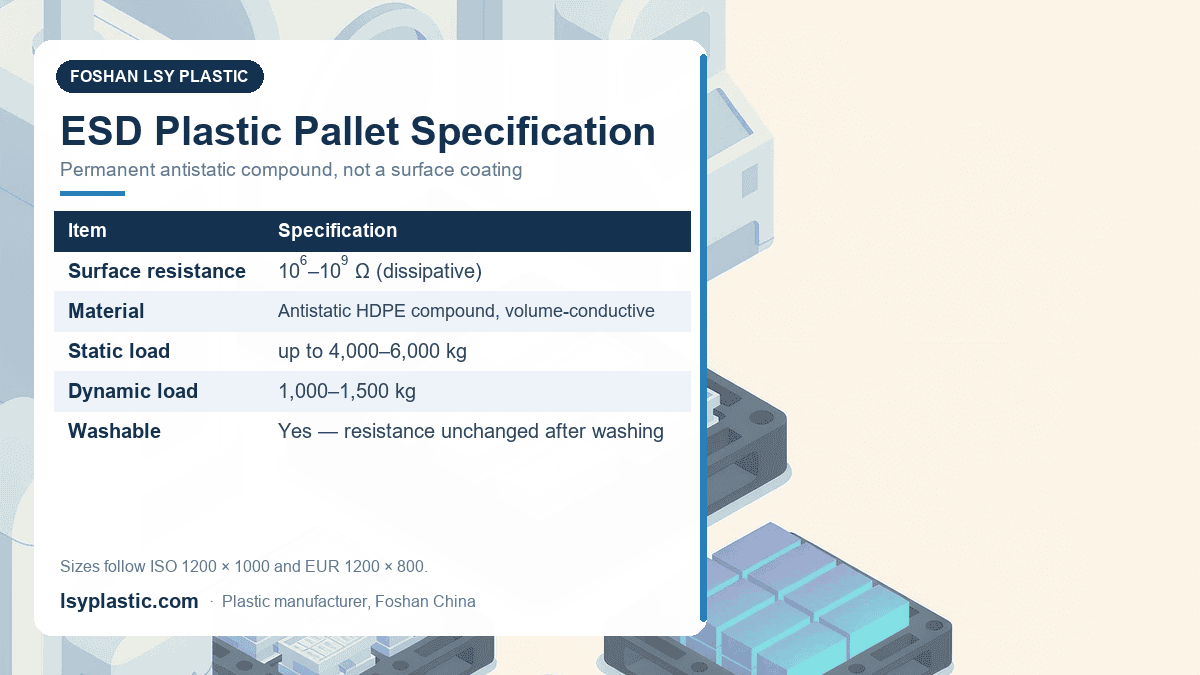
- Pallet fit: 600×400 gives four per EUR-pallet layer with zero overhang; five per layer on 1200×1000. Any “almost fits” footprint wastes 10–15% of every layer forever.
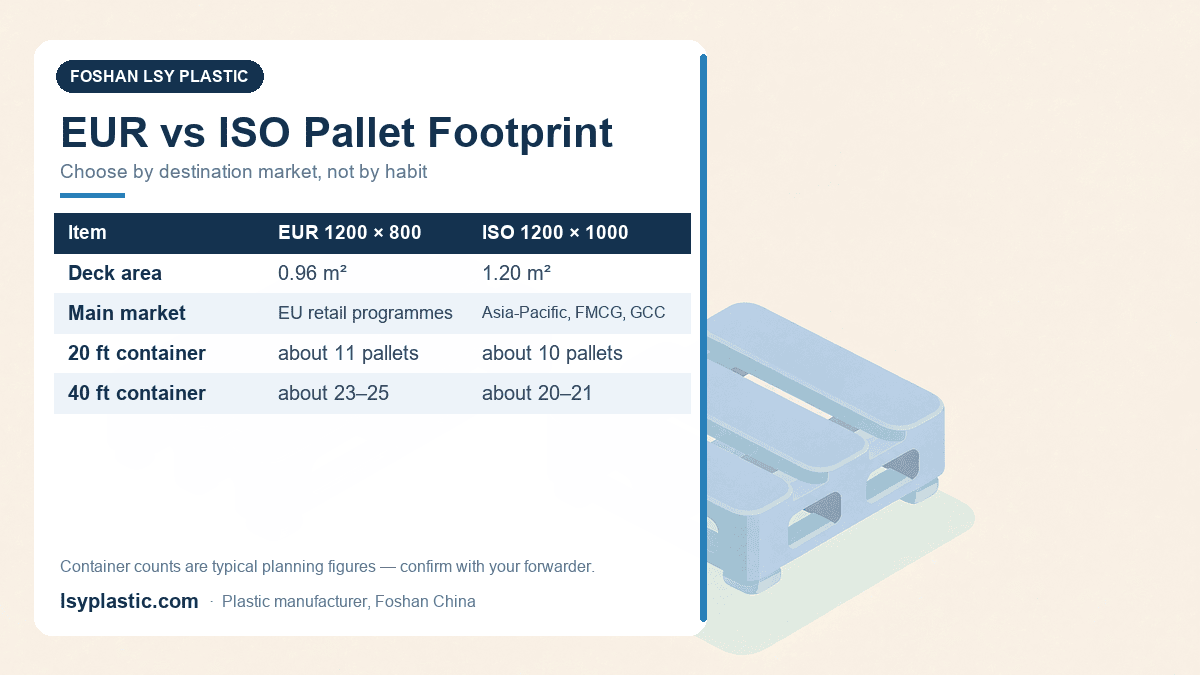
- Container (sea freight) fit: palletised euro containers load predictably into 20 ft and 40 ft boxes; our container loading guide shows the standard counts so you can budget freight per container unit.
- Automation tolerance: conveyors, shuttle systems and AS/RS care about two numbers: outer footprint tolerance (usually ±2 mm across the fleet) and underside geometry. Cheap containers with warped rims cause 90% of conveyor jams; buy from moulders who hold tooling tolerance, like the process described on our factory page.
- Racking width: 600×400 containers need ~450 mm clear bay depth minimum; check beam spacing if containers sit directly on racking rather than pallets.
Pre-Order Checklist
- Fix the footprint family first (2:3:4 modules) and standardise the whole site on it before buying any single size.
- Calculate filled weight for your densest SKU and pick height so no container exceeds your lift limit.
- Get all three load ratings in writing — dynamic, static stack, racking — for the exact material grade.
- Decide nesting depth if containers travel back: every 10 mm of nesting ratio compounds across thousands of return trips.
- Check automation documents: supply the container drawing to your conveyor integrator before PO, not after delivery.
- Confirm food-contact certification if any container touches food or pharma products.
What Actually Drives Euro Container Price
Once sizes are settled, buyers are often surprised by how widely unit prices vary for visually similar containers. The price drivers are predictable, and knowing them helps you compare quotes fairly:
- Container weight: the single biggest cost factor. A 600×400×320 container can weigh 2.0 kg or 3.2 kg depending on wall and rib design — and the resin cost difference flows straight into the price. Ask suppliers to quote weight per unit, not just dimensions.
- Material grade: virgin PP with food-contact certification costs more than recycled blend; impact-modified copolymer adds a further premium but pays back in freezer or rough-handling environments.
- Colour: standard greys, blues and blacks are run constantly and cost least; custom colours tie up a machine on a purge cycle and usually carry a minimum order quantity. If you need colour coding, adopting the supplier’s existing stock colours is the cheapest route.
- Lid type: hinged attached lids add moulded hinge volume and a second material consideration; detachable flat lids are cheaper but get lost. Price the system, including expected lid replacement over three years.
- Certification and documentation: EU 10/2011 or FDA food-contact files, batch traceability and drop-test reports cost the manufacturer something; suppliers who skip them are usually cutting elsewhere too.
A useful benchmark when comparing quotes: divide unit price by container weight to get price per kilogram of moulded product. Quotes within 10% of each other on that number are genuinely comparable; anything far below usually means lighter walls, recycled content or looser tolerances.
Five Mistakes to Avoid When Standardising a Fleet
- Buying a single size for everything. One deep container looks simple, but it forces pickers to ship air. A 2:1 mix of half-heights and mediums covers most operations better at similar cost.
- Ignoring the return leg. Containers that travel back empty need nesting or folding capability; rigid stacking-only designs look cheaper until you pay freight on air every week.
- Mixing brands inside a stack. Stacking feet and rims are not standardised between makers. Mixed-brand columns tilt, jam and shear lugs. Standardise one range per site.
- Skipping the tolerance check. Ask for the dimensional tolerance of the fleet (±2 mm is typical for good tooling). Automated systems fail on tolerance long before they fail on strength.
- Ordering without a pilot. Buy 20–50 units first, run them through your real pick, stack, wash and dispatch cycles for a month, then scale. Container faults show up in week three, not on the sample bench.
Sizing a container fleet for export volumes? LSY Plastic is an injection molding manufacturer in Foshan, China, running 180T to 2500T machines (JSW, Mitsubishi, NSC) with a 20,000 m² warehouse and daily full-container export experience. Contact us on WhatsApp +86 19311059570 or email fstyx01@lsyplastic.com for specifications, material data sheets and export pricing.
plastic crates and turnover boxes buyers: our Turnover Box Series range covers the specifications outlined in this guide.
Related guide: 1200×800 vs 1200×1000 pallet dimensions.
Related guides:
attached lid container sizes security returns
Related: MOQ, samples and FCL shipping policy — how we supply overseas buyers, including container loading volumes.