
Plastic pallets are marketed as the sustainable alternative to wood — but what actually happens to them at the end of their service life? For many warehouse managers, the honest answer is: nobody told them. This guide explains the full plastic pallet recycling process, what changes when HDPE is recycled, and the exact questions to ask a supplier before you buy.
Every model discussed below appears in our full plastic pallet dimensions chart, organised by ISO footprint.
Why Plastic Pallet Recycling Matters
Wood pallets account for roughly 90% of pallets in circulation, and a large share still ends up in landfills or incinerators after a handful of trips. Plastic pallets are designed for 10+ years of service, but their environmental case is only complete if they are recycled at end of life rather than discarded.
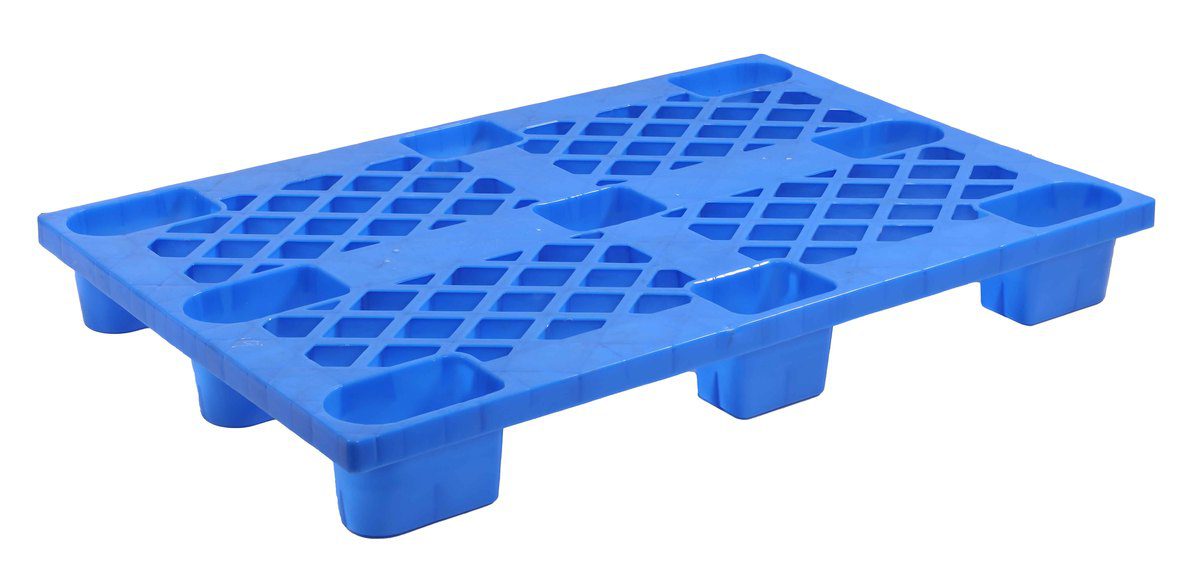
The economics are improving too. Recycled HDPE (high-density polyethylene) costs 20-40% less than virgin resin, and modern washing and sorting technology has closed most of the quality gap. A properly recycled pallet can perform nearly identically to a virgin pallet for most applications.
How HDPE Pallets Are Recycled: The 7-Step Process
Understanding the recycling chain helps you choose a supplier whose pallets are genuinely recyclable — and helps you route your own retired pallets correctly.
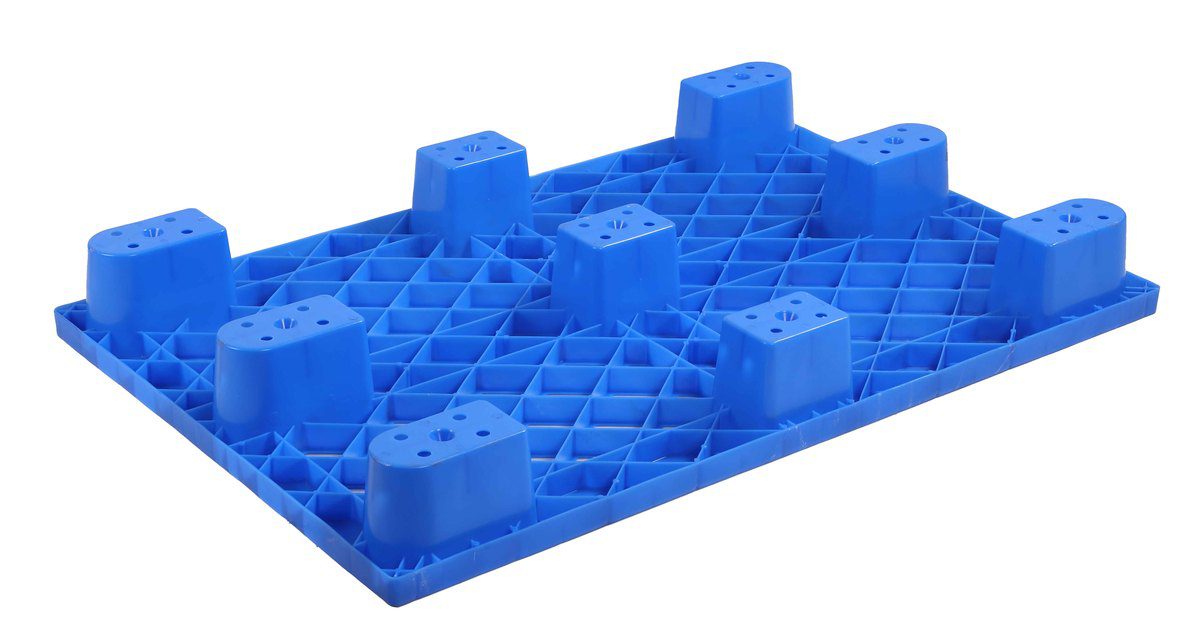
- Collection and sorting. Retired pallets are gathered and sorted by material (HDPE, PP, or composite) and color. Mixed materials contaminate the batch.
- Shredding. Pallets are fed into industrial shredders and reduced to fist-sized chunks.
- Washing. Chunks are washed in hot water with caustic detergent to remove dirt, oil, and labels. Contaminated plastic is the single biggest quality killer in recycling.
- Density separation. A float-sink tank separates HDPE (which floats) from heavier contaminants such as metal inserts or nylon components.
- Melt filtration. The clean flakes are melted and forced through fine mesh filters that capture remaining impurities.
- Pellettization. The filtered melt is extruded into pellets — the raw material for new products.
- Re-molding. Recycled pellets are mixed with virgin resin (typically 10-50% recycled content) and injection-molded into new pallets.
Pallets with metal reinforcement or foam cores break this chain. If a pallet has metal bars, screws, or inserts, ask whether the recycling facility can process it — many cannot, which silently turns a “recyclable” pallet into a landfill item.
Recycled vs Virgin HDPE: What Actually Changes
Recycled HDPE performs close to virgin HDPE, but there are real differences a buyer should understand:
- Impact strength. High-quality recycled HDPE retains 90-100% of virgin impact strength when melt-filtered properly.
- Color. Recycled resin is usually grey or black. Light-colored pallets require virgin or a large virgin blend, which is why many recycled pallets are dark.
- UV stability. Recycled resin may have slightly lower UV resistance, so outdoor recycled pallets should include a UV stabilizer package.
- Consistency. The quality of recycled resin varies by source. Reputable suppliers blend and test each batch; cheap suppliers do not.
For load capacity purposes, a well-made recycled-content pallet meets the same static, dynamic, and racking ratings as virgin — provided the molding quality and wall thickness are identical.
Common Misconceptions About Recycled Plastic Pallets
- “Recycled pallets are weaker.” False when the recycled content is properly filtered and blended. The failure mode is usually cheap molding, not recycled resin.
- “They can’t touch food.” Recycled HDPE is not approved for direct food contact under FDA rules, but the same is true of most virgin industrial pallets. Use dedicated food-grade pallets for direct contact and recycled pallets for transport.
- “Plastic pallets are worse for the environment than wood.” Life-cycle studies show plastic pallets win on total carbon footprint over their lifespan because they last 5-10x longer and weigh less per trip.
- “All plastic pallets are recyclable.” Only if the resin is a single uncontaminated stream. Ask for the supplier’s recycling take-back program.
How to Choose a Sustainable Pallet Supplier
- Ask for recycled content. “What percentage of recycled resin is in your standard pallets?” A credible answer is 10-50% with documented batches.
- Ask about take-back. Does the supplier buy back or collect retired pallets? Closed-loop programs are the strongest sustainability signal.
- Check material purity. Single-material HDPE pallets (no metal, no foam) are the only ones that recycle cleanly.
- Verify durability claims. A pallet that lasts 12 years instead of 6 halves its per-year footprint. Review the racking and durability guidance before comparing specs.
- Compare against wood honestly. Use a total-cost-of-ownership model: purchase price + repair + disposal, divided by trips. Plastic wins on most high-turnover lanes.
What Happens to Pallets at End of Life in Practice
Many large logistics operators now send retired plastic pallets directly to regional recyclers, earning a small rebate instead of paying landfill fees. Others return them to the original manufacturer. If your supplier offers neither route, your “sustainable” pallet has no retirement plan — and that should influence your purchasing decision.
Before you buy, compare the plastic vs metal pallet trade-offs and check the plastic pallet hub for more buying guides, capacity tables, and specification resources.
LSY Plastic: Sustainable Pallet Solutions
At LSY Plastic, our HDPE pallets are manufactured from a single resin stream with 10-50% recycled content available on request, and we provide documentation of material composition for every batch. With 35+ years of injection molding experience, we design pallets for longevity, reparability, and clean end-of-life recycling — not just first-year performance.
Explore our plastic pallet range or contact us to discuss recycled-content options and a take-back program for your operation.
Ready to compare options? Browse our Plastic Pallets range for plastic pallets.
Frequently Asked Questions
How are HDPE pallets recycled?
A seven-step process: collection, sorting by resin, cleaning, shredding or granulating, re-pelletising, quality testing, then moulding into new products. HDPE is highly recyclable and its core properties are largely retained.
Recycled versus virgin HDPE, what changes?
Recycled HDPE may have slightly lower and more variable impact strength and colour consistency, but for non-critical applications it performs well and costs less. For food contact or high-load duty, specify virgin resin.
What should I ask a sustainable pallet supplier?
Ask about resin source, recycled content, take-back or recycling programmes, and how they verify material. A supplier that offers pallet take-back closes the loop.
How do plastic pallets compare on sustainability?
Plastic pallets last years and are recyclable, which usually gives a lower lifetime footprint than one-way wood, especially in closed-loop use. LSY offers durable HDPE and PP pallets; no MOQ for domestic orders, overseas orders ship FCL.



