To specify an industrial platform trolley, describe the payload and its footprint separately. A capacity figure does not tell you whether the packages fit the deck, and a large deck does not prove that its supports can carry your load.
Use the worksheet below to prepare a model-specific discussion with your supplier. Keep the proposed loading arrangement, usable deck dimensions and complete trolley rating together in the approval record.
Build a payload list before choosing a trolley
List every item carried on the heaviest planned trip, including bins, fixtures and loose accessories. Record the mass and base dimensions of each item. Distinguish your normal operating trip from an unusual maximum trip so that the supplier understands both requirements.
| Record | What to include | Question it answers |
|---|---|---|
| Payload mass | All carried items and accessories | What complete load must be evaluated? |
| Contact pattern | Carton bases, feet, skids or other contact points | Where is the load applied to the deck? |
| Package arrangement | Orientation, gaps and permitted restraint space | Does the intended layout fit? |
| Working route | Doors, turns, lift entrances, joints and parking | Can the complete loaded unit follow the route? |
Calculate mass without turning it into a trolley rating
Hypothetical example: six cartons at 12 kg each plus an 8 kg fixture give a planned payload of 80 kg. Those invented figures illustrate addition only. They are not a capacity recommendation for a pictured trolley.
Give the supplier the payload and its distribution, then request the complete-model rating and conditions that cover the intended use. Do not assume an arbitrary percentage margin validates an assembly, and do not multiply a single caster’s rating by the wheel count to approve the whole trolley.
Check package dimensions as a layout
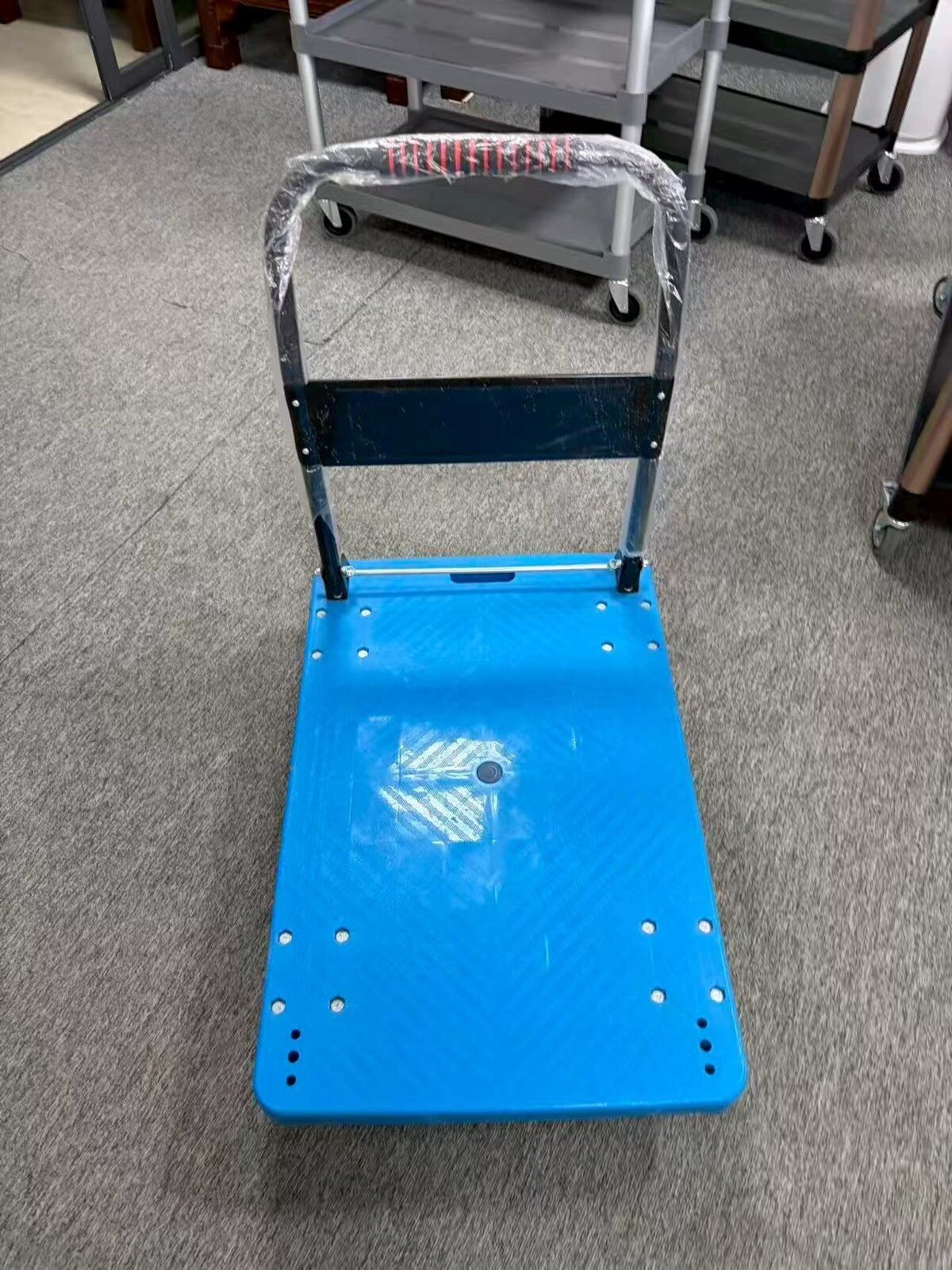
Use the actual external package dimensions, including protrusions. Draw the intended orientation on a measured deck outline. Overall trolley length may include handle projections, so request the usable deck length and width separately.
Hypothetical layout: two rectangular packages, each 400 by 300 mm, placed with their 400 mm edges in line occupy an 800 by 300 mm rectangle before gaps or restraints are included. Rotating or rearranging them changes the required dimensions. This example does not specify a suitable deck or authorize overhang.
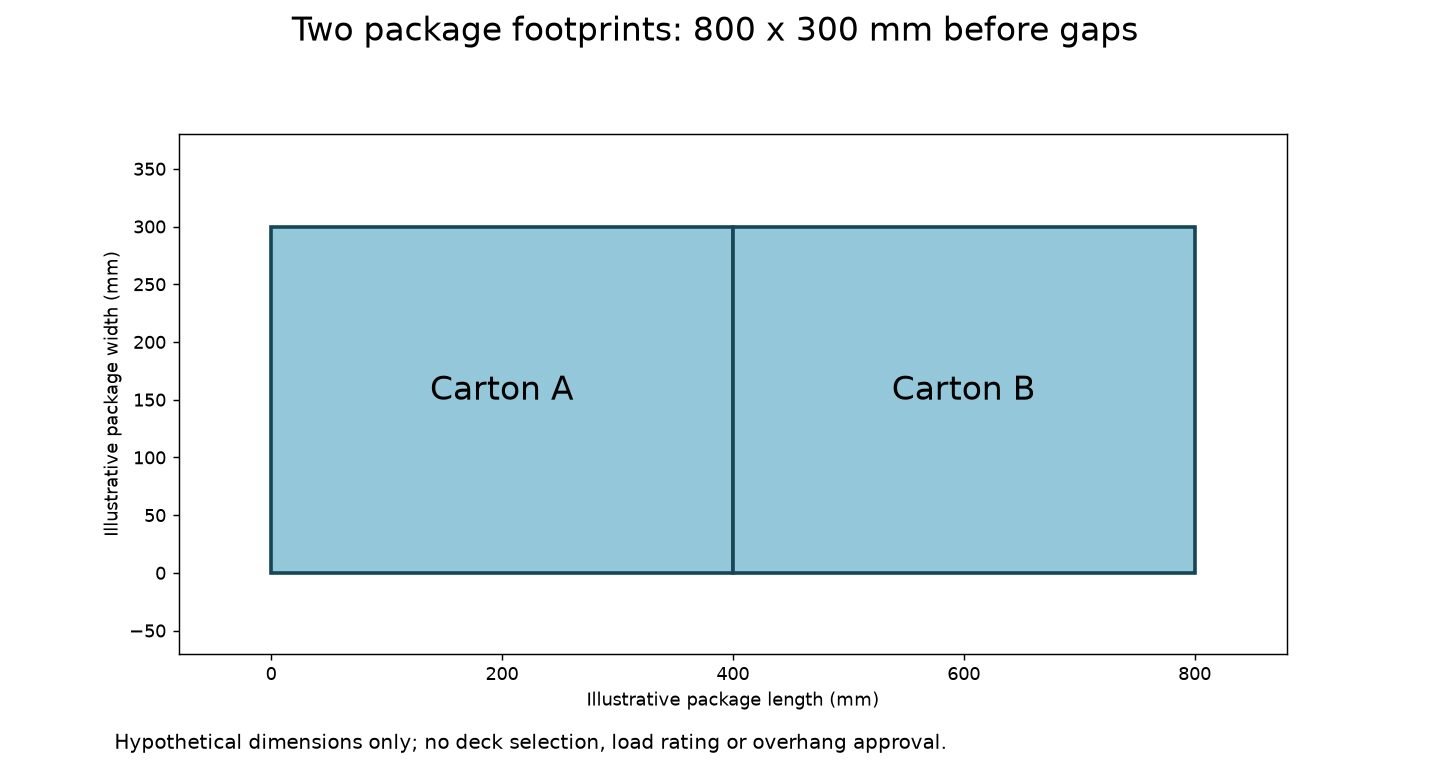
Do not divide total package area by deck area as proof of fit. Shapes, orientation, access and load distribution still need review. If the packages must be restrained, include the approved restraint arrangement in the layout.
Identify concentrated contact points
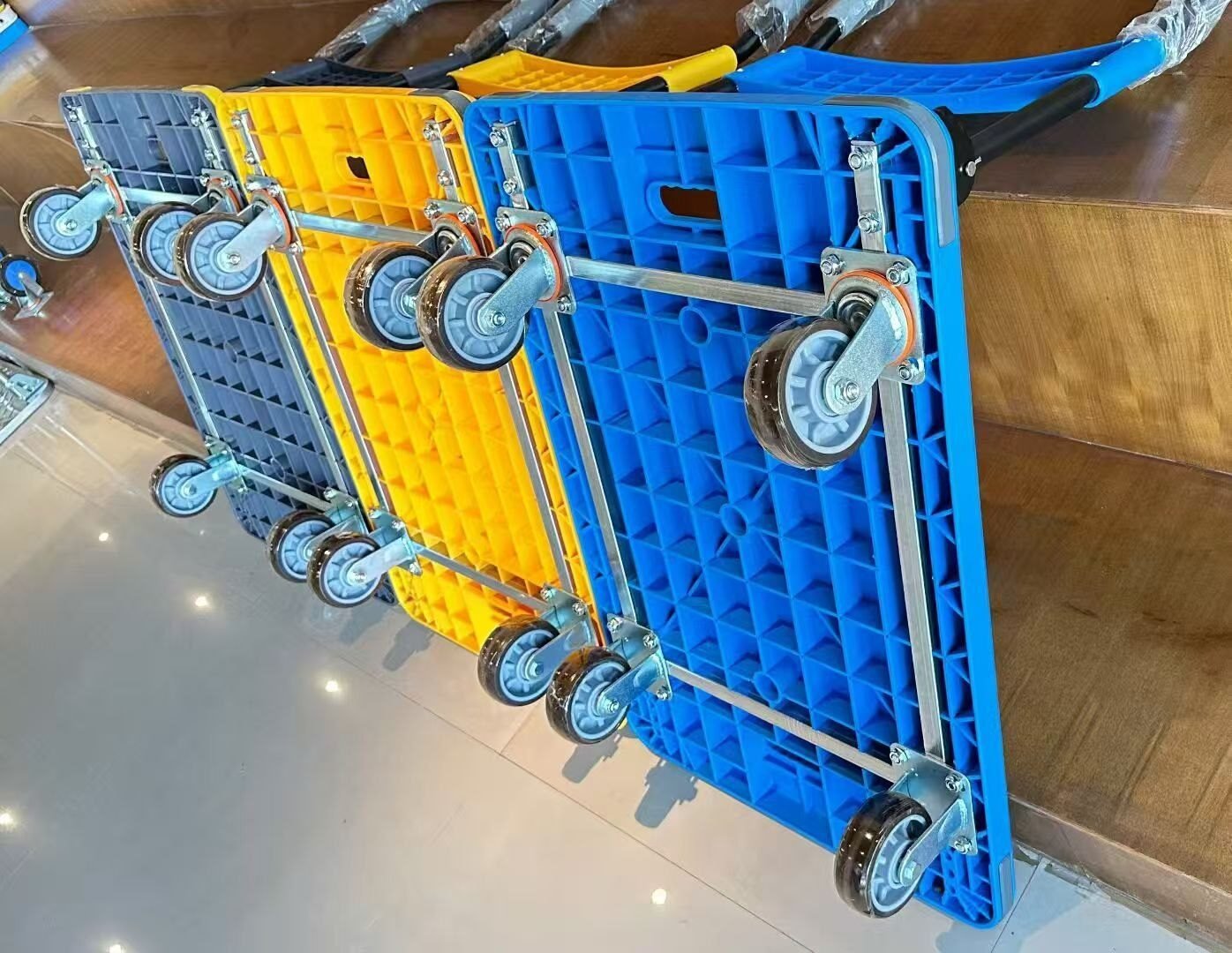
A component supported on a few small feet presents a different deck-contact pattern from cartons spread across the surface. Send a drawing or photograph identifying those contact points and the planned orientation.
Ask the supplier to review whether the complete deck and support arrangement covers that load. Do not add a board or other load-spreading component without checking its suitability and including its mass and dimensions in the proposal.
Review the whole loaded envelope along the route
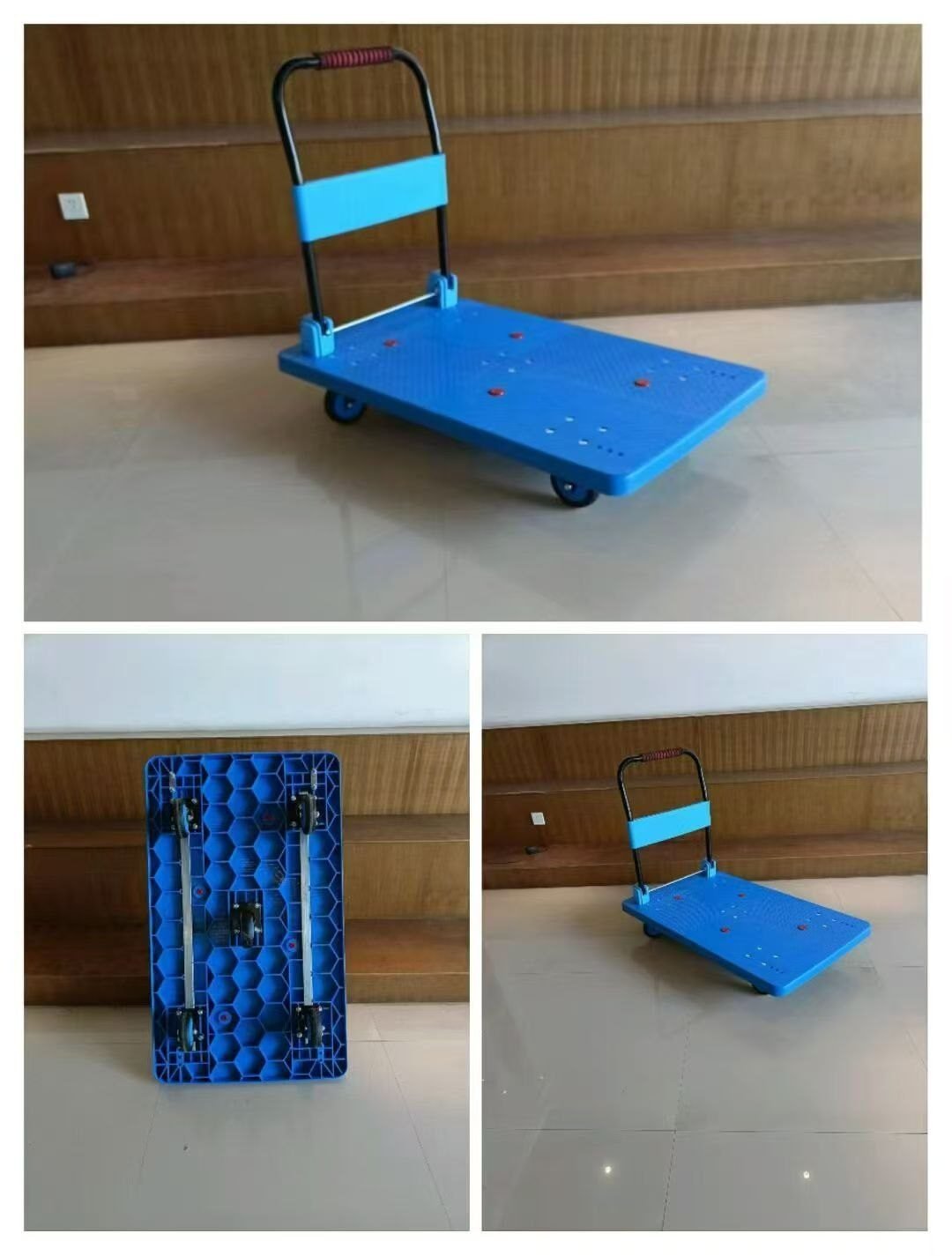
Measure the trolley, handle and loaded packages together. Record the narrowest access points and locations where the direction changes. A deck fitting through a doorway does not establish that the complete loaded unit can turn or pass safely.
Provide floor-condition information as part of the inquiry. For slopes, loading equipment or other unusual conditions, have the task reviewed by the responsible workplace personnel and equipment supplier. A wheel brake alone is not approval for incline use.
Agree the evidence and acceptance record
- Exact trolley model and drawing revision
- Payload list, package layout and contact-point description
- Usable deck and complete loaded dimensions
- Rating and supporting conditions for the proposed assembly
- Route review, cleaning requirements and operating restrictions
- Sample checks, permitted changes and delivery inspection requirements
Send your payload list and deck layout to LSY Plastic. Ask the supplier to identify missing information before recommending a model.
Common sizing questions
Can I choose capacity from carton weight alone?
Provide the combined payload, its distribution, the complete assembly and the working conditions. Carton weight alone leaves out information needed for a model-specific decision.
Is a larger deck always suitable for a heavier load?
No. Deck dimensions describe space; the complete-model rating and its conditions address the proposed load.
Can the load extend past the deck?
Do not assume overhang is permitted. Have the actual arrangement, restraint, route and applicable operating instructions reviewed before use.