1. Model 8003B: The “Silent Hero” of High-Capacity Logistics
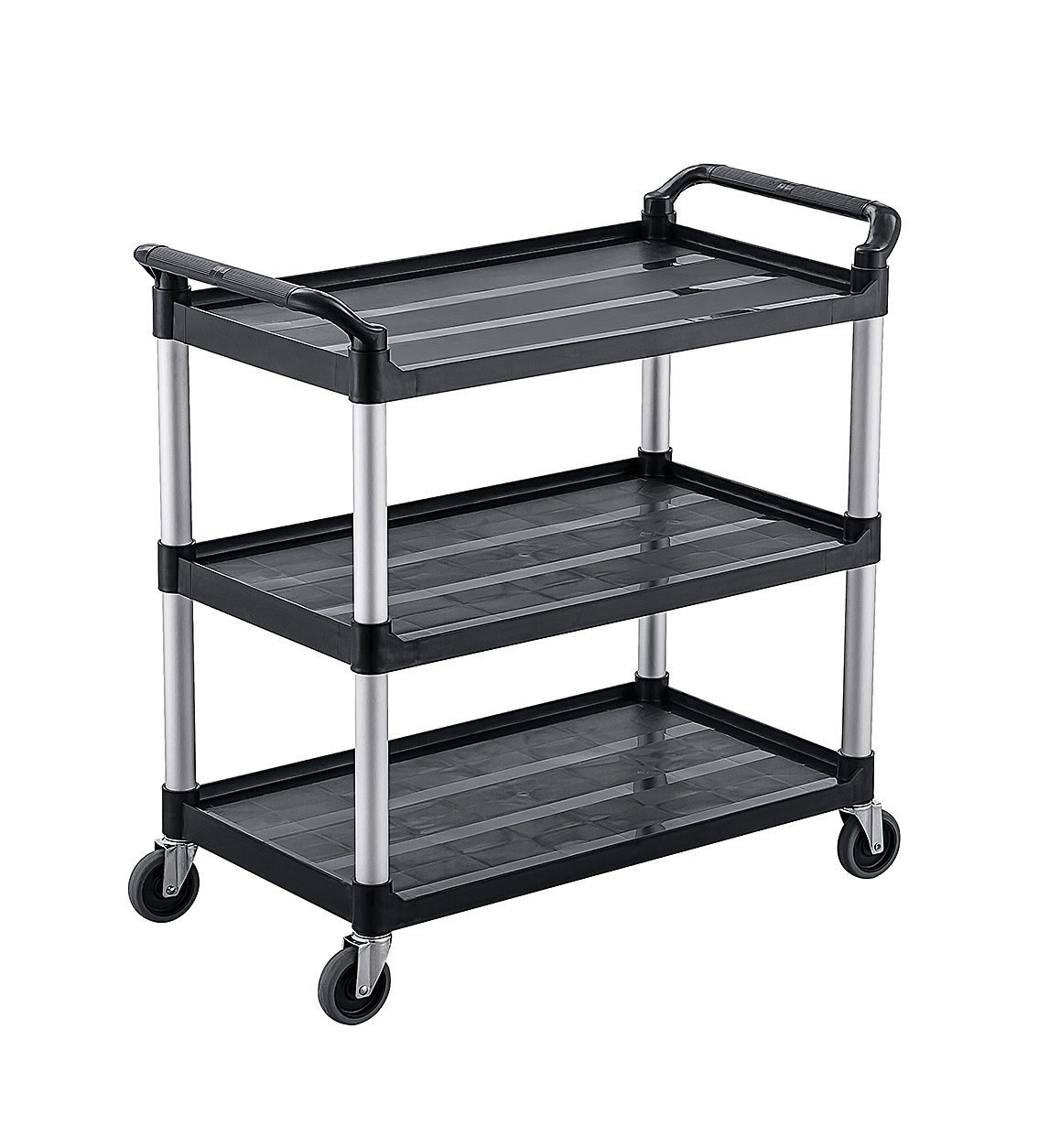
In the world of professional service, a cart is only as reliable as its internal architecture. The Model 8003B (3-Layer) is the definitive reinforcement component for our 98cm Standard Large series. While the outer frame provides the aesthetic, the 8003B provides the “industrial backbone” that allows your staff to move heavy loads with zero wobble and total confidence.
The Engineering of “Interpolation-Thickening”
Our proprietary interpolation-thickened system is a game-changer for commercial durability. By nesting the 8003B high-tensile steel tube inside the 8003A outer frame, we create a composite pillar that is significantly stronger than standard single-wall tubes.
- Structural Integrity: This “tube-within-a-tube” design prevents the frame from warping or “diamonding” under uneven weight distribution.
- Acoustic Comfort: The precision-engineered fit acts as a vibration dampener. In quiet environments like hospitals or high-end dining rooms, the 8003B ensures that your cart moves with a silent, premium feel rather than a distracting metallic rattle.
2. Versatile Application Scenarios
The 8003B 3-Layer configuration is the “Goldilocks” solution—large enough for high-volume tasks, yet nimble enough for standard corridors.
High-Volume Hospitality & Catering
In busy bistros or banquet halls, the 8003B-reinforced 3-tier cart is the ultimate busing tool. It can handle three full tiers of heavy ceramic plates and glassware (up to 120kg+ total), allowing staff to clear entire sections in a single trip, drastically reducing labor time.
Healthcare & Clinical Environments
For nursing homes and clinics, hygiene and stability are paramount. The 3-layer design provides organized tiers for medical records, sterilized kits, and diagnostic equipment. The reinforced core ensures that sensitive instruments aren’t subjected to frame vibrations during transport.
Corporate & Educational Logistics
From moving heavy reams of paper in a law firm to transporting chemicals and glassware in a university lab, the 8003B provides the rigid safety needed to prevent spills and accidents in professional settings.
3. Product Core Information
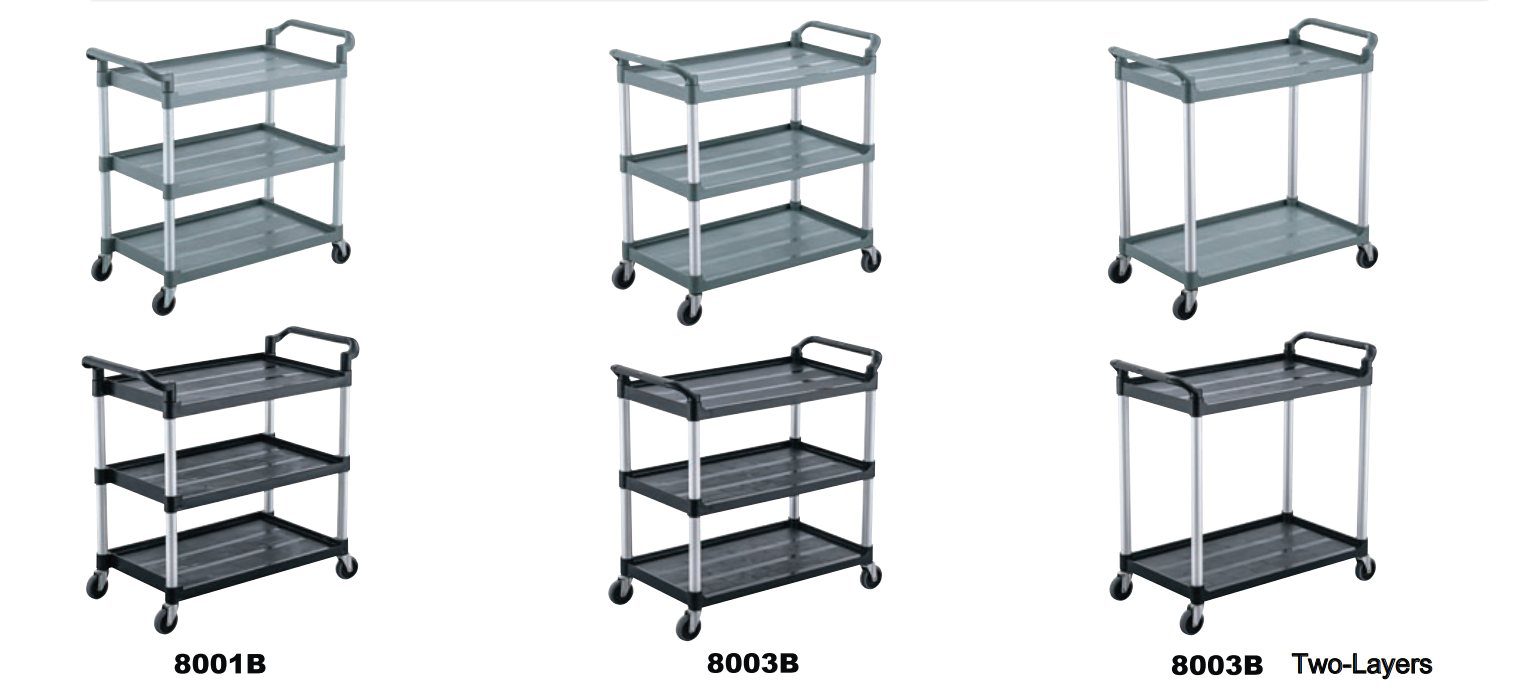
| Model | Name | Specifications | Material | Color | Packing Qty | Carton Size (cm) |
| 8001B | Large Inner Tube | 104 x 49.5 x 99 cm | High-strength Steel; Thickened wall, strong welding | Grey, Black | 1 Pc/Ctn | 91 x 50.5 x 22.5 |
| 8003B | Large Inner Tube | 98 x 49 x 92.5 cm | High-strength Steel; Galvanized + Powder Coated for double rust protection | Grey, Black | 1 Pc/Ctn | 88×50.5×21.5 |
4. Expert Insights & FAQ
Why choose the 3-layer 8003B over the 2-layer version?
The 3-layer 8003B is about organizational efficiency. By providing three distinct surfaces, it allows for better sorting (e.g., top shelf for clean items, middle for tools, bottom for waste). The inner tube is specifically notched to support the middle shelf connectors, ensuring that the center of the cart is just as stable as the top and bottom.
How does the 8003B improve the “Total Cost of Ownership” (TCO)?
Cheap carts are a “false economy”—they fail at the joints within 6–12 months of heavy use. By investing in the 8003B reinforcement, you are effectively doubling the lifespan of your fleet. The added rigidity prevents stress fractures at the wheel casters and handle joints, meaning fewer replacements and lower maintenance costs over a 5-year period.
Is it difficult to assemble the B-series into the A-series?
Not at all! We’ve designed the tolerances for a “Slide-and-Lock” fit. The 8003B is engineered to glide into the 8003A with minimal effort, yet once the shelves are tightened, the two tubes act as a single, indestructible unit.
On the 8003B, confirm the overall dimensions against the space you have, and tell us the load it has to carry.
More from LSY Plastic
Browse the full Food Service & Bussing Carts range, or read our guide: Hotel Cart Maintenance Schedule: Daily, Weekly, and Monthly Checklist. Factory-direct MOQ and FOB quotes within 24 hours.
How these trolleys are built
Start from the load per shelf and the floor surface. Those two answers fix the frame, the shelf count and the wheel compound.
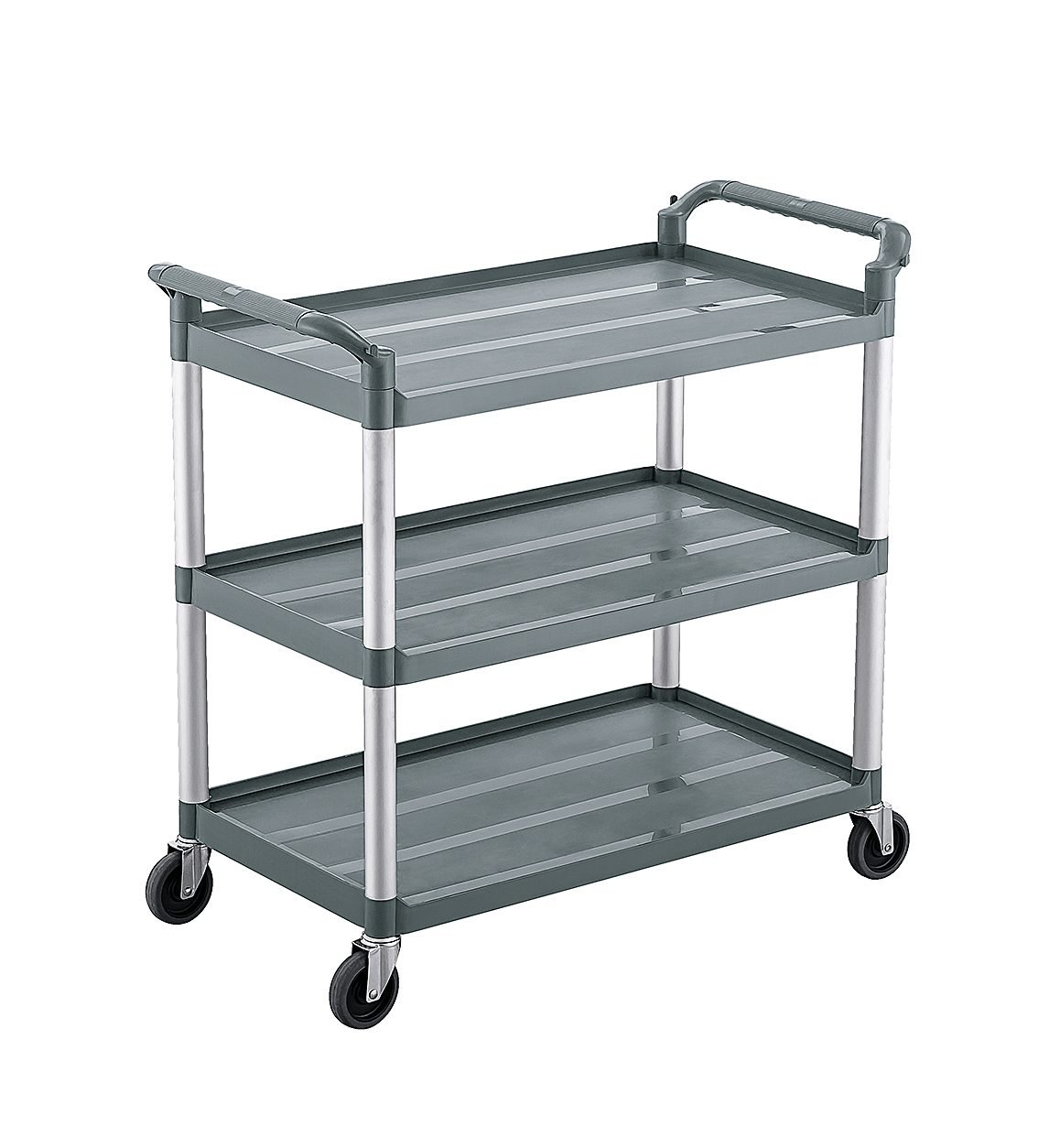
Utility carts pair a moulded polymer shelf stack with reinforced posts. The shelves carry the load; the posts carry the torsion. That split is what keeps a three-tier cart from racking out of square after a year of daily service.
Where buyers actually use these trolleys
Start from the load per shelf and the floor surface. Those two answers fix the frame, the shelf count and the wheel compound.
Restaurants, schools, hospitals and warehouses use multi-tier utility carts for anything that has to move in quantity: plated meals, linen, supplies, tools, stock picks. The cart earns its place by replacing several trips with one.
Ordering, caster options and shipping
Samples are charged at cost. Trolleys are specified by what they carry and where they roll, so the sample is the quickest way to confirm shelf height, clearance, and how the casters behave on your own floor. Domestic orders have no minimum quantity; export orders move as full container loads (FCL), with the cartons knocked down to protect the container cube.
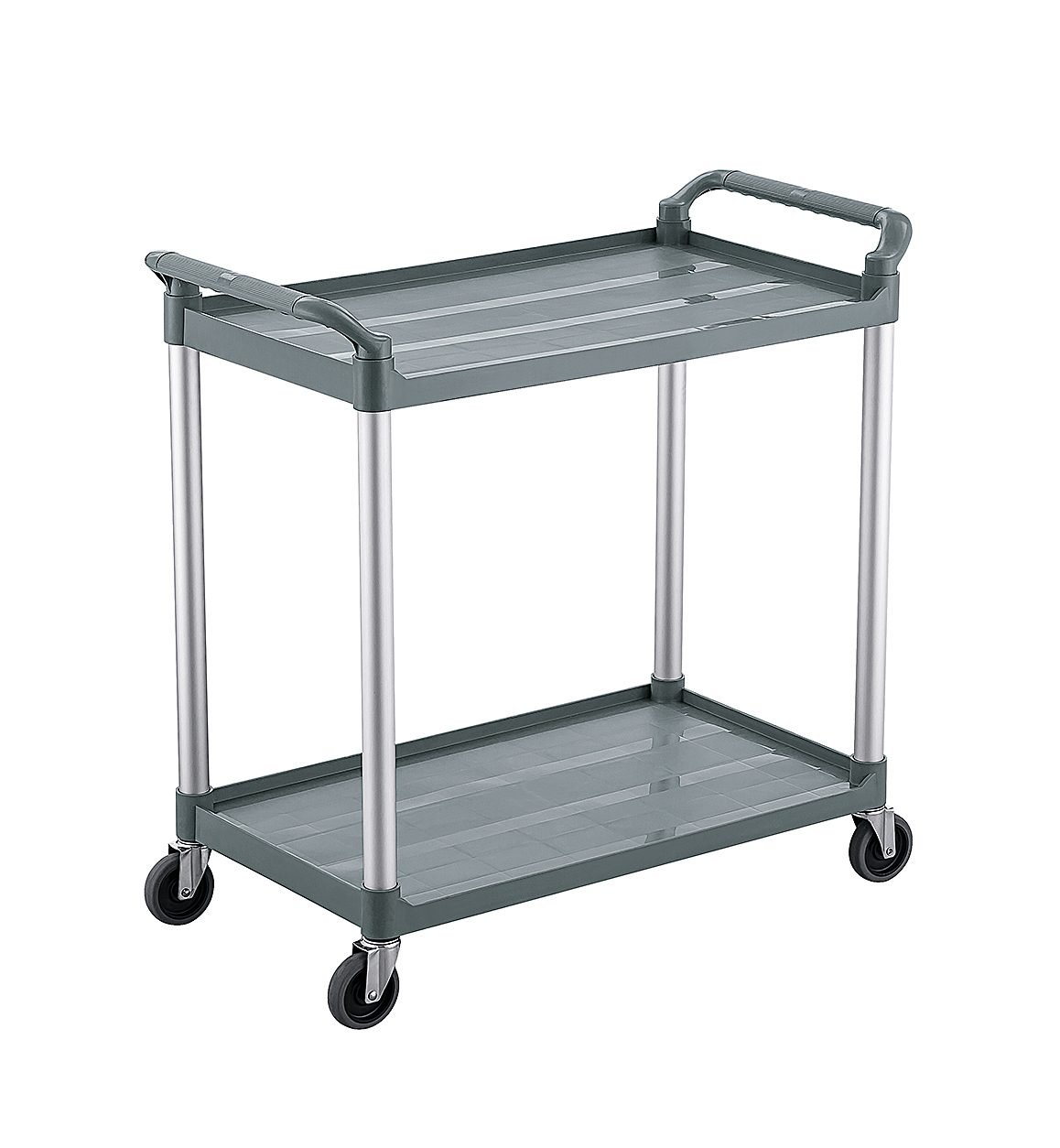
Each shelf is load-rated, and the casters are specified by wheel compound for the floor they run on — soft rubber for quiet guest floors, harder compounds for back-of-house. Shelves are checked for deflection under rated load before the cart is packed.
For the full selection logic behind this product family, see our hotel service cart guide.
FAQ
Are samples free?
Samples are charged at cost, not given away.
What is the minimum order quantity?
Domestic orders have no minimum. Export orders ship as full container loads (FCL).
Can you produce to our drawing?
Yes — LSY runs its own mould workshop and adapts tooling to customer drawings or samples.
Reinforced inner-tube cart: stiffness for tall loads
An inner-tube reinforcement raises the stiffness of the frame without adding much weight, which matters on a tall cart where a flexing frame translates into a wobble at the top shelf. Check the loaded stability at the highest tier, not just the load rating.
The load rating is not the load you will carry
A stated load rating usually assumes the weight spread evenly across the lower shelves. Real service does not work that way: the top shelf gets loaded first, and it is often loaded with the heaviest items because they are easiest to lift last. If the top shelf is where the weight ends up, that is the configuration to judge the cart on, not the total figure.
The second number that rarely appears on a specification is the shelf deflection under load. A frame can be strong enough not to fail and still flex enough to make a loaded cart feel uncertain. For tall loads especially, stiffness rather than strength is usually what separates a cart that is pleasant to push from one staff avoid using.
Castors are the component that decides service life
Castors fail before frames do, almost without exception. Wheel material decides most of it: soft tread rolls quietly and protects carpet but wears fast on tile and concrete, while hard tread lasts on hard floors and drags and marks on soft ones. Specify the actual floor surface when ordering — replacing four castors mid-life costs more per year than buying the specification right at the start.
Braking matters more than it sounds. Any cart parked on a slope, in a lift, or loaded while stationary needs a brake on at least two castors. Check that replacements are available as standard parts rather than a bespoke order.
Route width, thresholds and lifts
The largest cart that fits through the widest doorway is the wrong cart if it cannot turn at the corner afterwards. Measure the narrowest point on the route, and then check the turning circle against it. Thresholds and lift lips are the second constraint: a loaded cart crossing a raised threshold puts an impact load through the castor mounts that no load rating accounts for.
Frequently asked questions
How much weight can the top shelf take?
Ask for the per-shelf rating rather than the total. In real service the top shelf is loaded first and often heaviest, so it is the number that matters.
Which castor should I specify?
It follows the floor: soft tread for carpet and quiet areas, hard tread for tile and concrete. Where the cart parks on a slope or in a lift, specify brakes on at least two castors.
Will it fit through our service door and lift?
Check the narrowest point on the route and the turning circle, not just the door width. Send us both dimensions and we will confirm fit before you order.
Ordering notes: caster compound and shelf count
Start from the load per shelf and the floor surface. Those two answers fix the frame, the shelf count and the wheel compound.
- Colour. Send a RAL or Pantone reference rather than a colour name. Stock colours ship faster; custom shades carry a minimum quantity per colour.
- Export packing. Overseas orders ship as full container loads (FCL). Loose cartons are not consolidated for export.
- Samples. Samples are supplied at cost price plus freight, not free of charge.
- Lead time. Stock colours from existing moulds run a few weeks from deposit and artwork confirmation. Custom colour or new tooling adds time and is confirmed in writing with the quotation.
- Documentation. Commercial invoice, packing list and bill of lading as standard; certificate of origin where the destination requires it.
Related reading: hotel cart guide, service cart vs housekeeping cart.