
Product Introduction
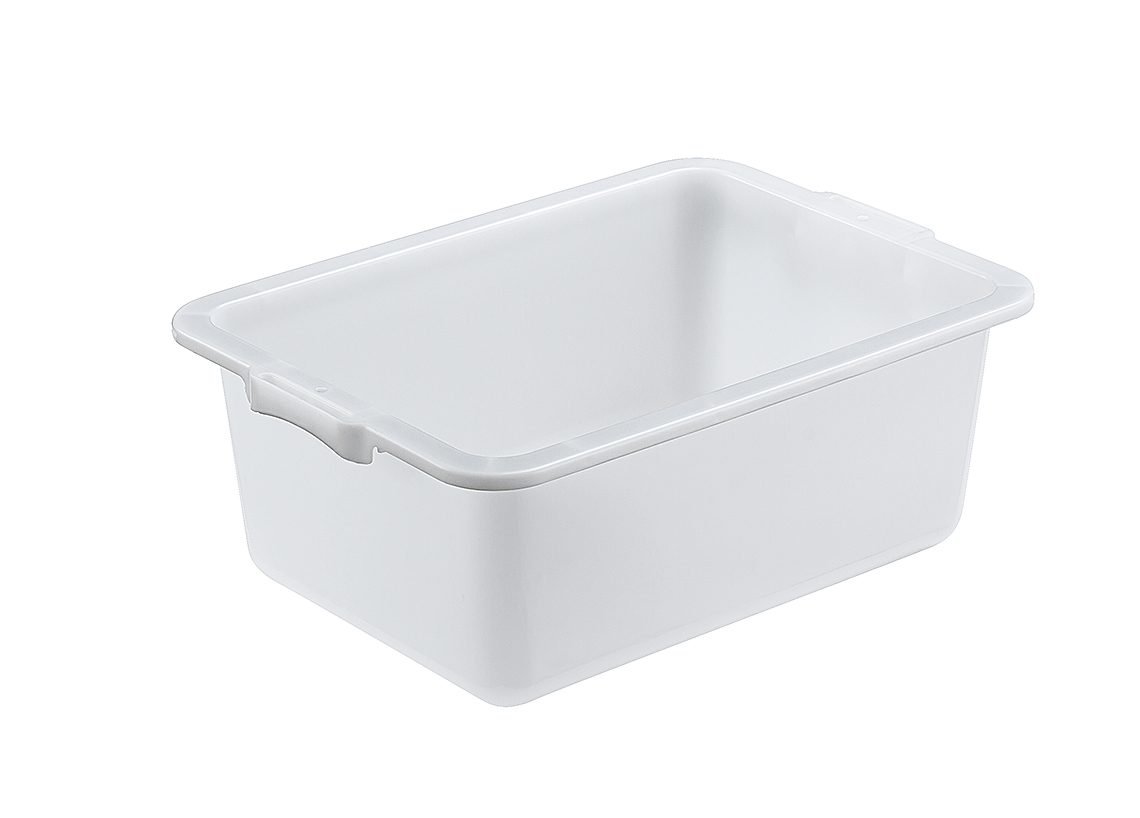
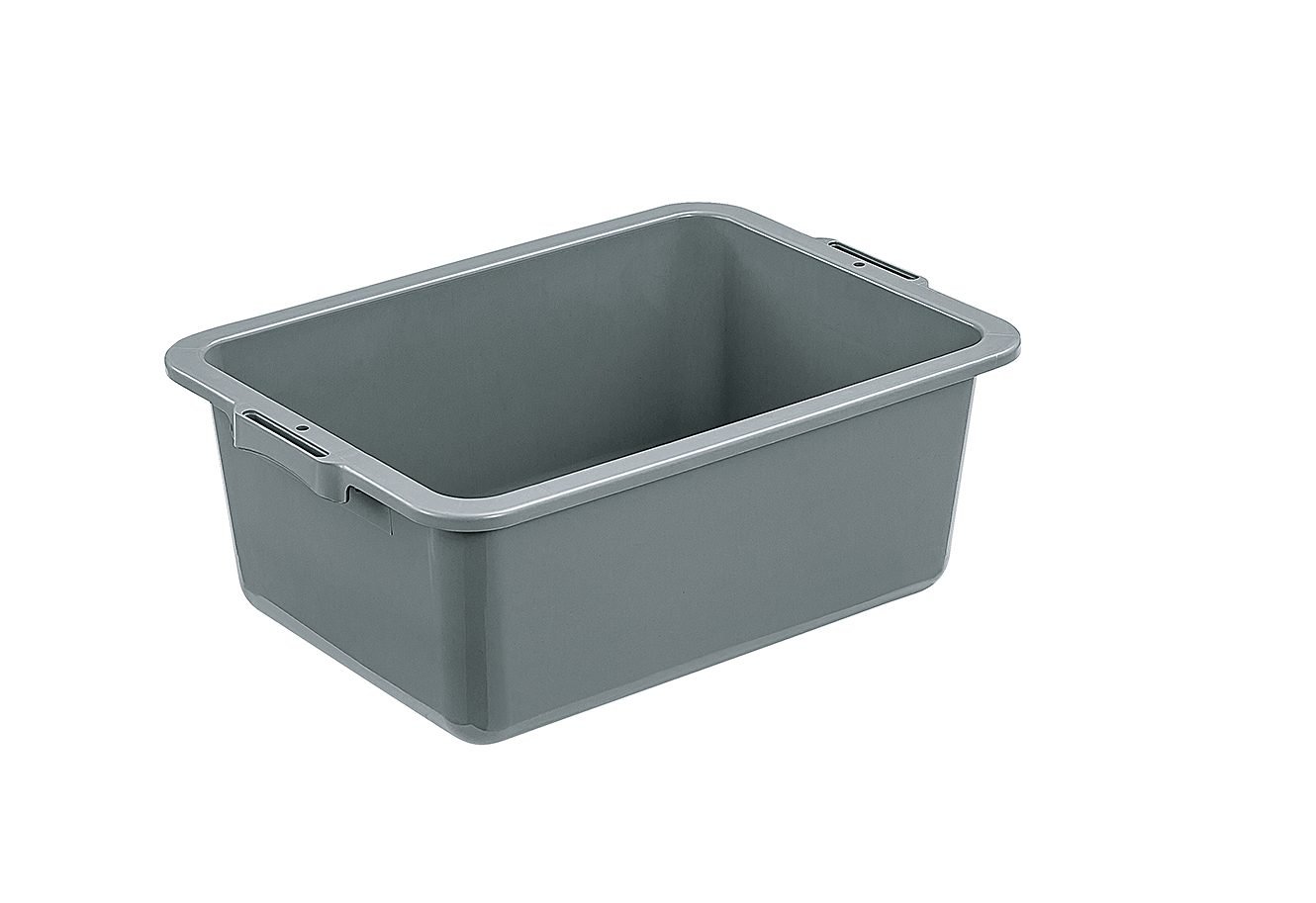
The Model 8316 Deep Collection Basin is engineered for tasks that require extra volume without taking up excessive counter space. With a significant 20.5 cm depth, this basin is the professional’s choice for heavy-duty soaking, liquid transport, and high-capacity waste collection.
Crafted from premium, high-impact polypropylene, the 8316 is designed to withstand the rigors of commercial dishrooms and industrial workspaces. Its reinforced deep-wall construction prevents splashing and spills, making it an essential tool for maintaining a clean and efficient environment.
⭐ Product Advantages (Features)
- Extra Deep Design: The 20.5 cm height provides superior volume for soaking large utensils, holding more liquids, or containing bulky items securely.
- Splash-Resistant Walls: High vertical sides act as a barrier against spills and splashes during transport, keeping floors safer and drier.
- Heavy-Duty Polypropylene: Resistant to cracking, staining, and common industrial chemicals, ensuring long-term durability in harsh conditions.
- Space-Efficient Footprint: A more compact length and width compared to standard basins, allowing it to fit into tighter workstations or double-sink setups.
- Integrated Reinforced Rims: Designed for easy lifting and carrying, even when filled to capacity with heavy liquids or hardware.
Product Parameters
| Attribute | Specification |
|---|---|
| Model Number | 8316 |
| Product Name | Deep Collection Basin / High-Sided Bus Box |
| External Dimensions | 51.5 x 38 x 20.5 cm (20.3″ x 15″ x 8.1″) |
| Material | High-Density Polypropylene (PP) |
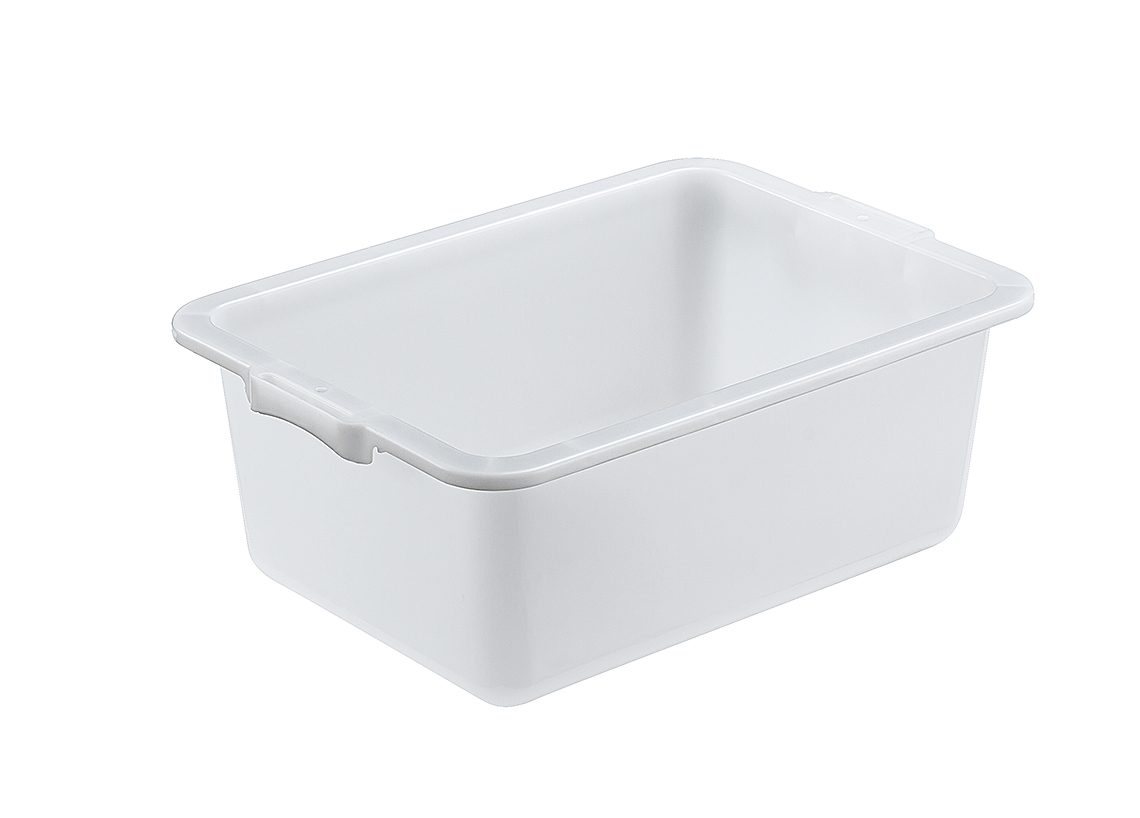
| Available Colors | Ash Gray / White |
| Packing Unit | 10 pieces per carton |
| Carton Size | 53.5 x 38.5 x 46.5 cm |
| Application | Soaking, Liquid Transport, High-Volume Bussing |
Product Data Extraction
| Product Model | Name | Size (cm) | Carton Size (cm) | Packing (pcs) | Color |
|---|---|---|---|---|---|
| 8318 | Collection Basin | 61.5 x 41 x 18 | 65 x 44.5 x 44.5 | 10 | Ash / White |
| 8316 | Collection Basin (Deeper) | 51.5 x 38 x 20.5 | 53.5 x 38.5 x 46.5 | 10 | Ash / White |
| 8313-A1 | Medium-sized Collection Basin | 53 x 38.5 x 15 | 53.5 x 38.5 x 64 | 20 | Black / Ash / White |
| 8312 | Small Collection Basin | 39 x 30 x 14 | 40 x 31 x 43.5 | 20 | Black / Ash / White |
| 8303 | Large Collection Basin (Tall Bin) | 33 x 23 x 56 | 34.5 x 23 x 97 | 5 | Ash / Black |
| 8302 | Small Bucket | 33 x 23.5 x 17.5 | 34.5 x 23 x 45 | 5 | Ash / White |
Application Scenarios
- Commercial Kitchens: Perfect for soaking burnt pots and pans or as a high-capacity “silverware soak” tub before dishwashing.
- Food Processing: Ideal for washing vegetables or transporting bulk ingredients in food production lines.
- Janitorial Services: Use as a deep utility pail for floor mopping prep or collecting wet waste in hotels and hospitals.
- Laboratories & Clinics: Excellent for chemical soaking or transporting medical waste where splash containment is critical.
Frequently Asked Questions (FAQ)
Q1: What is the main difference between 8316 and 8318? A: Model 8316 is deeper (20.5 cm) but has a smaller footprint, while 8318 is wider but shallower (18 cm). Choose 8316 if you need to contain more volume or liquids in a smaller area.
Q2: Is this basin resistant to hot water? A: Yes, the high-quality PP material can handle hot water typically used in commercial dishwashing and sanitizing processes.
Q3: Can these be nested to save space? A: Absolutely. Like all our collection basins, the 8316 is designed to nest inside one another when empty, significantly reducing storage space.
Q4: Does it come with a lid? A: This specific model is designed as an open-top basin for quick access. Please contact our sales team if you require custom lid solutions for bulk orders.
More from LSY Plastic
Browse the full Commercial Collection Basin range, or read our guide: What is a utility cart used for? (2026). Factory-direct MOQ and FOB quotes within 24 hours.
How these basins are moulded
Stack fit first — check the new size against the basins you already run, because a bus box that does not nest costs more in storage than in purchase.
Every item is injection-moulded in-house in Foshan on Japan-imported presses from 180 to 2,500 tons, with tooling designed and maintained in LSY’s own mould workshop.
Where buyers actually use these basins
Stack fit first — check the new size against the basins you already run, because a bus box that does not nest costs more in storage than in purchase.
Buyers source these items alongside a main product line to fill containers and consolidate suppliers, which is usually where the freight saving comes from.
Ordering, sizing and shipping
Samples are charged at cost. Bus boxes and collection basins are a fit-and-stack product, so the sample is really a check on whether the new size stacks with the bins you already run. Domestic orders have no minimum quantity; export orders move as full container loads (FCL).
Food-contact basins are moulded from virgin food-grade resin, with no regrind in the food-contact wall, and the rim is checked for stack alignment so a full column does not jam on the line.
On the 8316, confirm the nesting depth against the basins you already run; a stack that does not nest properly wastes more rack space than the basins cost.
For the full selection logic behind this product family, see our injection moulding capability guide.
FAQ
Are samples free?
Samples are charged at cost, not given away.
What is the minimum order quantity?
Domestic orders have no minimum. Export orders ship as full container loads (FCL).
Can you produce to our drawing?
Yes — LSY runs its own mould workshop and adapts tooling to customer drawings or samples.
What a bus box actually has to do
A bus box carries dirty plates and glasses from table to wash-up, which means it meets impact, water, and stacking — usually several times per service, hundreds of times per week. Two specifications decide service life: how well the base resists cracking when dropped loaded, and whether the boxes nest cleanly after washing so they can be stacked for the next service.
Size standards and why depth matters
Bus boxes follow informal industry standard sizes rather than a single specification, so the practical question is which size the operation already uses. Changing size changes the dish racks, the storage shelving and sometimes the wash-up layout — which is why buyers generally stay inside the footprint they run today.
Depth is the specification that gets chosen badly. A deeper box holds more per trip but becomes harder to carry when loaded with plates, and it stacks taller when nested. Most operations settle on a depth that suits plates and glassware rather than maximising volume.
Commercial versus domestic construction
A commercial bus box differs from a domestic tub in wall thickness, ribbing and corner reinforcement. The failure mode is corner cracking, typically starting small at the base and spreading until the box leaks. Look for reinforced corners and a rim that survives being stacked loaded without deforming.
Colour coding for back-of-house control
Many operations colour-code bus boxes by zone — restaurant, bar, banqueting — to stop boxes migrating and to make cross-contamination visible. It costs nothing extra if standard colours are used, and only carries a minimum quantity per shade if a custom colour is specified.
Frequently asked questions
Do these fit standard dish racks?
Most standard sizes fit common racking, but confirm the footprint against the racks and shelving you run — send us both dimensions and we will confirm fit.
What causes cracking?
Repeated impact when loaded, particularly at the corners. Reinforced corners and adequate wall thickness are what separate a commercial box from a domestic tub.
Can they be colour-coded by zone?
Yes. Standard colours carry no minimum; custom shades carry a minimum quantity per colour.
Ordering notes: sizing and stack fit
Stack fit first — check the new size against the basins you already run, because a bus box that does not nest costs more in storage than in purchase.
- Colour. Send a RAL or Pantone reference rather than a colour name. Stock colours ship faster; custom shades carry a minimum quantity per colour.
- Export packing. Overseas orders ship as full container loads (FCL). Loose cartons are not consolidated for export.
- Samples. Samples are supplied at cost price plus freight, not free of charge.
- Lead time. Stock colours from existing moulds run a few weeks from deposit and artwork confirmation. Custom colour or new tooling adds time and is confirmed in writing with the quotation.
- Documentation. Commercial invoice, packing list and bill of lading as standard; certificate of origin where the destination requires it.
Related reading: hotel cart guide.
Where these bus boxes ship
Bus box and collection basin shipments from this line go mostly to Vietnam, Bangladesh, Kenya, South Africa. Export orders move full container load; samples are charged at cost and credited against a confirmed order.


