If you work in electronics manufacturing or automotive logistics, you know the nightmare scenario: a batch of sensitive components arrives at the assembly line, and half of them are dead on arrival. The culprit? Invisible static electricity.
Before comparing options, it helps to review the standard plastic pallet dimensions chart so you know what is available.
You’ve likely already invested in ESD wrist straps and flooring, but the pallets moving your goods are often the overlooked weak link.
Choosing the right ESD plastic pallet buyer’s guides isn’t just about buying “black plastic.” It’s about matching the pallet’s structure to your specific warehouse flow—whether you are stacking them on the floor, throwing them up on high-bay racks, or shipping them one-way.
Below, I’ve broken down our inventory into four practical categories to help you figure out exactly what you need.
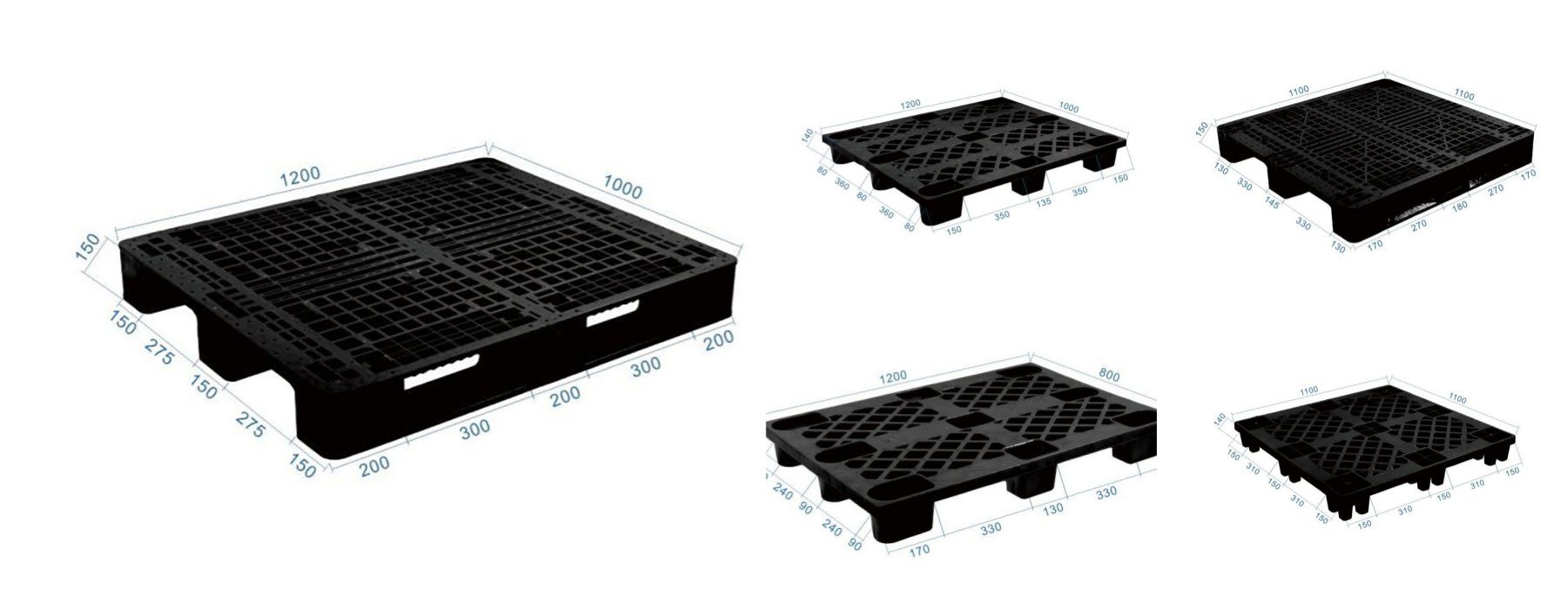
1. The “Space Savers”: 9-Feet / Single-Sided Series ESD Plastic Pallets
(Models: A1/B1#, A2#, A3#, 5#)
Best for: Moving light goods around the workshop & saving return shipping costs.
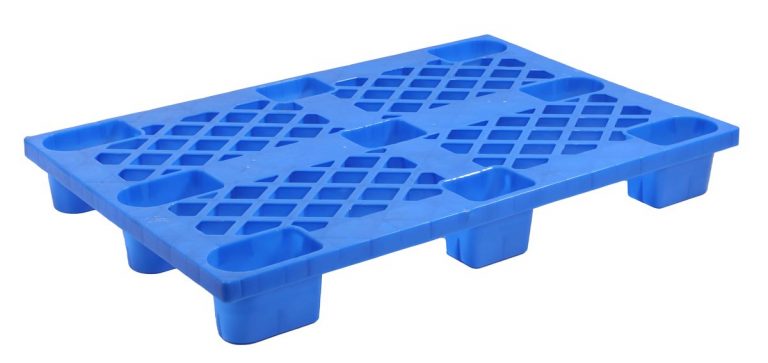
Think of these as the lightweight workhorses of the factory floor. Because they sit on nine independent “feet” rather than solid runners, they are incredibly light.
Why you’ll love them:
- They Nest: When they are empty, you can stack them inside each other (like plastic cups). If you have limited storage space or need to ship empty pallets back to a supplier, this feature alone saves a fortune in freight costs.
- Easy Access: Your pallet jack or forklift can grab them from any of the four sides without hassle.
Real-world tip: If you are just moving PCBA boards from the molding machine to the assembly station, the A1 or B1# is usually all you need. Don’t overpay for heavy-duty models.
2. The “Stacking Masters”: Full-Perimeter / “Tian” Type
(Models: 7#, 8#, 9#, A33#)
Best for: Stacking loaded pallets on top of each other (Block Stacking).
We call these “Tian” types because the bottom looks like the Chinese character “田” (a window pane grid). This closed bottom loop gives the pallet a massive footprint on the floor.
Why it matters: If you try to stack a heavy load on a 9-feet pallet, the feet might crush the cardboard boxes on the layer below. The Full-Perimeter design spreads that weight evenly.
Spotlight on the A33#: If you are in the automotive sector, look closely at the A33#. It’s built specifically for you—1200x800mm (Euro size) with special slots to lock irregular parts in place.
3. The “Rack Warriors”: 3-Runner / “Chuan” Type
(Models: 10#, 24#, 27#)
Best for: Beam Racking Systems and Automated Warehouses.
This is the industry standard for a reason. The three parallel runners on the bottom allow the pallet to sit securely on warehouse rack beams.
The critical difference: Unlike the lighter models, these (especially the 24# and 27#) are designed to hold steel tubes inside. Plastic naturally bends over time under heavy loads (we call this “creep”). By reinforcing these runners with steel, we ensure the pallet stays straight and safe, even when holding 1,000kg+ in the air for months.
4. The “Clean Freaks”: Flat Top Series
(Model: 43#)
Best for: Cleanrooms and small, sensitive parts.
Most pallets have a grid deck to save weight, but grids trap dust. The 43# (a compact 1000x500mm model) has a completely smooth, solid top. If hygiene is a priority—or if your parts are so small they might fall through a grid—this is your solution.
📊 Quick Spec Comparison
I know scanning through datasheets is tedious, so here is a quick cheat sheet of our most popular ESD models to help you compare load capacities.
| Type | Model | Size (mm) | Dynamic Load (Moving) | Static Load (Floor) | The Bottom Line |
|---|---|---|---|---|---|
| 9-Feet | A1/B1# | 1200×1000 | 500 KG | 1000 KG | Great entry-level choice. |
| 9-Feet | A3# | 1200×1000 | 600 KG | 1000 KG | Slightly tougher legs. |
| Full-Perimeter | 8# | 1200×1000 | 800 KG | 2000 KG | The standard for floor stacking. |
| Full-Perimeter | A33# | 1200×800 | 700 KG | 1500 KG | Auto-industry favorite. |
| 3-Runner | 10# | 1200×1000 | 800 KG | 2000 KG | Good for light racking. |
| 3-Runner | 27# | 1200×1000 | 1000 KG | 2500 KG | Heavy duty. Can take 10 steel tubes. |
| Flat Top | 43# | 1000×500 | 500 KG | 1500 KG | Easy to wipe down. |
> Pro Tip: “Dynamic Load” is what the pallet handles while a forklift is driving it around. If you plan to put these on a rack, ask us about “Racking Load”—that number changes based on how much steel reinforcement we add.
So, Which One Should You Buy?
Let’s simplify this. Here is my honest recommendation based on what we see most clients doing:
- “I just need to move chips around the factory floor.” Grab the A1/B1#. It’s cost-effective, lightweight, and gets the job done without fuss.
- “I need to store heavy loads on high racks.” Do not compromise here. Go for the 24# or 27# and ask us to install the steel tubes. It’s worth the extra investment to prevent a pallet from collapsing 10 meters in the air.
- “I’m shipping car parts.” The A33# is likely what your supply chain requires. It fits standard Euro dimensions and secures parts better than a flat deck.
- “I have a tight aisle or small assembly line.” Look at the 43# or 5#. They are narrower and fit where standard pallets don’t.
Still not sure? Every warehouse is different. If you are worried about load specs or chemical resistance, just drop us a message. We can look at your current setup and tell you exactly which ESD pallet will work best for your budget.
[https://lsyplastic.com/product-category/anti-static-industrial-series/esd-plastic-pallets/]
Need reliable plastic logistics solutions? Contact LSY Plastic today for a free consultation. Backed by decades of injection molding experience, LSY Plastic provides factory-direct quality at competitive prices. Chat on WhatsApp for instant quotes. For more guides on this topic, check our ESD Containers Complete Guide.
Related Guides
- Plastic Pallets Complete Guide (Hub) — every pallet guide we publish, in one place
- Do Plastic Pallets Need ISPM-15? — export compliance explained for shippers
- Plastic vs Metal Pallets Comparison — side-by-side cost and durability table
- How to Choose the Right Plastic Pallet — full buyer’s guide with specs
Related Guides
- Plastic Pallets Complete Guide (Hub) — every pallet guide we publish, in one place
- Do Plastic Pallets Need ISPM-15? — export compliance explained for shippers
- Plastic vs Metal Pallets Comparison — side-by-side cost and durability table
- How to Choose the Right Plastic Pallet — full buyer’s guide with specs
Related Guides
- Plastic Pallets Complete Guide (Hub) — every pallet guide we publish, in one place
- Do Plastic Pallets Need ISPM-15? — export compliance explained for shippers
- Plastic vs Metal Pallets Comparison — side-by-side cost and durability table
- How to Choose the Right Plastic Pallet — full buyer’s guide with specs
Related Guides
- Plastic Pallets Complete Guide (Hub) — every pallet guide we publish, in one place
- Do Plastic Pallets Need ISPM-15? — export compliance explained for shippers
- Plastic vs Metal Pallets Comparison — side-by-side cost and durability table
- How to Choose the Right Plastic Pallet — full buyer’s guide with specs
Related Guides
- Plastic Pallets Complete Guide (Hub) — every pallet guide we publish, in one place
- Do Plastic Pallets Need ISPM-15? — export compliance explained for shippers
- Plastic vs Metal Pallets Comparison — side-by-side cost and durability table
- How to Choose the Right Plastic Pallet — full buyer’s guide with specs
Related Guides
- Plastic Pallets Complete Guide (Hub) — every pallet guide we publish, in one place
- Do Plastic Pallets Need ISPM-15? — export compliance explained for shippers
- Plastic vs Metal Pallets Comparison — side-by-side cost and durability table
- How to Choose the Right Plastic Pallet — full buyer’s guide with specs
Related Guides
- Plastic Pallets Complete Guide (Hub) — every pallet guide we publish, in one place
- Do Plastic Pallets Need ISPM-15? — export compliance explained for shippers
- Plastic vs Metal Pallets Comparison — side-by-side cost and durability table
- How to Choose the Right Plastic Pallet — full buyer’s guide with specs
Related Guides
- Plastic Pallets Complete Guide (Hub) — every pallet guide we publish, in one place
- Do Plastic Pallets Need ISPM-15? — export compliance explained for shippers
- Plastic vs Metal Pallets Comparison — side-by-side cost and durability table
- How to Choose the Right Plastic Pallet — full buyer’s guide with specs
Frequently Asked Questions
What are the main types of ESD plastic pallets?
Four common designs: nine-foot / single-sided pallets are the space-savers for light, nestable storage; full-perimeter / stackable pallets are the stacking masters for heavy static loads; three-runner (chuan) pallets are the rack warriors with the strength for racking; and flat-top pallets are the clean choice for hygiene-critical or conveyor use.
Which ESD pallet should I choose for racking?
Use a three-runner (chuan) or reinforced rackable design — its runners carry the load across the beams, giving a much higher racked rating than a nine-foot pallet. Always specify the racked load figure for your real working weight, not the static number.
Do ESD plastic pallets need to meet a resistance specification?
Yes. ESD pallets are molded with conductive or dissipative material to control surface resistance. Confirm the rating band (for example about 10^4–10^9 Ω for dissipative) and ask for test data that matches the model you order.
Can ESD pallets handle the same loads as standard pallets?
Ratings are model-specific. The conductive additive does not by itself reduce capacity, but ESD models are often built in lighter nine-foot or flat-top formats, so check the actual static, dynamic and racked ratings rather than assuming parity with a heavy-duty general-purpose pallet.