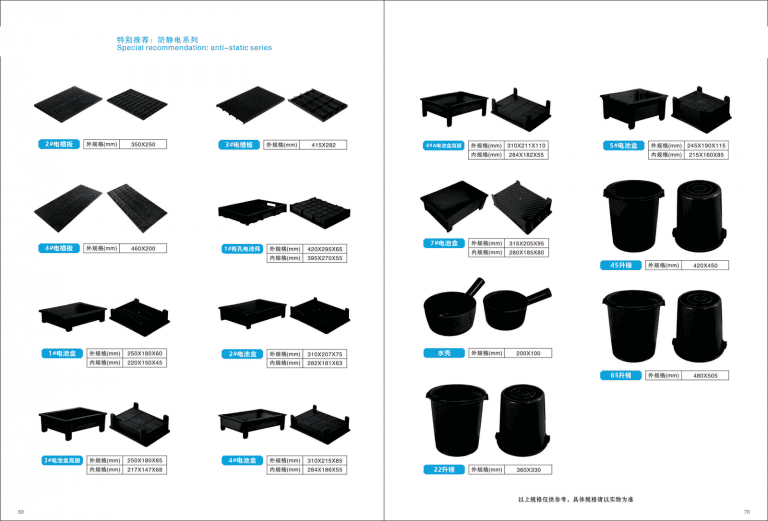
ESD trays for PCB assembly are the conductive or static-dissipative carriers that hold printed circuit boards, bare boards and sensitive assemblies as they move between SMT lines, test stations and storage racks. Electrostatic discharge is a silent profit killer in modern electronics manufacturing — a single microscopic spark can destroy thousands of dollars worth of sensitive microchips instantly.
Consequently, facility managers must follow strict ESD protection industry guidelines to eliminate these risks.
ESD Trays for PCB Assembly: Types, Sizes and How to Choose
An anti-static tray for PCB handling is specified by three things: surface resistance, physical size, and the way the board is supported. Conductive trays (103–105 Ω) give the fastest charge dissipation and suit bare boards moving through wave solder and reflow. Static-dissipative trays (106–109 Ω) are the safer choice for populated boards, because they bleed charge away slowly instead of dumping it. Insulating trays must never be used inside an EPA.
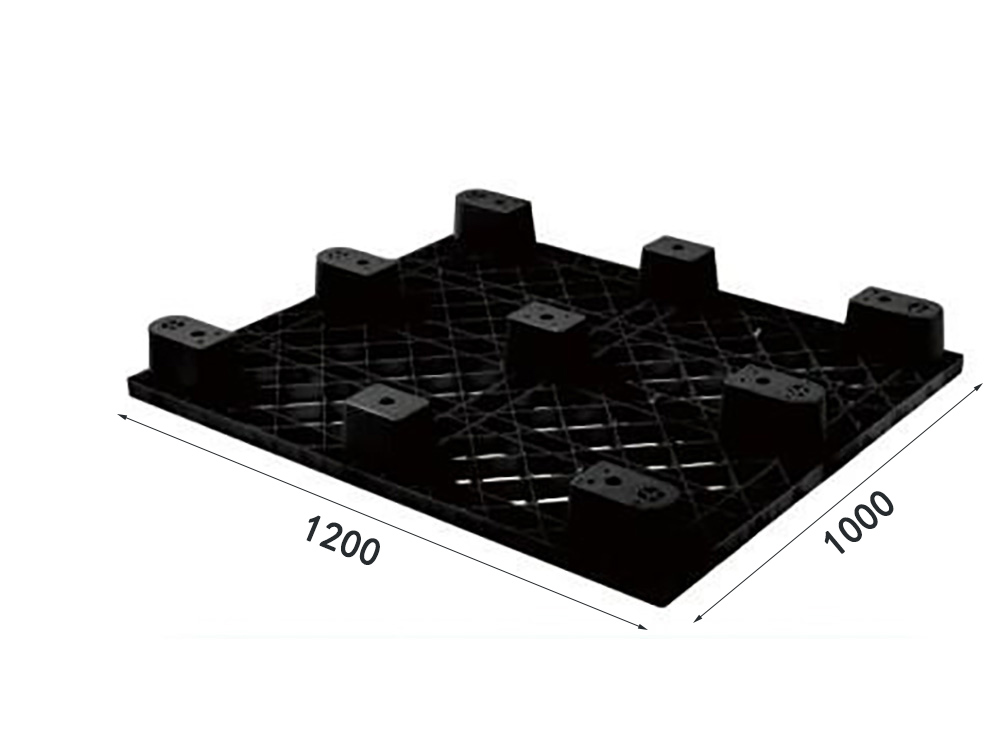
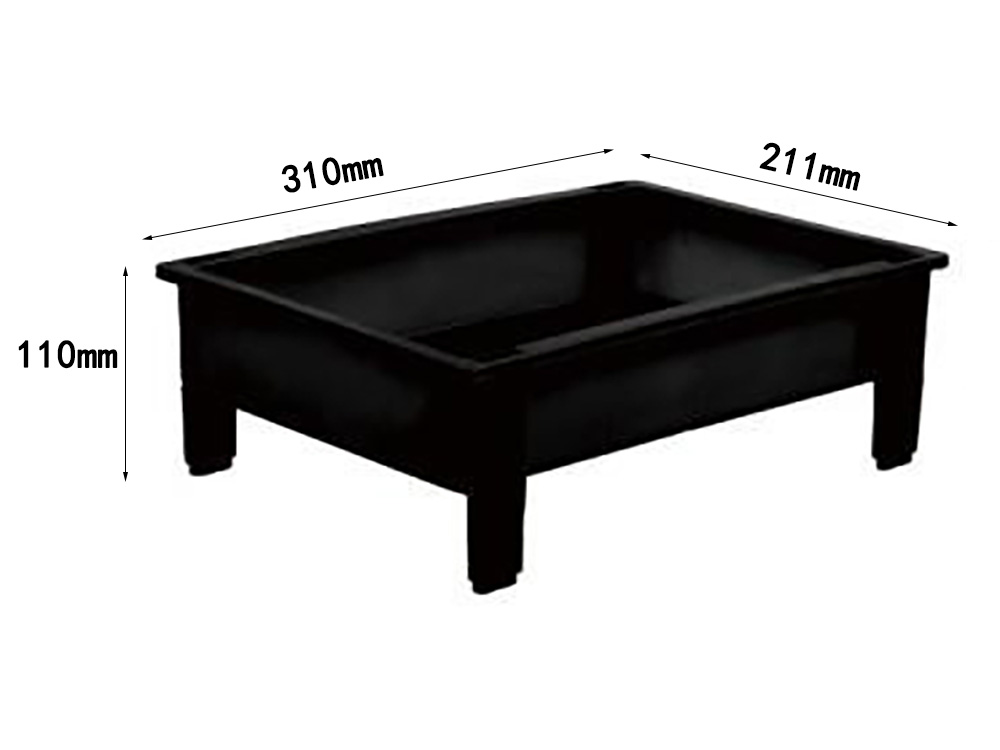
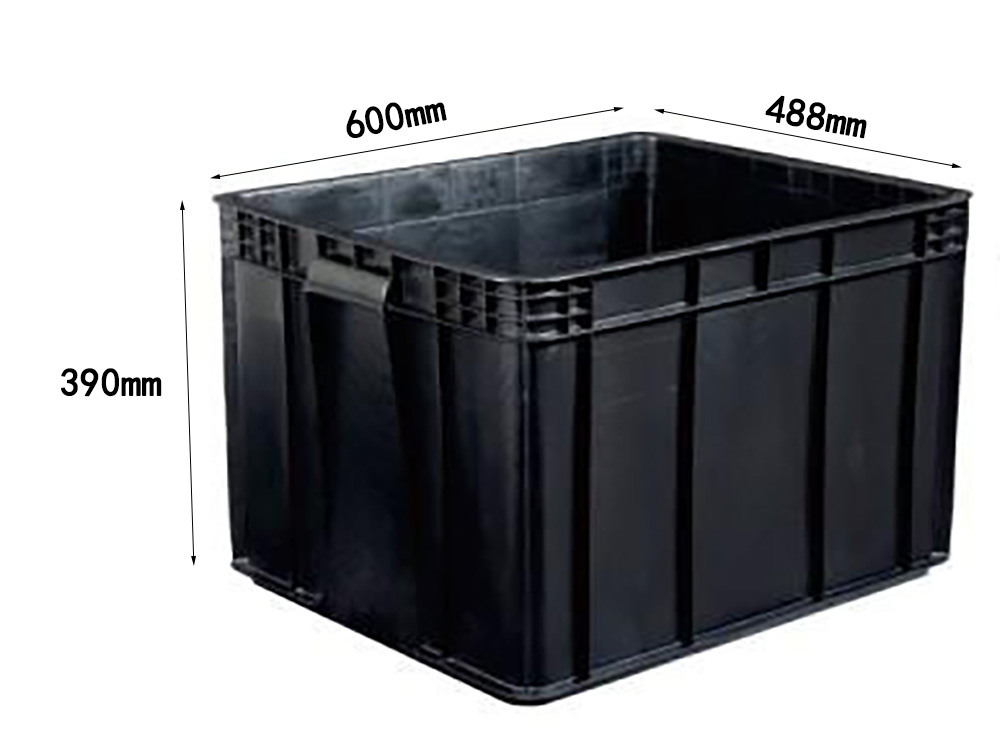
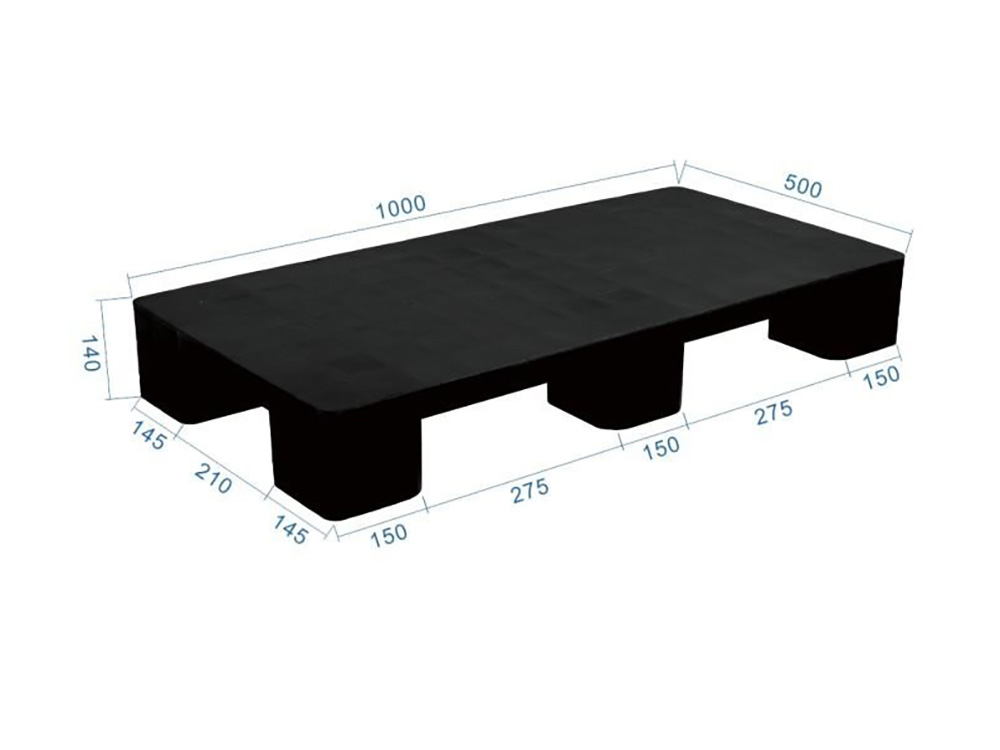
Size matters as much as material. An oversized tray lets boards slide and rub against each other, which is one of the most common sources of triboelectric charge on a PCB line. Most ESD tray footprints follow the magazine and rack standards used by SMT equipment, so pick the tray that matches your existing loader rather than the other way around. See our ESD trays and conductive flat boxes for available sizes, and pair them with ESD plastic pallets when boards move between buildings.
Investing in a highly reliable, factory-direct anti-static tray solution is essential to stop these costly breakdowns.
With our 20-year factory experience in customizing food-grade ESD trays, we know exactly how to protect your bottom line.
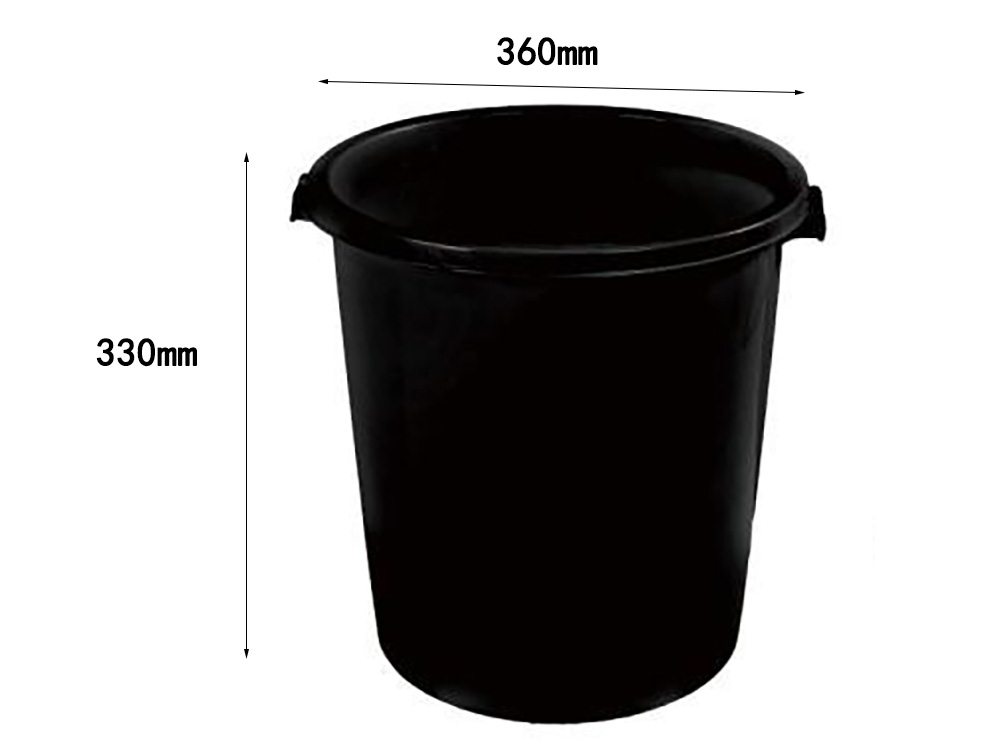
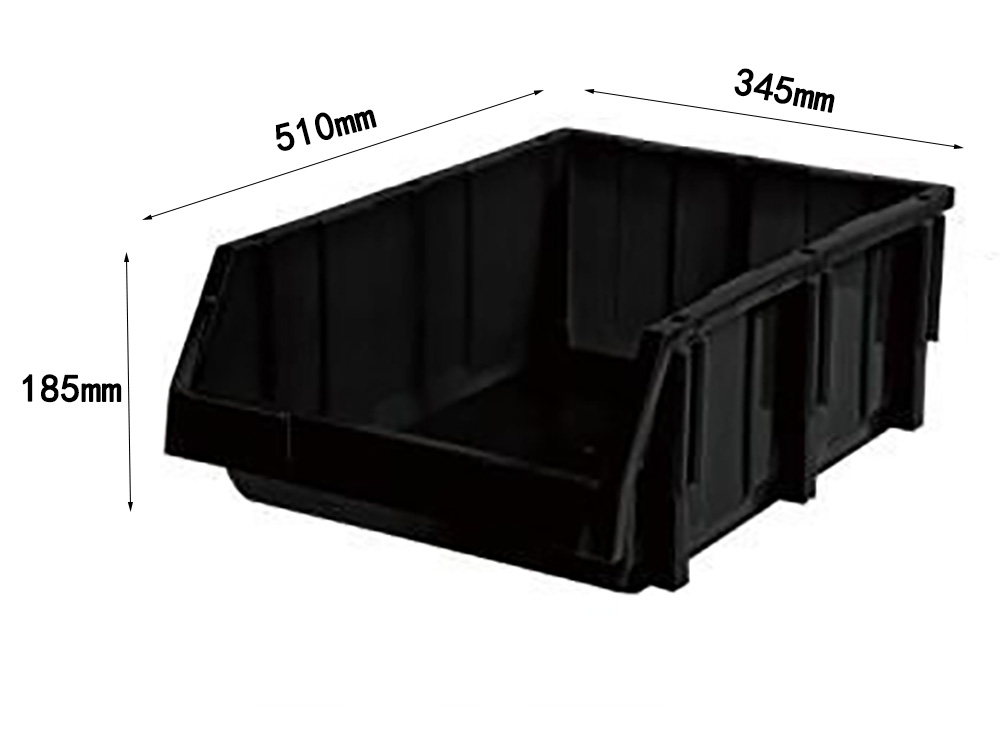
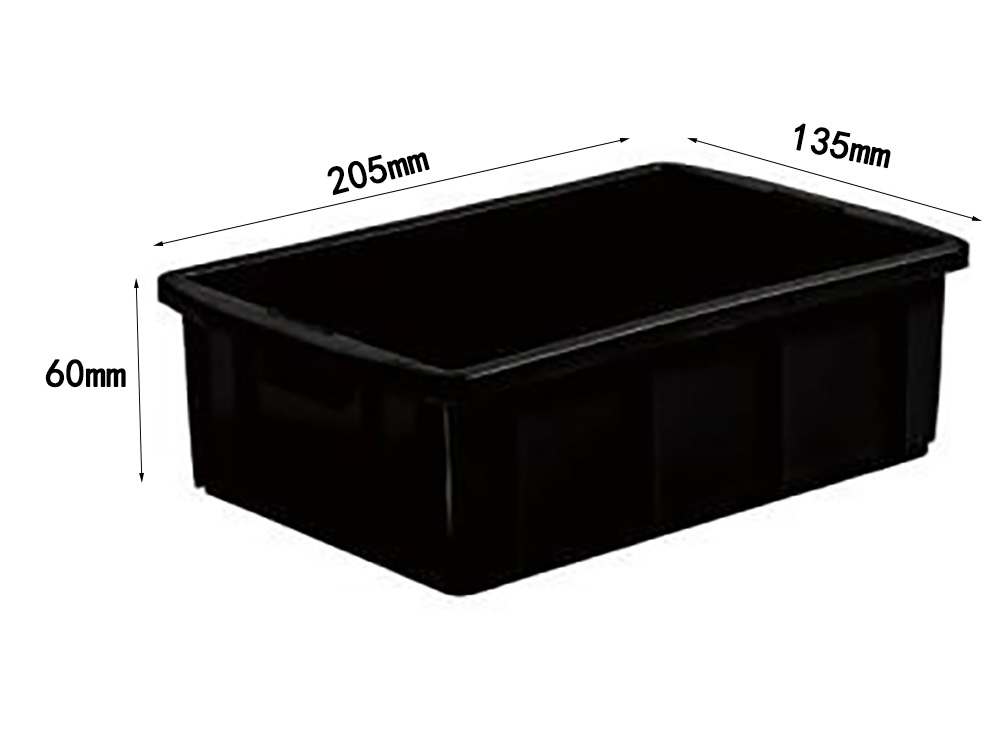
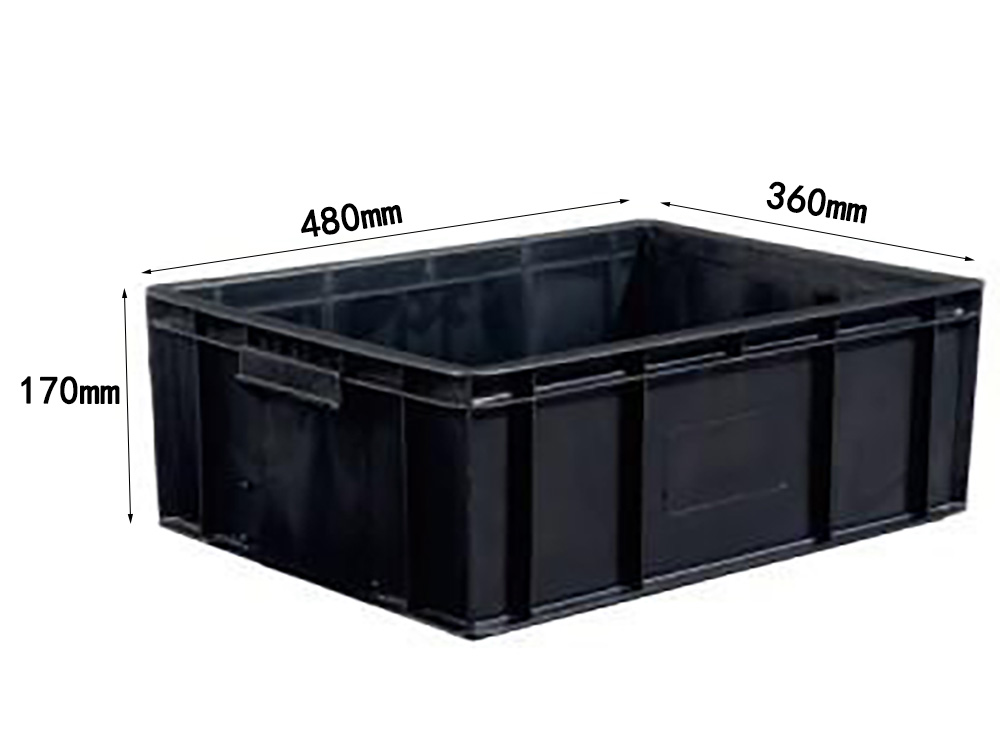
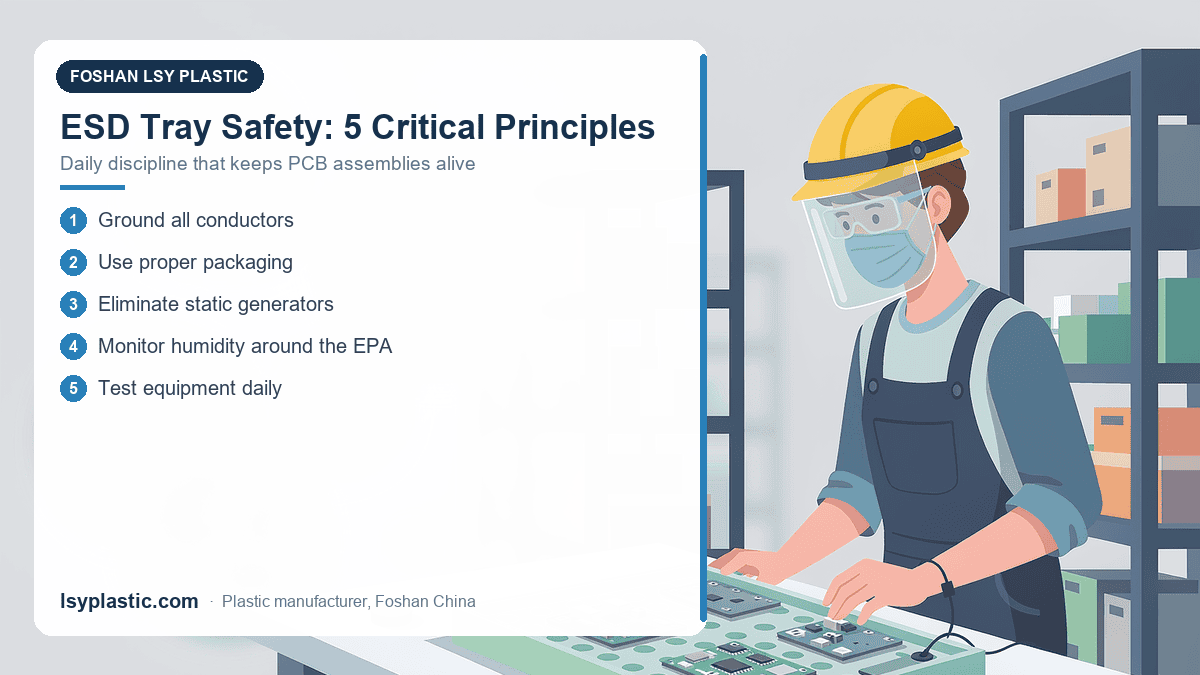
5 Critical ESD Tray Safety Principles for Factories
Protecting your components requires a highly systematic approach. Here are the 5 ESD safety principles every facility manager should implement immediately:
1. Ground All Conductors
Connect every person, machine, and workstation securely to the earth. This prevents any sudden static discharge from damaging your products.
2. Use Proper Packaging
Always transport parts in a reliable anti-static tray for electronics factory use. This ensures your components remain completely safe during transit.
3. Eliminate Static Generators
Keep standard plastics and synthetic fabrics away from your assembly line. These standard materials can easily compromise your anti-static tray for electronics.
4. Monitor Humidity Around Your Anti-Static Tray for Electronics
Keep indoor humidity between 40% and 60% to naturally reduce static buildup. Proper moisture levels help your anti-static tray for electronics perform perfectly.
5. Test Equipment Daily
Regularly verify that your wrist straps and grounding mats function perfectly. Daily checks ensure your entire static control system remains highly effective.
⚡ Custom ESD Trays for Electronics
Core ESD Tray Grounding Rules from Our Foshan Factory
At Foshan Foshan LSY Plastic Co., Ltd., we take static control very seriously. We proudly supply top-tier European and American electronics factories with premium packaging.
Furthermore, our 20-year factory production lines operate under strict quality controls. We even maintain ISO 9001 certification for plastic factories to guarantee excellence.
Therefore, we strictly follow essential ESD tray grounding rules for every single anti-static tray for electronics we manufacture.
Our OEM export background ensures all our ESD trays meet international shipping and cleanroom standards.
1. Consistent Surface Resistance for Every Anti-Static Tray
A safe packaging solution must maintain a surface resistance between 106 and 109 ohms. This specific range allows static electricity to dissipate slowly and safely.
As a result, your delicate components remain fully protected from sudden electrical shocks.
2. Seamless Grounding Connections for Your ESD Tray
Your packaging must make full contact with grounded work mats or transport carts. Through our custom ESD tray design, we create flat bases for perfect surface-to-surface grounding.
Consequently, the anti-static tray for electronics seamlessly connects to your facility’s earth ground without interruption.
3. Material Stability our Custom ESD Tray
Our factory-direct supply ensures we use permanent, high-quality materials that will not degrade. We specialize in certified ESD materials for specialised environments.
Every grade ships with surface-resistance test data, so you can verify compliance with ANSI/ESD S20.20 and IEC 61340-5-1 before the trays enter your EPA.
❓ Frequently Asked Questions (FAQ) About Your ESD Tray
Our custom ESD trays are built to last for years in high-demand electronics factories.Do you have more questions about choosing the right anti-static tray for electronics? Read below for clear answers to our most common customer inquiries.
How long does an anti-static tray last?
With proper handling, these permanent products can last for several years on the production line. Regular testing ensures they maintain their protective grounding properties over time.
Can I get an ESD tray in custom sizes?
Yes! We specialize in deep customization to fit your exact PCB or component dimensions perfectly. Simply tell us what your specific production line requires.
Is an anti-static tray safe for sensitive cleanrooms?
Absolutely. Our certified materials ensure no harmful outgassing or particulate shedding occurs during use. Therefore, the product remains perfectly safe for strict cleanroom standards.
💡 Take the Next Step for Total ESD Tray Protection
Don’t let static electricity eat into your hard-earned manufacturing profits. Upgrade your production line with a reliable anti-static tray for electronics tailored precisely to your needs.
Contact Foshan LSY Plastic for a custom anti-static tray quote today!. For more guides on this topic, check our ESD Containers Complete Guide.
All ESD tray guides in this cluster
- ESD Turnover Boxes vs ESD Trays: Choosing Containers for PCB Assembly and SMT Lines
- ESD Plastic Pallets for Electronics Manufacturing: SMT Line and Cleanroom Handling Guide
- ESD Trays vs Conductive Bins: Choosing the Right Anti-Static Storage for Your Factory