A mop wringer bucket (also called a mop bucket with wringer, 榨水车 or cleaning trolley bucket) is the core tool of every professional cleaning operation. The short answer: for hotels and commercial janitorial teams, a 24L-32L PP or HDPE bucket with a side-press wringer and a 5-10kg capacity is the best all-round choice; choose 18L for small guest areas and 40L+ for lobbies, hospitals and industrial floors. This guide explains sizes, materials, wringer types, caster options and price benchmarks so you can spec the right bucket.
For wringer types, capacity and caster options in one place, see our commercial mop bucket buying guide.
1. Why the Right Mop Wringer Bucket Matters
In a hotel or commercial building, mopping is done daily — sometimes twice a day. The right bucket:
- Reduces water splashing and floor re-contamination
- Lets staff wring mops to the correct dryness (too wet = slippery floors and streaks)
- Reduces back strain through ergonomic handle height
- Lasts years when made from impact-resistant plastic
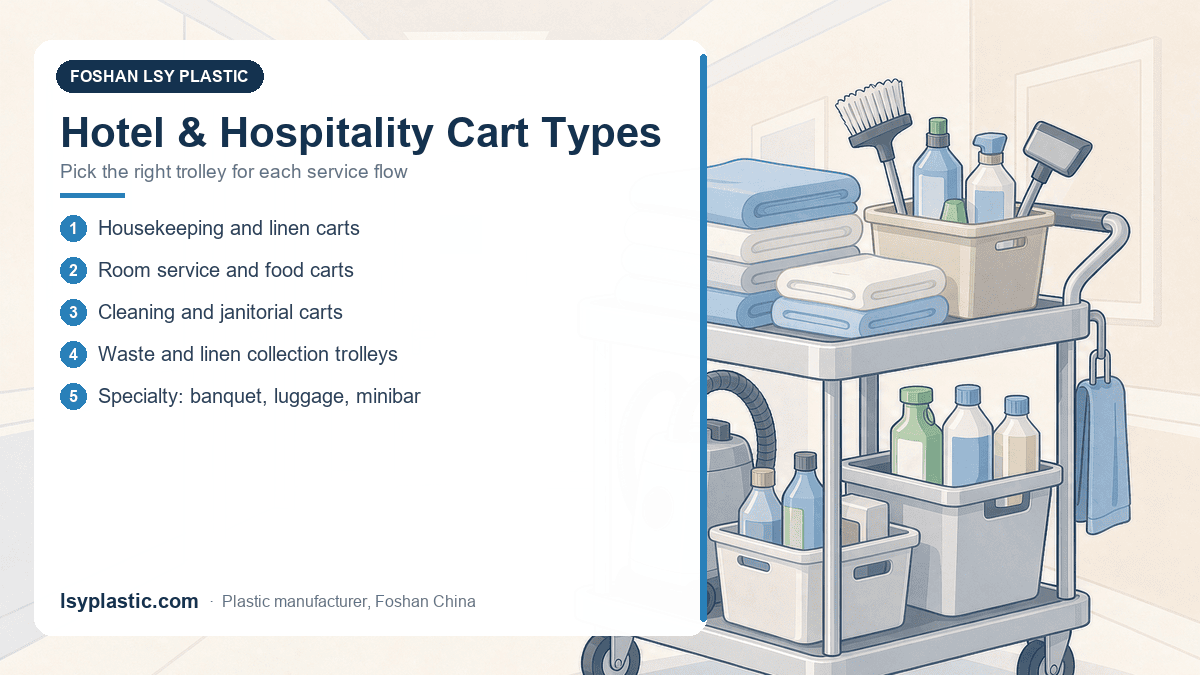
Mop buckets are part of the wider hotel and hospitality cleaning equipment family, which also includes housekeeping carts, linen trolleys and waste bins.
2. Size Guide: 18L to 44L
Bucket capacity is measured in liters and directly maps to floor area and frequency of emptying:
| Capacity | Best for | Emptying frequency |
|---|---|---|
| 18L | Guest rooms, small bathrooms, small offices | 1-2 rooms per fill |
| 24L | Mid-size guest floors, corridors | 2-3 rooms per fill |
| 32L | Hotel lobbies, restaurants, medium facilities | Large areas; fewer trips |
| 40L-44L | Hospitals, airports, supermarkets, industrial floors | Continuous large-area mopping |
Rule of thumb: the bucket should be emptied before the water becomes visibly dirty — cleaning with dirty water simply moves dirt around. Larger buckets mean fewer trips to the janitorial sink but heavier weight when full (1L of water = 1kg). A full 32L bucket with wringer weighs roughly 35-40kg — always choose a model with wheels.
3. Wringer Types: Side-Press vs Lever-Action vs Centrifugal
The wringer is the mechanism that squeezes water out of the mop head. Three main types:
| Type | How it works | Pros | Cons |
|---|---|---|---|
| Side-press (roller) | Two rollers squeezed by a foot or hand lever | Simple, durable, low cost | Requires manual force |
| Lever-action press | Downward lever presses the mop head between plates | Less effort, more control of dryness | Slightly more moving parts |
| Centrifugal (spin) | Mop head spins in a perforated basket | Driest result, least effort | More expensive, heavier |
For most hotel and commercial use, a lever-action or side-press wringer rated 5-10kg is the sweet spot: reliable, easy to repair, and compatible with standard cut-end mops.
4. Materials: PP vs HDPE and What “Food-Grade” Means
Two plastics dominate mop buckets:
- PP (polypropylene) — lighter, stiffer, more cost-effective; resists most cleaning chemicals.
- HDPE (high-density polyethylene) — tougher impact resistance, better in cold environments, excellent chemical resistance.
Both are food-contact-safe in standard grades, meaning the plastic will not leach into cleaning solutions or harbor bacteria when cleaned properly. Key features to check:
- Wall thickness — professional buckets use 3-5mm walls; thin consumer buckets crack within months.
- Reinforced rim and base — the rim takes the wringer load; the base takes impact from dragging.
- Graduated measurement marks — help staff mix cleaning chemicals to the correct dilution.
- Drain plug — a bottom drain makes emptying and rinsing much faster than tipping.
5. Bucket-on-Wheels vs Bucket-in-Trolley
Two configurations exist:
- Standalone bucket with casters — bucket + wringer mounted on 2-4 casters; light, cheap, easy to store. Best for small teams and compact storage.
- Cleaning trolley with bucket — a wheeled cart holding bucket, wringer, caddy, and space for chemicals and mops. Best for large hotels where staff carry everything in one trip.
If you already use housekeeping carts, a standalone caster bucket is usually enough. If you are setting up a new cleaning team, consider the trolley combination to reduce trips.
6. Caster and Handle Considerations
- Wheels: 2 fixed + 2 swivel casters, 75-100mm, PU or rubber tread to protect floors. Brakes are rarely needed on buckets because the weight is low.
- Handle: a padded T-handle at 90-100cm height suits most staff; avoid buckets that force bending.
- Noise: PU wheels keep buckets quiet on hotel corridors — important for early-morning cleaning.
7. Price Benchmarks (Factory-Direct, FOB China)
| Model | Typical factory-direct price |
|---|---|
| 18L bucket + side-press wringer, casters | US$ 8-14 |
| 24L bucket + lever wringer, casters | US$ 10-16 |
| 32L bucket + heavy wringer, casters | US$ 14-22 |
| 40-44L industrial bucket + wringer | US$ 18-30 |
Prices depend on wall thickness, wringer quality and order volume. Confirm MOQ (typically 100-500 pcs factory-direct) and whether custom colors/logo printing are included.
8. Hygiene and Maintenance
- Empty and rinse the bucket daily; never let dirty water sit overnight.
- Weekly: remove the wringer and wash both parts with neutral detergent.
- Monthly: check caster bolts and wringer pivot points; lubricate if stiff.
- Replace wringer rollers when they no longer squeeze effectively — this is the most common wear part.
Color-coding (blue = public areas, red = toilets, green = kitchens) is a simple way to prevent cross-contamination — confirm the factory can produce colored buckets for your team.
9. Buying Checklist
- [ ] Capacity matched to floor area (24-32L for most hotel use)
- [ ] PP or HDPE, wall thickness ≥ 3mm
- [ ] Wringer rated 5-10kg, lever-action or side-press
- [ ] 4 casters (2 swivel + 2 fixed), PU tread
- [ ] Drain plug for fast emptying
- [ ] Measurement marks on the inside
- [ ] Custom color/logo option for your brand
Bottom Line
For hotels and commercial cleaning teams, a 24-32L PP/HDPE bucket with a 5-10kg lever wringer, 4 PU casters and a drain plug is the professional standard. Size up to 40-44L only for large-area continuous mopping, and always verify wall thickness and wringer quality before ordering.
FOSHAN LSY Plastic manufactures mop wringer buckets and cleaning trolleys in 18L to 44L capacities across 57 models, with PP/HDPE food-grade materials, reinforced walls, PU casters and custom color/logo options. We are an ISO9001 injection molding factory with 30+ years of experience exporting to hotels, cleaning distributors and janitorial suppliers worldwide. WhatsApp: +86 193 1105 9570 | Email: fstyx01@lsyplastic.com — tell us your capacity and quantity, and we will send specs and pricing within 24 hours.
Sourcing mop bucket trolleys? See our Kitchen Cleaning & Mop Systems line for the sizes and materials discussed above.
Frequently Asked Questions
What size mop wringer bucket should I buy?
For hotels and commercial cleaning, 24L to 32L is the best all-round choice. Use 18L for small guest areas, and 40L and above for lobbies, hospitals and industrial floors where larger area coverage cuts refills.
Which wringer type is best?
Side-press wringers are lighter and cheaper for light use; lever-action gives more squeeze with less effort; centrifugal (spin) wringers remove the most water but cost more. Match the wringer to your daily intensity and mop type.
Bucket on wheels or bucket in a trolley?
A bucket on casters is fine for single-bucket mopping. A bucket-in-trolley system keeps clean and dirty water separate and carries other supplies, which suits larger hotels and healthcare sites where hygiene matters.
What material should the bucket be?
Virgin PP or HDPE resists detergents and will not rust like metal. Food-grade is not required for mopping but signals virgin resin quality; avoid thin or recycled material that cracks at the base. LSY moulds these buckets; no MOQ for domestic orders, overseas orders ship FCL.
Related guide: injection molding MOQ and cost breakdown.
Related reading
- Compact Collection Cart | 3-Basin Professional Utility Trolley LSY8005B
- Commercial Hotel Laundry Cart / Linen Trolley with Canvas Bag (X-Shape)
Related products:
50L Double Mop Bucket with Wringer | Water Separation
15-Liter Collection Bucket With Rubber Ring LSY-8301C
Commercial Industrial Cotton Wet Mop with Quick-Change Head