Key takeaway: Fresh produce keeps respiring after harvest. Crates with engineered ventilation remove field heat, ethylene, and moisture faster — reducing spoilage losses by 20-50% compared with solid-wall containers in real packing-house operations. This guide explains vent designs, sizing, and what to specify when buying ventilated crates in volume.
Dimensions, venting and stacking ratios are compared in the plastic crates guide — a useful reference before you order.
Why Produce Crates Need Ventilation at All
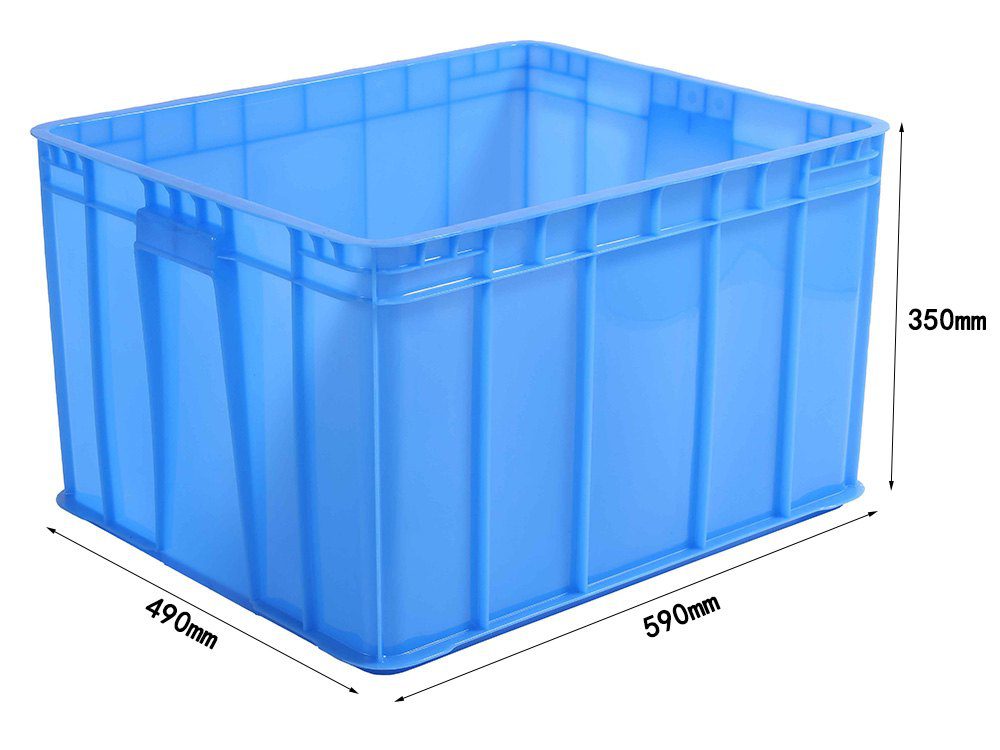
Fruits and vegetables are alive after harvest. They consume oxygen, release carbon dioxide and ethylene, and generate heat — a crate of spinach at field temperature can be several degrees warmer inside than the surrounding air. In a solid-walled container, that respiration heat and moisture has nowhere to go:
- Trapped heat accelerates ripening and softening.
- Trapped moisture condenses on produce surfaces, inviting mold and bacterial soft rot.
- Trapped ethylene self-catalyzes ripening — one over-ripe tomato speeds up the whole crate.
Perforated and slotted crate walls let cooling air pass through the load. In forced-air pre-cooling rooms, ventilated crates can cut the “half-cooling time” of produce dramatically compared to solid containers, and they protect that cold chain all the way to the retail backroom. For temperature-controlled logistics beyond field cooling, see our companion guide on cold chain insulated plastic crates.
Ventilation Design Patterns and What They Mean
Perforated Walls (Hole Pattern)
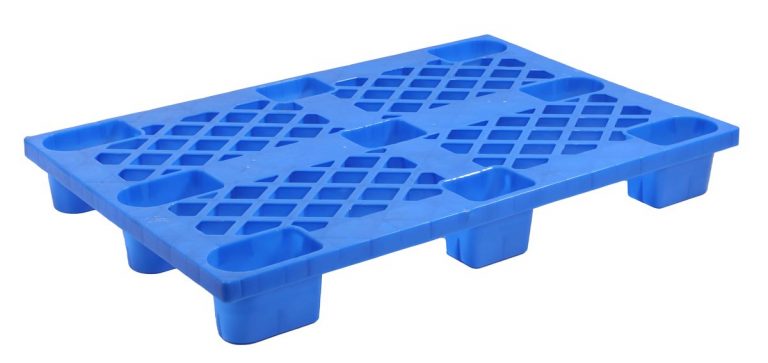
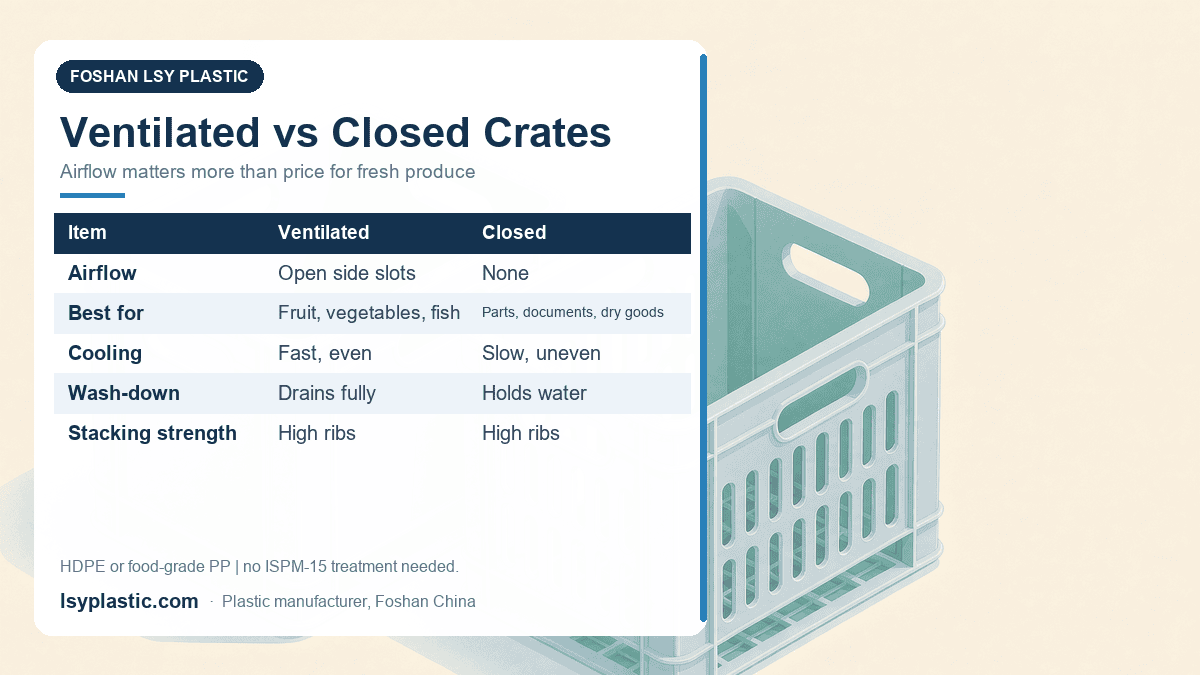
Rows of round or slot holes, typically delivering 15-35% open area. The standard choice for general produce: good airflow, good structural strength, and easy washing. Hole edges must be smooth — punched-hole technology in cheap molds leaves burrs that bruise soft fruit.
Lattice / Open-Grid Sides
Maximum airflow (40%+ open area) for fast pre-cooling of highly perishable items: leafy greens, berries, mushrooms. Trade-off: slightly lower stacking strength and less protection from physical damage in mixed loads.
Bottom Ventilation
Often overlooked: ribs or slots in the crate floor let air (and rinse water) drain vertically when crates are stacked in cooling tunnels. Crates with ventilated bottoms also dry faster after washing, cutting bacteria residence time.
Spec tip: match open area to your cooling method. Room cooling tolerates less ventilation; forced-air and hydrocooling demand more. Over-ventilating costs you stacking strength without produce benefit.
Materials: Food-Grade HDPE Is the Default
Ventilated produce crates live outdoors and in wash-down environments. Material requirements are specific:
- Virgin food-grade HDPE — the industry standard. FDA/EU food contact compliant, survives acids in cut produce, flexes instead of cracking when dropped cold.
- UV stabilization — non-negotiable for crates that sit in fields or loading yards. Untreated plastic becomes brittle after one summer of sun exposure; UV-stabilized resin lasts 5+ years outdoors.
- Smooth interior surfaces — reduce bruising and simplify sanitation between crops.
Recycled-content crates exist at lower prices, but food-contact compliance and UV life both suffer. For export produce programs and certifications like GLOBALG.A.P., virgin HDPE with documentation is the safe choice. Our manufacturing standards and testing are described on the certifications page.
Sizing and Stacking Strategy
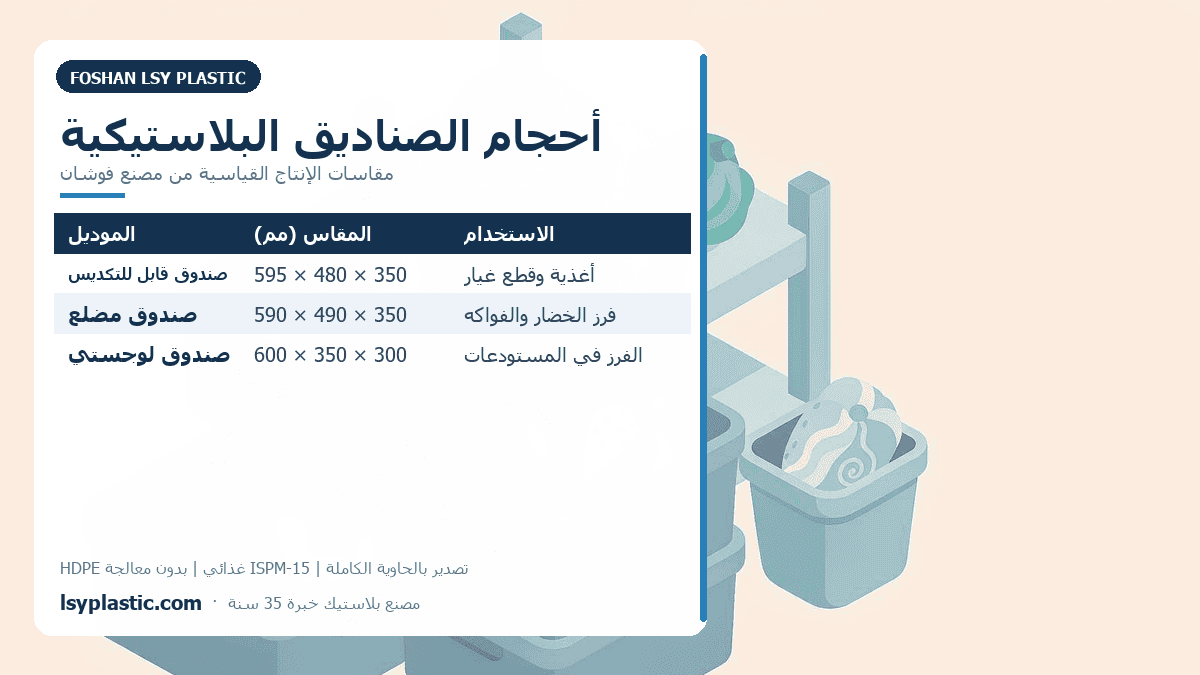
Ventilated crates come in a wide capacity range. Our logistics series spans 488L to 850L for bulk field harvest and distribution, with smaller footprint crates for retail-ready packing. Two design families matter for your warehouse math:
- Stackable (straight-wall) — same footprint full or empty; maximum stability for tall stacks in cold rooms. Best for long-term storage and transport.
- Nestable (tapered) — empty crates nest inside each other, cutting return-freight volume by up to 75%. Best for one-way distribution and pooling. Compare designs in stackable vs nestable containers.
Whichever you choose, verify the dynamic load rating: a stack of 8 full 600L crates puts more than a ton on the bottom crate. Reinforced rim and rib design — visible in our crate stacking guide — is what keeps the bottom crate from bowing.
Ventilated vs Solid Crates: Choosing per Application
| Application | Recommended Crate | Reason |
|---|---|---|
| Field harvest, pre-cooling | High-vent lattice or perforated | Fast heat removal |
| Cold storage 2-4 weeks | Perforated, stackable | Balance of airflow and density |
| Meat, fish, dairy transport | Solid or minimal vent, deep-walled | Drainage control, hygiene, no drip |
| Seafood and ice-packed | Solid with drain spigot | Meltwater management |
| Dry goods, parts, non-food | Solid wall | Protection and dust exclusion |
For general logistics volumes, our plastic crate selection guide and the warehouse logistics hub cover the full product family, including folding vs rigid crate economics.
Real-World Spoilage Math
Put numbers to it. A packing house moving 1,000 tons of produce per year at 15% spoilage loses 150 tons. Post-harvest literature and grower experience consistently show that faster pre-cooling and better ventilation recover a large share of that loss. Even a conservative 30% reduction in spoilage returns roughly 45 tons of sellable produce annually — many times the cost of the crate fleet. This is why ventilated crates dominate professional produce handling; the crate is not a container cost, it is a yield-protection investment.
Buying Checklist for Ventilated Produce Crates
- ✅ Virgin food-grade HDPE with compliance documentation
- ✅ UV stabilizer for outdoor exposure
- ✅ Vent open area matched to cooling method (15-40%)
- ✅ Ventilated or ribbed bottom for vertical airflow and drainage
- ✅ Dynamic load rating ≥ expected stack weight
- ✅ Smooth, burr-free vent edges (ask for samples)
- ✅ Nestable if return freight matters; stackable for storage density
- ✅ Batch-consistent colors for crop or farm traceability coding
Source From the Manufacturer
LSY Plastic molds ventilated produce crates from 488L field bins to retail-ready trays, using food-grade UV-stabilized HDPE on injection machines up to 2500T — the tonnage required for large one-piece bins with clean, burr-free vent patterns. We supply growers, packers, and produce distributors worldwide with custom colors and logo molding. Contact us with your crop types and volumes, or request a quote — recommended configurations and wholesale pricing within 24 hours.
Sourcing plastic crates and turnover boxes? See our Turnover Box Series line for the sizes and materials discussed above.
Frequently Asked Questions
Why do produce crates need ventilation?
Fresh produce keeps respiring after harvest, releasing heat, ethylene and moisture. Engineered ventilation removes these faster, which can cut spoilage losses by 20 to 50 percent versus solid-wall containers.
How does vent design affect cooling?
Open area, slot shape and alignment across stacked crates decide airflow. Ventilated sides and slotted bases let cold air pass through the stack, and aligning vents when stacking speeds field-heat removal.
Which material is best for produce crates?
Food-grade HDPE is the default: it handles cold, moisture and impact, does not absorb odours and meets food-contact approvals. PP can be used but is less impact-resistant when cold.
Ventilated or solid crates for produce?
Use ventilated crates for respiring produce needing airflow and drainage; use solid-wall crates for brined, liquid-tight or non-respiring goods. LSY moulds ventilated crates; no MOQ for domestic orders, overseas orders ship FCL.