Warehouse ergonomics directly affects your team’s health and your operating costs. Manual pallet handling — lifting, carrying, pushing, and pulling loads around pallets — is a leading source of musculoskeletal injuries in distribution and manufacturing. The good news: most of these injuries are preventable with proper technique, the right equipment, and a smarter layout. This guide covers the practical steps.
Why Ergonomics Matters in Pallet Handling
Back injuries account for a large share of workplace musculoskeletal disorders, and many happen during routine tasks: lifting a heavy carton off a pallet, bending to wrap a low load, or pushing a jammed pallet jack. Each injury means lost days, compensation claims, and disrupted operations. Beyond safety, ergonomic workplaces are more productive — workers spend less energy on awkward movements and more on moving goods.
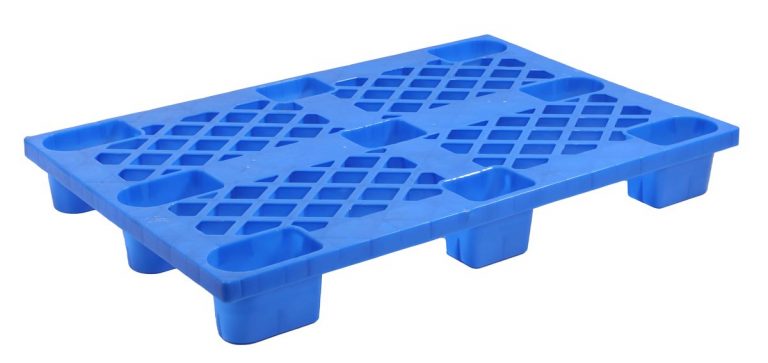
Pallet choice itself affects ergonomics. A damaged or warped pallet forces harder pushes and awkward lifts. Keep your fleet in condition with our pallet inspection checklist, and choose pallets sized to your loads using the pallet size guide.
The Safe Lifting Technique
For any manual lift, follow these fundamentals:
- Plan the lift: clear the path, check the weight, and decide where the load goes before lifting.
- Get close: stand with feet shoulder-width apart, load as close to the body as possible.
- Bend the knees, not the back: squat, grip the load firmly, and lift with the legs.
- Keep the load at waist height: avoid lifting from floor level or above shoulder level whenever possible.
- Move with the feet: pivot with your whole body; never twist the spine while carrying.
- Ask for help: if a carton exceeds 23 kg (50 lb), use a team lift or mechanical aid.
These rules map directly to the loads handled on pallets, where box weights vary by layer and product. Train every new hire on technique before they touch a pallet jack. For a refresher on how loads behave during handling, review the pallet load capacity guide.
Use Handling Aids, Not Muscles
Mechanical aids are the single biggest ergonomic win in pallet operations:
- Pallet jacks: use them for any pallet movement instead of pushing pallets by hand. A fully loaded pallet can weigh over 1,000 kg — never push it manually.
- Lift tables: raise the working height of a pallet so workers handle cartons at waist level instead of bending to floor level.
- Conveyors and dock levelers: bridge the gap between truck and warehouse to eliminate manual re-handling.
- Carton clamps and vacuum lifters: for heavy or awkward boxes, mechanical grips remove the strain entirely.
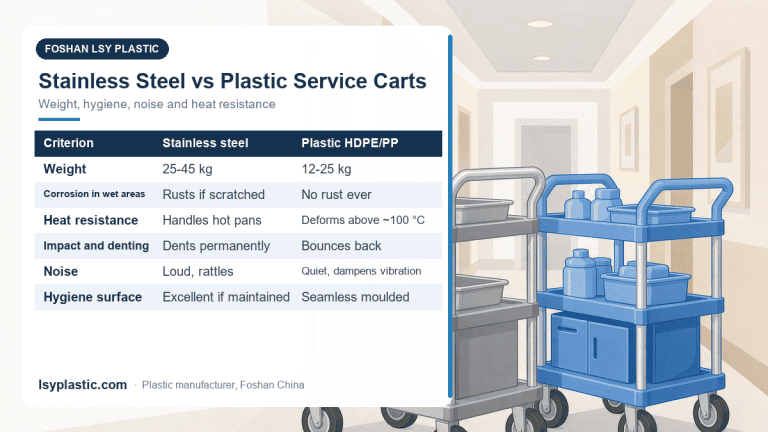
- Mobile carts: for picked orders, wheeled carts keep goods at working height during order assembly. Our plastic platform trolley buying guide covers cart options for warehouse use.
Even simple aids change injury risk dramatically. A lift table reduces spinal compression forces by roughly half compared with floor-level lifting. Our warehouse storage organization guide shows how bin placement reduces reaching and bending too.
Push, Don’t Pull
When workers must move loads manually, pushing is safer than pulling. Pushing uses larger leg and back muscles, keeps the spine straighter, and lets the worker see the path. Train the correct technique:
- Set the jack handle at waist height, elbows bent.
- Lean the body weight forward into the push, using legs.
- Keep the back straight and avoid sudden starts and stops.
- Never push or pull from a twisted position.
Worn casters make pushing dramatically harder — on jacks and carts. Keep wheels clean and replace worn casters; a sticky wheel can add the equivalent of many kilograms of push force. See our caster selection guide for wheel types suited to warehouse floors.
Pallet Height and Stacking Ergonomics
The height of a pallet load determines how much workers bend and reach:
- Best picking zone: waist to shoulder height. Position the most-handled cartons there.
- Use lift tables to keep the current layer in this zone as the pallet empties.
- Lower the rack opening: design rack levels so full pallets are placed at heights that avoid overhead reaching and floor bending.
- Limit stacking height: very high stacks force overhead reaching and unstable loads. Keep hand-built stacks within reach.
Workplace layout interacts with stacking: keep travel distances short between picking and packing zones, and keep aisles wide enough for carts and jacks. Pallet racking layout guidance appears in our pallet racking guide.
Team Lifting and Task Rotation
Two-person lifts are appropriate for loads over 23 kg or awkward shapes. Team lifting works only with coordination: both lifters should be similar in height, lift on a count, and carry the load at the same height. If the load is too heavy even for two, use equipment — that is the rule, not a suggestion.
Job rotation reduces repetitive strain. Rotate workers between pallet picking, wrapping, and packing stations every 1 to 2 hours. Rotation spreads physical stress across muscle groups and keeps alertness high. Our forklift safety guide includes operator fatigue management that applies to manual teams too.
Workplace Design for Ergonomics
Ergonomics starts before the first lift — with the environment:
- Floor condition: level, clean floors make pushing and walking easier. Patch cracks and remove debris from travel lanes.
- Lighting: bright, shadow-free lighting lets workers see hazards and box labels, reducing awkward bent-over checks.
- Non-slip surfaces: anti-slip flooring and dry, cleared dock plates prevent slips that cause sudden twisting injuries.
- Housekeeping: clear shrink wrap scraps and debris; workers step over clutter and risk trips.
- Rest areas: scheduled breaks for physical work reduce fatigue-related injuries.
These measures work together with equipment. If you handle heavy loads, pair ergonomic layout with pallet weight awareness so workers know what they are moving. For cold-chain operations, see the cold storage pallet guide — cold environments increase injury risk and demand extra care.
Recommended Maximum Manual Loads
| Condition | Max Weight per Worker | Action |
|---|---|---|
| Ideal (waist height, close to body) | 23 kg (50 lb) | Team lift or aid above this |
| Awkward (floor level or overhead) | 10-15 kg (22-33 lb) | Use lift table or other aid |
| Any push/pull force | Under 23 kg (50 lb) sustained | Mechanical aid for higher force |
| Any load | — | Inspect pallet first, clear the path |
These thresholds are practical guidelines; local regulations may set stricter limits. Always follow the stricter standard.
Conclusion
Warehouse ergonomics is not a training poster — it is a daily system: safe lifting technique, mechanical aids for heavy work, push-don’t-pull habits, smart pallet heights, team lifts for big loads, and a workplace designed around the worker. Apply all of them and musculoskeletal injuries drop while throughput climbs.
LSY Plastic supports ergonomic operations with high-quality injection-molded pallets, platform trolleys, and storage containers. Explore the plastic pallets hub and warehouse logistics hub, or contact our team to spec the right equipment for your layout.
Request a quote today: WhatsApp +86 19311059570 | Email fstyx01@lsyplastic.com
Sourcing plastic pallets? See our Plastic Pallets line for the sizes and materials discussed above.
Frequently Asked Questions
What is the safe way to lift a load off a pallet?
Keep the load close to your body, bend at the knees, keep your back straight, get a firm grip and lift smoothly without twisting. Push rather than pull, and use handling aids instead of muscle for anything heavy.
What are recommended maximum manual lifting loads?
Many safety guidelines cap routine two-handed manual lifts at roughly 20kg to 25kg for an adult at ideal height, and less for repeated or awkward lifts. Above that, use a pallet truck, trolley or a team lift.
How does pallet height affect ergonomics?
The best working zone is roughly knuckle-to-shoulder height, so store fast-moving goods at that level and keep heavy items off the floor and above knee height. Frequent low lifts and twisting are a leading cause of back injury in warehouses.
What equipment reduces manual handling risk?
Pallet trucks, platform trolleys and hand trucks take the load off the body; adjustable-height work surfaces and anti-fatigue matting help too. LSY’s material-handling range covers trolleys and pallet trucks that cut manual lifting.