
Stacking and nesting are opposite answers to the same question: what does an empty crate cost to move? A crate fleet spends a surprising share of its life empty, and the geometry you choose decides whether empty logistics is a rounding error or a second fleet. Here is how the two systems compare.
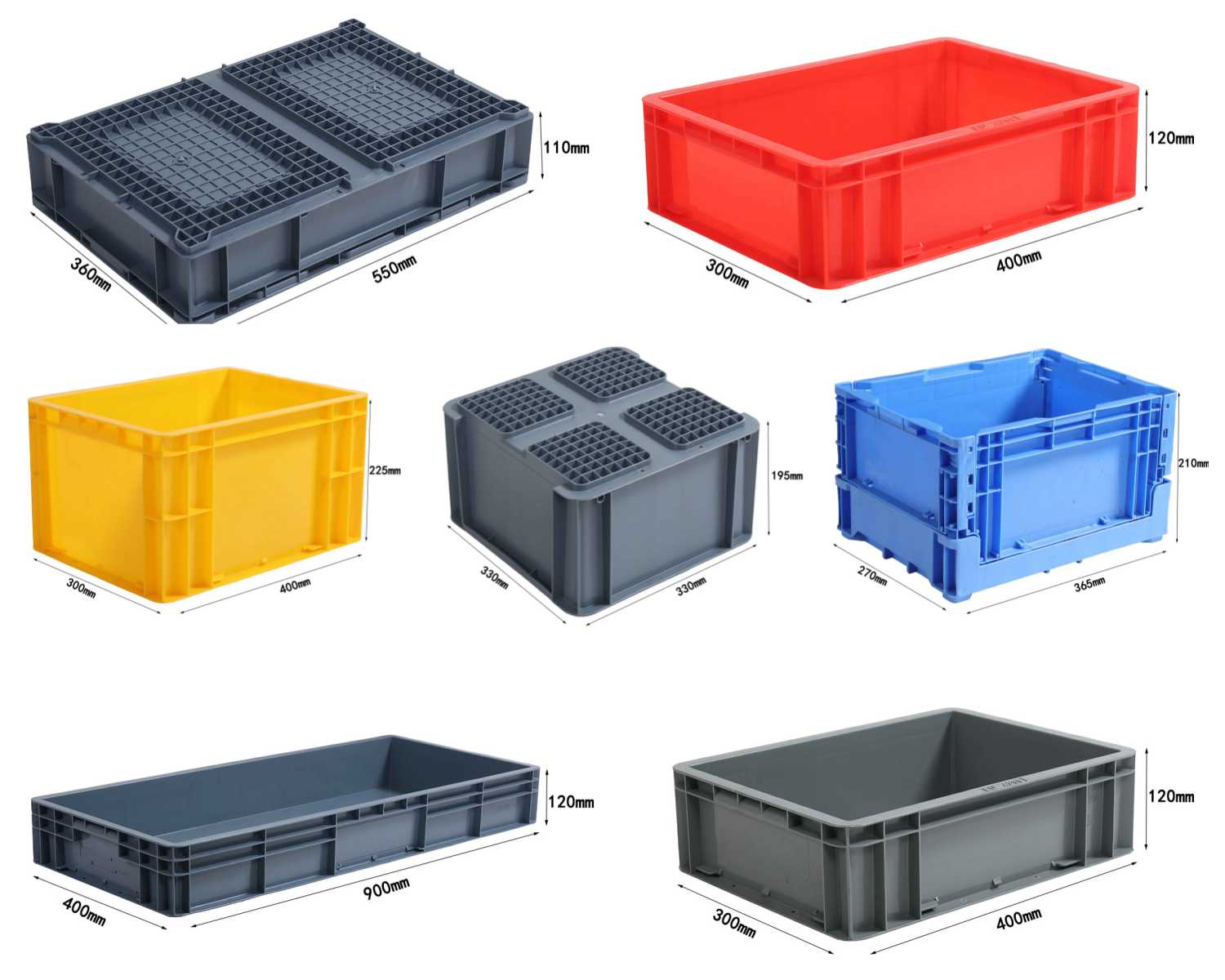
The two geometries
| Property | Stackable | Nesting |
|---|---|---|
| Full-load stability | Excellent — rims interlock | Good — relies on taper friction |
| Empty volume | 100% (same as full) | 20–40% of full |
| Typical nesting ratio | 1:1 | 3:1 to 5:1 |
| Wall strength | Higher (straight walls) | Lower (tapered walls) |
| Best duty | Heavy closed-loop, racking | Distribution, retail, produce |
| Empty return cost | High | Low |
Where nesting wins outright
Any operation that ships crates out and brings them back empty — bakery routes, produce distribution, laundry, catering, retail replenishment. If a truck returns empty anyway, nesting pays twice: fewer trucks or fewer trips for the same crate count, and less warehouse volume burned storing the empties. The returnable packaging ROI guide shows how to put numbers on this; the nesting ratio is usually the single biggest lever in the model.
Where straight-walled stacking still wins
- Heavy loads — straight walls carry compression from crates stacked above; tapered walls shed part of it.
- High stacking in storage — interlocking rims keep towers stable at 6+ high.
- Automated handling — straight geometry is friendlier to conveyors and stacker cranes.
- Content protection — for fragile or high-value goods, maximum wall stiffness earns its price.
Automotive parts loops are the classic straight-walled case; see our turnover boxes for automotive logistics guide for that duty class.
Dual-mode: stack full, nest empty
The reversing-rim design flips one way to stack and the other to nest. The trade-offs:
- + One fleet does both jobs — no mixed inventory
- + Empty returns at nesting economics
- − Higher unit price than single-mode crates
- − Slightly lower stack stability than dedicated interlocking rims
For pooled operations running full both directions, dual-mode usually has the lowest total cost per trip despite the higher purchase price.
Decision checklist
| Your situation | Recommendation |
|---|---|
| Round-trip distribution, loads < 15 kg | Nesting or dual-mode |
| One-way export, no return | Cheap stackable, or expendable |
| Heavy industrial closed loop | Straight-walled stackable |
| Mixed fleet headaches | Standardise on dual-mode |
| Produce / ventilated duty | Nesting ventilated crates (see our ventilated crate guide) |
The last row is a reminder that ventilation and colour-coding decisions stack on top of the geometry decision — fix footprint, then geometry, then ventilation and colour, in that order. Each layer narrows the field before money changes hands.