
Beverage crates are heavy — glass bottle crates run 18 to 30 kg each when full — and they get stacked six, eight or ten layers high on a single pallet. A moulded plastic layer pad is what keeps that stack square, ventilated and intact through a 40-day ocean voyage. Cardboard delaminates after one wet cycle. Plywood splinters and the screws fail. Moulded HDPE and PP layer pads survive the trip, the wash-down, and the next 200 trips after that.
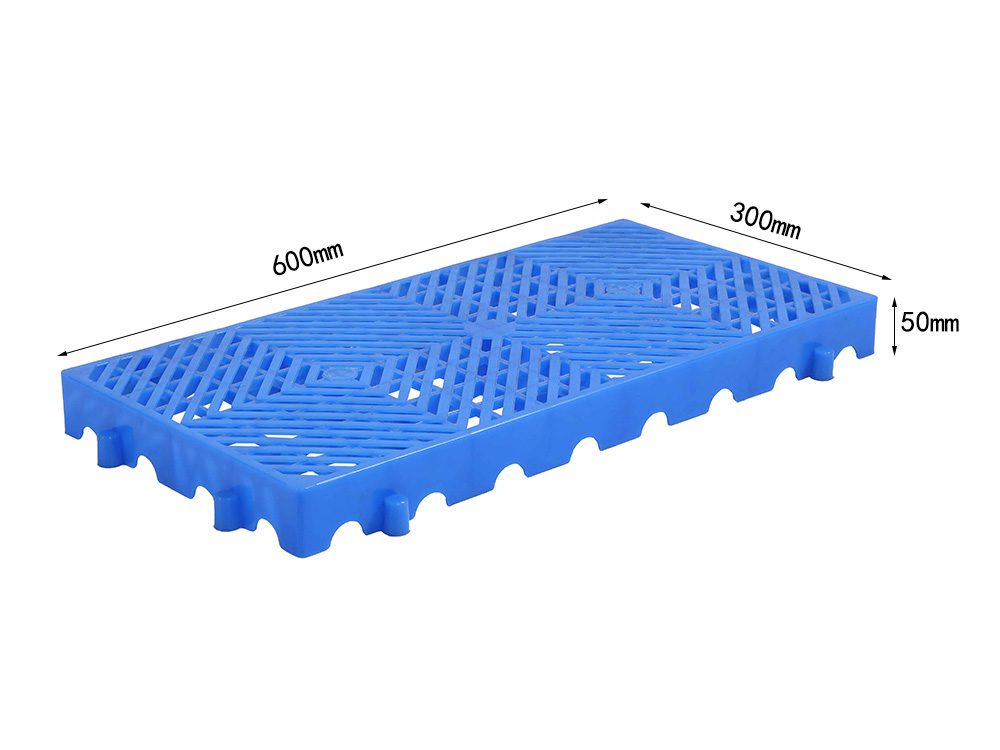
This guide walks through the five specs that separate a working beverage-industry layer pad from a one-trip sheet. Specs are based on the moulded plastic layer pad range made by FOSHAN LSY Plastic, a 35-year injection moulding source in Foshan, China.
1. Match the pad to the crate footprint
Most beverage crates in global distribution use one of three footprints: 400 x 300 mm (European 24-bottle), 500 x 325 mm (US-style 24-pack) and 600 x 400 mm (Asian market 30-bottle). The layer pad must be cut or moulded to sit flat on the crate rim without overhang, and the bottom of the next layer of crates must rest on the pad — not on the bottles below.
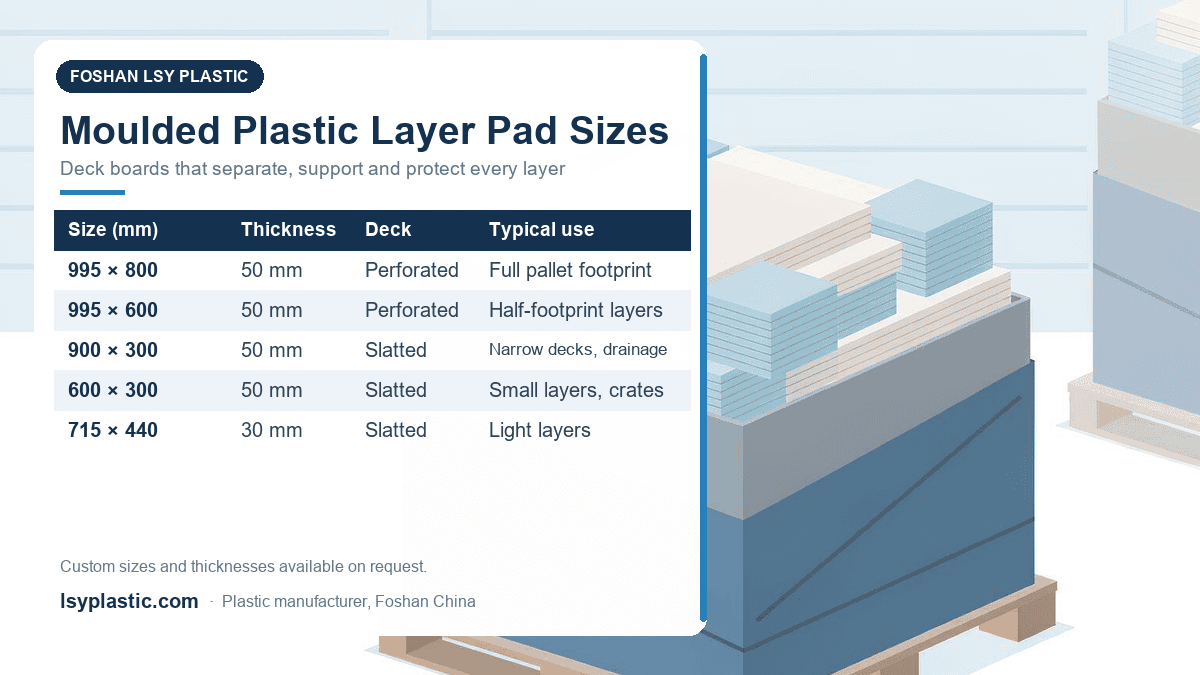
LSY moulds layer pads in five common sizes: 995 x 800, 995 x 600, 900 x 300, 600 x 300 and 715 x 440 mm. For a 600 x 400 mm beverage crate, the 600 x 300 mm pad runs as a divider strip — two strips per layer. For a 400 x 300 mm crate, the 600 x 300 mm pad covers two crates side by side.
2. Check the static load rating
A 30-bottle glass crate stacks at roughly 30 kg. Eight layers = 240 kg on the bottom crate. The pad must carry that load without cracking, sagging, or letting the bottom of the upper crate touch the bottle caps of the lower crate. Moulded HDPE pads in the LSY range carry 1,500 to 3,000 kg static load depending on thickness — well above what beverage stacks ever demand.
3. Slatted vs perforated vs closed deck
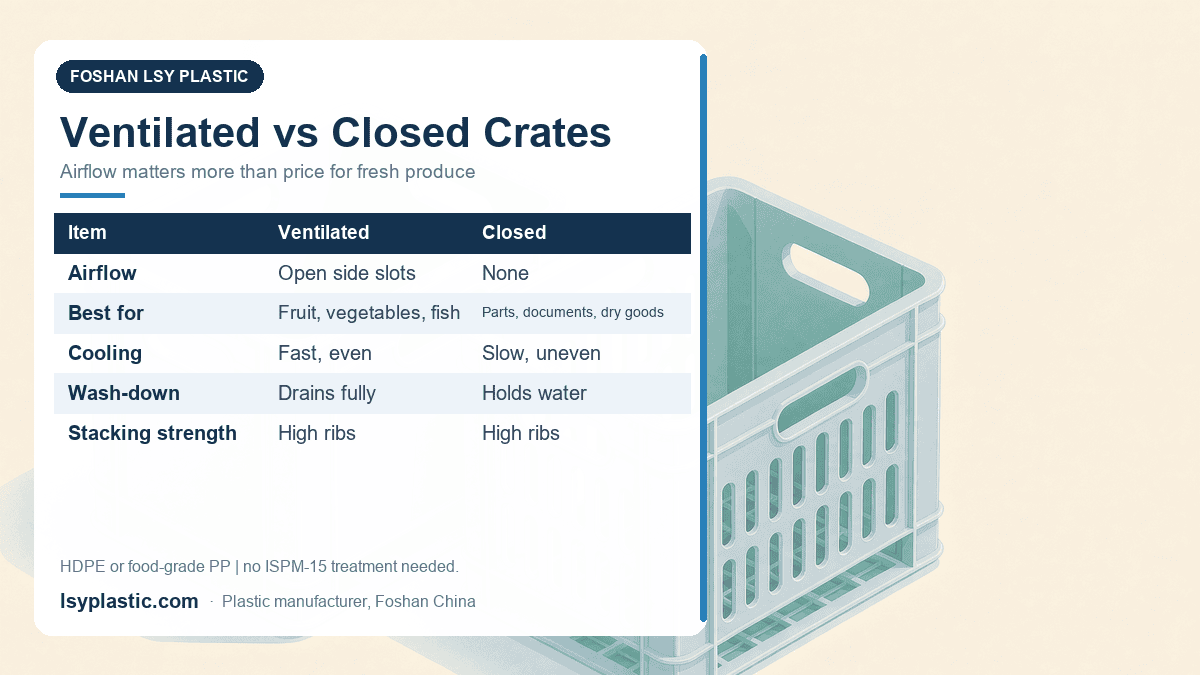
Ventilated beverage crates — the common bottle crate — need a slatted or perforated pad so condensation drains instead of pooling. Closed-deck crates (used for canned soft drinks where dust ingress matters) take a closed-deck pad. Mixing them causes either water pooling or unwanted dust. Ask for the pad drawing before order.
4. Material: HDPE or PP, both food-contact grade
Beverage crates touch the outside of bottles and cans, not the contents, so food-contact certification matters for many buyers even when the pad does not directly touch the drink. LSY pads use virgin HDPE or PP, both FDA-grade and EU 10/2011 compliant on request. Recycled-content pads are available but should be specified as such — they cost less but show scratches sooner.
See the Crate hub for the full range and specifications.
For beverage and bottle handling, see the layer pad hub for vent pattern and stack-load specs.
5. Two-way or four-way entry
Beverage stacks move on forklifts and pallet jacks from multiple sides. A four-way pad — entry on all four edges — saves time on the warehouse floor. LSY’s standard moulded pads are four-way by design.
Why moulded plastic instead of cardboard or plywood
Cardboard sheets fail after one wet cycle. Plywood splinters and the fasteners loosen. Moulded plastic layer pads survive the wash-down, the humid reefer container, and the 200th trip. For a beverage distributor moving 50,000 crates per month, the per-trip cost of a moulded pad is lower than cardboard within the first quarter. See the full export pallet sizing guide for how pad and pallet choice work together.
Order specs checklist
- Size: pad footprint matches crate footprint (or crate grid)
- Load: static rating ≥ 1,500 kg, dynamic rating ≥ 600 kg
- Material: virgin HDPE or PP, FDA-grade on request
- Deck: slatted / perforated / closed — match to crate type
- Entry: four-way for forklift handling
LSY Plastic moulds the full range of moulded plastic layer pads at the 20,000 m² Foshan factory, in 180 to 2,500 ton injection presses. Samples are supplied at cost price for buyer evaluation; overseas orders ship by FCL. Request a quote at fstyx01@lsyplastic.com or WhatsApp +86 19311059570.
FAQ — plastic layer pads for beverage crates
What is the standard layer pad size for beverage crates?
It depends on the crate. For 400 x 300 mm European crates, a 600 x 300 mm pad covers two crates. For 600 x 400 mm Asian crates, use two 600 x 300 mm strips. For 500 x 325 mm US-style crates, a 715 x 440 mm pad covers the full layer.
Can a moulded plastic layer pad be used in a refrigerated container?
Yes. HDPE and PP both perform at -20°C and lower. The pad will not become brittle under normal reefer operation, and condensation drains through the slatted or perforated deck.
Do you supply samples for evaluation?
Yes — samples are supplied at cost price so the buyer can verify fit and load rating on their own crate stack. Domestic orders in China carry no MOQ; overseas orders ship by full container load (FCL).
What is the standard layer pad size for beverage crates?
It depends on the crate. For 400 x 300 mm European crates, a 600 x 300 mm pad covers two crates. For 600 x 400 mm Asian crates, use two 600 x 300 mm strips. For 500 x 325 mm US-style crates, a 715 x 440 mm pad covers the full layer.
Can a moulded plastic layer pad be used in a refrigerated container?
Yes. HDPE and PP both perform at -20°C and lower. The pad will not become brittle under normal reefer operation, and condensation drains through the slatted or perforated deck.
Do you supply samples for evaluation?
Yes — samples are supplied at cost price so the buyer can verify fit and load rating on their own crate stack. Domestic orders in China carry no MOQ; overseas orders ship by full container load (FCL).
Related reading: plastic layer pads guide — moulded deck boards, layer pad specs and sourcing.
plastic crates and turnover boxes buyers: our Turnover Box Series range covers the specifications outlined in this guide.
More industrial crate guides
- 600×400 Plastic Crate Chart: Ventilation & Shelf Life
- Poultry Crate Layer Pad: 5 Sizes for Egg & Live-Bird Hauling
- Returnable Plastic Crates vs Cardboard for Produce Shipping



