
The 600 × 400 mm footprint is the workhorse of European and Asian produce logistics. It fits standard 1200 × 800 mm Euro pallets two crates wide, it stacks and nests in standard racking, and it is the size most packhouses standardise on when they move from cardboard to returnable plastic. This guide puts the 600 × 400 crate against the produce it carries: which vent pattern suits which crop, how load limits change with wall design, and what to specify when you order from a factory.
Why 600 × 400 mm Became the Produce Default
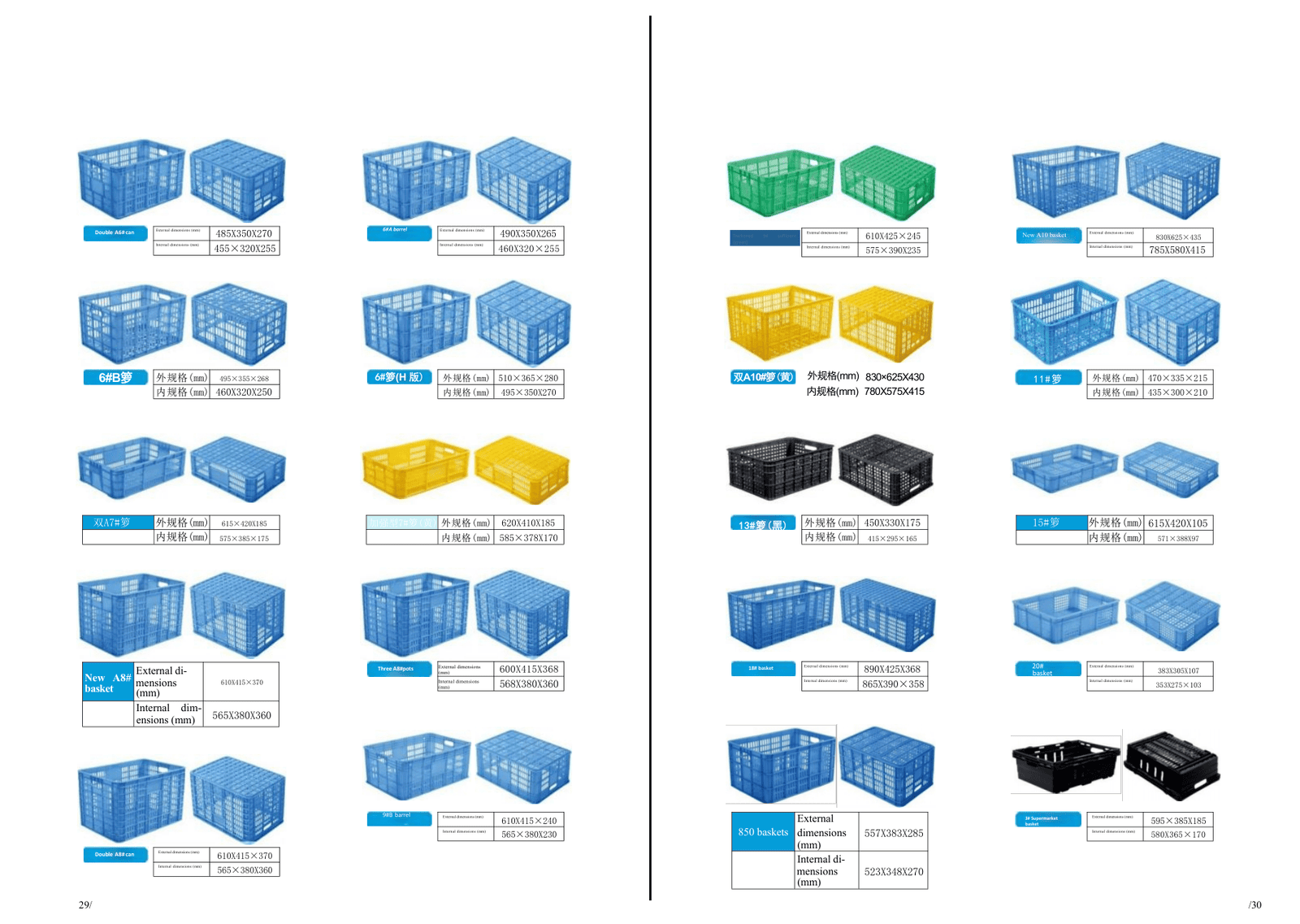
600 × 400 mm is one half of a 1200 × 800 mm Euro pallet. That simple ratio removes the guessing from pallet loading: two crates across, three crates along, six crates per layer. At LSY Plastic we mould 600 × 400 ventilated crates in depths from 150 mm to 400 mm, with open-area ratios from 15% to 40%, so one footprint can handle everything from herbs to melons. See the full industrial plastic crates selection guide for material and rib comparisons.
Hole Pattern Airflow Chart for 600 × 400 Produce Crates
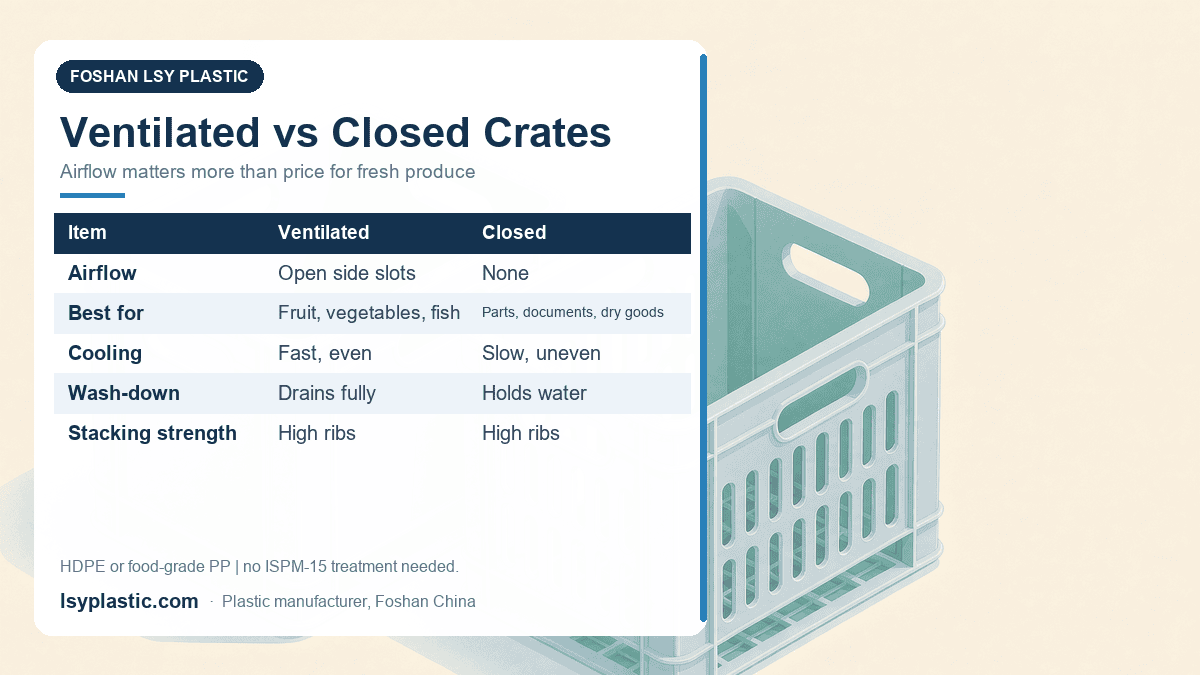
The vent pattern is the single biggest performance variable. The numbers below are taken from the LSY ventilated crate range and match the design rules covered in our produce cold-chain guide.
| Open area | Pattern | Cooling speed | Best produce | Stack height loaded |
|---|---|---|---|---|
| 15–25% | Small distributed perforations | Even, moderate | Leafy greens, herbs, beans | 6–8 high |
| 20–30% | Vertical slotted sides | Fast vertical flow | Tomatoes, peppers, stone fruit | 5–7 high |
| 30–40% | Large open grid | Very fast | Root vegetables, citrus, onions | 4–6 high |
| 20–30% | Base plus side vents | Best under forced air | Mixed packhouse use | 5–7 high |
The 600 × 400 footprint keeps these patterns aligned when stacked, so air channels stay continuous from the bottom crate to the top. Misaligned vents create dead zones where produce stays warm.
Depth and Load: Matching the Crate to the Crop
Crate depth controls bruising. Weight from above travels down through the produce column, and a deep crate of delicate product self-destructs:
- 150 mm depth: herbs, loose leafy greens, cherry tomatoes — low stack weight, fast cooling.
- 300 mm depth: standard tomatoes, peppers, cucumbers, stone fruit — the most common 600 × 400 size.
- 400 mm depth: root vegetables, onions, potatoes, citrus — denser product, still needs side vents.
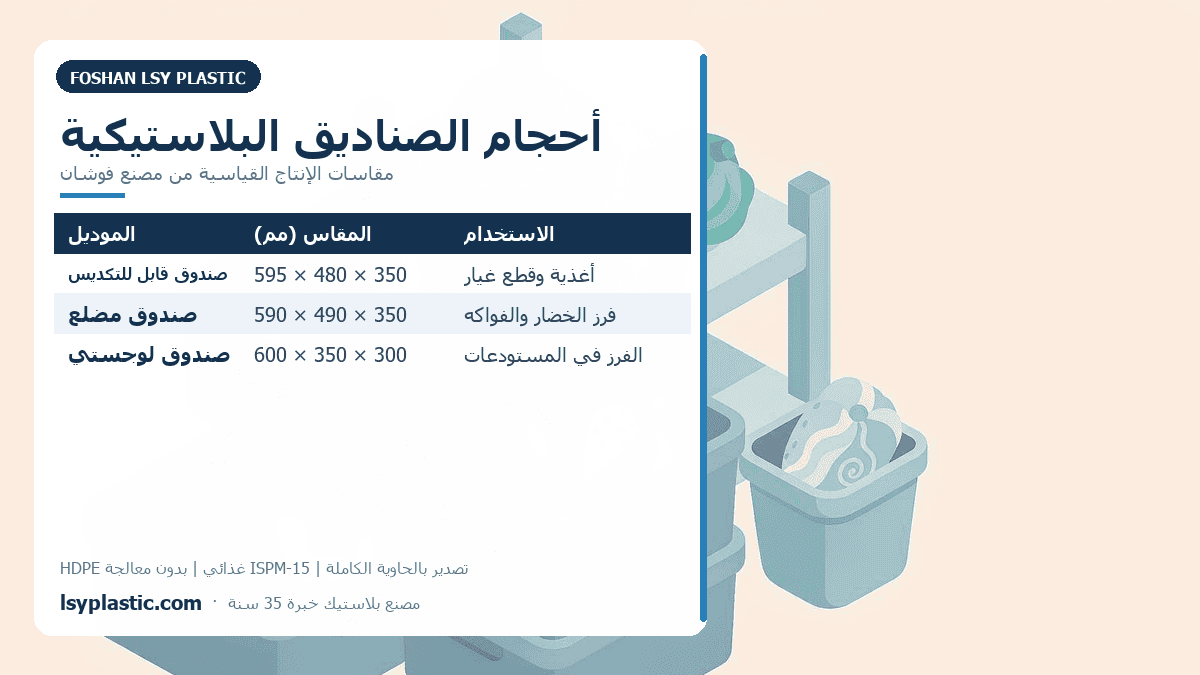
For heavy bulk produce, the LSY 488L and 850L large ventilated crates are the alternative. They carry 300–450 kg and 500–700 kg respectively and replace entire stacks of small boxes. For GCC importers, our fresh produce logistics in GCC guide covers the 488L–850L range and desert-climate handling.
Material and Food-Contact Compliance
LSY 600 × 400 produce crates use virgin HDPE or PP, both FDA-grade and EU 10/2011 compliant on request. Recycled-content grades are available but should be declared — they cost less but mark and scratch sooner, which matters if crates are reused for retail display.
Need reliable plastic crates and turnover boxes? Browse the Turnover Box Series collection and request a quote.
Frequently Asked Questions
What is the standard 600 × 400 crate load rating?
Stacking strength depends on wall thickness and rib design, but a standard 600 × 400 ventilated crate in the LSY range carries 20–25 kg per crate and stacks 5–8 high when loaded. Ask for the static and dynamic load test data before ordering.
Do you ship 600 × 400 crates overseas? What is the MOQ?
Overseas orders ship by FCL (full container load). LCL and small trial batches are not supported for export. Domestic China orders have no MOQ and ship by courier or domestic logistics.
Can I get samples before a full order?
Samples are billed at cost price against a proforma invoice. Lead time is 5–7 days for in-stock 600×400 mm crate SKUs and 10–15 days for custom colours or vent patterns.
How is pricing calculated?
Unit price depends on material (virgin HDPE or PP), vent pattern, wall thickness, and order volume. Share your target produce and monthly volume for an FOB Shenzhen quote within 24 hours.
Written from the production floor of LSY Plastic, a 35+ year injection moulding manufacturer in Foshan, China. Specifications are drawn from the industrial plastic crates guide and produce cold-chain guide.



