Fresh produce logistics in the GCC is a race against heat. From Dubai’s wholesale fruit and vegetable market to Riyadh cold chains and Doha port reefer terminals, ventilated crates are the workhorse that keeps dates, citrus, leafy greens and imported vegetables saleable. Choosing the right crate—size, ventilation, stacking strength, food-grade resin—decides whether your consignment arrives fresh or arrives as a write-off.
Dimensions, venting and stacking ratios are compared in the plastic crates guide — a useful reference before you order.
Why Ventilation Matters in a Desert Climate
Fresh produce keeps respiring after harvest: it produces heat, moisture and ethylene gas, even inside a cold chain. In a crate with no airflow, that respiration creates pockets of warm, humid air around the product, which accelerates ripening, condensation and decay. Ventilated crates let cold air circulate through the load and let ethylene and moisture escape, keeping the produce at the right temperature from the packhouse to the wholesale floor.
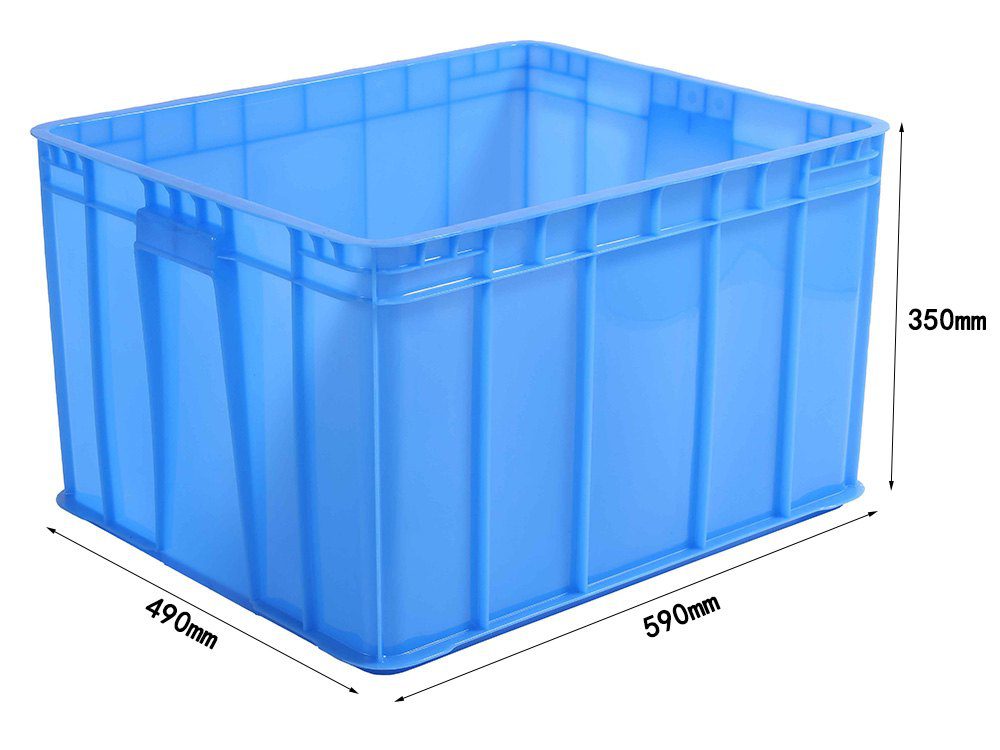
Ventilation is especially important in the Gulf because the ambient-to-cold gap is extreme. A crate that moves from a 45 °C quayside to a 2 °C cold store in minutes will see condensation; an open, well-ventilated crate handles that moisture far better than a solid box, which traps it against the product.
Standard Sizes: 488L to 850L Ventilated Crates
Large-format ventilated crates are the backbone of GCC wholesale and import distribution. The two most common capacity classes:
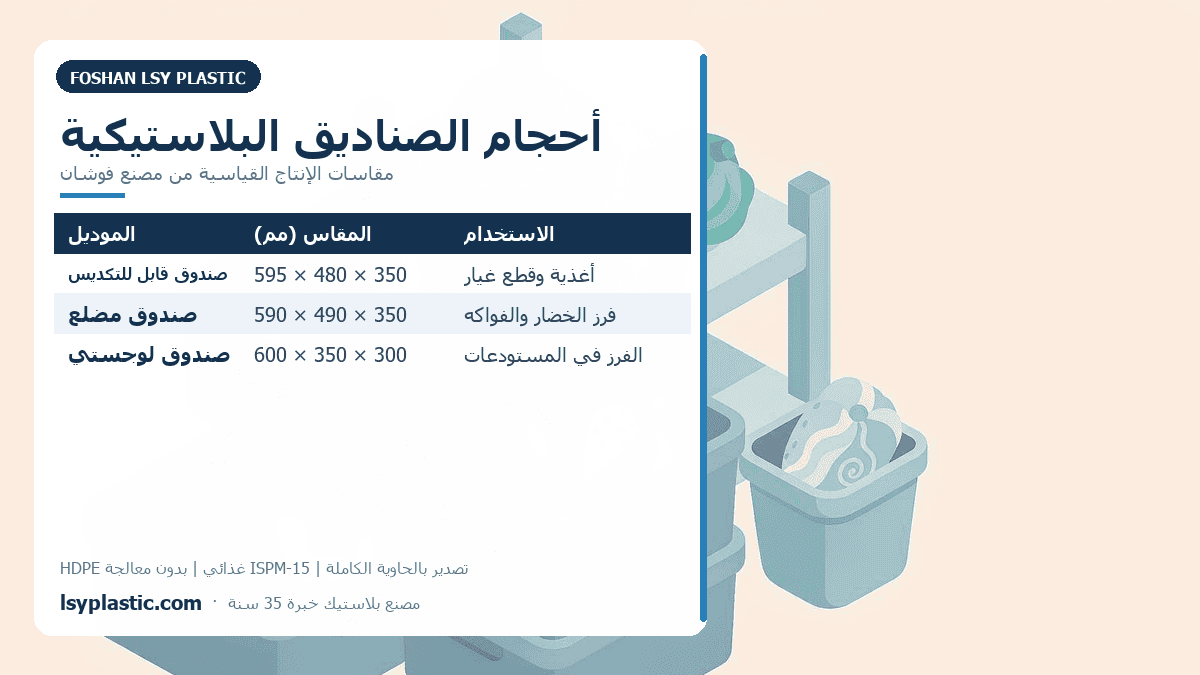
- 488L crates — typically around 1200 × 1000 mm footprints with capacities near 488 liters. The standard choice for onions, potatoes, citrus, apples and dense dry-packed produce, and compatible with standard 1200 × 1000 racking.
- 700–850L crates — taller, higher-volume crates for lightweight bulk produce such as watermelons, pumpkins, squash and leafy lines that must never be crushed by stacking. Fewer crates per truck, less handling per kilogram.
Smaller 40–70L ventilated crates complete the system for loose retail packs and open-market display. A common GCC pattern is bulk 488L crates from port to wholesale, with product decanted into smaller vented crates for retail distribution. We manufacture the full range; see our fresh produce handling range for current options.
Ventilation Design: Open Area, Slot Shape and Produce Type
Not all ventilation is equal. Three design factors control performance:
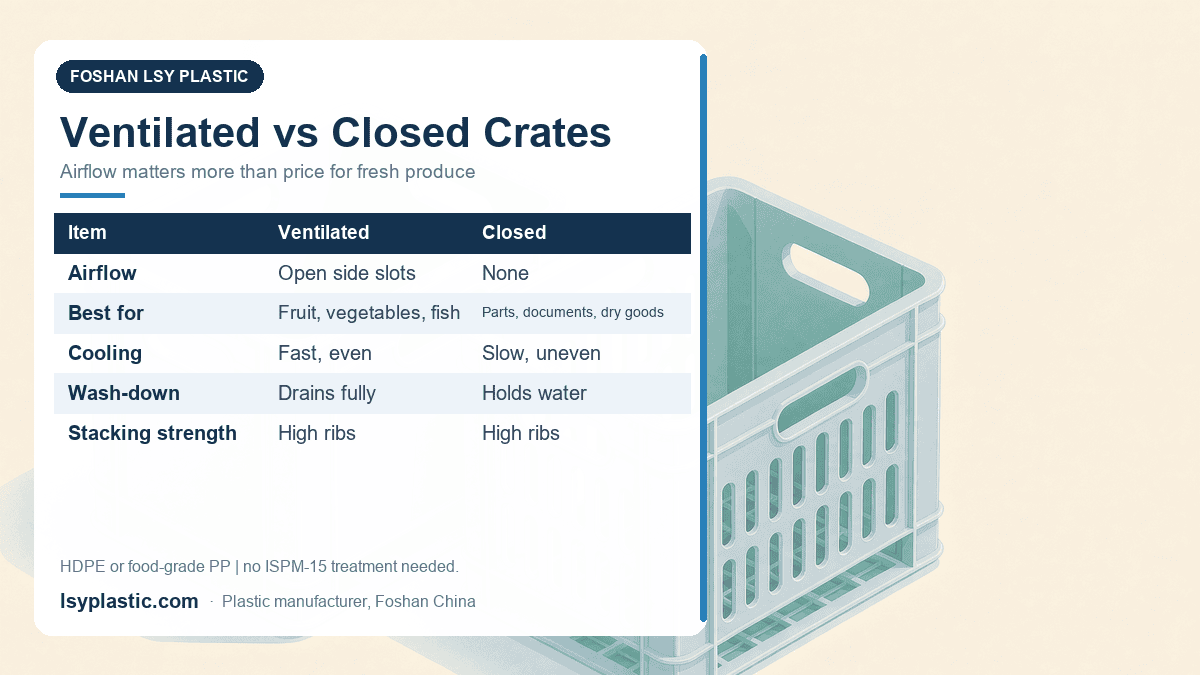
- Open area — ventilated produce crates typically have 15–25% open area in the side walls and base. Higher open area suits leafy greens; moderate open area suits dense root crops that hold their shape.
- Slot shape and layout — long horizontal slots maximize airflow but reduce side strength; small round or elliptical perforations keep strength and prevent small produce from escaping. Match the hole pattern to the smallest item you pack.
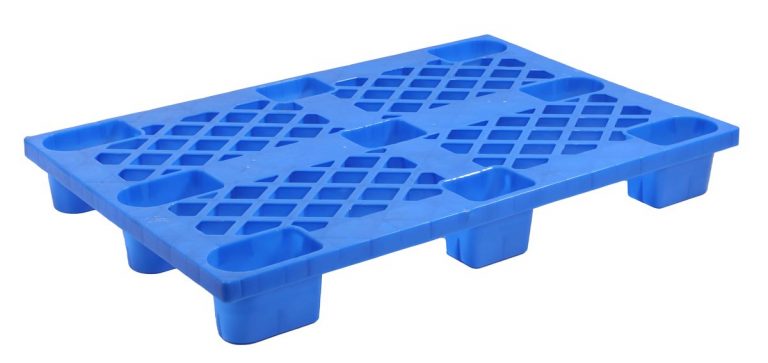
- Base airflow — footed or raised bases with floor slots let cold air sweep under the crate, which matters most in forced-air and vacuum precooling rooms.
For soft or premium fruit, consider a crate with a smooth, vented floor to avoid bruising. For hard-skinned produce, aggressive ventilation is a free win. Ask your ventilated crates supplier for airflow-per-crate guidance rather than generic recommendations.
Cold Chain Suitability and Cleaning
GCC cold chains run from 0–4 °C for leafy vegetables and berries up to 8–12 °C for tropical fruit. HDPE ventilated crates perform reliably across this band: they stay tough at refrigeration temperature, do not absorb moisture, and can be hot-water washed or pressure cleaned between loads. That washability is a compliance requirement in most Gulf markets, where distributors supply multiple retail customers from one facility and cross-contamination controls are inspected.
Choose food-grade HDPE for crates that touch produce directly. Food-grade resin means no migration of non-approved additives, and it survives repeated sanitizer contact without surface degradation. Crates with smooth internal surfaces clean faster and show residue clearly to auditors.
Stacking Load and Handling
A filled crate is heavy—a fully loaded 488L crate can exceed 300–400 kg, depending on the product. Two questions decide durability:
- Stacking strength — how many full crates can be stacked without collapse? Well-built crates are engineered for 5–8 high in the stack, with ribbed sidewalls and reinforced corners. Check the number molded on the spec sheet, and test with your densest product.
- Forklift and pallet-jack compatibility — large crates must be forklift-friendly from at least two sides, with a footprint that fits your racking and trucks. Integrated runner bases are standard on 488–850L models.
Also check whether empty crates nest for return trips. Nestable design cuts return-transport volume dramatically, which lowers the real cost per trip for GCC distributors who send empties back to farms or central packing stations.
Choosing the Right Crate for Your Distribution Model
- Import distributor (port → cold store → wholesale market): bulk 488L crates, rackable, forklift-friendly, durable for many round trips.
- Retail supplier (wholesale → store DC): mid-size vented crates, nestable, display-ready, food-grade.
- Farm-to-packhouse operations: rugged high-ventilation crates with stacking strength for field transport and precooling.
Branding is a practical extra: molded-in logos and company colors on crate fleets are a low-cost way for Gulf distributors to keep assets from disappearing into the wholesale market. Ask about custom colors and ID marking at order time, not after.
Get a Quote
Looking for a reliable supplier of ventilated crates for GCC produce logistics? Tell us your capacity (488L–850L), produce type and container volume—we will send a quote, drawings and a container loading plan within 24 hours.
Contact our export team:
WhatsApp: +86 193 1105 9570
Email: fstyx01@lsyplastic.com
Browse our range at lsyplastic.com or request our catalog.
Frequently Asked Questions
Why does ventilation matter for GCC produce?
In desert heat, fresh produce respires fast and field heat is severe. Ventilated crates let cold air circulate and remove heat, ethylene and moisture, so dates, citrus and leafy greens arrive saleable rather than spoiled.
What sizes are available for produce crates?
Ventilated crates for produce run from about 488L to 850L in common logistics sizes, matching pallet and rack footprints. Choose the size to your pallet and distribution model.
How do I choose the vent design?
Match open area and slot shape to the produce: large vents and slotted bases for leafy greens and fast cooling, finer vents for small items. Align vents when stacking so air passes through the whole stack.
What material for GCC produce crates?
Food-grade HDPE, because it handles heat, cold, moisture and impact without absorbing odours, and is UV-stable for outdoor port and market use. LSY moulds ventilated produce crates; no MOQ for domestic orders, overseas orders ship FCL.