Middle East logistics and warehousing buyers—from Riyadh distribution centers and Jeddah cold stores to Dubai free zones and Qatar port terminals—are moving to plastic pallets in growing numbers. Before you place an order, you need the right standard size, the correct load rating, and the right deck style for how your pallets will actually be used. This guide covers the essentials for buyers across Saudi Arabia, the UAE and Qatar.
Before comparing options, it helps to review the standard plastic pallet dimensions chart so you know what is available.
للقراء بالعربية: دليل المشتري للمنصات البلاستيكية في السعودية والإمارات.
Standard Pallet Sizes Used in the Middle East
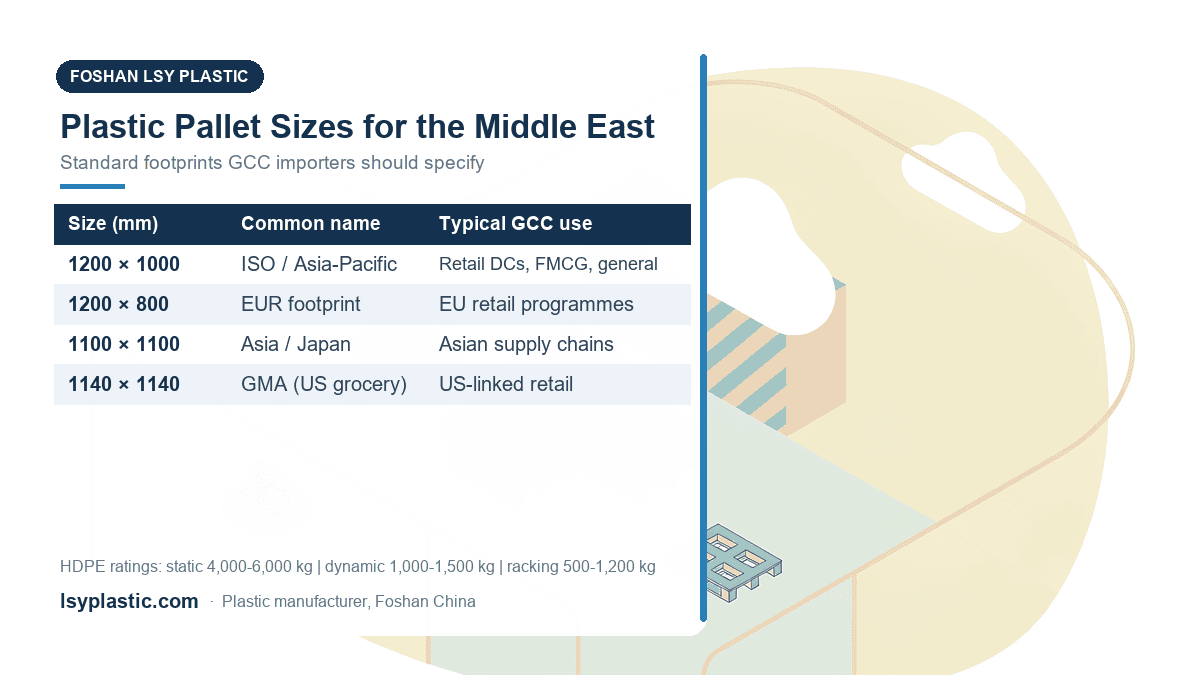
The GCC has no single home-grown pallet standard, so buyers inherit the footprint of their main trade lanes. The vast majority of pallets entering the region from China, India and Europe are 1200 × 1000 mm or 1200 × 800 mm. The 1200 × 1000 mm footprint is the de facto ISO workhorse for Asian, Australian and American supply chains and the safest default for Saudi and UAE importers serving retail, FMCG and industrial distribution.
The 1200 × 800 mm size (the classic European EUR pallet footprint) appears where European retail chains or EU-sourced goods set the racking and truck dimensions. If your pallets must slot into existing racking or automated handling, measure the rack beam spacing first, then match the footprint—do not guess.
| Size (mm) | Common Name | Typical GCC Use |
|---|---|---|
| 1200 × 1000 | ISO / Asia-Pacific pallet | Retail DCs, FMCG, general warehousing |
| 1200 × 800 | EUR footprint | European retail programs, roll-cage systems |
| 1100 × 1100 | Asia / Japan pallet | Asian supply chains, automotive pools |
| 1140 × 1140 | GMA (US grocery) | North-America-linked retail programs |
For most new GCC programs, 1200 × 1000 mm is the least-risk choice because it maximizes container utilization, fits standard racking, and is compatible with the largest pool of handling equipment. A reliable plastic pallet supplier for Middle East projects should confirm your footprint against your racking before molding a single pallet.
Load Ratings: Static, Dynamic and Racking Load
Three numbers define what a pallet can carry, and each is tested differently:
- Static load — the weight a pallet can support when resting on a flat floor or on another pallet. Typical HDPE pallets: 4,000 – 6,000 kg.
- Dynamic load — the weight while being moved by forklift or pallet jack. Typical: 1,000 – 1,500 kg.
- Racking load — the weight supported across rack beams. Typical: 500 – 1,200 kg, strongly dependent on beam span and pallet structure.
Buyers frequently compare only static numbers, which is how under-specification happens. If pallets sit on rack beams every night, the racking load is the number that matters, and it is always lower than the static rating. Ask the manufacturer for test reports in the actual beam span you use, and check whether the rating assumes the load is distributed evenly or concentrated on a smaller footprint.
Pallet Styles: Chuan (Three-Runner), Nine-Leg and Grid Decks
Three deck and base designs dominate the market, and each suits a different operation:
- Chuan (three-runner) pallet — three solid bottom runners running the full length. The strongest base for racking and heavy loads, compatible with both forklifts and pallet jacks from the two open sides. The go-to choice for racked warehousing.
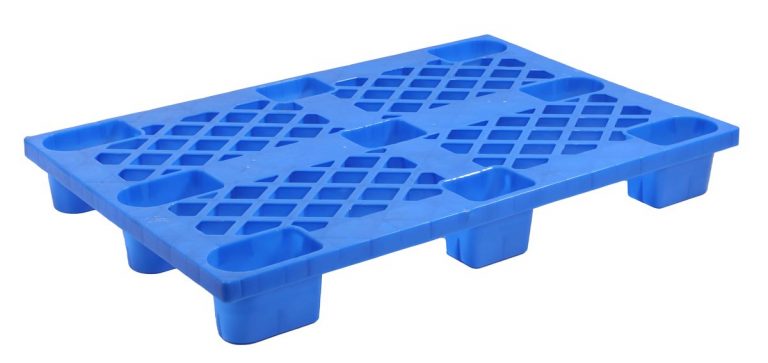
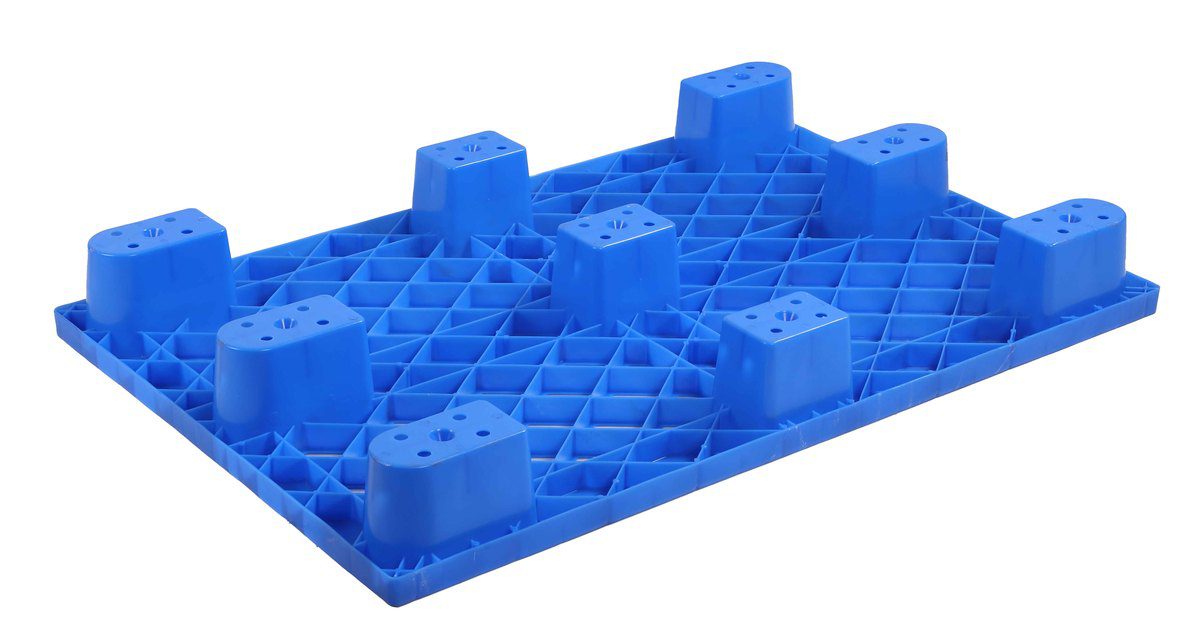
- Nine-leg pallet — nine molded feet, four-way entry. Lightweight, stackable, and ideal for floor-stacked pallets or light logistics. Not recommended for heavy racking unless the design is reinforced.
- Grid-deck pallet — open mesh deck surface for airflow and drainage. Preferred for food, seafood, wet goods and outdoor logistics, where the pallet must shed water and stay breathable.
Many Saudi and UAE importers run a hybrid fleet: chuan pallets in the racking zone, nine-leg pallets for floor stacking and retail staging, and grid decks in food and cold-storage lines. Deck surface also matters for slip—specify an anti-slip or textured top for loads that shift in transit.
How Many Pallets Fit in a 40ft Container?
Container math is where plastic pallets outperform expectations, because their consistent thickness lets more units ship per TEU. For a standard 40-foot dry container (approximately 12.03 m × 2.35 m × 2.39 m internal):
- 1200 × 1000 mm pallets (flat-stacked, pallet height under ~150 mm): roughly 20 pallets per container.
- 1200 × 800 mm pallets: roughly 25 pallets per container.
These figures assume pallets are laid flat on the floor, one layer. If you can nest or stack empty pallets, quantities rise sharply. Confirm the exact internal length with your shipping line—reefer containers and 40ft high-cube units differ, and GCC-bound reefer space is often tight for fruit and dairy lines.
Why HDPE Suits the Desert Climate
Gulf summers push ambient temperatures past 45 °C, and sand is everywhere. HDPE plastic pallets handle this environment better than any traditional alternative:
- Heat tolerance — HDPE keeps its strength in hot warehouses and in containers sitting on sunny quays; it does not warp, crack or lose nails the way wood does under heat cycling.
- Moisture and condensation — HDPE does not absorb water, so pallets in cold stores or humid port air never swell, rot or mildew.
- Sand and dust — the smooth, hard surface sheds sand, does not splinter, and is easy to blow or wash clean before export or audit.
- UV — for pallets stored outdoors for long periods, request UV-stabilized HDPE so the resin does not become brittle over years of sun exposure.
Food-grade HDPE options are available for direct food contact, and anti-static grades protect sensitive electronics in regional e-commerce and telecom logistics. For a deeper look at material choice, see our HDPE vs polypropylene pallet comparison.
Buying Checklist for Saudi, UAE and Qatar Importers
- Footprint and tolerance — confirm the size fits your racking and trucks; ask for dimensional QC data (±2 mm is typical for quality molds).
- Resin source — specify virgin or recycled HDPE; virgin gives the most consistent strength and color.
- Load test reports — request static, dynamic and racking tests from an independent lab, not only manufacturer data.
- Surface and color — anti-slip top, custom corporate color, molded-in logo for fleet identification.
- Sample validation — run a sample through your own racking and forklift fleet before committing to volume.
- Documentation — SGS or third-party inspection reports smooth customs clearance in Saudi and UAE ports.
LSY Plastic is a 30+ year injection-molding manufacturer of HDPE pallets in 180T–2500T machines (JSW, Mitsubishi, NSC), with a 20,000 m² warehouse in Foshan and OEM supply to BYD, OPPO, vivo, Desay and Meituan. We ship pallets to 30+ countries, including regular orders across the Middle East.
Get a Quote Today
Need a dependable plastic pallet supplier for Middle East projects? Send us your size, load profile and quantity, and we will respond within 24 hours with a quote and container-loading plan.
Contact our export team:
WhatsApp: +86 193 1105 9570
Email: fstyx01@lsyplastic.com
Browse our pallet range at lsyplastic.com or request our catalog.
Frequently Asked Questions
What pallet size should I use in Saudi Arabia, the UAE or Qatar?
The GCC has no home-grown pallet standard, so follow your trade lanes: most Middle East logistics use the ISO 1200×1000 mm pallet, with 1200×800 mm (EUR) common in European-linked supply chains and 48×40 in (GMA) where US goods are involved. Confirm your racking and truck dimensions before ordering.
Which plastic is best for the desert climate?
HDPE. Gulf summers push past 45°C and sand is everywhere, so HDPE’s UV stability, moisture resistance and impact strength make it the safer resin than PP for outdoor and hot-weather use.
How many plastic pallets fit in a 40ft container?
Because plastic pallets have consistent thickness, more units fit than with wood. The exact number depends on footprint and stack height — send us your pallet size and we will confirm units per 40HQ, and nestable designs fit even more when empty.
What deck style should I choose — chuan, nine-leg or grid?
Chuan (three-runner) pallets suit racking and heavy loads, nine-leg pallets are a versatile general-purpose base, and grid decks give airflow and drainage for produce and wet goods. Match the style to whether the pallet will be racked, stacked or used on the floor.