
If you ship table eggs, hatching eggs, broiler crates or live-bird modules in 600×400 mm Euro plastic crates, a moulded plastic layer pad between each tier keeps stacks stable, lets wash water drain, and stops birds or eggs from sitting in condensate. The pad is not optional stack decoration — it sets the static load rating for a 12-crate column and decides whether the bottom box crushes on a hot humid dock.
Which layer-pad size for which poultry crate
The five standard moulded plastic layer pad sizes we stock cover almost every Euro-crate and industrial crate footprint on the market today:
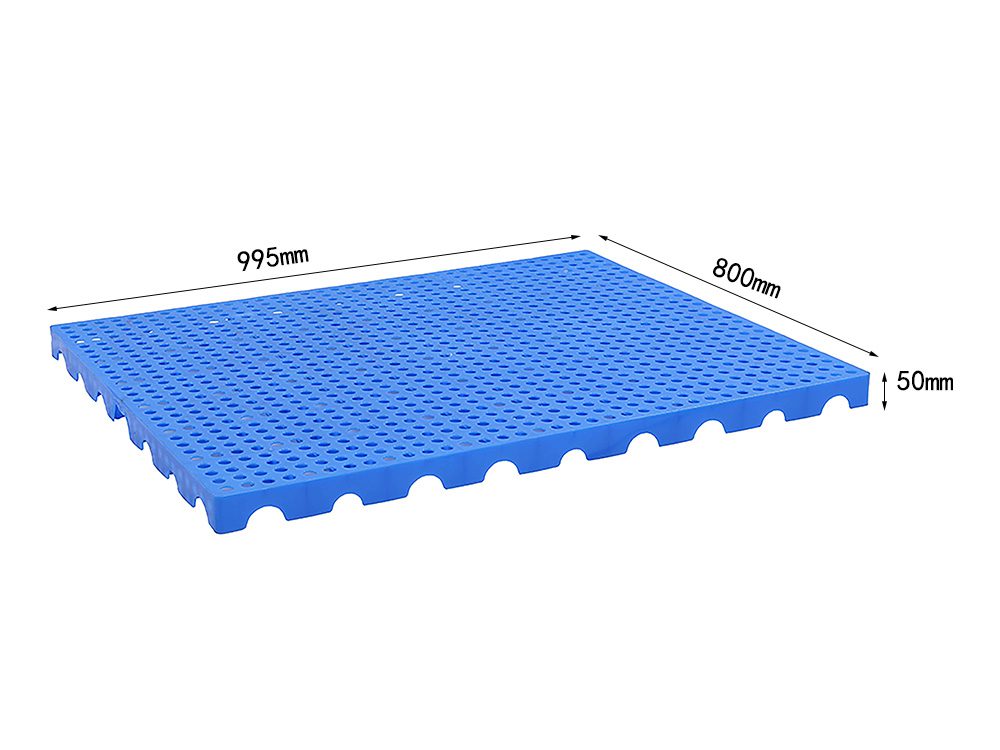
- 995 x 800 x 50 mm perforated — primary poultry-crate pad. Sits a full layer of four 600×400 mm egg crates or two 800×600 mm broiler crates per tier. Perforated deck drains wash water in under 12 seconds.
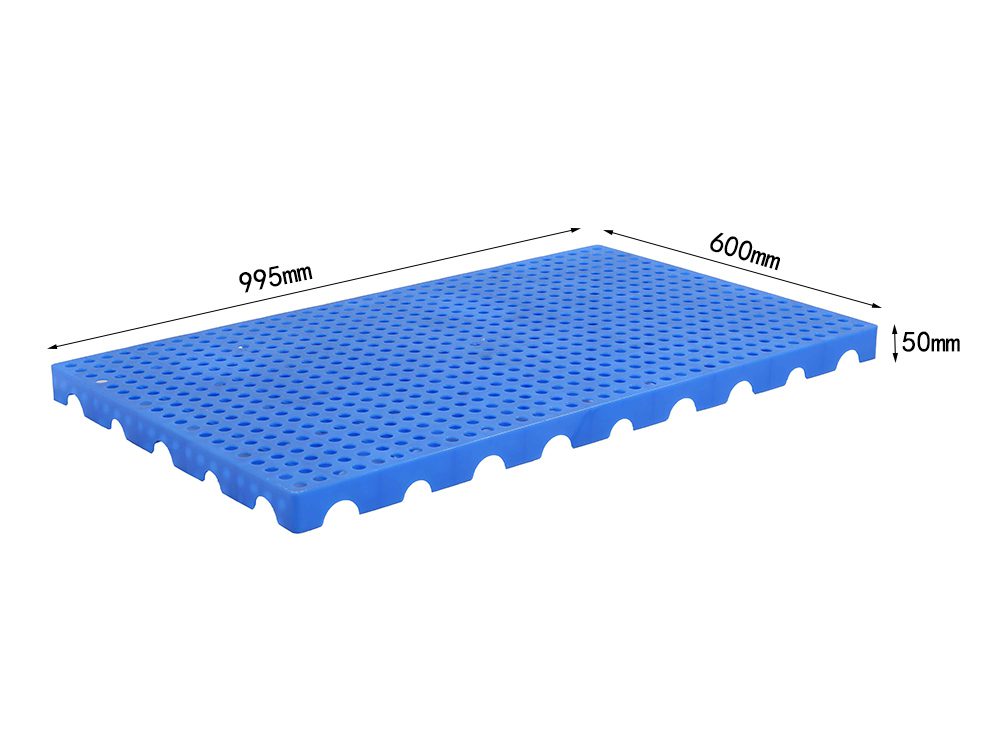
- 995 x 600 x 50 mm perforated — for 800×600 broiler crates and 1200×1000 mm standard pallet footprints. The deck punch is round 8 mm holes for fast condensate drainage in cold-chain runs.
- 900 x 300 x 50 mm slatted — narrow layer pad for 600×300 mm hatchery trays or single-column egg stacks where airflow matters more than deck area.
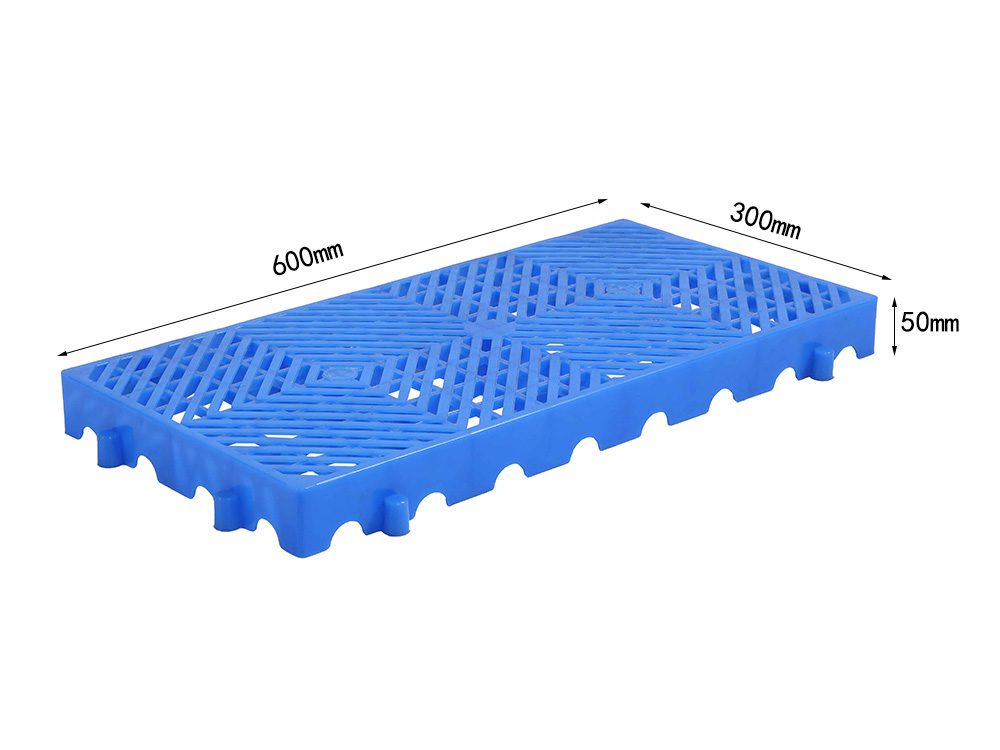
- 600 x 300 x 50 mm slatted — pad for 600×300 mm poultry-quote-tray size. Lightweight option for short-haul egg deliveries where pad weight itself is the constraint.
- 715 x 440 x 30 mm slatted — thin pad for shallow crates and tiered hatchery carts. Keeps pad weight low while still breaking the cold bridge between tiers.
Stack loads that hold bottom crates together
A 12-crate column of empty 600×400 mm poultry crates, each one a typical 2.3 kg, loads the bottom box with roughly 28 kg of static weight from the upper 11 tiers alone — and that is before you add eggs or birds. Egg handling typically runs 8 to 10 kg per crate, so the bottom crate on a 12-stack holds 110 to 130 kg total per lift. Filled broiler modules run 18 to 22 kg per crate, and the bottom crate carries roughly 220 to 250 kg of static load.
The 50 mm perforated 995×800 and 995×600 pads are rated for the 12-stack egg pattern. The 30 mm slatted pads in 715×440 and 600×300 are rated to a 6-stack column with the same 600×400 footprint — they save on pad weight but cap your stack height.
Drainage and condensation in real poultry washing
Poultry crates are washed at 55 to 65 °C with a Quat-based or chlorine-based sanitizer at the back of every delivery. A flat closed-deck pad traps water between tiers and creates a hot-cold surface where birds or eggs sit in condensate for the next loader. The round-perforation 50 mm pads drain a full wash-rinse cycle in about 12 seconds on a standard 600×400 crate footprint. Slatted 30 mm pads drain in about 8 seconds but hold less static load.
FCL and pallet fits for export
The five pad sizes all fit a 1200×800 mm Euro pallet and a 1200×1000 mm standard pallet footprint, so an industrial plastic crate topped with a layer pad can ride four-per-layer on Euro pallets or five-per-layer on standard pallets without overhang. In a 40HC container, a 12-tier column of 600×400 poultry crates with the 995×800 or 995×600 layer pads fits about 26 stacks per row, leaving aisle room for forklift access in cold-chain runs.
FAQ
Q: What is the minimum order for poultry crate layer pads?
Domestic orders have no MOQ. Export orders ship full container loads only (FCL) so the pad, crate and pallet arrive in the same lot.
Q: Can I get a sample layer pad before ordering FCL?
Yes, samples are supplied at cost price so you can check deck pattern, thickness and rigidity against your actual poultry crate and wash cycle before placing the production order.
Q: Are the pads food-contact grade for table-egg handling?
Pads moulded from PP or HDPE source material can be specified with FDA-grade raw material on request; moulded black regrind is the standard industrial-grade option and is not food-contact rated. Confirm the food-contact status you need at quote stage.
Ready to compare options? Browse our Turnover Box Series range for plastic crates and turnover boxes.
More industrial crate guides
- 600×400 Plastic Crate Chart: Ventilation & Shelf Life
- Returnable Plastic Crates vs Cardboard for Produce Shipping
- Plastic Layer Pads for Beverage Crates: Sourcing Specs



