A housekeeping cart rarely fails all at once. It fails one accessory at a time: the bumper splits and starts leaving grey marks on every door frame, the vacuum bracket cracks and the machine has to be carried, the broom clip loosens and the tools end up in the linen bag. Each failure is small, and each one slows a room attendant down on every single room. Specifying the accessories at the point of purchase costs almost nothing and removes most of what a cart gets complained about.
Bumper guard: the part that protects the building
The bumper is the first thing to hit a door frame, a lift wall or a skirting board, and it is what stands between a loaded cart and a scuffed corridor. Two questions decide whether it does its job: how much of the perimeter it covers, and what it is made of.
Corner-only bumpers protect the four corners, which is where most impacts land, and they cost less. Full-perimeter bumpers cost more and look tidier in a guest-facing corridor, which is why front-of-house properties usually specify them and back-of-house operations often do not. On the material side, a softer polymer absorbs the impact better; a harder one resists tearing but transmits more of the knock.
Replace a bumper when it splits rather than when it looks worn. A split bumper catches on door frames and can tear off mid-shift, which is worse than no bumper at all.
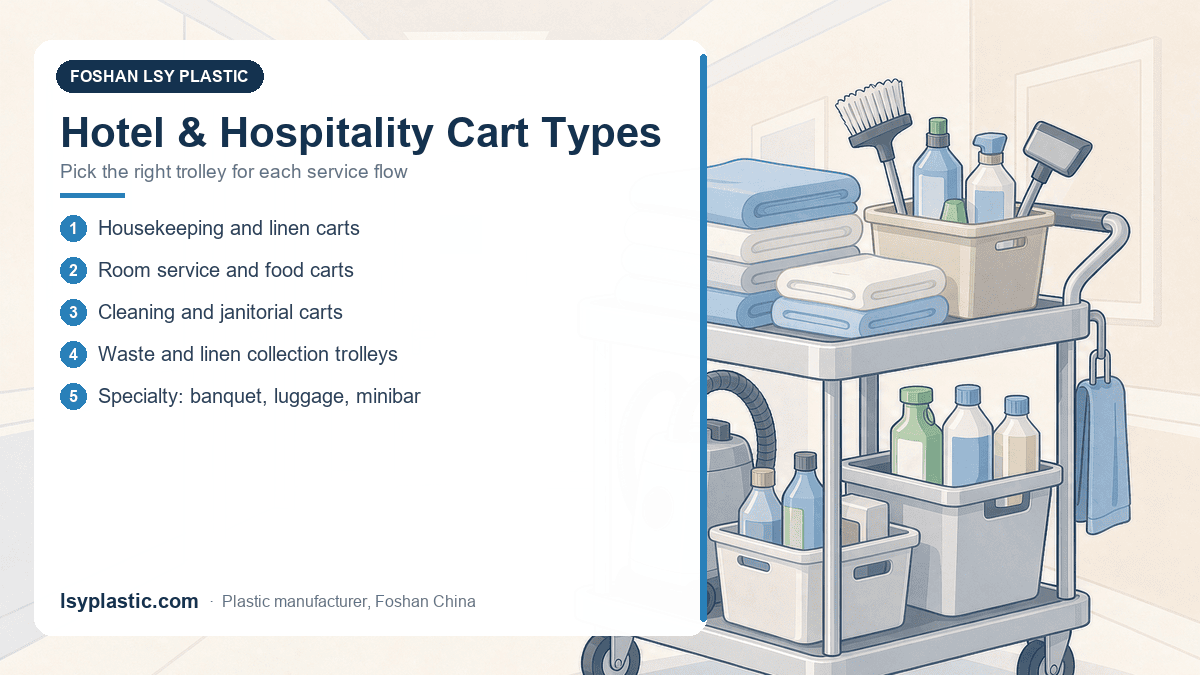
Vacuum holder: the accessory that decides whether the vacuum survives
Upright vacuums are carried on the cart, not pushed alongside it, and the holder is the only thing keeping them upright in a moving corridor. A holder that is too shallow lets the machine lean; one that is too narrow will not accept a replacement machine when the fleet changes.
When specifying, ask two things: the maximum body diameter the holder accepts, and whether the bracket is moulded into the frame or bolted on. A moulded bracket is stronger; a bolted bracket is replaceable, which matters because this is the accessory most likely to be broken by an attendant in a hurry.
Broom and tool holders
Clip-style tool holders hold a broom, a mop handle or a dustpan brush by the shaft. The failure mode is a clip that relaxes over time and lets the handle slide — so the specification worth asking about is the clip’s grip range and whether it is replaceable without replacing the whole cart.
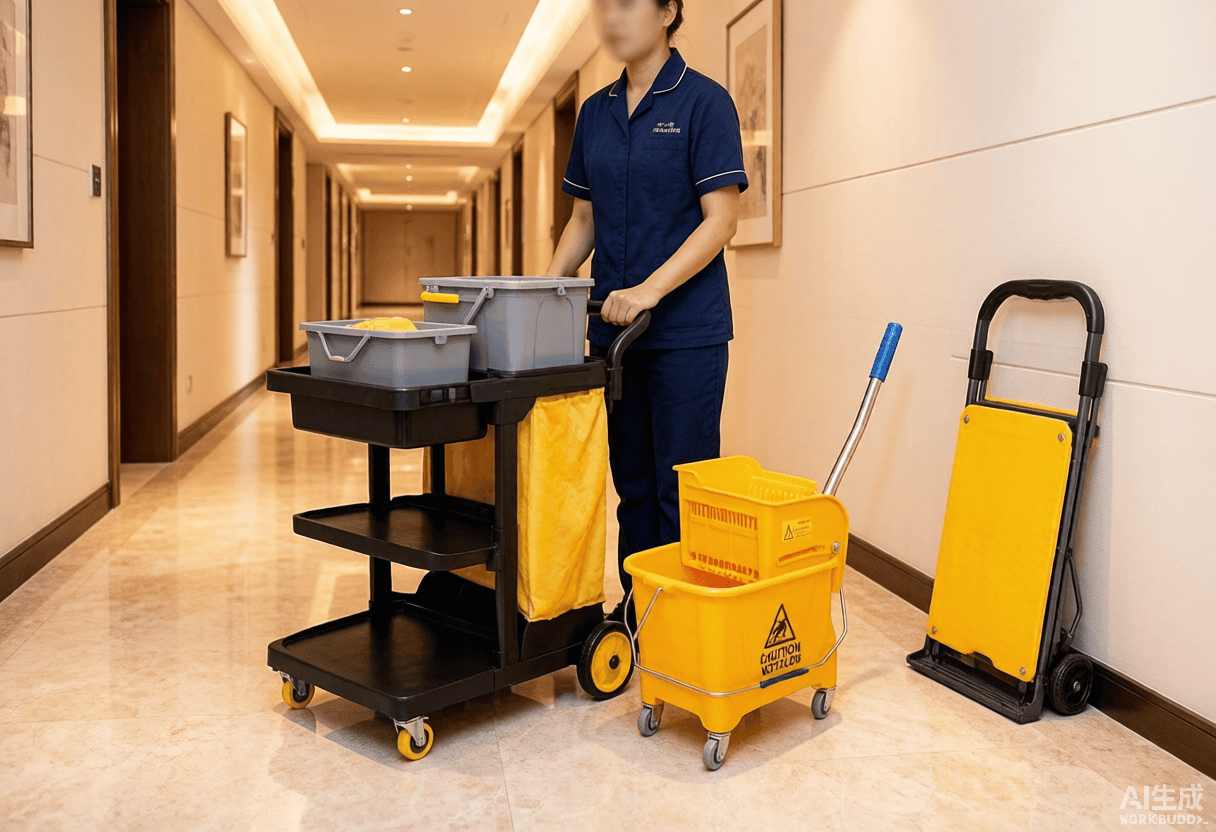
Pocket organisers and linen bags
A pocket organiser keeps amenities, gloves and cleaning cloths separated instead of loose in a bag, which is the difference between an attendant finding something in three seconds and thirty. Linen bags are specified by volume, because the bag is what sets how many rooms can be turned before a trip back to the linen room. A bag that is marginally too small costs a trip per shift, every shift.
Ask whether the bag is removable for laundering and whether the frame accepts a replacement bag from a local supplier — for a property running hundreds of carts, bag availability is a recurring cost, not a one-off.
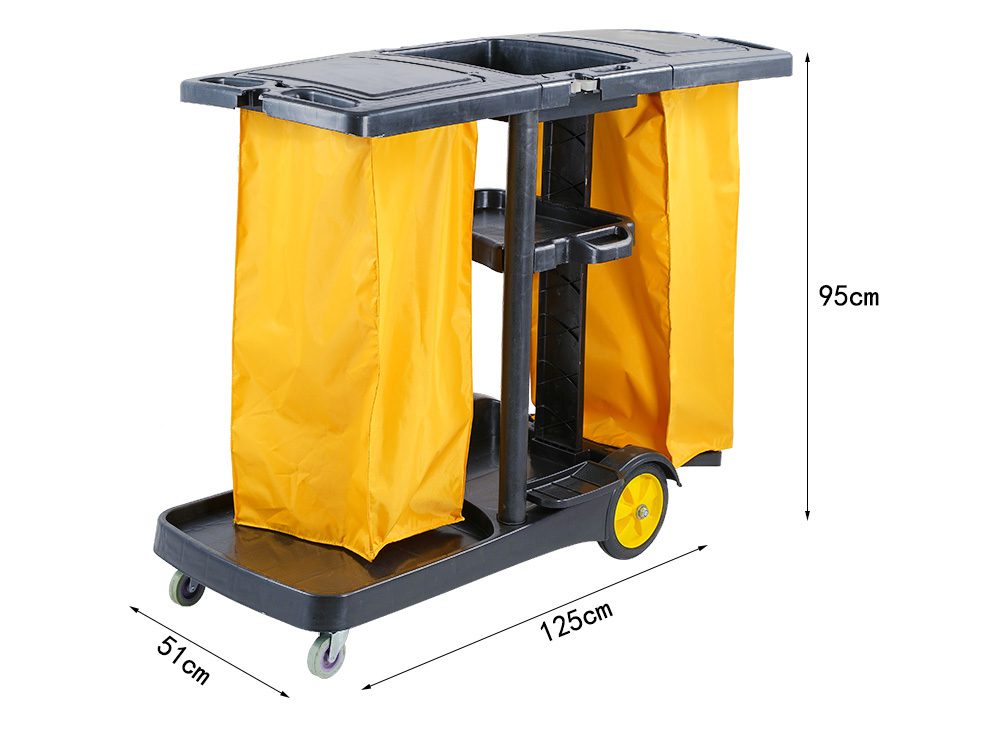
What to specify on the purchase order
- Bumper coverage: corner-only or full perimeter, and the polymer hardness.
- Vacuum holder: accepted body diameter, moulded or bolted.
- Tool clips: shaft diameter range, and whether clips are individually replaceable.
- Bag: capacity in litres, removable or fixed, and whether spares are available separately.
- Spare parts: whether bumpers and holders ship as spare parts with the container, not only fitted to the cart.
That last line is the one buyers forget most often. A container of carts with no spare bumpers means the first broken bumper becomes an international spare-part order.
FAQ
Can accessories be ordered separately from the cart?
Yes, and it is worth doing. Ordering a carton of spare bumpers and holders with the initial container costs a fraction of shipping them later, and it removes the most common reason a cart gets taken out of service.
Do bumpers fit other brands of cart?
Usually not directly, because the frame profile and fixing centres differ between manufacturers. If you operate a mixed fleet, standardise on one cart model or keep separate spare stock for each.
What is the minimum order for export?
FOSHAN LSY Plastic ships export orders as full container loads. Samples are charged at cost rather than given away; domestic Chinese orders carry no minimum quantity.