Pallet size is not a product decision, it is a supply-chain decision. The footprint has to match the racking at the destination, the truck body that carries it, and the container it ships in — and those three rarely agree. Pick the wrong one and every leg of the journey gets a little more expensive, forever.
The footprints that matter in export trade
| Footprint | Where it is standard | Notes |
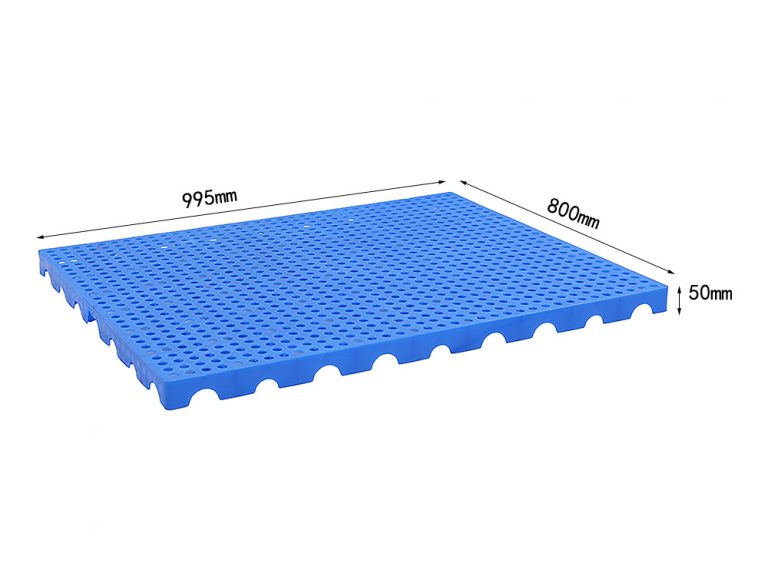
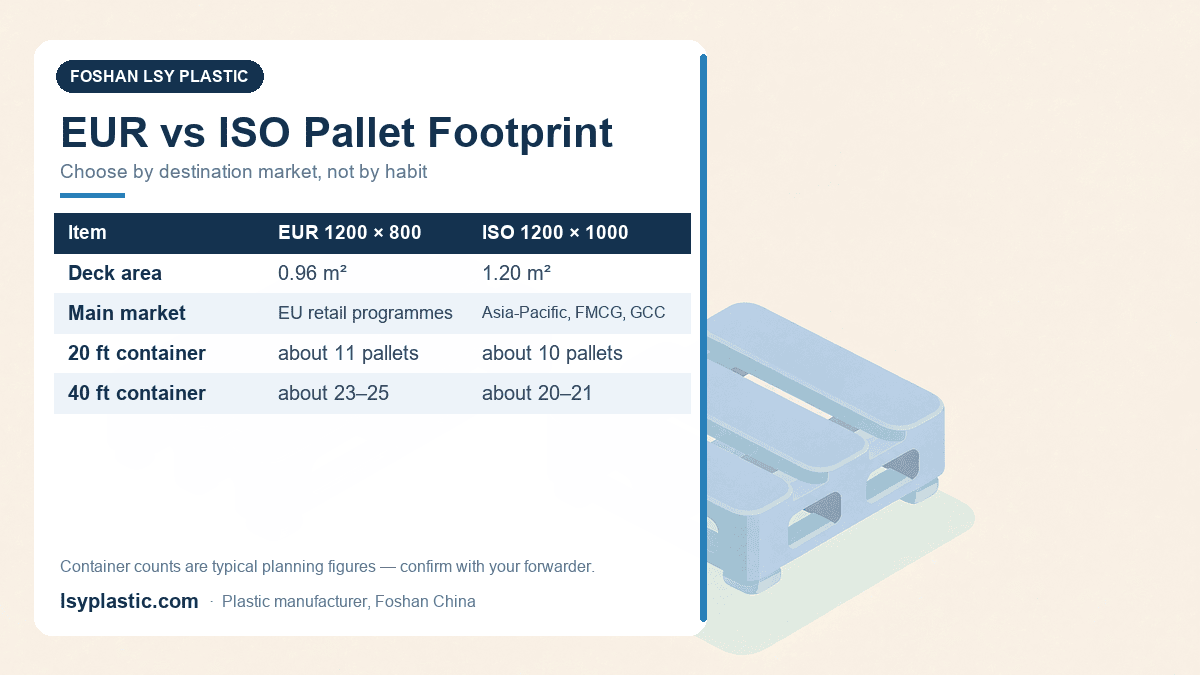
| 1200 × 800 mm | Europe (EUR / Euro pallet) | Two fit side by side across a standard truck body; the dominant European pool footprint. |
| 1200 × 1000 mm | International / ISO, widely used in Asia and the Middle East | Better cube utilisation per pallet; two fit across a standard container width. |
| 1100 × 1100 mm | Japan, Korea and much of East Asia | Square, so it can be turned in an aisle without losing the load pattern. |
| 1219 × 1016 mm (48 × 40 in) | North America (GMA) | The North American grocery standard; not metric-compatible with European racking. |
| 1140 × 1140 mm | Australia | Sized for the Australian standard racking and truck body. |
Anyone exporting to more than one region ends up holding more than one footprint. The cost of that is not the pallet — it is the racking, the stretch-wrap settings and the warehouse slotting that go with it.
What it does to container loading
A 40-foot high-cube container has an internal length of roughly 12,032 mm and an internal width of roughly 2,352 mm. Working from those two numbers:
- 1200 × 800 — ten pallets down the length, and two across the width with room to spare. Twenty per layer.
- 1200 × 1000 — ten down the length, two across. Also twenty per layer, but each pallet carries more cube.
- 1100 × 1100 — ten down the length, two across. Twenty per layer, on a square footprint.
Stack height is then set by the internal height of about 2,698 mm, the height of the loaded pallet and the weight limit of the container and the roads it travels on. The point worth taking away: 1200 × 1000 puts more product in the same number of layers, which is why it tends to win on cost per unit shipped — provided the destination racking accepts it.
Racking is where the decision gets made
A pallet that fits the container and does not fit the racking is a pallet that gets restacked by hand at the destination. Check three things before specifying:
- Beam span and depth — a 1200 mm footprint on racking cut for 1000 mm deep leaves the pallet overhanging or sitting on one beam.
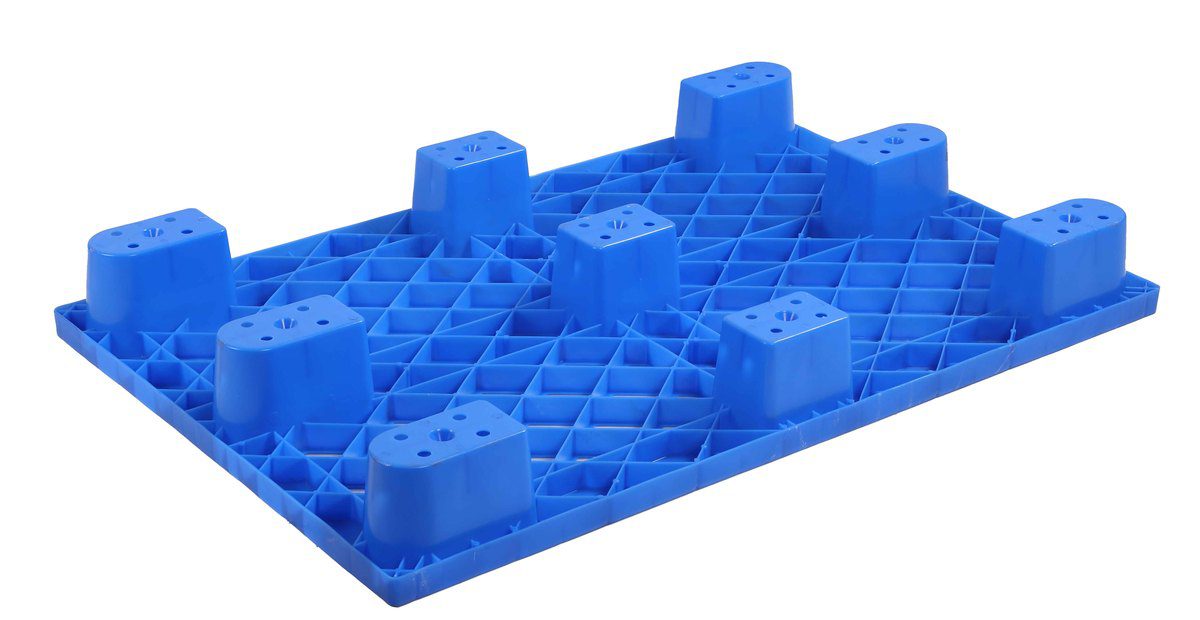
- Entry type — a four-way pallet can be handled from any side; a two-way one cannot, which matters in a narrow aisle.
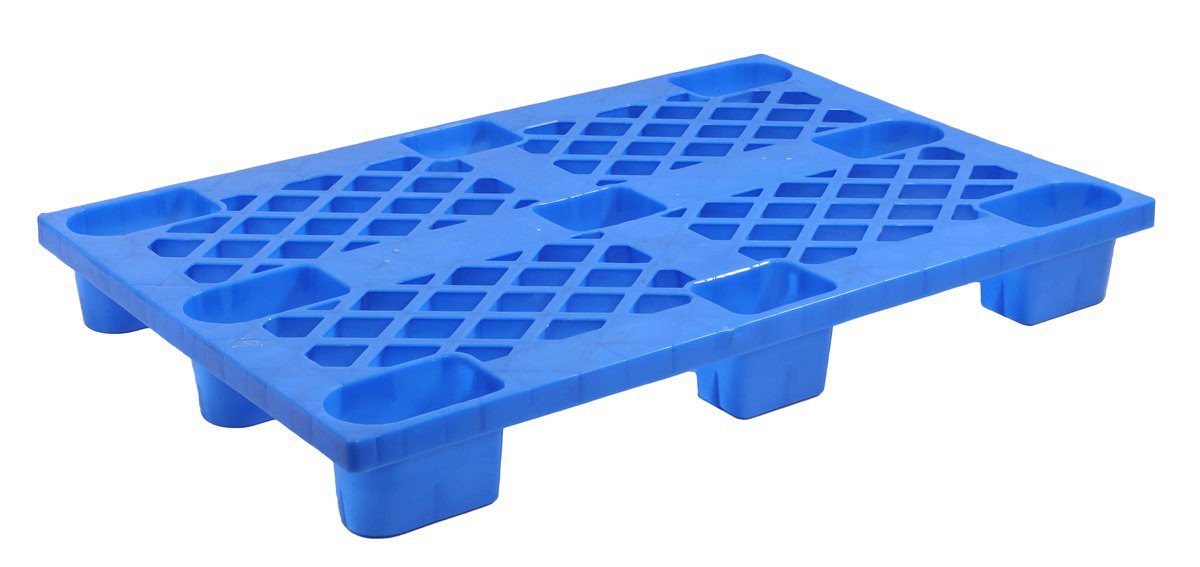
- Deck style — open deck drains and washes but needs the load to span the gaps; closed deck suits small or bagged items and cleans faster.
Why plastic changes the size conversation
A moulded pallet holds its dimensions for its whole service life. A wooden pallet that has been repaired, re-nailed or exposed to water is no longer quite the size it was, which is one reason automated warehouses and closed-loop pools move to plastic: the handling equipment can trust the footprint. The other reason is ISPM-15 — plastic is exempt from the wood treatment rules that apply to every international wooden pallet movement.
FOSHAN LSY Plastic injection-moulds pallets in the standard footprints above on presses from 180 to 2,500 tons, with tooling adapted in its own mould workshop. Export orders move as full container loads; samples are charged at cost.
FAQ
Should I buy 1200×800 or 1200×1000?
Follow the destination racking, not the container. 1200 × 1000 ships slightly more cube per pallet, but if the receiving warehouse is built around the EUR 1200 × 800 footprint, the saving is lost the first time a load has to be restacked.
Do you make 1300×1100 pallets?
Non-standard footprints are a tooling conversation rather than a catalogue question. Send the drawing or a sample — LSY’s mould workshop can quote adaptation, though a standard footprint ships faster and costs less.
Related guide: 1300×1100 plastic pallets.
Can one pallet work for both Europe and North America?
Not cleanly. The European metric footprints and the 48 × 40 in North American standard are not interchangeable on racking. Shippers serving both usually hold two footprints rather than compromise on one.