Electrostatic discharge (ESD) can destroy a PCB before it ever reaches final assembly. For electronics manufacturers, the right ESD storage containers and bins are not optional—they are part of the quality system. This guide explains what buyers should look for when sourcing anti-static storage for cleanrooms, SMT lines, and component warehouses.
For a complete overview of ESD container types, materials and how to select the right one, see our ESD containers complete guide.
Why ESD Protection Matters in Electronics Manufacturing
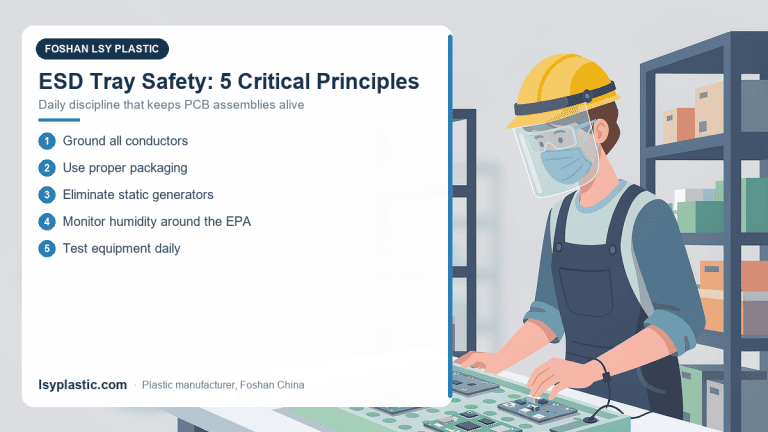
Static charges as low as 100 volts can damage sensitive components. In dry factory environments, walking across a floor, sliding a bin across a shelf, or pulling tape from a reel can generate thousands of volts. ESD-safe storage channels that charge away from the parts, keeping surface resistance within a controlled range.
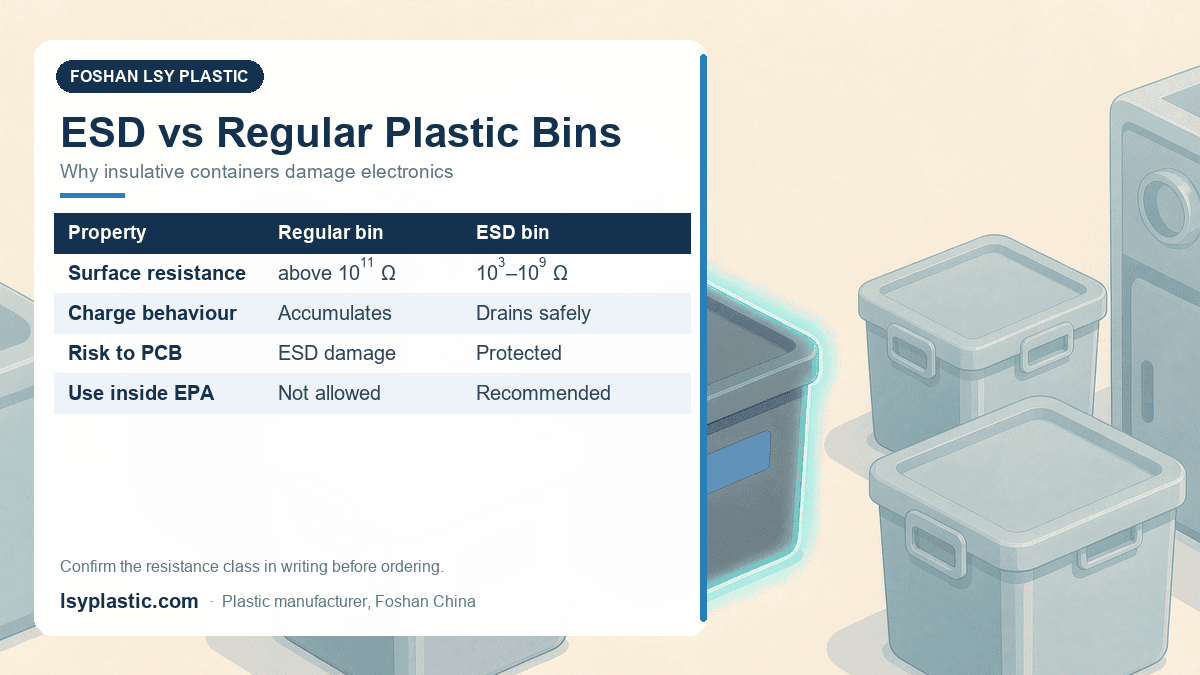
For OEMs serving automotive, medical, telecom, and consumer electronics markets, ESD controls are often required by customers and auditors. Using the wrong tote can turn a minor handling step into a warranty claim or recall risk. The cost of a failed field return usually far exceeds the price difference between a standard bin and an ESD-rated bin.
What Are ESD Storage Containers and Bins?
ESD storage containers are plastic totes, bins, trays, and dividers made from conductive or static-dissipative materials. Unlike standard polypropylene, they allow static electricity to drain slowly and safely rather than building up and discharging into components.
They are used to store and transport:
- Printed circuit boards (PCBs)
- Semiconductors and ICs
- Connectors, relays, and sensors
- LED modules and displays
- Medical device sub-assemblies
- Battery cells and power electronics
Key Materials and Surface Resistance
Conductive vs Dissipative Plastic
Conductive plastics have a surface resistance below 10^4 ohms and move charge quickly. Static-dissipative plastics fall in the 10^4 to 10^11 ohm range and drain charge more gently. Most electronics applications prefer static-dissipative bins because they reduce the risk of rapid discharge.
Carbon-Loaded PP and ABS
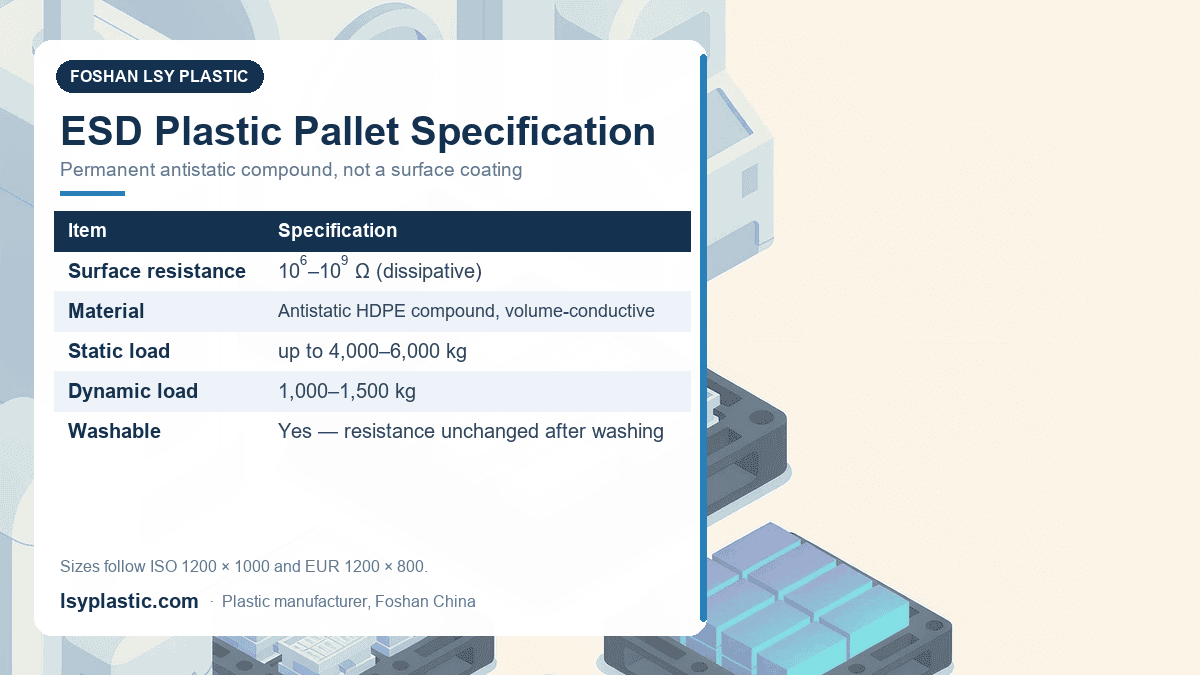
Carbon black or carbon fiber is compounded into PP, ABS, or polycarbonate to give the material permanent ESD properties. Unlike topical coatings that wear off, carbon-loaded polymers keep their performance through washing, abrasion, and years of use. Black is the most common color because of the carbon content, but gray and other colors are possible with special compounds.
| Material | Surface Resistance | Best For |
|---|---|---|
| Conductive PP | 10^2 – 10^4 Ω | Rapid charge removal, tooling trays |
| Static-dissipative PP | 10^4 – 10^9 Ω | PCB storage, component bins |
| Conductive ABS | 10^3 – 10^5 Ω | Precision trays and dividers |
| Dissipative PC | 10^6 – 10^9 Ω | Cleanroom, medical electronics |
Common Types and Sizes
ESD Storage Bins
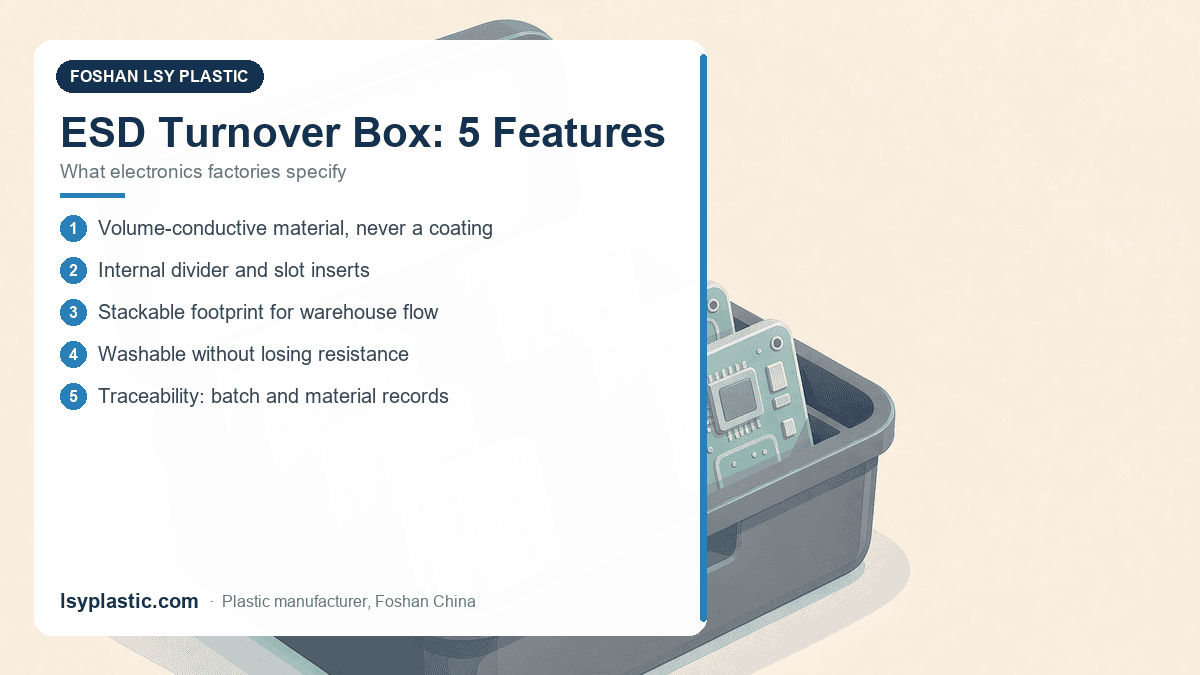
Stackable bins with front openings are popular for kitting and Kanban racks. Standard footprints such as 300×450 mm and 400×600 mm match common shelving systems. Look for reinforced rims and label holders if you use barcode scanning.
ESD Totes and Crates
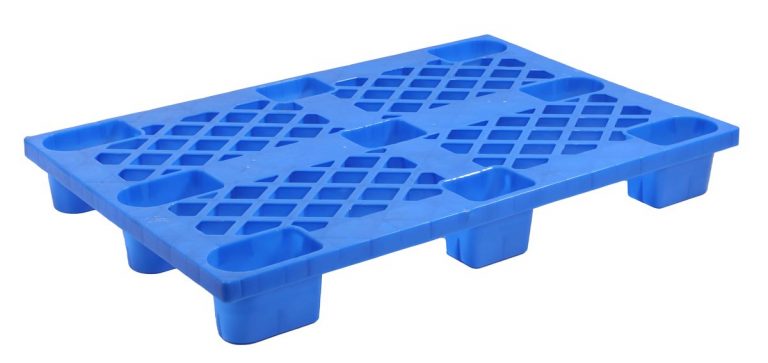
Larger totes handle PCB panels, sub-assemblies, and returns from contract manufacturers. Nestable designs save space when empty. If you ship between plants, choose totes that fit on standard plastic pallets for stable transport.
ESD Dividers and Foam Inserts
Custom dividers and conductive foam inserts protect irregular shapes and keep parts from touching. For high-value assemblies, a fitted insert can eliminate transit damage better than a generic bin.
Choosing the Right ESD Container
Before ordering, answer these questions:
- What is the size and weight of the parts?
- Will the bin sit on a shelf, travel on conveyors, or ship between sites?
- Does the application need conductive or dissipative performance?
- Is washability or temperature resistance required?
- Do you need matching ESD pallets or carts?
For buyers who also move sensitive components on pallets, pairing ESD bins with an ESD plastic pallet creates a grounded handling system from warehouse to line side.
ESD Container Standards and Testing
Common test methods include ANSI/ESD S20.20, IEC 61340-5-1, and ASTM D257. Reputable suppliers provide surface-resistance test reports and lot traceability. Ask for certificates if your customer audit requires them.
Regular testing is also important. A bin that looked good on arrival can lose performance after harsh cleaning or mechanical wear. Set a recertification schedule based on your quality plan.
How ESD Containers Fit Into ANSI/ESD S20.20 Programs
ANSI/ESD S20.20 is the most widely used ESD control program standard. It requires companies to identify ESD-sensitive items, establish protected areas, and use grounded, conductive, or dissipative materials inside those areas. ESD storage containers are part of the “packaging and materials handling” control.
A complete program usually combines ESD flooring, wrist straps, grounded workbenches, ionizers, and ESD storage. Bins alone cannot compensate for a dry floor or ungrounded operators, but they are a necessary layer of protection during storage and internal transport.
ESD Container Maintenance and Recertification
ESD performance degrades over time. Dust, grease, and cleaning chemicals can create insulating films on the surface. Mechanical scraping from stacking and sliding can expose non-conductive base material.
Best practices include:
- Clean bins with ESD-safe detergents, not strong solvents.
- Avoid stacking beyond the rated weight to prevent stress cracks.
- Test surface resistance every 6–12 months in high-use areas.
- Replace bins that fail resistance tests rather than reusing them.
- Mark bins with purchase or test dates for traceability.
Custom ESD Solutions: Colors, Labels, and Inserts
Many buyers need more than a black box. Custom options can include:
- Color coding: Different colors for different product families or cleanroom zones.
- Barcode/QR holders: Integrated label windows for WMS scanning.
- Divider kits: Adjustable slots for varying component sizes.
- Conductive foam: Cut to fit fragile assemblies.
- Lids: Hinged or loose lids to protect contents during shipping.
Custom tooling is cost-effective at volumes above 1,000 pieces or when the same design is used across multiple production lines.
ESD Bins vs ESD Bags: When to Use Each
ESD bags are cheap and work well for individual parts or short-term shipping. They are common for IC tubes, reels, and small PCB shipments. However, bags tear easily, offer no structural protection, and are hard to stack neatly on shelves.
ESD bins are the better choice for repeated internal handling, kitting, line-side feeding, and any application where parts need protection from impact. Bins also support Kanban systems because they stack, nest, and label cleanly. Most factories use a mix: bags for inbound components and bins for work-in-process storage.
Cost and Sourcing from China
Unit cost depends on size, material compound, volume, and any custom inserts. In general, ESD bins from Chinese manufacturers offer 25–40% savings compared with European brands for comparable specs, especially at volumes above 500 pieces per size.
When sourcing, verify that the supplier controls the carbon compounding process in-house or through a qualified partner. Inconsistent material batches are the main cause of ESD failures in low-cost bins. Request sample test reports and, if possible, audit the mixing and molding process.
Lead times from China typically range from 3 to 6 weeks for standard sizes and 6 to 8 weeks for custom molds. Sea freight is the most economical option for volumes over one cubic meter, while air freight works for urgent samples or small pilot orders.
Humidity, Temperature, and ESD Performance
ESD risk rises in low-humidity environments. In winter or in air-conditioned plants, relative humidity can drop below 30%, making static buildup more likely. ESD containers help, but they work best when combined with humidity control and grounded flooring. If your facility handles very sensitive devices, monitor humidity and keep it above 40% RH where possible.
High temperatures from ovens, soldering stations, or outdoor storage can also affect plastic ESD containers. Standard carbon-loaded PP handles up to about 80°C, while specialized compounds can go higher. Always tell your supplier the maximum temperature the bins will see.
Conclusion
ESD storage containers protect parts, reduce rework, and support customer audits. Focus on material grade, surface resistance, and lot testing rather than color or price alone. Build them into a larger ESD program that includes flooring, grounding, and operator training.
If you need custom sizes, conductive compounds, or matching pallets, contact a manufacturer that can mold ESD products to your specification. A reliable supplier will offer test reports, sample approval, and consistent carbon loading—three things that matter far more than a low unit price.
Need ESD storage containers or bins for your electronics plant? Message LSY Plastic on WhatsApp +86 19311059570 or email fstyx01@lsyplastic.com. We produce carbon-loaded PP and ABS ESD bins, totes, and pallets for OEMs worldwide.
Looking for ESD containers and pallets? Explore our ESD & Anti-Static Industrial range — injection molded in our own factory with 35+ years of experience.
Related ESD guides: ESD safe storage containers · ESD trays and conductive flat boxes
Frequently Asked Questions
What materials are ESD storage bins made from?
They are molded from polypropylene loaded with conductive carbon black, giving a controlled, permanent surface resistance rather than a temporary coating. Because the conductivity is in the material itself, it does not wear off with handling.
What surface resistance should ESD bins have?
For electronics manufacturing, dissipative bins in the range of about 10^5–10^11 Ω are typical, while conductive bins run lower (10^3–10^5 Ω) for the highest-risk areas. Define the band your process needs before you order.
Are ESD bins tested and certified?
Reputable suppliers test each batch and provide reports referencing a standard such as IEC 61340-2-3 or ANSI/ESD S20.20 programs. Ask to see batch test reports and confirm the model and material match the report — a generic or old certificate is not enough.
Can ESD bins be stacked or used with shelving systems?
Yes. ESD-safe bins come in the same stackable and louvered-panel formats as standard parts bins, so you can build a complete floor-to-shelf ESD storage system. Check that any shelves or panels in the system are also rated for ESD use.