A platform trolley is one of the most flexible material-handling tools in a warehouse, hotel, retail store, or workshop. It moves boxes, linens, tools, and supplies with less strain than carrying by hand. This buying guide explains the main types, load ratings, caster choices, and what to check before placing an order.
What Is a Platform Trolley?
A platform trolley is a flat load deck mounted on four wheels, usually with a handle at one or both ends. Unlike a hand truck, which tilts and rolls on two wheels, a platform trolley stays level and carries the load on all four casters. That makes it safer for tall or fragile items and easier for one person to maneuver.
Main Types of Platform Trolleys
Flatbed Platform Trolley
The classic flat deck is ideal for boxes, cartons, and tote bins. Decks are usually steel plate, aluminum, or plastic. Steel decks handle the heaviest loads, while plastic decks resist corrosion and are lighter to move.
Folding Platform Trolley
Folding models have a handle that collapses flat against the deck. They save space in vans, storerooms, and hotel housekeeping areas where floor space is limited. Load capacity is usually lower than fixed-frame models.
Mesh-Side Platform Trolley
Mesh sides keep loose items from sliding off. These are common in laundry, parcel sorting, and retail restocking. Make sure the mesh is welded or bolted solidly at the corners.
Heavy-Duty Industrial Trolley
Built for 300 kg and above, heavy-duty trolleys use thicker steel tube frames, larger casters, and reinforced decks. They are common in manufacturing, distribution centers, and automotive plants.
| Type | Typical Load | Best Use |
|---|---|---|
| Flatbed | 150–300 kg | Boxes, cartons, bins |
| Folding | 80–150 kg | Hotels, offices, delivery vans |
| Mesh-side | 150–250 kg | Laundry, parcels, loose goods |
| Heavy-duty | 300–800 kg | Factory, warehouse, tools |
Load Capacity and Frame Specs
Always choose a trolley rated above your heaviest expected load. If the maximum box stack weighs 200 kg, a 300 kg-rated trolley gives a safety margin and longer caster life. Check whether the rated capacity is for static load or dynamic use—some low-cost models list the deck strength when stationary, not while rolling.
Frame tubing thickness, deck thickness, and weld quality determine durability. For demanding environments, ask for a sample and load-test it before volume ordering. A frame that flexes under load will fatigue quickly and may crack at the welds.
Frame Materials and Deck Finishes
The frame and deck material affects weight, corrosion resistance, and load capacity:
- Powder-coated steel: Strong and economical, but can rust if the coating chips.
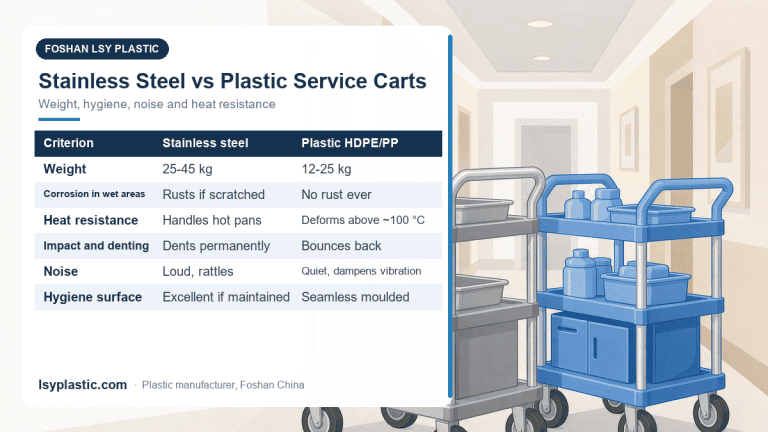
- Stainless steel: Resists corrosion and is easy to clean; common in food, pharma, and hospitality.
- Aluminum: Lightweight and rust-proof, but costs more and has lower load limits.
- Plastic/PP deck: Resists chemicals and moisture; lighter but less rigid than metal.
For wet or chemical environments, stainless steel or plastic decks are usually better than coated steel.
Caster Selection Guide
Casters are the part that fails first on most trolleys. Consider these factors:
- Wheel material: PU casters are quiet and floor-friendly. Nylon handles heavier loads. Rubber grips well outdoors but wears faster indoors.
- Bearing type: Ball bearings roll easier than plain bore wheels, especially under load.
- Brakes: Two brakes are enough for loading on slopes; four brakes add safety on ramps.
- Swivel vs fixed: Two swivel and two fixed casters give straight-line stability plus cornering. All-swivel setups are more maneuverable but harder to track in a straight line.
Handle Designs and Operator Ergonomics
Handle height should let operators push without stooping or reaching upward. Many trolleys offer handles around 900–1,000 mm, which suits most adults. Fold-down or loop handles improve storage but check that the locking mechanism is secure under load.
For heavy loads, a handle on both ends lets two operators share the work. Non-slip grips reduce hand fatigue during long shifts.
Platform Trolley vs Hand Truck: Which One Fits Your Task?
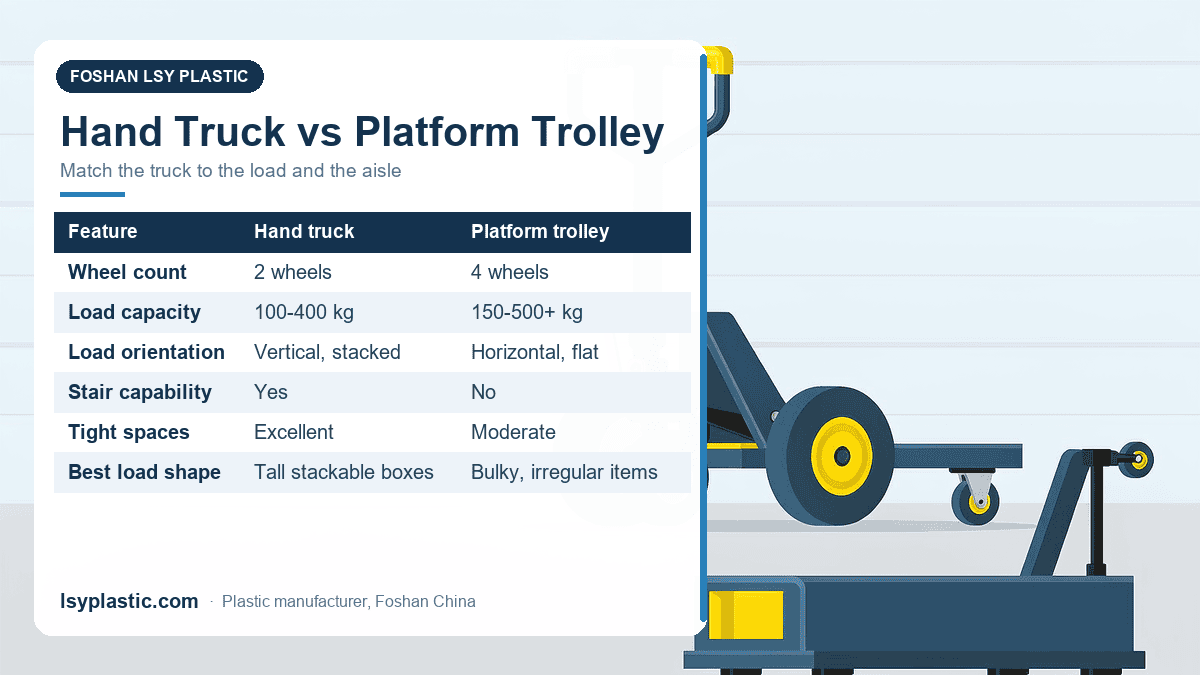
A hand truck is best for moving a few heavy items over short distances, such as unloading a delivery van. It takes less storage space and is easy to maneuver in tight areas. A platform trolley is better for moving multiple boxes, fragile loads, or items that must stay level. It also reduces operator fatigue on longer routes.
Many facilities keep both. Use the hand truck for heavy single items and the platform trolley for lighter, bulkier loads.
Platform Trolley Maintenance and Safety
A simple maintenance routine extends trolley life and prevents accidents:
- Check casters weekly for worn treads, loose bolts, or seized bearings.
- Inspect welds and frame tubes for cracks or rust.
- Clean debris from the deck to prevent slipping.
- Test brakes if the trolley is used on ramps or lifts.
- Replace damaged casters immediately; do not overload while waiting for parts.
Platform Trolley Applications
Warehouse and Distribution
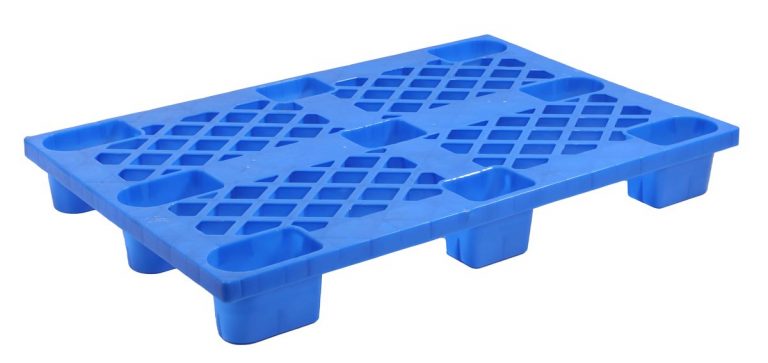
In warehouses, platform trolleys move picked orders from rack to packing station. Pair them with plastic pallets and stackable bins for a complete handling system.
Hotels and Hospitality
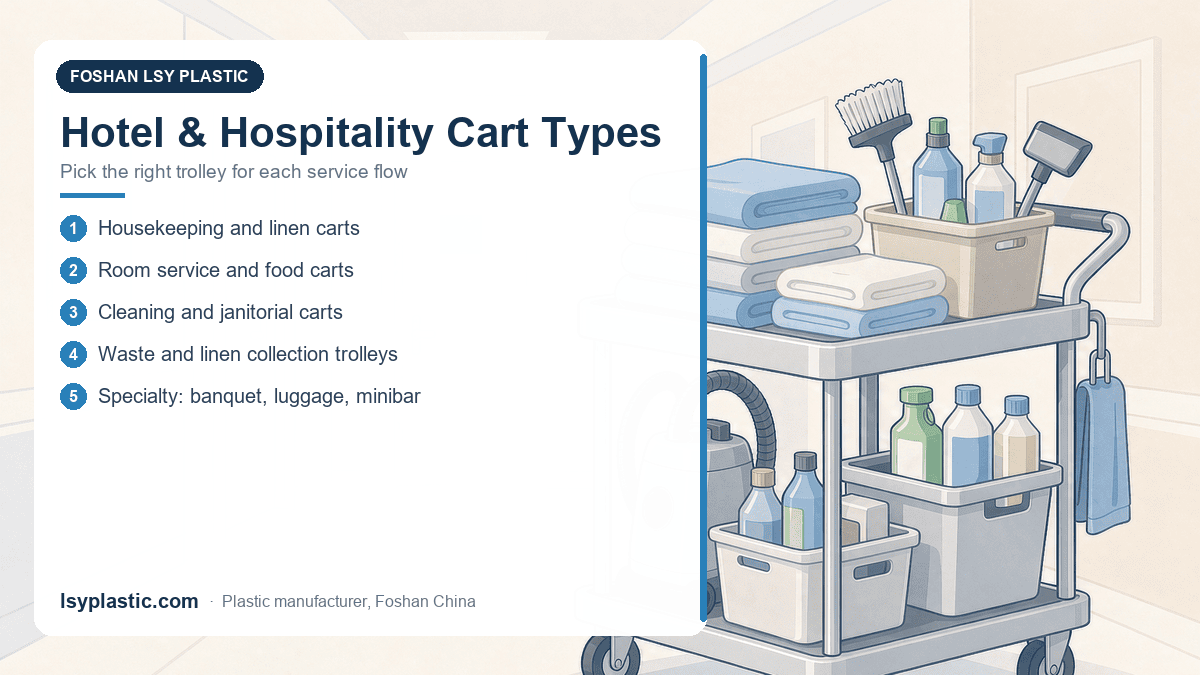
Hotels use folding and mesh-side trolleys for linen, luggage, and banquet setup. A quiet PU wheel protects guest corridors from noise. For housekeeping workflow tips, see our guide on hotel hospitality carts.
Retail and Workshops
Retail backrooms and repair workshops use compact flatbed trolleys to move inventory and tools. A non-marking wheel is important on polished floors.
Healthcare and Food Service
Hospitals and commercial kitchens use stainless steel trolleys to move meals, linens, and supplies. Smooth welds and sealed decks make cleaning easier and help meet hygiene standards.
Custom Branding and OEM Options
For hotel groups, retail chains, and logistics companies, custom platform trolleys can include branded colors, logos, specific deck sizes, and proprietary casters. OEM orders from China typically require 200–500 pieces minimum, depending on the level of customization.
If you resell trolleys under your own brand, ask about neutral packaging and laser-etched logo plates. Many Chinese factories can adapt frame dimensions and caster specs to match existing fleet equipment.
Sizing and Storage Considerations
Measure your doorways, aisles, and elevator dimensions before ordering. A trolley that is too wide for a standard doorway becomes a daily frustration. Also consider where trolleys will be parked when not in use. Folding models and nesting designs save floor space in crowded storerooms.
If you transport trolleys in delivery vans, confirm that the folded or assembled dimensions fit through the rear doors and leave room for cargo.
Buying Checklist
- Confirm real dynamic load capacity, not static deck strength.
- Match caster material to floor type and noise limits.
- Check handle height for your operators.
- Request surface finish standards if used in food or medical areas.
- Ask about spare caster availability for long-term maintenance.
- Order a sample for load testing before volume purchase.
- Verify deck dimensions against your typical load sizes.
Load Distribution and Safe Stacking
A trolley’s rated capacity assumes the load is spread evenly across the deck. Concentrating weight in one corner stresses the frame and can cause the trolley to tip. Train operators to place the heaviest items low and centered, and to secure tall loads with straps or bungees when moving over ramps or uneven floors.
Stacking height also matters. A load above shoulder height blocks the operator’s view and raises the center of gravity. As a rule, keep the top of the load below 1,200 mm unless the trolley is designed specifically for tall loads.
Total Cost of Ownership
The cheapest trolley is rarely the most economical over five years. A low-cost model with thin tubing, plain-bore wheels, and no spare parts may need replacement within 12–18 months. A better-quality trolley with replaceable casters and a stronger frame can last 5–7 years with basic maintenance.
When comparing quotes, include caster replacement cost, expected lifespan, and downtime. For fleets of 50 or more trolleys, the total cost of ownership often favors the stronger unit.
Conclusion
The right platform trolley cuts handling time, reduces back injuries, and lasts for years. Match the type, capacity, and casters to your actual use case, and avoid choosing by price alone. For buyers sourcing in volume, Chinese manufacturers offer strong value with custom deck sizes and branding options.
Looking for platform trolleys or custom material-handling carts? Contact LSY Plastic on WhatsApp +86 19311059570 or email fstyx01@lsyplastic.com. We supply steel and plastic platform trolleys for warehouses, hotels, and retail chains.
Ready to compare options? Browse our Industrial Logistics & Material Handling range for warehouse logistics containers.
Frequently Asked Questions
How do I choose the load capacity for a platform trolley?
Start from your heaviest realistic load, then add margin rather than buying at the limit. Castors and the deck carry the weight, so a trolley rated well above your day-to-day load lasts longer and rolls more easily than one running at its maximum all day.
Which castor type should I choose?
Match the castor to the floor and load. Larger wheels (125–200 mm) roll over rough or uneven floors far better; rubber or polyurethane treads protect floors and run quieter. Use two swivel plus two fixed castors for straight runs, or four swivel where tight manoeuvring is needed, and add a braking castor where the trolley sits on ramps.
What is the difference between a folding and a fixed platform trolley?
A folding platform trolley collapses for storage and transport — ideal where space is tight or the trolley moves between sites. A fixed trolley is more rigid and durable for constant daily use in one warehouse or store.
Are platform trolleys suitable for hotels and hospitals?
Yes. Four-wheel platform trolleys are standard in hotels for moving luggage, linen and amenities in bulk, and in hospitals and warehouses for heavy or bulky loads. Choose quiet, floor-protecting castors and wipe-down decks for guest and patient areas.