Housekeeping teams move hundreds of kilograms of towels, sheets, and guest amenities every day, and the hotel linen cart is the workhorse that makes it possible. Choosing the wrong cart means extra trips, wrinkled linens, damaged corridors, and slower turnaround times between check-out and check-in. This guide covers everything you need to evaluate linen carts for your property, from size and capacity to material, wheels, and workflow design.
Why the Right Linen Cart Matters
A well-chosen linen cart directly affects three hotel metrics: turnover speed (rooms cleaned per hour), linen lifespan (fewer trips means less handling and less wear), and staff fatigue (pushing an overloaded cart strains backs and slows the team). Industry benchmarks show that housekeepers carrying supplies by hand take 30-50% longer per room than teams using properly sized carts.
If you are still comparing cart types, start with our overview of housekeeping carts vs linen carts to understand the difference between room-attendant carts and dedicated laundry transport carts.
Types of Hotel Linen Carts
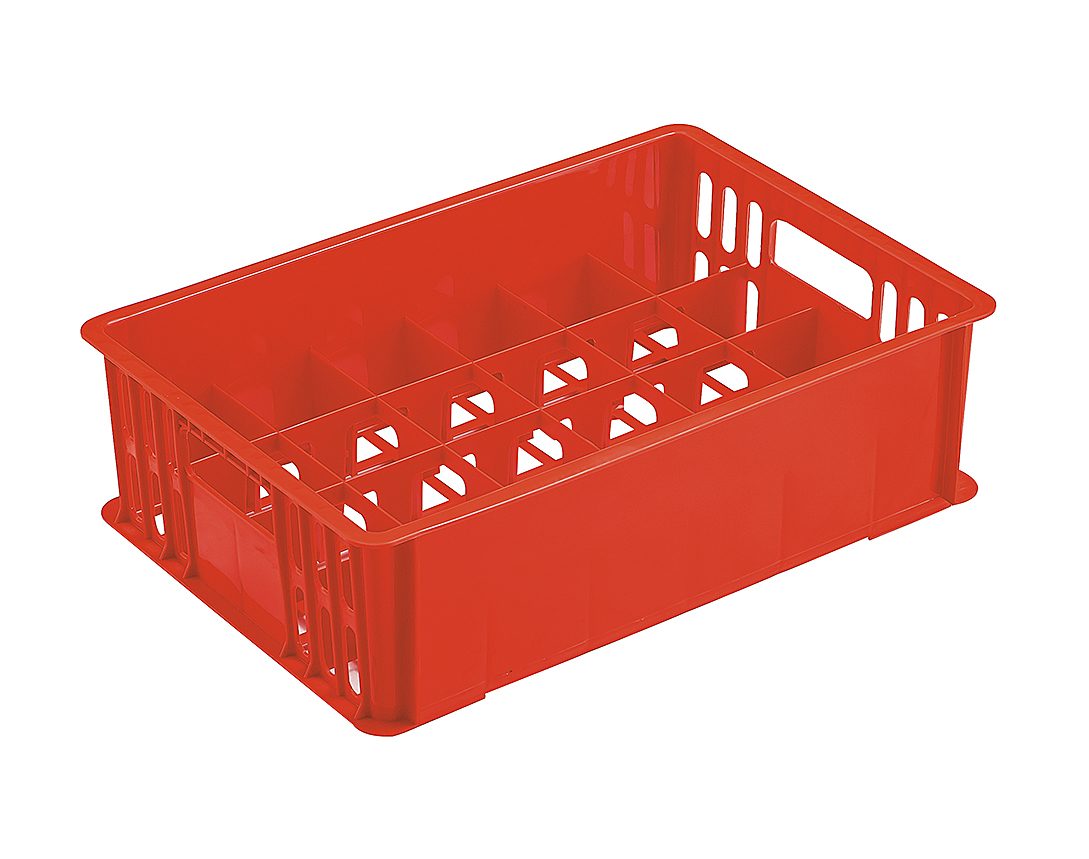
Linen carts fall into several categories, each designed for a specific stage of the laundry workflow:
| Type | Best For | Typical Capacity | Key Feature |
|---|---|---|---|
| Open shelf cart | Clean linen delivery between floors | 3-4 shelves, 50-120kg | Easy access, visible inventory |
| Enclosed / bag cart | Soiled linen collection | 100-200L bag, 60-150kg | Contains odor, protects from dust |
| Sling / tilt cart | Feeding laundry machines | Up to 250kg | Dumps directly into washer |
| Folding utility cart | Storage and seasonal use | 40-100kg | Saves space when not in use |
| Heavy-duty platform cart | Bulk transport to laundry room | 300-800kg | Flatbed with side rails, stacks boxes |
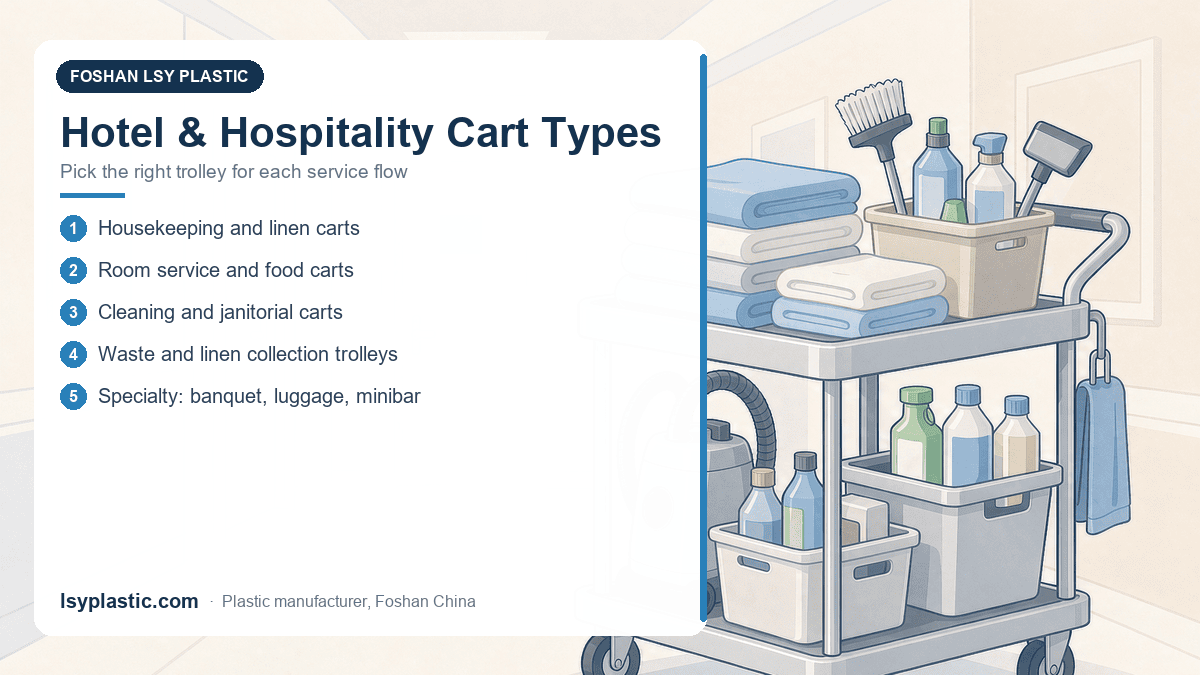
Many mid-size properties use a hybrid approach: one enclosed cart for soiled linen and two open shelf carts for clean linen per floor wing. For housekeeping room service, also review our room service cart setup guide.
Key Specifications to Compare
Load Capacity
A standard hotel twin room generates roughly 6-8kg of linen per stay (sheets, towels, duvet cover). A housekeeper servicing 14 rooms per shift therefore moves 85-110kg of linen. Choose a cart rated for at least 20-30% above your peak load so the frame and casters are not stressed at the limit.
Frame Material and Construction
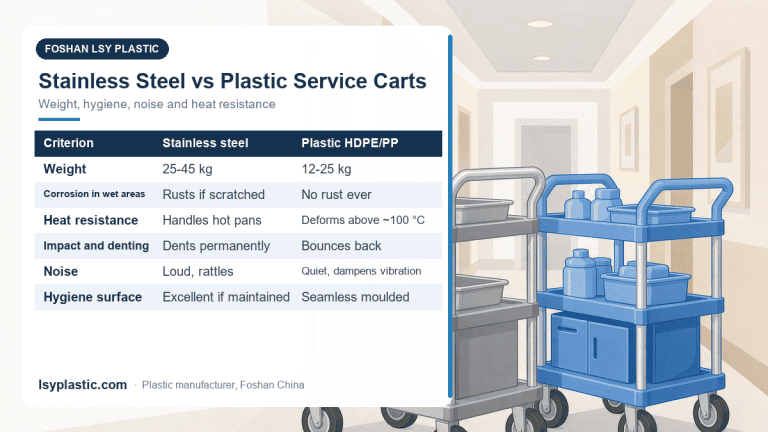
- Plastic molded carts — Rust-proof, easy to sanitize, quiet, and ideal for wet or humid environments. Injection-molded HDPE/PP frames resist chemicals and never corrode.
- Stainless steel carts — Durable and premium-looking but heavier, noisier, and more expensive.
- Wire / chrome carts — Lightweight and affordable, but prone to rust and snagging fabric over time.
For housekeeping carts with molded plastic construction and maintenance workflow, see our housekeeping cart organization guide.
Wheel and Caster Selection
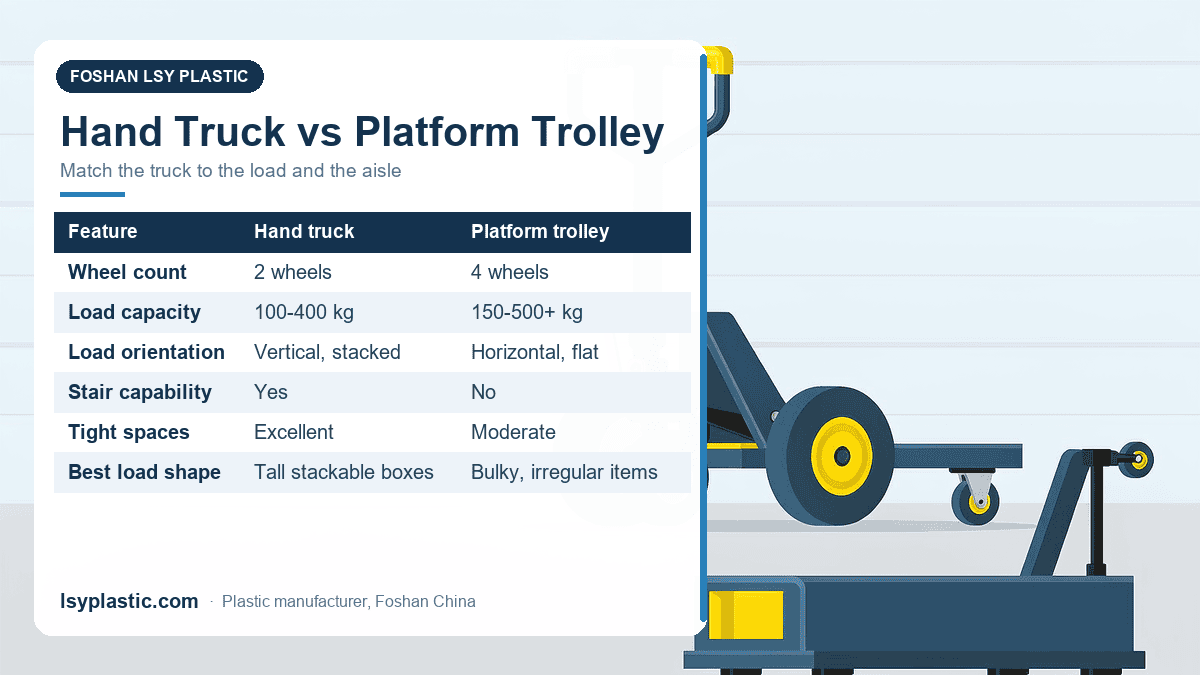
Wheels are the most underrated component. On carpeted corridors, wide rubber or polyurethane casters (75-125mm) reduce rolling resistance and protect floors. Two swivel + two fixed casters give straight-line stability for heavy loads; four swivel casters improve maneuverability in tight laundry rooms. If your hotel has thresholds or elevators, look for casters with brakes on at least two wheels.
Dimensions and Corridor Clearance
Measure your service corridors, linen room doors, and elevator openings before buying. A cart that fits the laundry room but cannot pass a 90cm corridor door creates daily friction. Typical linen cart widths range from 45cm (single-person corridor carts) to 60-80cm (bulk transport), with heights kept under 150cm to fit elevators and avoid ceiling lights.
Laundry Workflow Design Tips
The cart itself is only half the solution. These workflow practices extend linen life and speed up room turnaround:
- Zone the cart: Label shelves for “clean linens,” “guest amenities,” and “chemicals” so housekeepers grab everything in one pass.
- Alternate rotation: Always load clean linen so older stock is used first (FIFO), reducing faded or over-washed sets in circulation.
- Contain soiled linen immediately: Use a closed bag cart with a liner that can be tied shut, preventing cross-contamination and odor spread.
- Sanitize daily: Plastic carts can be wiped down with neutral detergent or disinfectant without rust or warping — a major advantage over metal frames.
- Right-size per shift: In high-occupancy seasons, add one more cart per floor wing instead of overloading existing carts.
Budget and Total Cost of Ownership
An entry-level wire cart may cost $80-150, but a molded plastic cart that lasts 8-10 years with daily chemical cleaning often delivers a lower total cost per room cleaned. When budgeting, factor in casters (replaceable parts), liners, and the labor cost of extra trips. For a 120-room property replacing 12 carts, choosing durability over the cheapest option typically saves $3,000-6,000 over a five-year horizon.
For related equipment decisions, read our commercial cleaning cart buying guide to see how cleaning carts complement your linen fleet.
Conclusion
The best hotel linen cart balances capacity, durability, and corridor compatibility for your specific workflow. Molded plastic carts offer the strongest combination of hygiene, quiet operation, and longevity for most properties. Before you buy, measure your doors, weigh your peak linen load, and choose casters matched to your flooring.
Looking for injection-molded linen carts and housekeeping trolleys? FOSHAN LSY Plastic has 35+ years of injection molding experience, producing hotel service carts, platform trolleys, and food service carts with food-grade materials. Contact us for a quote or browse our hotel & hospitality carts hub for more buying guides.
Sourcing hotel service carts? See our Restaurant & Room Service Carts line for the sizes and materials discussed above.
Frequently Asked Questions
What types of hotel linen carts exist?
Standard single-deck carts for one-floor rounds, high-capacity multi-shelf carts for large properties, and combination carts that carry linen plus waste or amenities. Match the type to your housekeeping workflow.
What specifications should I compare on a linen cart?
Load capacity, deck and shelf dimensions, frame material, caster type and whether bags are removable. These decide efficiency and lifespan.
How do I design the laundry workflow?
Zone the cart so clean linen stays separate from soiled, stock to your busiest typical floor, and top up between rounds rather than overloading. This reduces trips and linen damage.
What are the budget and total-cost considerations?
A durable cart from a manufacturer lasts years and cuts replacement and labour cost, so weigh total cost of ownership, not just unit price. LSY moulds linen carts; no MOQ for domestic orders, overseas orders ship FCL.