
The mop bucket is the most-used, least-specified piece of cleaning equipment in any building. Size it too small and your cleaners lose hours to refills; size it too large and they push 44 kg they never needed. This guide matches bucket capacity to floor area, explains wringer types, and covers the colour and wheel decisions that turn a bucket into a system.
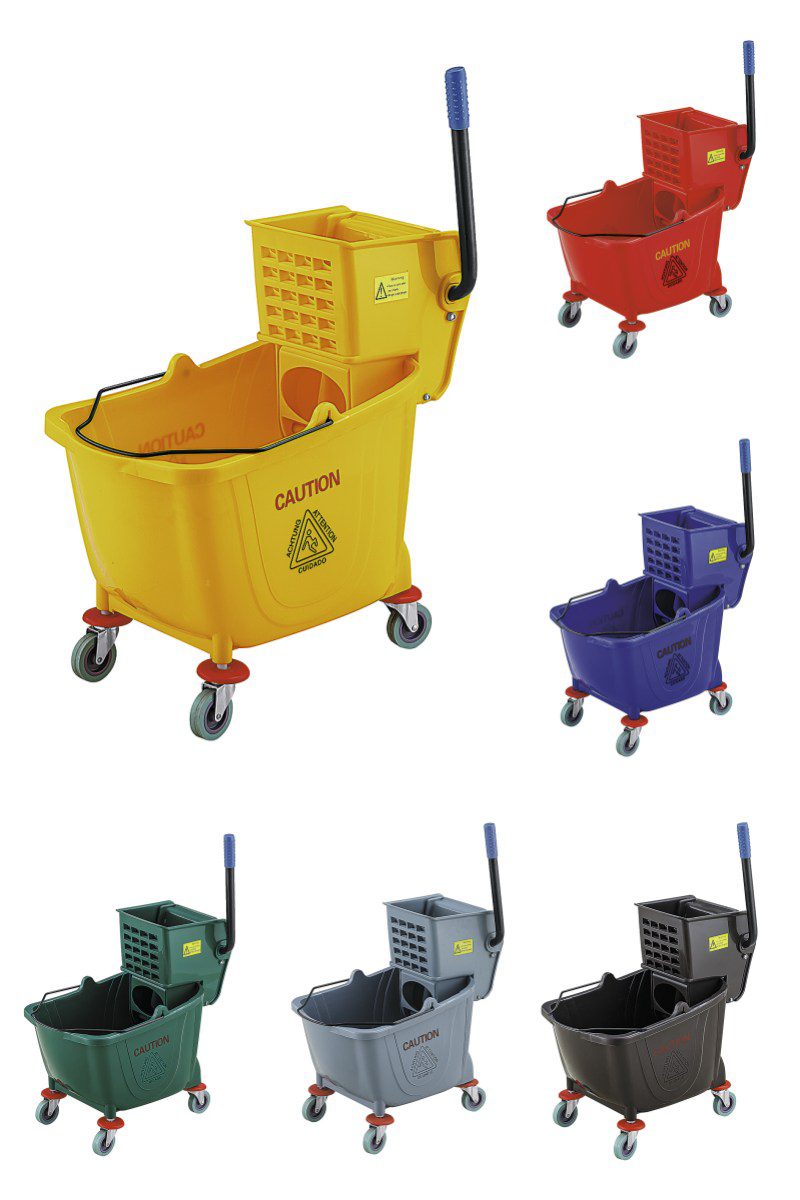
Capacity by cleaning area
| Capacity | Area per fill | Typical duty | Full weight |
|---|---|---|---|
| 18 L | ~60–100 m² | Rooms, small offices, en-suites | ~18 kg |
| 26 L | ~100–200 m² | Shops, clinics, small corridors | ~26 kg |
| 36 L | ~200–400 m² | Hotel corridors, lobbies, schools | ~36 kg — castors required |
| 44 L | ~400 m²+ | Malls, warehouses, large halls | ~44 kg — castors required |
The rule behind the table: one fill should cover one work zone. If a corridor needs two fills, either step up a size or split the zone — both refill walking and over-capacity weight are pure labour loss.
Wringer types
- Down-press — vertical squeeze over the bucket. Straighter back, minimal splash. The hotel/hospital standard.
- Side-press — cone press at the side. Faster drainage, more splash. Industrial and outdoor duty.
- Separate wringer unit — wringer mounts as an accessory on the bucket rim. Replacement-friendly, and the wringer can move between buckets.
Whatever the type, check the wringer fits your mop gauge — a wringer sized for 300 g mops will not press an 800 g industrial mop, and an under-pressed mop leaves wet floors and streak lines.
Colour zoning: the cheapest hygiene control you can buy
Colour-coding stops cross-contamination between zones, and buckets are where it starts:
| Colour | Zone |
|---|---|
| Red | Toilets, sanitary areas |
| Yellow | General floors, washrooms (non-sanitary) |
| Blue | Public areas, offices |
| Green | Food preparation and service areas |
Buy buckets, wringers and mop handles in the same colour per zone — a red bucket with a blue mop handle defeats the system at a glance. For food-area container colour rules, see our colour-coded crates guide.
Wheels, splash and detail features
- Four castors above 26 L, two locking, non-marking for finished floors.
- Splash rim or lid if the bucket travels in lifts or across carpet edges.
- Graduated fill lines so chemical dilution survives shift changes.
- Moulded handle grip — steel handles corrode in wet rooms; polyethylene bodies survive drops.
HDPE bodies are the default for a reason: they resist cleaning chemicals, do not corrode, and survive the drop tests that end a cheaper bucket’s life. When a fleet of buckets is in play, storage matters too — our housekeeping storage systems guide covers where equipment parks between shifts.