
In pharmaceutical logistics, handling equipment is part of the quality system, not just a way to move boxes. Pallets, totes and containers that enter a controlled area must be cleanable to a verifiable standard, must not shed particles or fibres, and must be traceable to the batch they carried. This guide covers the material and design requirements for pharmaceutical pallets and containers, why wood and cardboard are excluded, how cleaning and traceability are handled, and the specification checklist to work through before ordering. For the food-contact equivalent, see our guide to food grade plastic pallets for HACCP and cold storage.
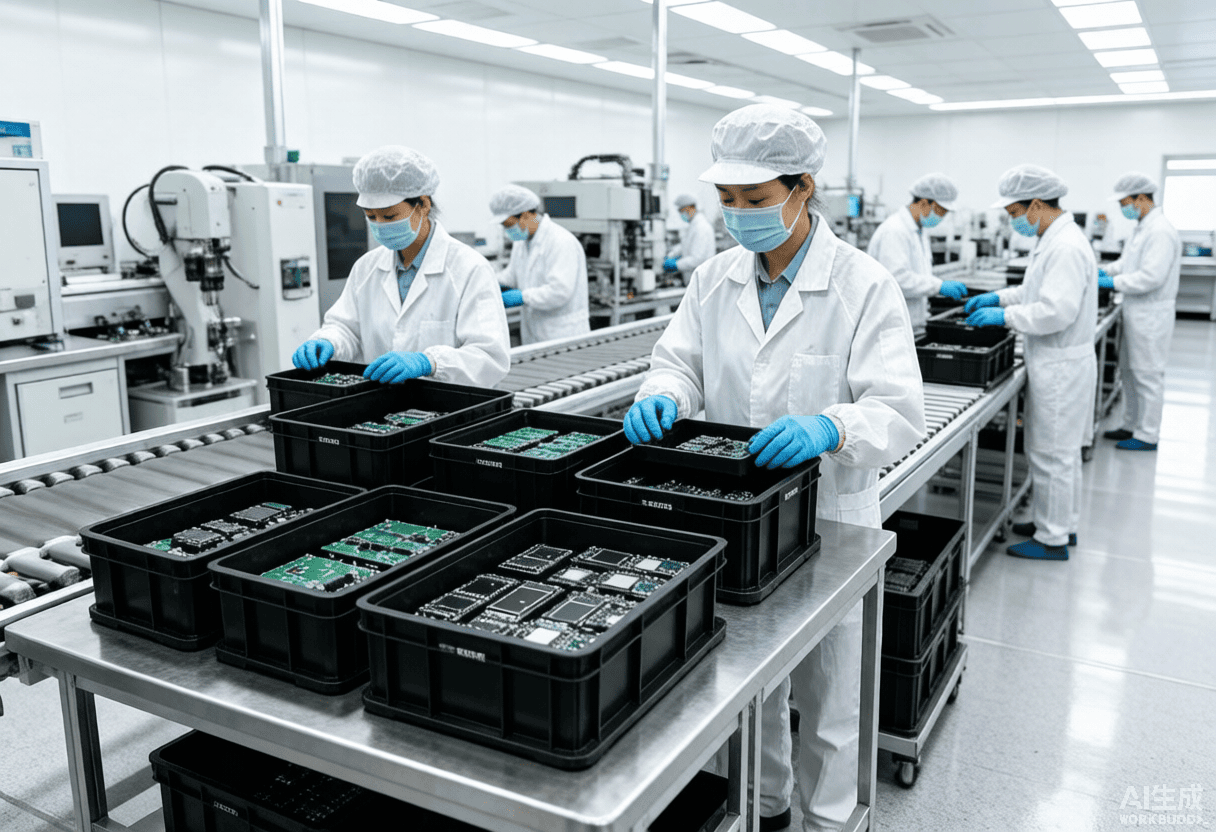
What makes pharmaceutical logistics packaging different
Four constraints separate pharma logistics from general warehousing:
| Constraint | Design consequence |
|---|---|
| Contamination control | No fibre, dust or loose material; smooth, sealed surfaces |
| Cleanability | Washable and drainable, tolerant of detergents and heat |
| Traceability | Unique identifiers linked to batch records |
| Temperature control | Stable performance from cold chain to ambient storage |
Each of these rules out a class of material. Cardboard fails on contamination and cleanability. Wood fails on particle shedding, moisture and pest risk. Mixed-material equipment fails on cleanability because water and detergent get trapped between components.
Why wood and cardboard are excluded
Wooden pallets are one of the most common corrective actions in pharmaceutical audits. The reasons are practical:
- Wood sheds particles and splinters continuously and cannot be cleaned to a verifiable standard.
- Untreated wood can harbour mould, bacteria and insects, and absorbs spills.
- Wood cannot be washed industrially without degrading, so cleaning records become meaningless.
- Heat-treated export wood is still wood — ISPM 15 compliance addresses pests, not contamination.
Plastic pallets solve all four at once: one-piece moulding with no joints, non-absorbent, washable, dimensionally stable, and available in grades intended for contact with packaged pharmaceutical products.
Material and grade selection
| Requirement | Specification |
|---|---|
| Material | Virgin HDPE or PP, documented grade reference |
| Recycled content | Excluded in the contact layer for pharma applications |
| Surface finish | Smooth, closed deck; no open honeycomb where particles can lodge |
| Colour | Light or high visibility colours for contamination detection |
| Cleaning temperature | Tolerant of your SOP, commonly 60 to 80 °C with alkaline detergents |
| Documentation | Material declaration, dimensional drawing, batch traceability on delivery |
Closed-deck designs are strongly preferred in controlled areas. An open-deck pallet that looks clean after washing can still hold residue inside the deck structure, and there is no way to verify that it does not. Where airflow or drainage is needed, specify a design with generous drainage channels that a inspector can actually see.
Static and ESD considerations
Most pharmaceutical logistics does not require ESD control, but two cases do: handling of electronic medical devices, and dry powder processes where static can affect product behaviour. Where ESD control applies, specify conductive or dissipative grades with verification reports, as described in our anti-static, conductive and dissipative bins guide.
Cleaning procedures and validation
A pallet or container is only as clean as its worst geometry. Design for cleaning means:
- No blind holes, trapped channels or deep recesses that detergent cannot reach.
- Full drainage in every orientation, so containers do not hold water between washes.
- No removable parts that could be re-fitted incorrectly, unless they are clearly keyed.
- Surfaces that withstand scrubbing without scratching, because scratches become particle traps.
- Stable colour and finish after repeated washes, so visual cleanliness checks remain meaningful.
Validation then covers three things: the cleaning procedure itself, the detergent and rinse regime, and the acceptance criteria — usually a visual check plus a defined residue limit. Pallets that come out of the wash with visible water retention should be re-specified rather than re-washed.
Traceability on returnable equipment
Two identifiers are usually needed: one for the pallet and one for the batch.
- Equipment ID — moulded-in code plus a barcode, QR or RFID tag on the pallet or container, surviving repeated washing.
- Batch linkage — recorded at each movement in the warehouse management system, so that if a batch is recalled, every piece of equipment it touched can be identified and quarantined.
Labels on flat plastic surfaces peel off in wash loops. Specify a recessed label pocket or a replaceable label holder, and consider moulding the equipment ID permanently so it survives even when the label does. Embedded RFID is worth considering where the same containers circulate through several sites, in line with the methods described in our guide to pallet RFID and barcode tracking.
Cold chain and temperature performance
Pharmaceutical logistics includes 2 to 8 °C cold rooms, ambient storage and sometimes deep freeze. Two implications:
- Impact behaviour at low temperature. Standard grades become more brittle below freezing; specify grades that keep impact strength in your actual operating range.
- Dimension stability. Pallets must keep their footprint under cold chain handling so automated equipment and racking continue to work.
For cold room and blast freezer applications, the same material logic applies as in food logistics, covered in the food grade pallet guide.
Specification checklist
- Confirm every area the equipment enters: ambient, cold room, cleanroom class.
- Choose a closed-deck, single-piece pallet or container in a light colour.
- Specify virgin pharma or food grade HDPE or PP with a documented grade reference.
- Check wash temperature, detergent compatibility and full drainage.
- Define the equipment identifier method and the batch linkage in your WMS.
- Agree inspection and rejection criteria — cracks, staining, worn stacking features.
- Ask for material declarations and dimensional drawings with the first delivery.
Custom pharmaceutical handling equipment
LSY Plastic has molded food grade and industrial plastic pallets, containers and boxes since 1991 from our Foshan factory, running Japanese imported injection machines from 180T to 2500T with an in-house mould workshop. We produce closed-deck pallets, stack and nest containers, and custom bin geometries, and we hold a 20,000 m² warehouse for repeat orders.
Send your area classifications, cleaning SOP and container standard, and we will propose a pallet and container specification with material documentation.
WhatsApp: +86 19311059570
Email: fstyx01@lsyplastic.com
Related reading: food grade plastic pallets for HACCP and cold storage, open deck vs closed deck plastic pallets, and pallet load capacity ratings.