Short answer: for beverage and catering distribution, buy bus tubs (also called bus boxes or tubs) when your crates carry mixed, wet, high-turnover loads, and buy cup crates with dividers when the cargo is glassware, bottles or cups that must not touch. Both live in the same truck and the same wash cycle, but they are engineered for different failure modes — a tub absorbs abuse, a divided crate prevents contact. This guide covers the sizes that actually matter, load ratings worth writing into a PO, the divider details most catalogs hide, and how to load a container efficiently with a mixed order.
What Bus Tubs and Cup Crates Each Do in a Distribution Chain
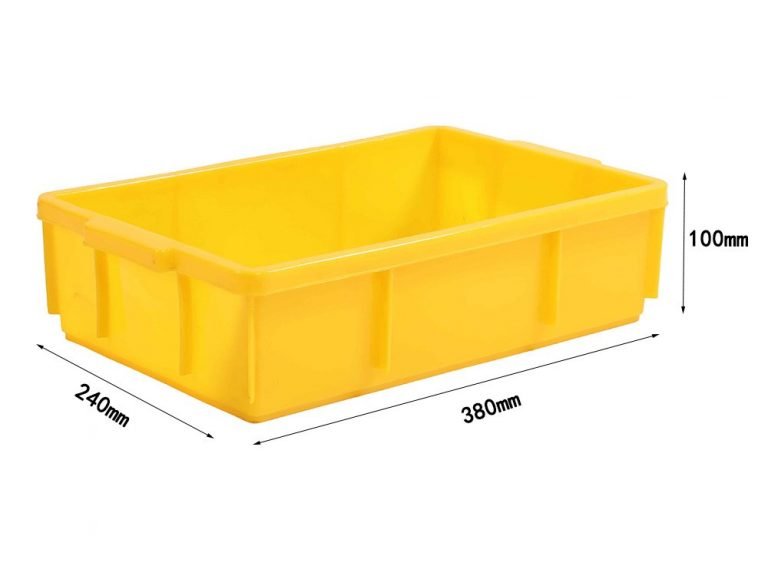
A bus tub is an open, rounded, usually tapered box — 20–45 liters typical — designed to be grabbed from both sides, filled fast and stacked in a dish or bottle room. Beverage distributors and catering operators use them for dirty glassware return, bottle collection, ice service and general shuttling between stations.
A cup crate is a rigid, often fully stackable container with an internal divider grid — commonly 20, 24, 36 or 48 cells — that holds cups, tumblers or glasses upright and separated. Hotels, banquet suppliers and beverage brands use them wherever the product would otherwise chip, scratch or nest into each other.
The one-line difference
Bus tubs are built for throughput and abuse; cup crates are built for separation and presentation. A distributor usually needs both, in fixed proportions that follow the cargo mix.
Sizes and Load Ratings Worth Writing Into a Purchase Order
Vague specs produce vague containers. These are the working sizes we mold most often and how buyers should specify them:
| Item | Typical size (mm) | Volume / capacity | Specify this in your PO |
|---|---|---|---|
| Bus tub, small | 500×375×250 | ~28 L | Static stack 4 loaded; drop test from 1 m |
| Bus tub, large | 600×400×320 | ~45 L | Static stack 3 loaded; rim reinforcement |
| Cup crate, 24-cell | 500×375×300 | 24 cups Ø70–80 | Cell pitch matches your glass Ø minus 2–4 mm |
| Cup crate, 36-cell | 600×400×300 | 36 cups Ø60–70 | Full-stack (4–5 loaded) rigidity on racking |
| Crate basket, vented | 600×400×230 | ~40 L produce | Load 25–30 kg; ventilation % if produce |
Two details decide whether these numbers mean anything. First, cell pitch: a cup crate’s cells must match your actual glass diameter, not a catalog average — ask us to quote against a sample glass. Second, static vs dynamic load: “stackable” is marketing until a kilogram figure and a stack height are attached to it.
Cup Crate Design Details Most Catalogs Do Not Show
The divider grid is where quality is won or lost:
- Divider height vs cup height. Cells should reach 70–80% of cup height — enough to stop tipping, low enough to grab and release quickly.
- Floating vs molded dividers. One-piece molded grids never come loose; inserted dividers allow reconfiguration but can crack at the joints after years of washing. For fixed glassware programs, molded grids last longer.
- Rounded cell corners. Sharp internal corners concentrate stress and chip glass rims during loading. Insist on radiused cells.
- Interlocking stack geometry. Top and bottom faces should mate so a full stack of loaded crates cannot shear sideways on a trolley.
For hospitality buyers running mixed fleets, the crate must also coexist with other equipment dimensions — our hotel-side hotel service trolley buyer guide covers the trolley sizes these crates and tubs must fit alongside.
Material and Food-Contact Compliance
Both product families should be specified in virgin HDPE or PP. HDPE handles cold rooms, ice service and drop abuse better; PP tolerates hotter wash water and stiffer grids. Recycled blends have their place in non-food shuttling, but for anything touching drinkware or food, insist on virgin material and ask for a food-contact declaration (FDA or EU 10/2011 as your market requires).
Washability is the quiet economic driver. Both tubs and crates are expected to survive hundreds of commercial wash cycles: no delamination, no grey creep, no odor retention. That performance comes from material grade and wall thickness, not from the color — which is why we quote by weight, not by appearance.
Cost Drivers and Container Loading for a Mixed Order
Three factors move the unit price more than anything else: self-weight (wall thickness = trips = price), mold complexity (divided crates cost more per unit than tubs of the same weight), and color (black or natural regrind-adjacent colors run cheapest; corporate colors cost slightly more in virgin grades).
For a mixed container, plan it in two layers of logic. Bus tubs and undivided baskets nest when empty, so they travel collapsed against container walls; fully stackable cup crates cannot nest, so they form the rigid core of the load. A realistic 40ft HC mixed order carries roughly 3,000–4,500 stackable cup crates, plus several thousand nested tubs packed into the voids and along the walls. Ask the factory for a written loading plan with crates-per-layer and total units — that document is also your customs volume reference.
Minimum order, sampling and container consolidation follow our standard MOQ, samples and FCL shipping policy; if your business is produce as well as beverage, the plastic crates buyer guide covers the vented crate side in depth.
Ordering Checklist Before You Confirm
- Send one physical glass or cup sample for cell-pitch matching before approving the crate drawing.
- State stack height loaded and unloaded, in units, plus the kg figure per crate.
- Choose molded vs inserted dividers based on whether your glassware set will ever change.
- Require food-contact documentation if tubs touch drinkware or food directly.
- Decide color coding per outlet, route or product line — free at molding, expensive as a retrofit.
- Request a written 40ft HC loading plan for the exact mixed order you intend to buy.
- Agree drop-test and wash-cycle expectations in the PO, not in the dispute.
For customs classification of these items in the Indian market, the HSN code classification guide lists which headings cover bus boxes and crates.
FAQ
What is the difference between a bus tub and a bus box?
Terminology, not engineering. Buyers use “bus tub”, “bus box” and “bus bin” for the same open, tapered container used to clear glassware and shuttle wet loads. When comparing quotes, align on dimensions, volume in liters, self-weight and static stack rating — those four numbers define the product regardless of the name on the catalog page.
How many cups fit in a standard plastic cup crate?
Common grids hold 20, 24, 36 or 48 cups depending on glass diameter and crate size: a 600×400×300 mm crate typically carries 36 cups of Ø60–70 mm. The correct number is set by your glass — send a sample for cell-pitch matching, because a cell that is 5 mm too wide lets cups tip and chip during transport.
Are plastic bus tubs dishwasher safe?
Virgin HDPE and PP bus tubs are designed for commercial dishwashing and pressure washing, surviving hundreds of cycles without deforming. Avoid low-grade recycled tubs for hot wash lines — inconsistent walls warp and trap odors. Always confirm the wash temperature rating with the factory; PP generally tolerates hotter cycles than HDPE.
Can cup crates and bus tubs be shipped together in one container?
Yes, and it is the normal pattern. Stackable cup crates form the rigid core of the load while nestable bus tubs collapse against walls and fill voids. A realistic 40ft high-cube mixed order carries roughly 3,000–4,500 cup crates plus several thousand nested tubs. Ask for a written loading plan with crates-per-layer before confirming the PO.
Need a quote with a loading plan for your mixed tub-and-crate order? Send your glass samples and monthly volumes — we return cell-matched drawings and container figures within days. WhatsApp: +86 19311059570 · Email: fstyx01@lsyplastic.com · FOSHAN LSY Plastic, injection molding factory since 1988.