Plastic pallet colors are not random—they are an often-missed communication system that tells warehouse operators, drivers, and auditors exactly what is stacked on top. From quick visual triage in a 100,000 ft² DC to compliance audits, a disciplined color scheme can cut pallet mis-identification by half and shrink cross-contamination risk in food and pharma facilities. This guide walks through the standard color conventions used in pallet identification, what each color typically signals, and how to design a coding system that works in your warehouse.
Why Color Code Plastic Pallets in 2026
The average warehouse worker identifies the contents of a stack in under three seconds. A molded-in color turns every pallet into a billboard that survives dirt, scuffs, and sticker loss. With rising audit pressure for GMP, HACCP, and ISO 22000, color coding is increasingly a regulator’s first question, not an internal nice-to-have. Plants that run color-coded pallets report a 25-40% faster inbound staging time and noticeably fewer rejected loads at receipt.
For a deeper breakdown of material properties, see our HDPE vs Polypropylene pallet comparison, and explore our full range of industrial and logistics material-handling plastic pallets.
The Standard Plastic Pallet Color Meanings
| Color | Common Use Case | Typical Industry |
|---|---|---|
| Blue | Food and dairy | FDA-compliant storage, dairy processing |
| Green | Horticulture and produce | Fresh produce, floral, agriculture |
| Red | Quarantine, hold, or export | Pharmaceutical holds, rejected loads, hazmat |
| Yellow | Apparel and textiles | Garment racks, retail returns |
| White | Premium or aseptic applications | Pharmaceutical, medical devices, electronics |
| Black | General purpose, industrial | Heavy duty warehousing, automotive, general logistics |
| Gray | Recycling or reusable stream | Closed-loop pools, returnable systems |
| Orange | Cold storage | Refrigerated or frozen warehousing |
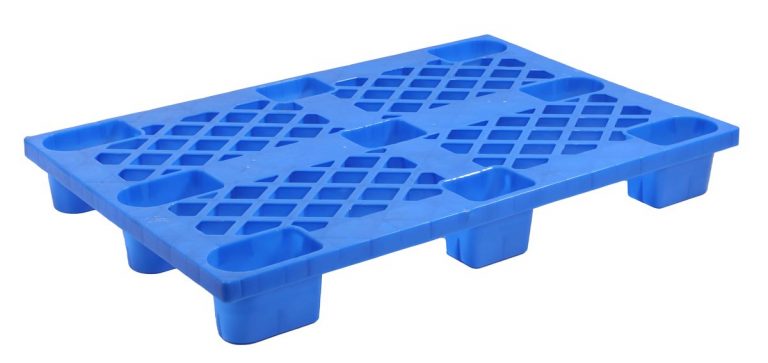
These are conventions, not laws—your supplier’s choices depend on masterbatch selection. Most plastic pallets are molded in HDPE, PP, or a recycled blend with a pigment masterbatch added at the extruder. The color you see is permanent and cannot flake off like paint, which is a major reason food and pharma buyers prefer pigmented HDPE over stickers and labels.
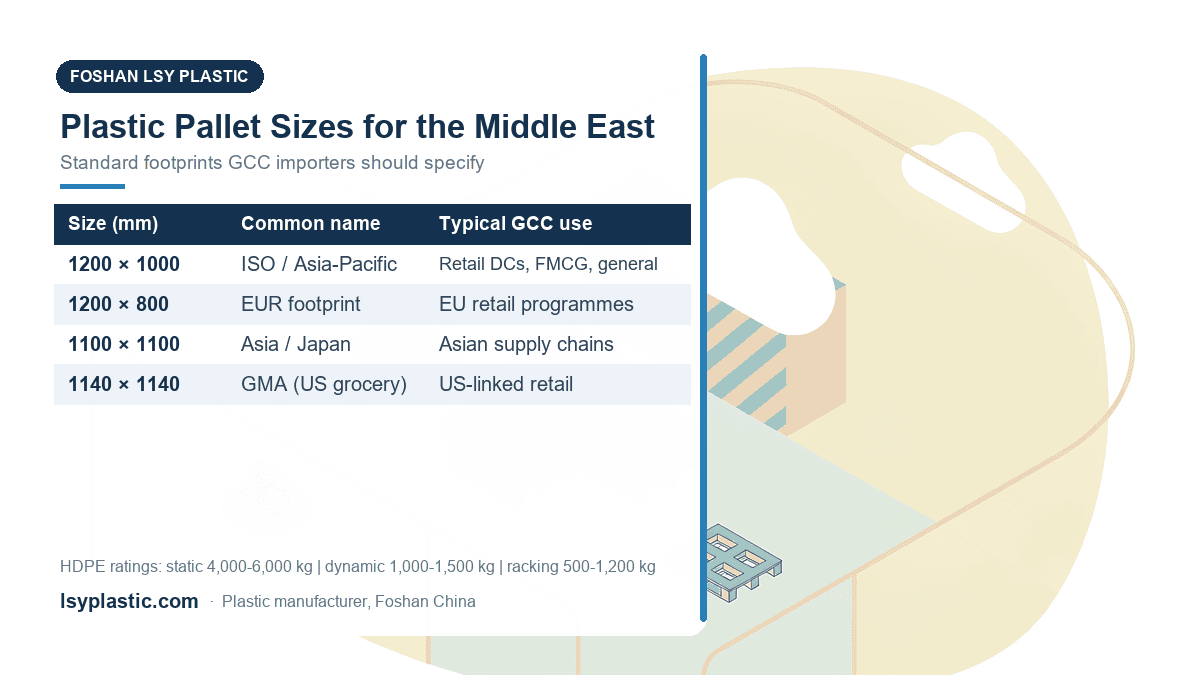
For size standards used in these color-coded fleets, review our plastic pallet sizes and dimensions guide.
Industry-Specific Coding Examples
Food and Beverage
Dairy and beverage plants often use blue for raw materials and green for finished goods heading to retail. Red is reserved for allergen hold or downgraded batches. The visual cue survives pallet washdowns and steam cleaning better than printed labels, which is one reason every major bottler and dairy now runs a mandatory color-coded pool.
Pharmaceutical and Medical
White and light blue dominate cleanroom and medical device storage. The trend is toward antimicrobial masterbatches built into the resin, which adds an extra layer of contamination control on top of color identification. Traceability seals molded into the rim are also standard.
Automotive and Industrial
Black for general manufacturing, gray for returnable, and yellow for service-parts returns are common. Color coding makes kanban identification of just-in-time deliveries faster on the assembly line. For racking load capacity requirements in automotive stacks, see our plastic pallet racking safety guide.
How Custom Color Coding Works
Custom color coding requires a masterbatch matched to your spec—usually Pantone or RAL—with a minimum order of approximately 500 to 1,000 pallets, depending on mold setup and resin source. The process adds 7-10 days to production and roughly 4-12% to the unit price based on pigment cost.
| Custom Code | Typical Scenario | MOQ (Pallets) | Cost Premium |
|---|---|---|---|
| Brand color | Customer-branded logistics | 500-1,000 | 5-10% |
| Department coding | Multi-tenant warehouse | 300-500 | 4-8% |
| Compliance color | Quarantine / hold stream | 200+ | 4-12% |
| Anti-microbial masterbatch | Healthcare / pharma | 1,000+ | 8-15% |
See the Pallet hub for the full range and specifications.
If you run a closed-loop or rental pool, color coding becomes a contractual requirement, not an internal preference. Most GPOs and 3PL networks demand a unique hue per channel partner so mixed-stock returns can be reconciled at receiving.
Designing Your Color-Coding System
Start with three questions: How many distinct categories must you support? Which colors are already adopted by your customer base? What cleaning chemistry will the pallet see? If you wash with hot caustic, neutral grays and blacks hold color better than bright pigments.
A simple 4-color system:
- Black: general warehouse / industrial
- Blue: food-grade pallets in current rotation
- Red: hold, quarantine, or rejected loads
- Green: returnable pool / vendor-managed inventory
A 6-color system adds dedicated hues for cold storage, hazardous materials, and premium / aseptic applications. Whatever you adopt, document the chart, audit compliance quarterly, and train every forklift driver on the meaning of each color.
For forklift handling best practices, see our plastic pallet forklift safety guide.
Compliance and Audit Considerations
Color-coded pallets simplify compliance audits dramatically. If your HACCP, GMP, or ISO plan requires separate handling of allergen, raw, and finished pallets, color is the cheapest enforcement tool you have. Auditors typically ask for two pieces of evidence: a documented scheme and a record of compliance. A visible color scheme ticks the first box in seconds.
For deeper FAQ coverage, review our plastic pallet FAQ with 20 buyer questions answered.
Common Mistakes to Avoid
- Mixing temporary and permanent solutions. Stickers and printed bands fade, chip, and wash off. Pigment-in-resin is permanent.
- Choosing unsafe colors for your industry. No bright colors in cleanroom—use white or soft neutrals.
- Skipping a written standard. A color chart only works if every shift knows what each color means.
- Forgetting cleaning chemistry. Caustic wash strips some pigments; check with your supplier.
Where to Source Color-Coded Plastic Pallets
When you source, ask the manufacturer these questions:
- Is the pigment mixed into the virgin resin, or surface-applied?
- What is the minimum order quantity for custom colors?
- Can the color survive 100+ wash cycles?
- What is the masterbatch supplier and the percent of carrier resin?
LSY Plastic molds plastic pallets in HDPE and PP with food-grade, conductive, and anti-microbial masterbatch options. We have supplied custom color-coded pallets to dairy, pharma, automotive, and 3PL customers across 30+ countries. Browse our plastic pallets category for the full range.
Get a Quote Today
Need color-coded plastic pallets for your DC or production line? Send us your volume, color spec, and load profile—we will return a quote within 24 hours.
Contact our engineering team:
WhatsApp: +86 19311059570
Email: fstyx01@lsyplastic.com
Browse our plastic pallets product range or send a quote request.
Related reading: plastic pallets hub — pallet sizes, materials, load ratings and export guides.
Frequently Asked Questions
What do plastic pallet colors mean?
There is no single global standard, but common conventions are blue for food or general stock, red for rejects or hazardous goods, green for approved or export, and yellow for quarantine or inspection. The value is consistency, so define your own scheme and apply it everywhere.
Why color code plastic pallets?
Color gives staff, drivers and auditors an instant visual cue about what is stacked on top, which cuts mis-identification and cross-contamination risk in food and pharma warehouses and speeds visual triage in large distribution centres.
Can I get custom pallet colors?
Yes. As a manufacturer LSY can mould pallets in specified colors and match a Pantone or RAL reference so reorders stay consistent. Custom color affects MOQ and lead time, so plan it into the first order.
How do I design a color-coding system?
Map colors to zones, product families, status or customers, document the scheme, and keep a physical reference sample. Batch-to-batch color can drift slightly, so the reference keeps every reorder matching the original.