How to Clean and Sanitize Plastic Pallets: Food & Pharma Standards
A pallet spends its life on floors, in trucks and next to dock doors — picking up dust, mold, chemical residue and the occasional food spill. In food processing and pharmaceutical operations, that surface is a contamination risk that auditors will ask about. Plastic pallets are easier to clean than wood, but only if you have a procedure. This guide lays out practical cleaning methods, food-safe sanitizers, drying rules and a hygiene schedule you can hand to your warehouse team.
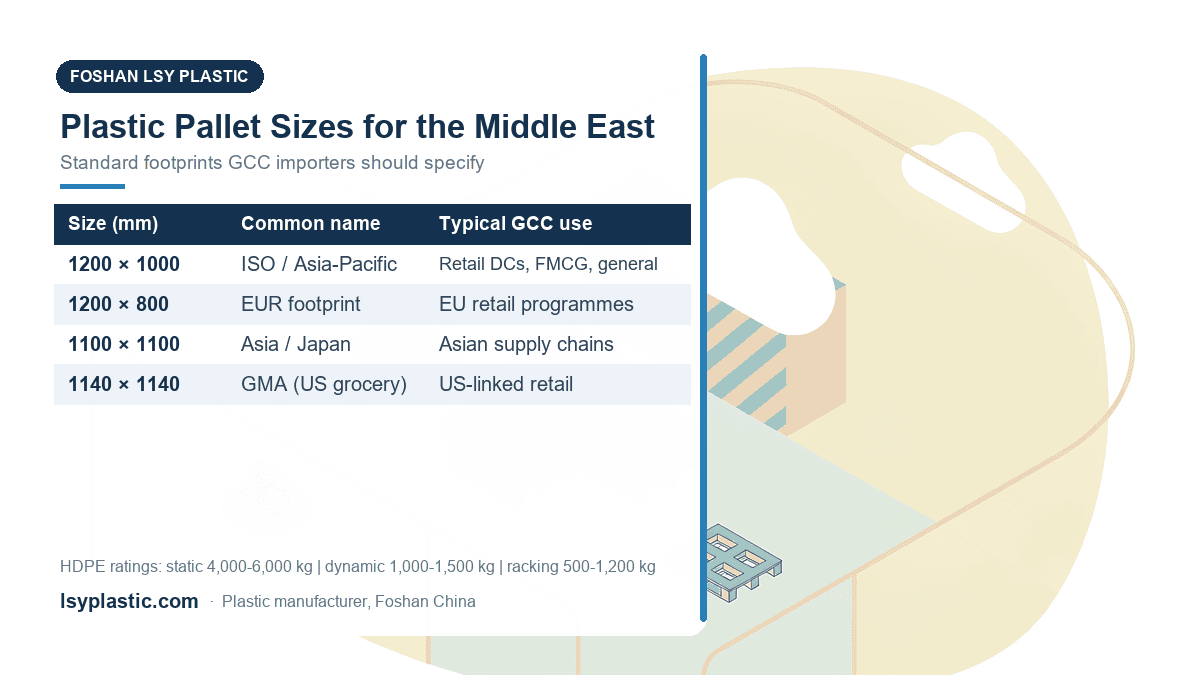
For a full chart covering 1200×1000, 1200×800 and 1140×1140 pallets, check our plastic pallet dimensions guide.
Why Pallet Hygiene Is a Real Issue
Wood pallets absorb moisture and are nearly impossible to sanitize below the surface — one reason food plants are moving to plastic. Plastic pallets are non-porous, but they still collect surface contamination: grease from loads, mold in humid storage, allergens from food spills, and residues that can transfer to the next load. In food and pharma, cross-contamination between allergens or active ingredients is a recall-level risk.
Audits under GFSI schemes (BRC, IFS, SQF) and pharma GMP routinely check pallet condition and cleaning records. A documented cleaning routine is not optional for certified facilities — it is evidence.
What Actually Contaminates Pallets
- Food residues and allergens — spills from produce, dairy, meat, nuts
- Biological growth — mold and mildew in damp or refrigerated storage
- Chemical residues — cleaning agents, lubricants, leaked containers
- Pests and insects — harborage in or under pallets
- General dirt — dust, mud, forklift tire marks
Because HDPE pallets do not absorb liquids, most contamination stays on the surface and can be removed completely — the key advantage that the plastic vs wooden pallet comparison details for hygiene-sensitive industries.
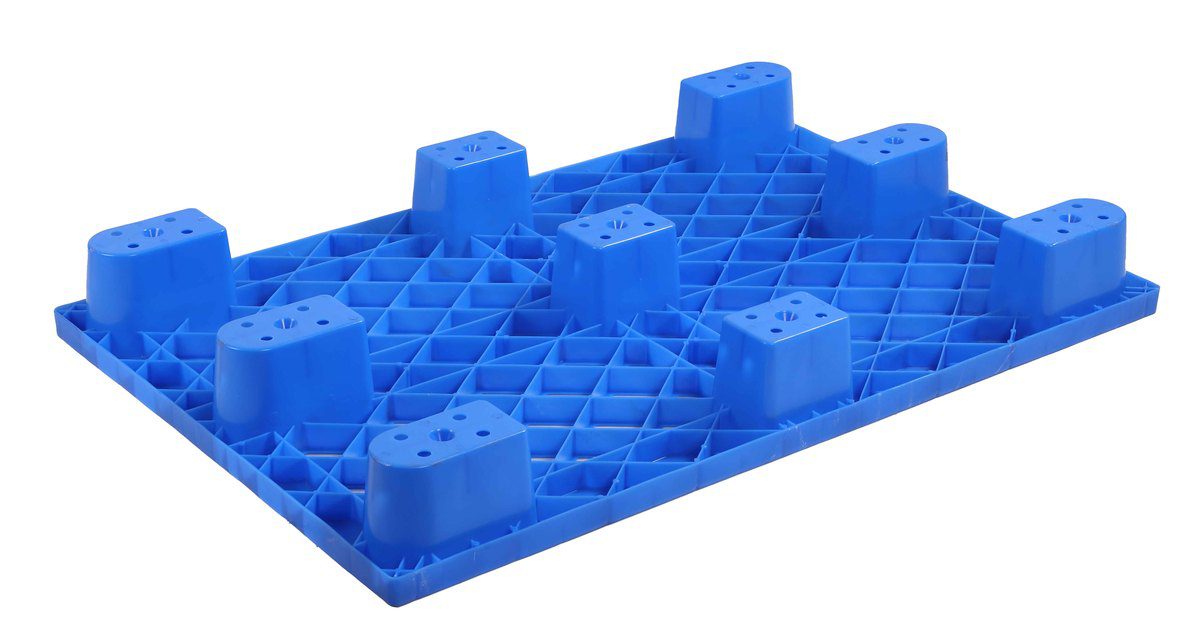
Cleaning Methods: From Quick Wipe to Full Washdown
1. Dry cleaning (daily)
Brush or vacuum pallets before they enter food zones to remove dust and loose debris. Dry cleaning is not sanitizing — it is the pre-step that makes the wet process effective.
2. Manual washdown
For small fleets: warm water with a food-safe detergent, a stiff brush or pressure washer, and attention to the underside where forklift tines and floors drag dirt. Rinse with potable water.
3. Pallet washer / tunnel washer
For fleets of hundreds or thousands, a dedicated pallet washer cycles pallets through detergent wash, rinse and sanitizer stages at controlled temperatures. This is the fastest way to standardize hygiene across a large pool and is the industry norm in food and pharma logistics.
4. Dry steam and foaming
Dry steam (160-180°C at the nozzle) kills surface pathogens without chemicals and is useful for allergen-changeover cleaning. Foaming detergents cling to vertical surfaces and improve contact time.
Sanitizing and Disinfecting: Choosing the Right Chemistry
Cleaning removes soil; sanitizing reduces microorganisms to safe levels. For food contact surfaces, use sanitizers approved for food plants:
- Quaternary ammonium (quat) — broad-spectrum, food-safe at approved dilutions
- Peracetic acid — strong oxidizer for tough biofilms; use at label rates
- Chlorine-based — effective and cheap; rinse well to avoid corrosion and residue
- Food-grade alcohol — quick touch-up sanitation for low-soil pallets
Check compatibility with HDPE: all of the above are safe for HDPE at label concentrations. Verify concentration and contact time on the label, and document the cycle for audits. Never use solvents that attack the polymer or leave toxic residues.
Drying and Storage: The Step Everyone Skips
Moisture is the enemy. Pallets that leave the washer damp and go straight into a cool warehouse can harbor mold on the surface. Dry pallets — air-dried on racks, or through a dry stage in a tunnel washer — before stacking. Store clean pallets away from dust sources, ideally covered or in a clean zone, and never store food-zone pallets next to chemical drums.
How Often Should Pallets Be Cleaned?
| Operation | Recommended frequency |
| Food processing plant (production pallets) | Every cycle or daily |
| Cold storage / DC (clean product) | Weekly + on visible soiling |
| Returnable pool (cross-dock) | Per return, before re-issue |
| Pharma / nutraceutical | Per cycle, documented |
| General warehouse (non-food) | Monthly + on visible soiling |
Trigger-based cleaning also applies: any pallet that touches a spill, a damaged load, or a pest finding must be pulled from circulation and cleaned before reuse. Assign one person to own the clean-pallet release step so nobody is tempted to skip it.
Plastic vs Wood: The Hygiene Difference
The reason food and pharma plants convert to plastic pallets is simple: wood cannot be sanitized to the same standard. Wood absorbs liquids, splinters, and cannot withstand caustic washdown chemistry without degrading. HDPE pallets survive hundreds of wash cycles, dry fast, and show no absorption — which also supports ISPM-15 compliance, since plastic pallets are exempt from heat treatment and can be exported without phytosanitary risk.
Pallet Hygiene SOP: A Ready-to-Use Checklist
- Pre-clean: brush/vacuum loose soil
- Inspect for damage — cracked decks trap bacteria and get replaced
- Wash with food-safe detergent (manual, washer or steam)
- Rinse with potable water
- Sanitize with approved chemistry at label concentration and contact time
- Dry completely before stacking
- Store clean pallets in a covered, clean zone
- Log the cycle (date, batch, operator) for audits
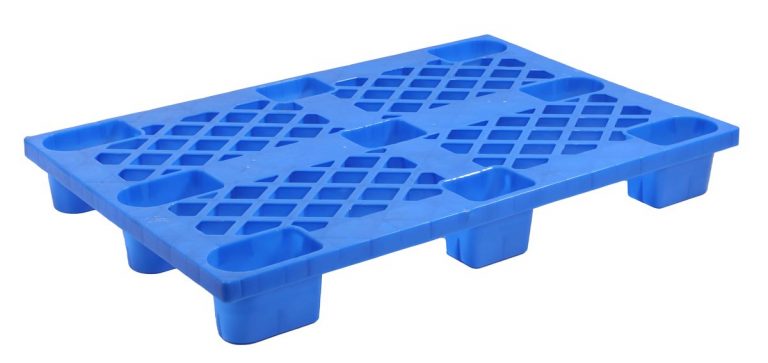
Need reliable plastic pallets? Browse the Plastic Pallets collection and request a quote.
Frequently Asked Questions
Can plastic pallets be pressure washed? Yes. HDPE handles pressure washing well; avoid directing the jet into edge notches for extended time. Keep pressure moderate (under 2,000 psi) to protect labels and RFID tags.
Do plastic pallets need ISPM-15 treatment? No. ISPM-15 applies to wood packaging. Plastic pallets are exempt, which simplifies export compliance and customs clearance.
Can I use bleach on plastic pallets? Yes, at food-safe chlorine dilutions (typically 100-200 ppm), followed by a potable-water rinse. Never mix chlorine with acids or ammonia.
How many wash cycles does an HDPE pallet survive? With proper chemistry and temperature control, HDPE pallets typically tolerate 500+ wash cycles; compare that with wood, which degrades after a fraction of that.
Need plastic pallets for your warehouse or export line? LSY Plastic is a 35+ year injection molding factory in Foshan, China, exporting pallets, bins and carts to wholesalers across the Middle East, Southeast Asia and North America. Send us your size and load requirements for a factory-direct quote, or browse our product range.