Food Grade Storage Bins: A BPA-Free Buying Guide for Commercial Kitchens
Walk into any serious commercial kitchen or food warehouse and you will see rows of plastic bins holding flour, produce, sauces and prepared food. The plastic itself is quietly doing a safety job: it must not leach chemicals into food, survive temperature swings, and stand up to repeated sanitizing. This guide explains what food grade really means, what BPA-free adds on top, and how to specify bins that pass food-safety audits without paying for features you do not need.
For the full range of food-safe storage options, see our plastic food storage containers guide.
What Does Food Grade Actually Mean?
Food grade is a material property, not a brand claim. A plastic resin is food grade when it complies with food-contact regulations such as the US FDA 21 CFR 177.1520 (olefin polymers) or the EU Framework Regulation 1935/2004 and Plastics Regulation 10/2011. In practice it means the resin contains only permitted additives, and migration of substances into food stays below legal limits under expected use conditions.
Food-grade certification for a finished bin also covers the colorants and processing aids used in injection molding. That is why reputable manufacturers can provide a declaration or test report for each product line — ask for it when you qualify a supplier.
BPA: What It Is and Why It Matters
BPA (bisphenol A) is a chemical used in polycarbonate plastics and epoxy resins. Concerns about endocrine-disrupting effects led regulators to restrict BPA in baby bottles and food containers in many markets, and retailers and food-service chains now commonly require BPA-free materials.
The good news: HDPE and PP — the two workhorse resins for food storage bins — are not made from BPA at all. A well-made HDPE or PP bin is inherently BPA-free. If a supplier’s bin is labeled BPA-free but is not explicitly food grade, the label alone is not enough; always ask for the food-contact declaration.
BPA-Free vs Food Grade: Know the Difference
These terms are often used as if they were interchangeable. They are not:
- BPA-free says what is NOT in the material (no bisphenol A)
- Food grade says the material complies with food-contact migration limits and additive rules
- A bin can be BPA-free and still fail food-grade migration testing, or food grade and made without any BPA
- For food storage, the requirement that matters is food grade; BPA-free is a common subset
Specify both in your purchase order: food grade (FDA/EU compliant) and BPA-free. Then verify with documentation rather than trusting printed labels.
HDPE vs PP: Which Resin for Food Storage Bins?
| Property | HDPE (high-density polyethylene) | PP (polypropylene) |
| Temperature range | -40°C to +80°C continuous | 0°C to +120°C (better for hot filling) |
| Impact strength | Excellent at low temperature | Good, less ductile in deep cold |
| Chemical resistance | Excellent (oils, acids) | Good (some solvents attack PP) |
| Typical use | Freezer storage, bulk dry goods | Hot food, catering pans, dishwasher-safe items |
| Rigidity | Good balance | Higher stiffness, thinner walls possible |
For freezer storage and tough handling, HDPE is the classic choice. For hot filling, steam tables or dishwasher cycles, PP handles higher temperatures. Many commercial kitchens keep both: HDPE bins for cold storage, PP containers for hot lines. Our temperature rating guide goes deeper into safe use ranges.
What to Look for in a Food-Grade Storage Bin
- Resin documentation: FDA 21 CFR or EU 10/2011 declaration from the manufacturer
- BPA-free confirmation: ideally backed by a lab report
- Smooth, seamless surfaces: no cracks or rough textures where bacteria hide
- Stackable design with lids available: lids prevent contamination and pest access
- Dishwasher/freezer compatibility: confirmed by the supplier’s spec sheet
- Clear or tinted options: visibility aids FIFO stock rotation in kitchens
Also check the bin’s working volume against your rack spacing. A 25 L bin may physically fit under a prep table but leave no clearance for a lid; measure the usable opening, not just outer dimensions.
Temperature, Chemicals and Everyday Abuse
Food bins face worse abuse than most plastic products: hot steam, caustic degreasers, heavy drops, and forklift scuffs in storage areas. Temperature matters most. HDPE bins hold their impact strength in freezers, but should not receive boiling contents; PP bins survive hot filling and steam cleaning. If your operation flash-freezes or holds sous-vide lines, review our temperature tolerance guide before choosing.
Cleaning chemistry matters too. Quaternary ammonium sanitizers and food-safe chlorine dilutions are fine for HDPE and PP; avoid solvents that attack PP if the bin manufacturer warns against them. Always follow the commercial cleaning and sanitizing procedure for plastic food containers to keep audit records consistent.
How Food-Grade Bins Are Made (and Why It Matters)
Injection molding compresses molten resin into a steel mold, producing a seamless, non-porous bin with no surface cracks. That seamless structure is the hygiene advantage over welded or assembled containers. The mold finish and gate design determine how easy the bin is to clean; a good mold leaves no sharp internal corners. As a manufacturer, we control this at the tooling stage — which is why mold quality is a fair question to ask any supplier.
Applications Across the Food Industry
- Restaurants & catering: prep storage, sauce containers, service-line pans
- Bakeries: dough tubs, ingredient bins with lids
- Meat & seafood processing: HDPE tubs that survive cold rooms and washdown
- Food manufacturing: bulk ingredient storage, FIFO batching bins
- Schools & hospitals: batch-cook and cold storage with audit-friendly labeling
Sourcing plastic storage containers? See our Commercial & Home Storage line for the sizes and materials discussed above.
Frequently Asked Questions
Is BPA-free the same as food safe? No. BPA-free only states one chemical is absent; food safe (food grade) means the material passed migration testing for food contact. Require both.
Can HDPE bins go in the dishwasher? Most HDPE bins tolerate dishwasher cycles with food-safe detergents, but check the temperature limit — repeated high-heat cycles can distort thin bins. PP bins are the safer choice for regular machine washing.
Do food-grade bins need lids? For storage and pest control, yes. Lids also slow moisture loss and preserve aroma; many kitchens use fitted lids on all dry-good bins.
How do I verify a supplier’s food-grade claim? Ask for the FDA or EU declaration and, for large orders, a third-party migration test report. A factory like LSY Plastic can supply documentation per production batch.
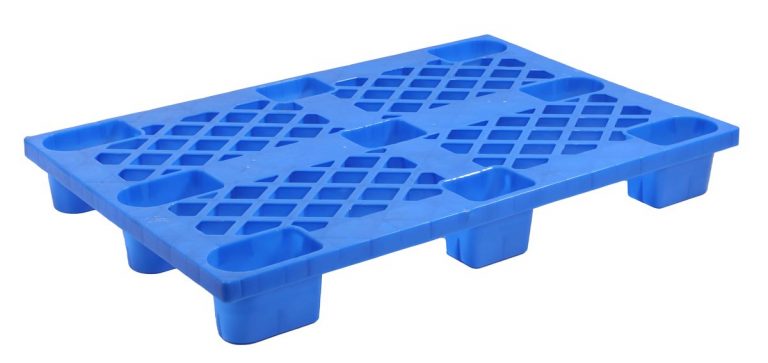
Need plastic pallets for your warehouse or export line? LSY Plastic is a 35+ year injection molding factory in Foshan, China, exporting pallets, bins and carts to wholesalers across the Middle East, Southeast Asia and North America. Send us your size and load requirements for a factory-direct quote, or browse our product range.