Not all plastic storage containers can handle the same temperature range. HDPE containers typically withstand temperatures from -40°C to +120°C, making them suitable for both freezer storage and hot food handling. PP containers offer even higher heat resistance up to 140°C but become brittle below -20°C. This guide explains temperature ratings for every common plastic material, helping you choose the right container for freezers, microwaves, steam tables, and hot-fill food processing.
Why Temperature Ratings Matter in Commercial Kitchens
In food service and food processing operations, containers move between temperature extremes daily—from walk-in freezers at -18°C to steam tables at +90°C. Using a container rated below the operating temperature causes:
- Cold temperature failure: Cracking, shattering, or brittleness that can contaminate food with plastic fragments.
- High temperature failure: Warping, chemical leaching, or melting that violates food safety regulations.
- Thermal shock cracking: Rapid temperature changes (e.g., moving from freezer to microwave) can crack containers not rated for thermal shock.
Understanding material temperature limits is essential for HACCP compliance and FDA food contact regulations. For a broader overview of food safety standards, see our food-grade container safety standards guide.
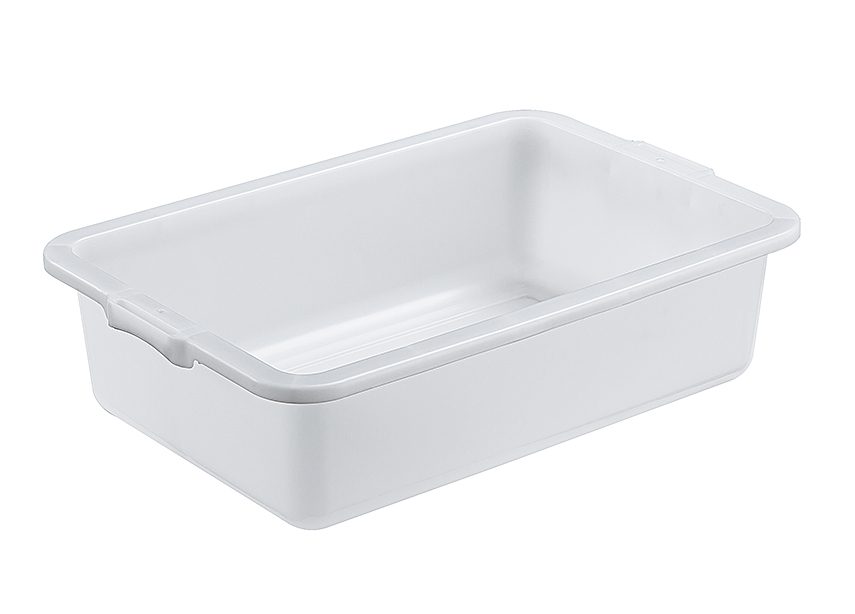
Temperature Ratings by Plastic Material
| Material | Min Temp (°C) | Max Temp (°C) | Freezer Safe | Microwave Safe | Hot Food Contact |
|---|---|---|---|---|---|
| HDPE | -40 | +120 | Yes | Limited | Yes (up to 120°C) |
| PP | -20 | +140 | Limited | Yes | Yes (up to 140°C) |
| LDPE | -50 | +80 | Yes | No | No |
| PS (Polystyrene) | -20 | +90 | No | No | Limited |
| PC (Polycarbonate) | -40 | +130 | Yes | Yes | Yes |
HDPE Containers: The All-Rounder
High-Density Polyethylene (HDPE) is the most versatile food container material. With a temperature range of -40°C to +120°C, HDPE containers can go from walk-in freezers directly to hot-fill food processing lines. HDPE is:
- Excellent for cold storage and freezer applications (down to -40°C)
- Suitable for hot food contact up to 120°C (boiling water temperature)
- Resistant to thermal shock better than PP
- Compliant with FDA, EU 10/2011, and China GB food contact standards
However, HDPE is not recommended for microwave reheating of high-fat foods, as fats can exceed 120°C and soften the container surface.
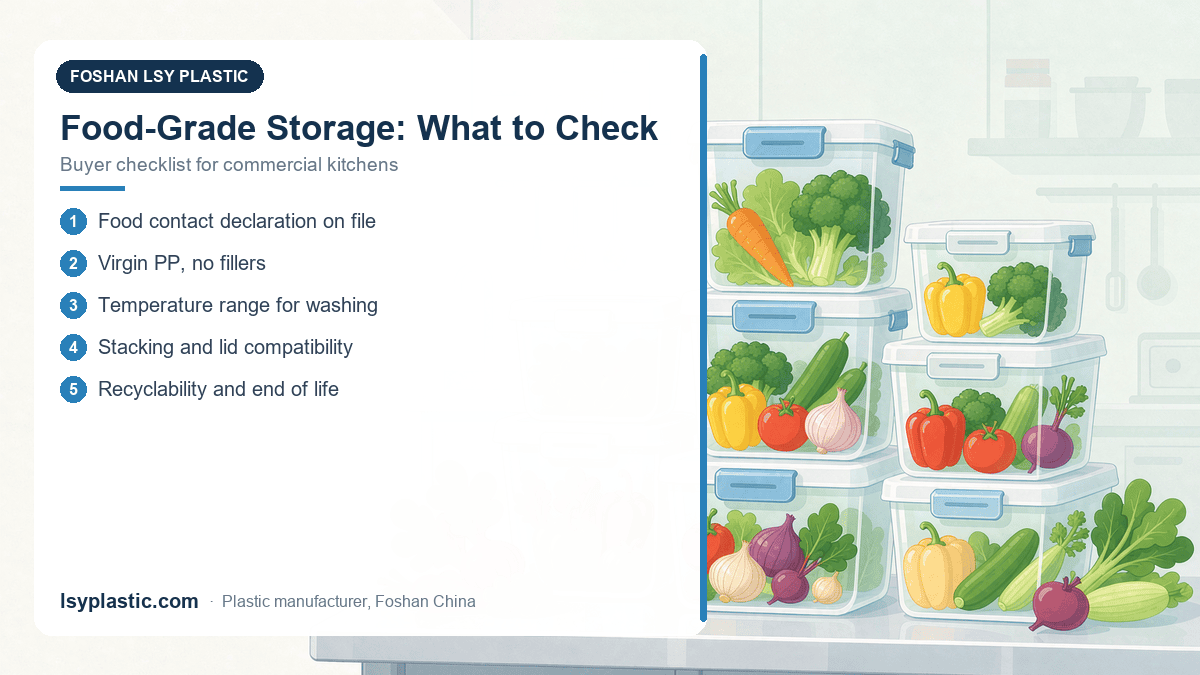
PP Containers: High Heat Champion
Polypropylene (PP) offers the highest heat resistance among common food-grade plastics, rated up to 140°C. PP containers are the best choice for:
- Microwave reheating (FDA-approved for microwave use)
- Steam table food holding (typically 60–90°C)
- Hot-fill packaging (soups, sauces at 80–95°C)
- Autoclave sterilization (121°C for 15-20 minutes)
The limitation of PP is cold-temperature performance. Below -20°C, PP becomes increasingly brittle and may crack under impact. For deep freeze applications below -20°C, HDPE is the better choice.
Freezer-Safe Plastic Containers
For freezer storage at -18°C to -25°C (standard commercial freezer temperatures), both HDPE and LDPE are excellent choices. Key features to look for:
- Wall thickness: Minimum 2mm for rigidity at low temperatures
- Reinforced corners: Rounded corners distribute stress and resist cracking
- Sealed lids: Snap-on or gasket lids prevent freezer burn and ice crystal formation
- Graduated markings: Volume indicators for portion control and inventory management
Our food prep basins guide covers how these containers integrate into commercial kitchen workflows.
Microwave-Safe Plastic Containers
Only PP and polycarbonate containers are universally rated as microwave-safe. Here are the key considerations:
What makes a container microwave-safe?
- The material does not soften, warp, or melt at microwave heating temperatures (food typically reaches 75–100°C)
- The material does not leach chemicals into food at microwave temperatures
- The container is marked with a microwave-safe symbol (wavy lines above a dish)
Microwave safety by food type:
| Food Type | Max Temperature | Recommended Material |
|---|---|---|
| Water-based soups | 100°C | PP or HDPE |
| Fatty foods (cheese, meat) | 120–140°C | PP only |
| Sugary foods (syrup, jam) | 130°C+ | PP only |
| Reheating prepared meals | 75–90°C | PP or PC |
Hot-Fill and Steam Table Applications
In food processing, hot-fill packaging involves filling containers with product at 80–95°C. In food service, steam tables hold food at 60–90°C for extended periods.
Hot-fill container requirements:
- Material rated above fill temperature with a 20°C safety margin (for 90°C fill, use material rated 110°C+)
- Rigid construction to maintain shape during cooling contraction
- Ventilated lids to release steam pressure
- Food contact certification at elevated temperatures
For food handling and cleaning protocols that complement proper container selection, see our commercial kitchen cleaning guide and our stackable vs nestable container comparison.
Thermal Shock: The Hidden Risk
Thermal shock occurs when a container experiences a rapid temperature change (e.g., from -18°C freezer directly to a +90°C steam table). Even if both extremes are within the material’s rating, the rapid transition can cause stress cracking.
Thermal shock resistance by material:
- HDPE: Good resistance; can typically withstand 60°C temperature jumps
- PP: Fair resistance; recommend gradual warming (max 40°C jumps)
- PC: Excellent resistance; handles 80°C jumps without cracking
Best practice: Always allow containers to temper gradually. Move frozen containers to a 4°C refrigerator for 2 hours before placing on a steam table.
Choosing the Right Container for Your Temperature Needs
For freezer storage (-18°C to -25°C):
Choose HDPE containers with 2mm+ wall thickness and sealed lids. Avoid PP for deep freeze applications.
For microwave reheating:
Choose PP containers clearly marked with the microwave-safe symbol. Always vent lids. Avoid reheating high-fat or high-sugar foods in HDPE.
For hot-fill packaging (80–95°C):
Choose PP or HDPE containers rated above 120°C. Ensure food contact certification covers elevated temperature use.
For steam table holding (60–90°C):
Choose PP or polycarbonate containers. PP is more cost-effective; PC offers better clarity for food display.
Explore our full range of food-grade storage solutions in the plastic storage containers hub.
Sourcing plastic storage containers? See our Commercial & Home Storage line for the sizes and materials discussed above.
Frequently Asked Questions
Can I put HDPE containers in the microwave?
HDPE is rated to 120°C, but FDA guidance recommends PP for microwave use. HDPE can be used for reheating water-based foods, but avoid high-fat or high-sugar foods that may exceed the material’s temperature limit.
What plastic containers are freezer-safe?
HDPE and LDPE containers are the best choices for freezer storage, rated to -40°C and -50°C respectively. PP containers should not be used below -20°C as they become brittle.
What temperature do plastic containers start leaching chemicals?
Food-grade HDPE and PP containers do not leach harmful chemicals within their rated temperature ranges. Leaching concerns are primarily associated with non-food-grade plastics or containers exposed to temperatures exceeding their ratings.
Need Custom Plastic Pallets, Containers, or Hotel Carts?
At LSY Plastic, we’ve been manufacturing high-quality injection-molded plastic products for over 35 years. From HDPE pallets and food-grade containers to hotel service carts and ESD bins, we deliver factory-direct pricing with OEM customization.
Contact us today:
- WhatsApp: +86 19311059570
- Email: fstyx01@lsyplastic.com
- Website: lsyplastic.com
Our team responds within 24 hours with detailed quotations and technical specifications.