Plastic food prep basins are deep, food-grade HDPE containers used in commercial kitchens for mixing, brining, marinating, serving, and bulk storage. They come in capacities from 3 L for prep-line mise en place to 100+ L for high-volume brining and dough proofing, and they outperform metal bowls for break resistance, temperature insulation, and dishwasher durability.
Every commercial kitchen – from restaurant prep lines to hotel banquets, catering companies, and food processing facilities – relies on food prep basins to move ingredients efficiently. This guide covers material safety, standard sizes, the most common uses, and how to choose the right basin for each station.
What Is a Food Prep Basin?
A food prep basin (also called a food storage basin, prep bucket, or food service basin) is a wide, low-profile food-grade container designed for handling food in volume. Unlike narrow storage tubs, prep basins have a large open mouth that allows quick access, easy mixing, and efficient scooping. Typical features include:
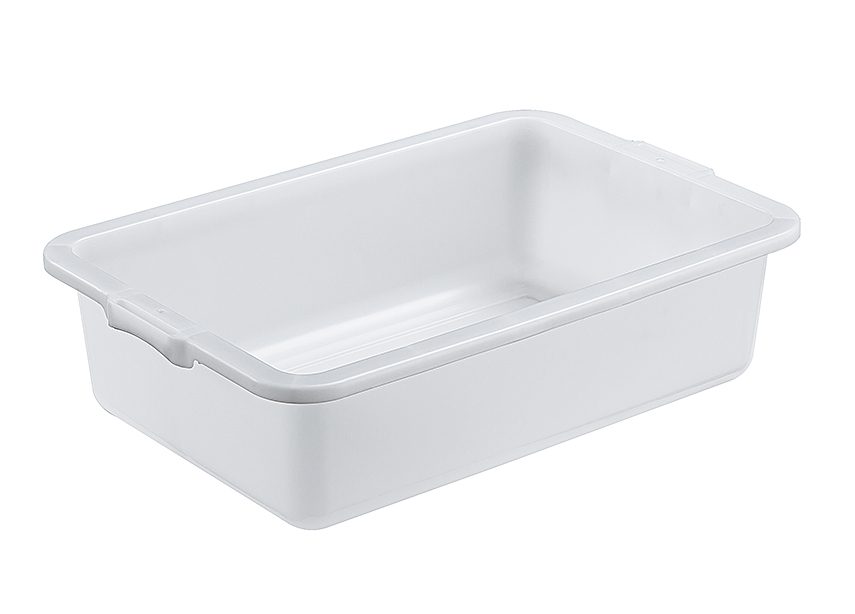
- Wide, stackable design for compact storage
- Reinforced rims for lifting when full
- Volume markings molded into the wall
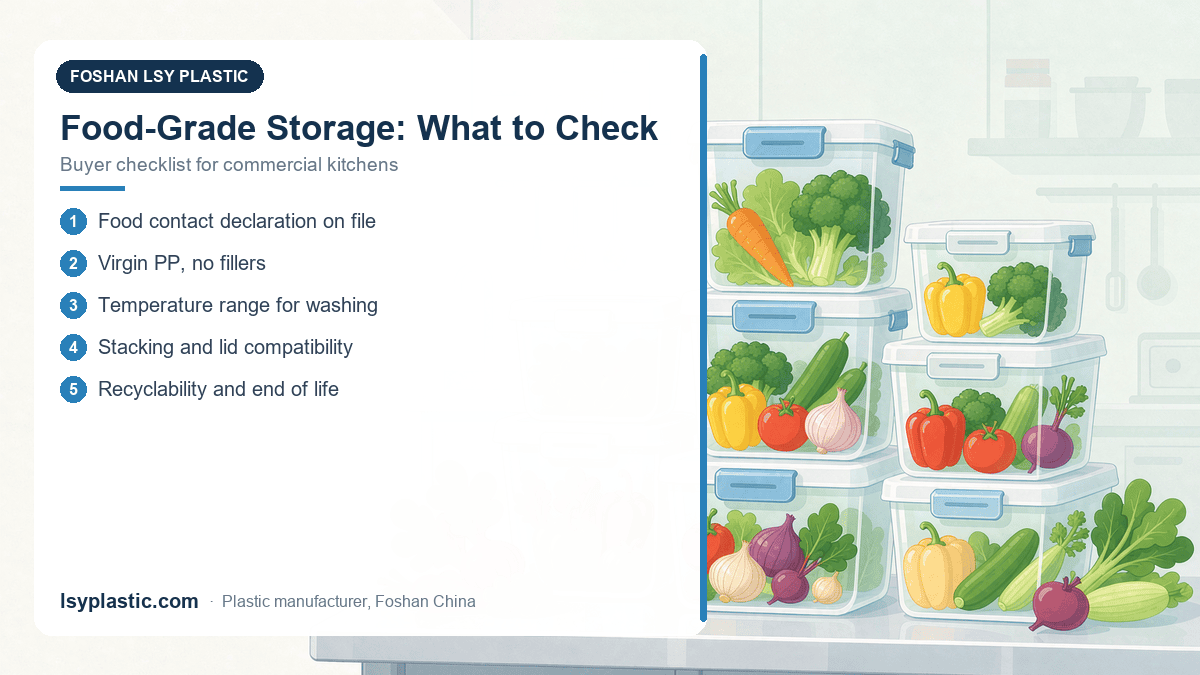
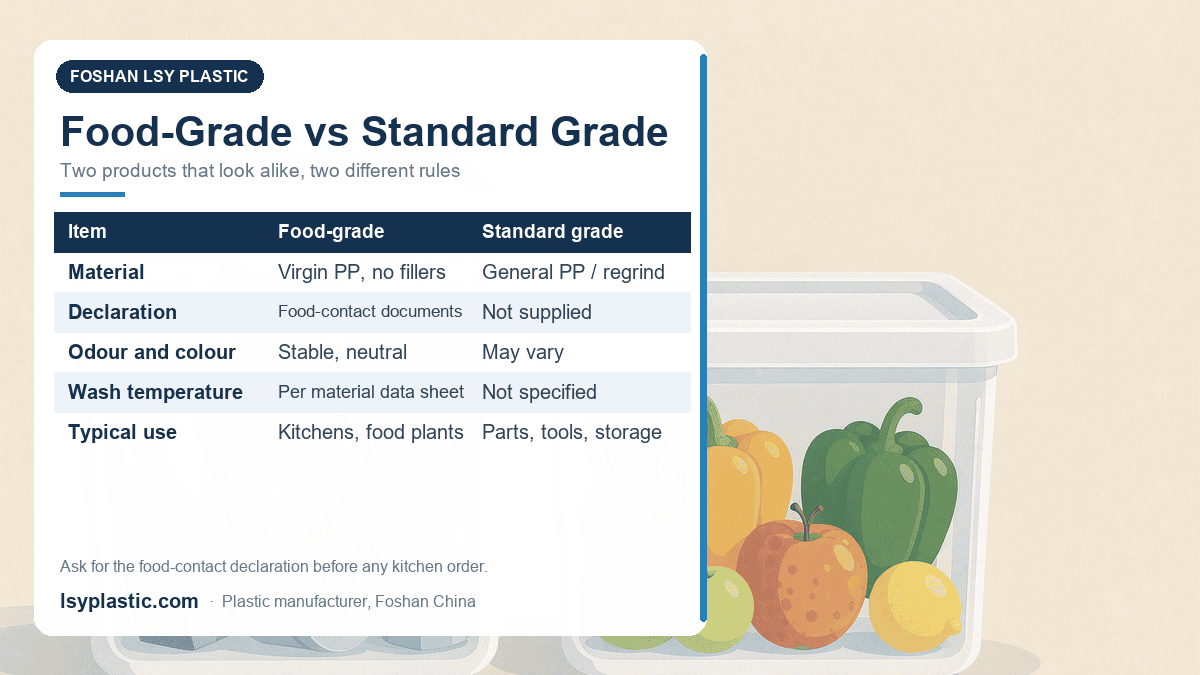
- Food-grade HDPE or PP construction (FDA / EU compliant)
- Compatible with commercial dishwashers and steam sanitizers
Material: Why HDPE Is the Industry Standard
Food prep basins are almost always molded from HDPE (High-Density Polyethylene), and for good reasons:
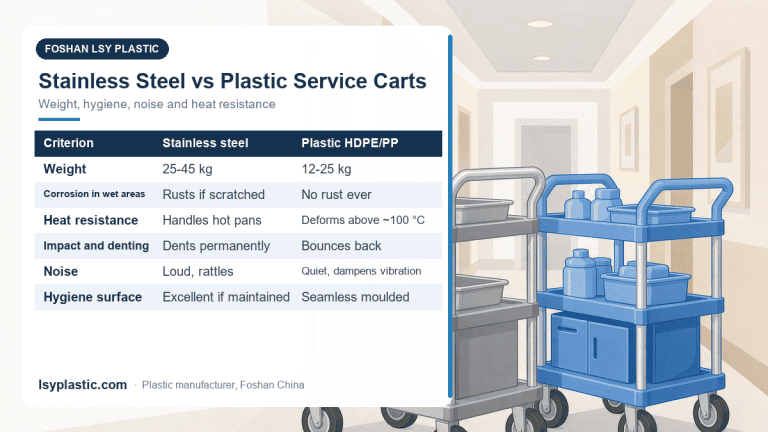
| Property | HDPE Food Basin | Stainless Steel Basin |
|---|---|---|
| Weight | Light (1-4 kg) | Heavy (3-10 kg) |
| Break Resistance | High – bounces instead of denting | Dents permanently |
| Temperature Range | -30C to +80C (some up to 110C) | Much wider |
| Dishwasher Safe | Yes (top rack recommended) | Yes |
| Heat Transfer | Low – keeps food temperature stable longer | High – food cools quickly against metal |
| Cost | Lower upfront and per unit | Higher |
| Corrosion | None – immune to acids, salt, and brines | Can pit with prolonged salt exposure |
HDPE is non-porous, which means it does not absorb juices, odors, or bacteria – a critical food safety advantage. It is also unaffected by acidic ingredients like vinegar, citrus, and tomato, and by high-salt brines that corrode metal. For full compliance details, see our FDA and EU food-grade container standards guide.
Standard Basin Sizes and Capacities
Food prep basins are typically sold in round and square formats across a wide capacity range:
| Capacity | Typical Dimensions (approx.) | Common Uses |
|---|---|---|
| 3-6 L | 25-30 cm diameter | Prep-line mise en place, sauces, garnishes |
| 10-15 L | 35-40 cm diameter | Batter mixing, salad prep, portioned ingredients |
| 20-30 L | 40-45 cm diameter | Marinating, brining batches, dough proofing |
| 40-60 L | 50-60 cm diameter | Bulk produce washing, large marinades, catering events |
| 80-100+ L | 60+ cm diameter | High-volume brining, pickling, bulk storage |
LSY Plastic’s 8312, 8313, and 8316 series cover the 20-60 L range most used by restaurants and hotel kitchens, with stackable designs and molded volume markings. Choose the smallest basin that fits the batch – oversized basins waste fridge space and encourage overfilling.
Top Uses in Commercial Kitchens
Mixing and Prep
Basins handle everything from whisking batters to folding salads. The wide opening gives whisk and spatula clearance that narrow tubs cannot match. For high-volume kitchens, keep 3-4 basins per prep station so staff rotate through washing cycles.
Brining and Marinating
Brining poultry, pork, and seafood in a plastic basin is the industry norm – salt brines corrode metal and react with aluminum. HDPE basins can sit in walk-in coolers for 12-48 hours without affecting food flavor. Always use a food-grade basin with a lid or food wrap for long brines.
Bulk Storage
For dry goods, par-cooked components, and prepared sauces, basins with lids extend shelf life and keep walk-ins organized. See our storage organization guide for labeling and rotation systems that prevent waste.
Serving and Buffet Support
Hotel banquet and buffet operations use large basins as chafing dish inserts, ice display bowls, and prep-side serving containers. Because HDPE insulates, food stays at serving temperature longer than in metal bowls.
Cleaning and Sanitizing Food Prep Basins
Food prep basins must follow the same sanitization protocol as any food-contact surface: scrape, pre-rinse at 43C, wash with detergent at 60C, rinse, sanitize (200 ppm chlorine or 82C hot water), and air dry. Full step-by-step instructions are in our commercial container cleaning guide.
Important: avoid abrasive scouring pads – they scratch HDPE and create microscopic grooves where bacteria multiply. Use nylon brushes or non-abrasive sponges, and inspect rims regularly for cracking, which can trap food residue.
How to Choose the Right Basin
- Match capacity to batch size: the basin should hold the batch with 20% headroom for mixing and splashing
- Check temperature rating: if you pour hot liquids or use steam tables, confirm the basin’s rated temperature range
- Stackability: stackable basins save up to 60% storage space versus nesting-incompatible designs
- Volume markings: molded markings reduce measuring errors and speed up prep
- Color coding: use color-coded basins to prevent cross-contamination (e.g., red for raw meat, green for produce, white for ready-to-eat)
- Lids: buy matching lids for storage and transport use
Conclusion
Plastic food prep basins are indispensable in commercial kitchens, offering break resistance, food-safe HDPE construction, and versatile performance from the prep line to the walk-in. Match basin size to batch volume, prioritize stackable designs with volume markings, and follow proper sanitization protocols to maximize lifespan and food safety.
LSY Plastic manufactures food-grade HDPE prep basins (8312, 8313, 8316 series), storage bins, and food containers designed for commercial kitchens, hotels, and food processing. Contact us on WhatsApp at +86 19311059570 or email fstyx01@lsyplastic.com for catalogs, samples, and bulk pricing.
Explore more in our Plastic Storage Containers Hub, or read about stackable vs nestable designs and temperature tolerance ratings.
Looking for plastic storage containers? Explore our Commercial & Home Storage range — injection molded in our own factory with 35+ years of experience.
Frequently Asked Questions
What is a food prep basin?
A deep, food-grade HDPE container used in commercial kitchens for mixing, brining, marinating, serving and bulk storage. They run from about 3L for prep-line mise en place up to 100L and more for high-volume brining.
Why is HDPE the industry standard for basins?
HDPE resists impact, moisture and chemicals, insulates temperature, survives dishwasher cycles and will not dent or shatter like metal bowls. It is food-safe and easy to clean.
What basin sizes do I need?
Match capacity to the task: small 3L to 12L basins for prep and garnishes, 20L to 50L for mixing and serving, and 50L to 100L-plus for brining and dough proofing. Confirm depth against your shelf and sink.
How do I clean food prep basins?
Wash with a food-safe detergent, rinse, sanitise and air dry, and avoid abrasives that scratch the surface. LSY moulds food prep basins and food pans from food-grade HDPE; no MOQ for domestic orders, overseas orders ship FCL.