Match trash can capacity to waste volume with this rule of thumb: guest rooms need 8-30 L bins, small restrooms and offices need 20-40 L, kitchens and back-of-house areas need 60-120 L, and outdoor or communal areas need 120-240 L. A bin that fills within half a shift is too small; a bin that is rarely half-full wastes floor space and bag costs.
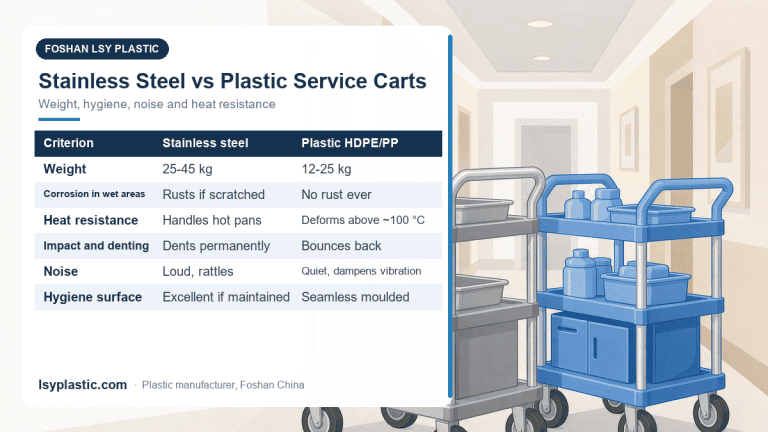
Not sure which cart fits which department? Our hotel carts guide maps every cart type to its workflow.
Choosing the right trash can size affects more than appearances – it determines collection frequency, labor cost, bag expenses, and whether waste overflows into guest-facing areas. This guide provides a capacity-by-location sizing table for hotels and restaurants, explains how to calculate your actual waste volume, and highlights features worth paying for.
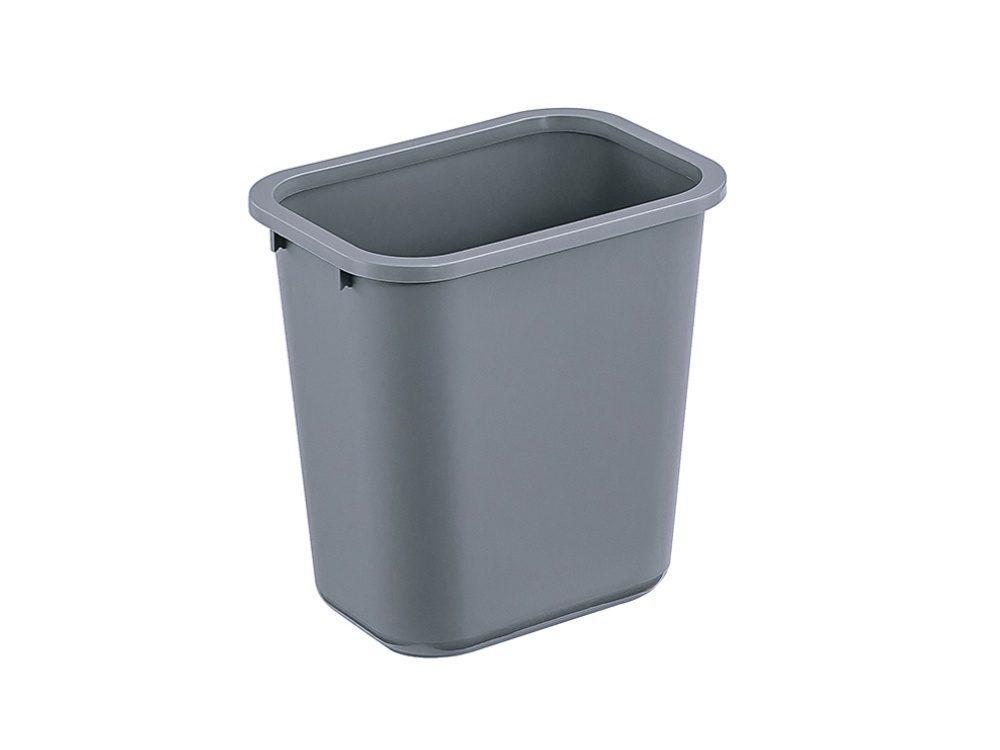
Trash Can Capacity by Location
| Location | Recommended Capacity | Collection Frequency |
|---|---|---|
| Guest room (standard) | 8-12 L | Daily turnover |
| Suite / family room | 15-30 L | Daily turnover |
| Restroom / washroom | 20-40 L | 2-4x daily |
| Office / front desk | 30-60 L | Daily |
| Restaurant dining floor | 40-80 L | 2-3x per service |
| Kitchen / back of house | 80-120 L | 2-4x per shift |
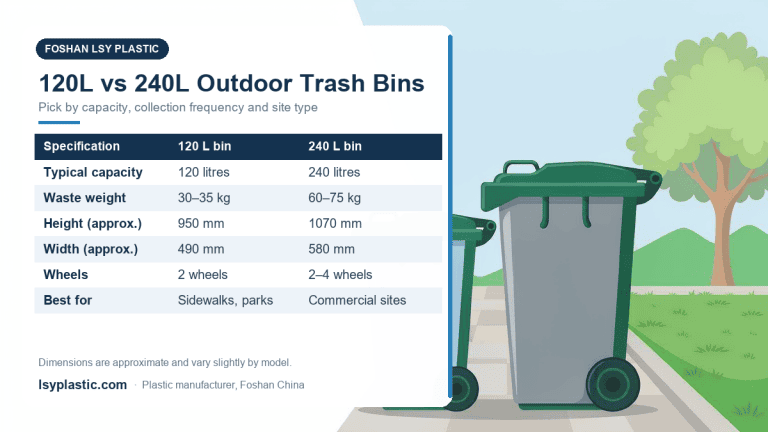
| Loading dock / compactors | 120-240 L | 1-2x daily |
| Outdoor / terrace / parking | 120-240 L | 1x daily or per collection contract |
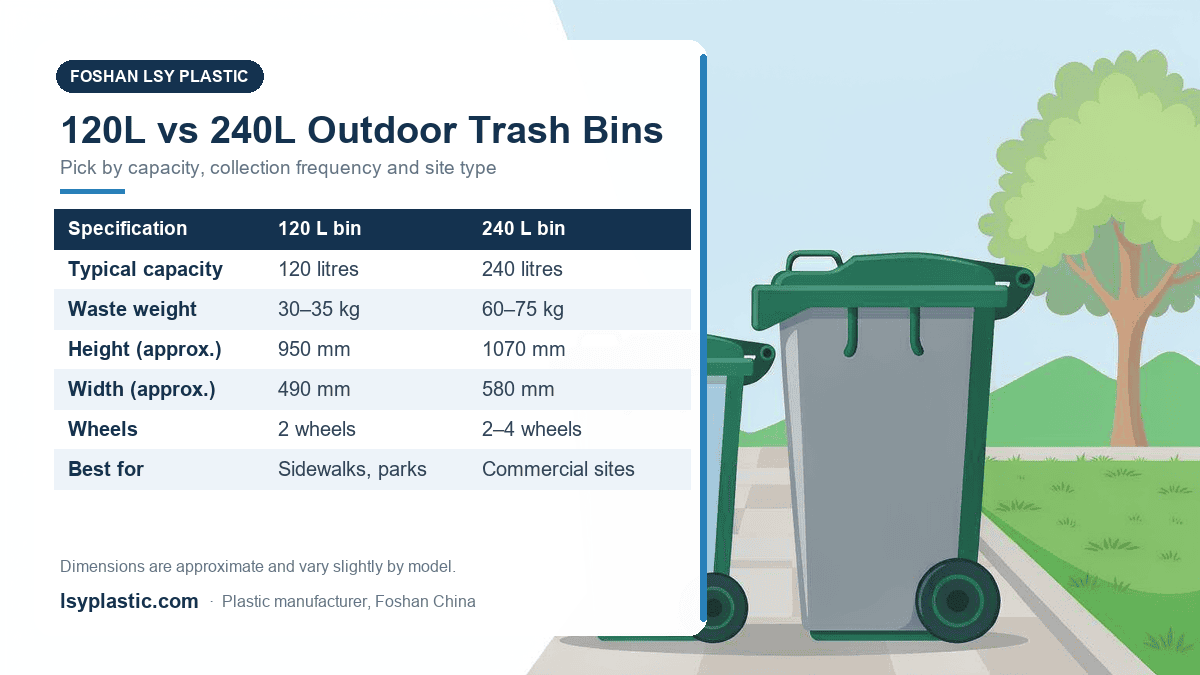
For guest room specifics, see our hotel wastebasket buying guide. For outdoor bins, our 120L/240L outdoor bin guide covers durability, locking lids, and wind resistance.
How to Calculate Your Actual Waste Volume
Stop guessing – measure for one week:
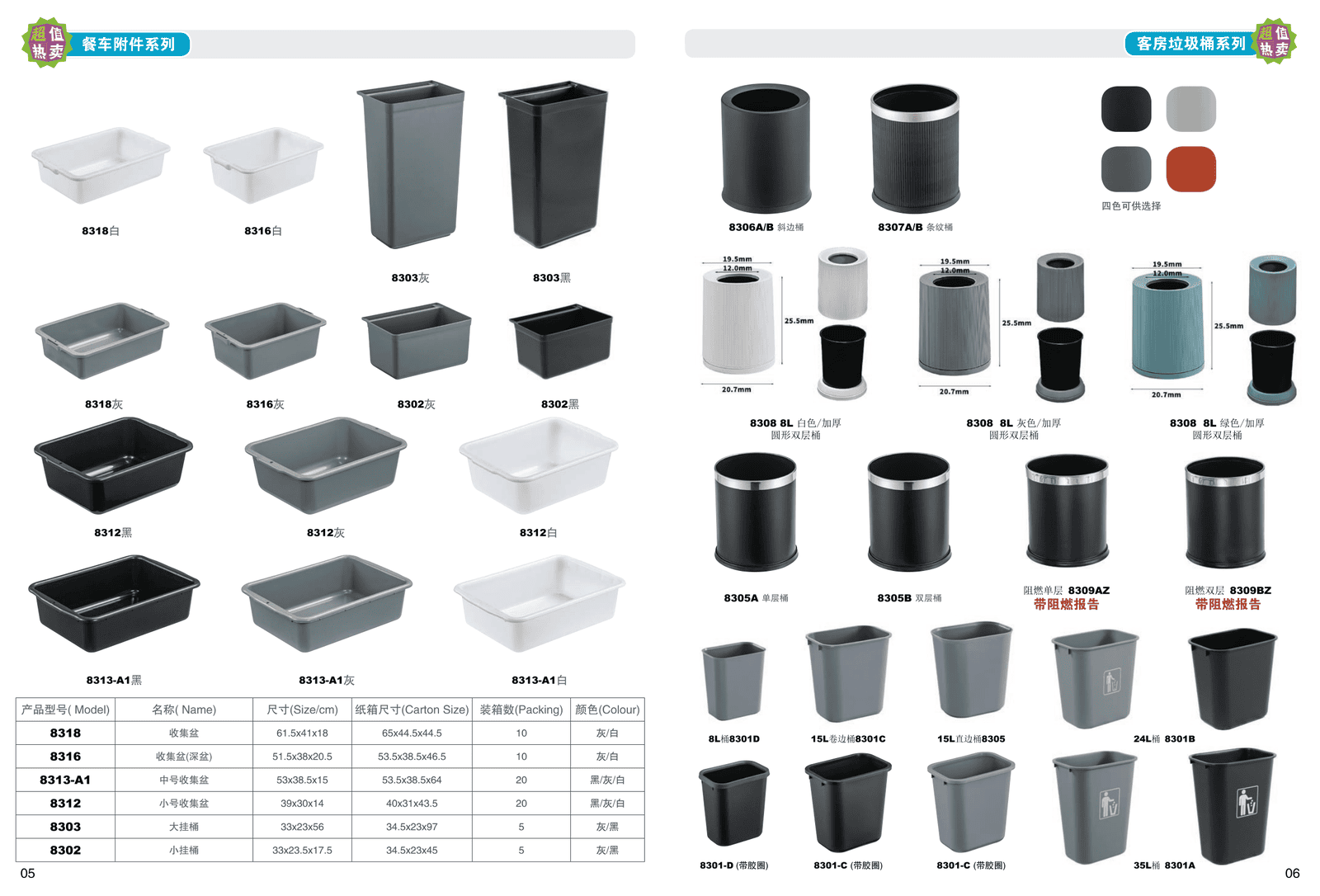
- Weigh the bags: record the weight of every full bag removed per area for 7 days (include peak days: check-out day, weekend banquet service)
- Convert to volume: 1 kg of mixed hotel waste occupies roughly 8-12 L uncompacted; kitchen waste (wet) occupies 5-8 L per kg
- Pick the sizing rule: the bin should hold 1.5-2x the average daily volume per area, so collection intervals stay reasonable
- Add peak buffer: if check-out day produces 3x average volume, either add a second bin or schedule an extra collection that day
Example: a 120-room hotel generating 4 kg of room waste per room-day produces about 480 kg daily, or roughly 4,000-5,000 L uncompacted. That means 15-20 bins of 240 L at the loading dock plus daily room-level collection – the exact configuration depends on how often housekeeping runs waste down.
Size vs Bag Cost: The Hidden Math
Bag costs often exceed bin costs within the first year. A 120 L bin with a 120 L bag costs roughly 1.5x a 60 L bag – but holds 2x the waste, halving bag usage per liter collected. Oversized bins reduce labor (fewer change-outs) but increase bag expense when only partially filled. The break-even point is usually 60-70% fill rate. If your bins routinely fill under 60%, downsize; if they overflow, upsize by one step.
Material and Feature Considerations
HDPE vs PP vs Fire-Retardant
Standard HDPE bins (2-5 mm wall) suit most indoor uses. In kitchens and loading docks, look for reinforced rims and thicker walls. For guest rooms and corridors, fire-retardant bins (FR-rated HDPE) provide an extra safety layer – see our fire-retardant wastebasket guide and our double-layer 8L safety guide.
Features Worth Paying For
- Locking lids: essential for outdoor bins (pest control, odor, unauthorized dumping)
- Dome or swing lids: reduce odor and fire risk in corridors and kitchens
- Bag retainers: molded rings or clips keep bags hidden and prevent slip-in
- Wheels (for 120L+): two fixed wheels plus handles make dock-to-compactor moves safe
- Foot pedals: hands-free operation in kitchens and restrooms
- Color coding: standardize sorting with color-coded lids – our waste sorting guide explains a complete color system
Sizing Checklist for Procurement
- List every area that needs a bin (rooms, restrooms, dining, kitchen, dock, outdoor)
- Record actual weekly fill rates for the current bins
- Apply the 60-70% fill benchmark and the 1.5-2x daily volume rule
- Add peak-day buffer and plan collection frequency
- Select material (HDPE / FR), lid type, and wheels per location
- Order 5-10% spares – bins get damaged and stolen, especially outdoors
Conclusion
Trash can sizing is a simple calculation: measure your weekly waste volume, size bins to 1.5-2x daily volume with a 60-70% fill target, and choose features by location – locking lids outdoors, fire-retardant bodies in corridors, and wheels on anything over 120 L. Getting the size right cuts labor, bag costs, and overflow incidents across the property.
LSY Plastic manufactures the full range – from 8 L guest room wastebaskets to 240 L outdoor bins, including fire-retardant and color-coded models – with 35+ years of injection molding experience. Contact us on WhatsApp at +86 19311059570 or email fstyx01@lsyplastic.com for a sizing consultation and bulk pricing.
For more, visit our commercial trash can buying guide and plastic waste bin manufacturer guide.
Ready to compare options? Browse our Sanitation Solutions range for plastic waste bins.
Frequently Asked Questions
What size trash can do I need by location?
Guest rooms 8L to 30L, small restrooms and offices 20L to 40L, kitchens and back-of-house 60L to 120L, and outdoor or communal areas 120L to 240L. A bin that fills within half a shift is too small.
How do I calculate actual waste volume?
Estimate the waste generated per shift or per room, then size the bin so it fills roughly once per collection cycle. Over-sized bins waste floor space and bag cost; under-sized bins overflow.
How does bin size affect bag cost?
Bag cost tracks bin size, so over-sizing bins means buying larger, more expensive liners for the same waste. Matching capacity to real volume controls this hidden cost.
What materials and features should I consider?
Food-grade or UV-stable HDPE and PP for durability and easy cleaning, plus lids and colour coding for sorting. LSY moulds hotel and restaurant bins; no MOQ for domestic orders, overseas orders ship FCL.