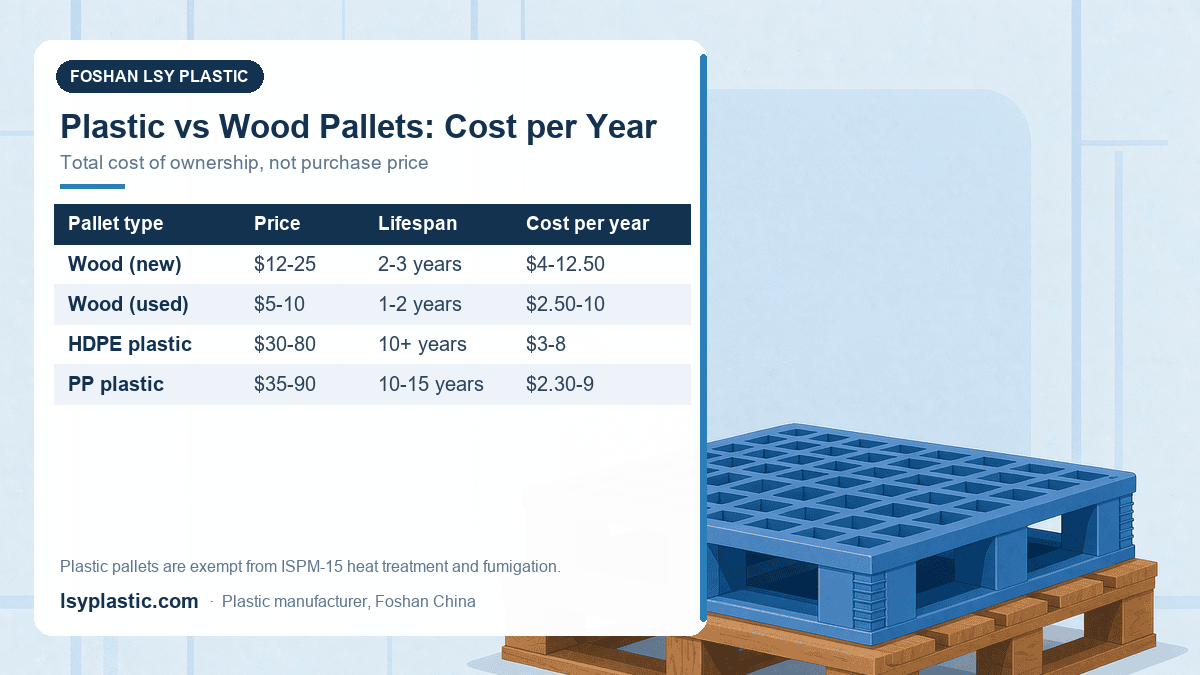
When comparing plastic pallet vs wood pallet total cost of ownership, plastic wins by 25 to 50 percent over a 5-year horizon. A wood pallet costs $12 to $25 upfront; a plastic pallet costs $30 to $80. But the wood pallet needs replacement every 2 to 3 years, requires constant maintenance, and carries hidden costs from product damage and ISPM-15 compliance. Plastic pallets last 10+ years with zero repairs and are ISPM-15 exempt.
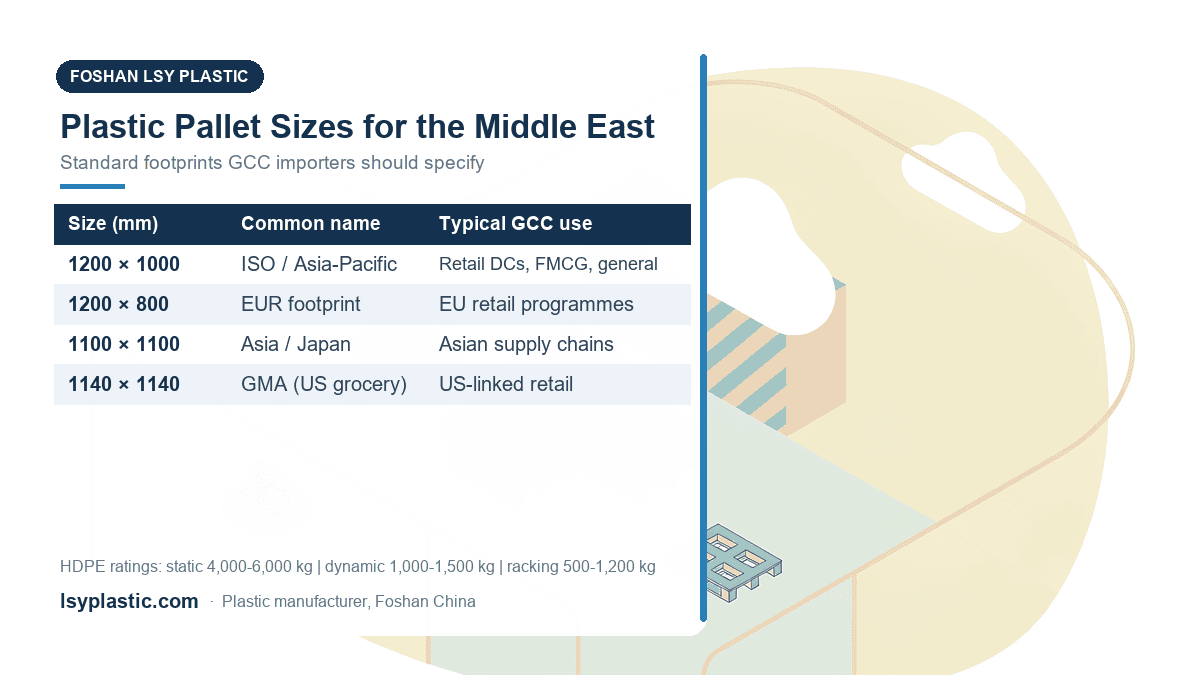
Need the specs first? See our complete plastic pallet sizes and dimensions guide with charts for every standard footprint.
Why Total Cost of Ownership Matters More Than Unit Price
Procurement teams often compare pallet prices and pick the cheapest option. That approach ignores the real cost of ownership. A pallet is a recurring operational expense, not a one-time purchase. The true cost includes purchase price, replacement frequency, maintenance labor, product damage from splinters and nails, hygiene compliance, and export certification. When you add these factors, the cheapest pallet per unit is rarely the cheapest pallet per use.
For a deeper look at lifespan economics, see our plastic pallet cost-per-trip analysis. For material differences, our HDPE vs polypropylene comparison breaks down how resin choice affects durability.
Upfront Purchase Cost Comparison
At first glance, wood pallets win on day-one price. Here is the typical price range for standard 48 by 40 inch pallets:
| Pallet Type | Price Range | Expected Lifespan | Cost Per Year |
|---|---|---|---|
| Wood pallet (new) | $12 to $25 | 2 to 3 years | $4 to $12.50 |
| Wood pallet (used) | $5 to $10 | 1 to 2 years | $2.50 to $10 |
| HDPE plastic pallet | $30 to $80 | 10+ years | $3 to $8 |
| PP plastic pallet | $35 to $90 | 10 to 15 years | $2.30 to $9 |
Plastic pallets cost 2 to 4 times more upfront, but the annual cost difference shrinks when you factor in lifespan. A $60 HDPE pallet lasting 10 years costs $6 per year. A $15 wood pallet lasting 2.5 years costs $6 per year. The upfront gap disappears, and plastic pulls ahead once you add maintenance and damage costs.
Lifespan and Replacement Frequency
Wood Pallet Lifespan
Wood pallets typically last 2 to 3 years in normal warehouse conditions and less than 1 year in harsh environments like cold storage or outdoor yards. Common failure modes include board splitting from forklift impact, nail loosening from repeated handling, wood rot from moisture, insect infestation, and warping from humidity changes. Each failure removes a pallet from service and triggers a replacement order.
Plastic Pallet Lifespan
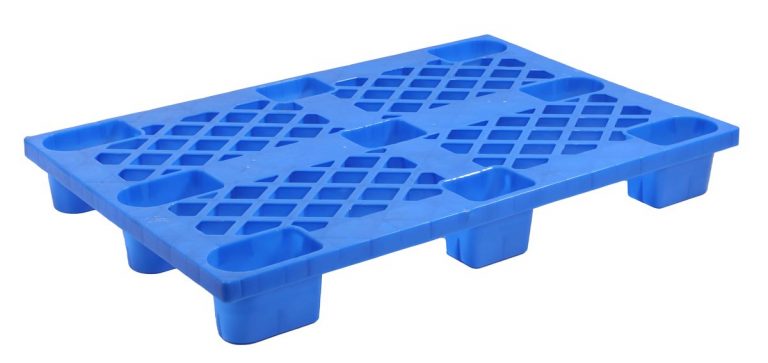
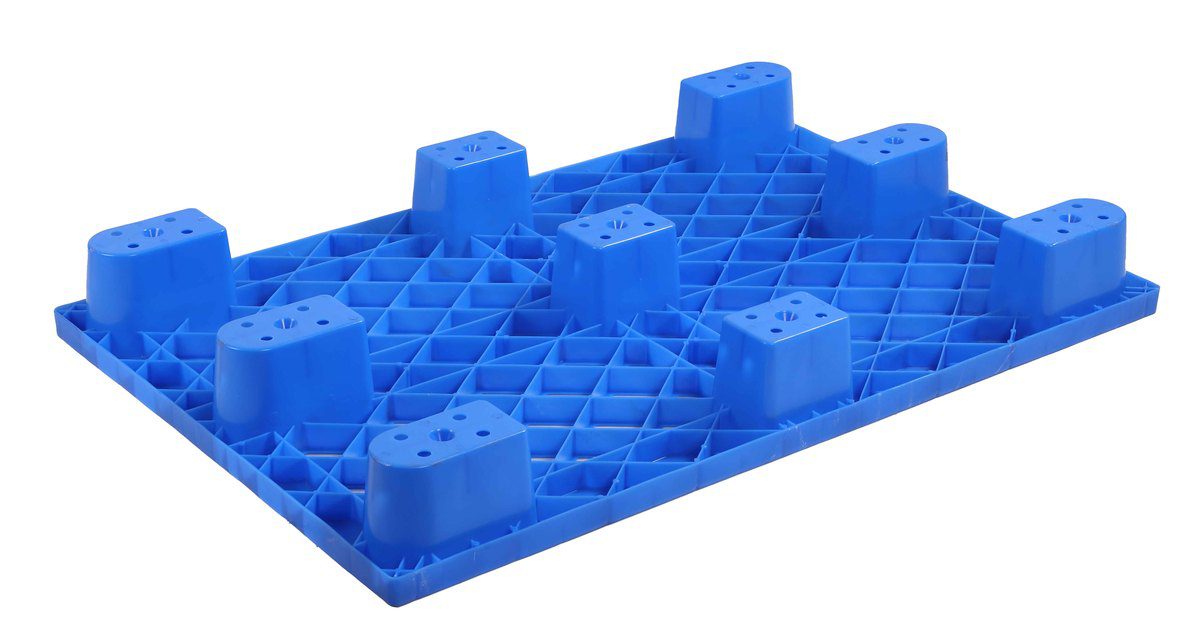
HDPE and polypropylene pallets last 10 to 15 years under the same conditions. They resist moisture, insects, chemicals, and impact damage. LSY Plastic manufactures pallets using injection-molded HDPE and PP, with reinforced designs that handle static loads up to 4,000 kg and dynamic loads up to 1,500 kg. Our plastic pallets hub covers the full product range.
Maintenance, Repair, and Downtime Costs
Wood pallets require ongoing maintenance: replacing broken boards, re-nailing loose joints, and discarding unsalvageable units. Industry estimates put maintenance labor at $2 to $4 per pallet per year for operations using 500 or more pallets. Over 5 years, that adds $10 to $20 per pallet, often exceeding the original purchase price.
Plastic pallets need no repairs. A damaged plastic pallet is recycled rather than repaired, and the failure rate is roughly 90 percent lower than wood. The labor savings alone often justify the higher purchase price within 2 to 3 years.
Safety, Damage, and Product Loss
Wood pallets cause product damage through several mechanisms: splinters puncturing shrink wrap and packaging, protruding nails scratching goods, board collapse under overload, and loose boards shifting during transport. Companies switching from wood to plastic typically report a 60 to 80 percent reduction in pallet-related product damage claims.
Plastic pallets have smooth, molded surfaces with no fasteners. This eliminates splinter damage and reduces insurance premiums. For operations handling high-value goods like electronics or pharmaceuticals, the damage reduction alone can pay back the price difference within months.
Hygiene and Contamination Costs
For food, pharmaceutical, and medical applications, wood pallets pose serious hygiene risks. They absorb moisture, harbor bacteria, and cannot be fully sanitized. Many FDA-regulated industries now require plastic pallets for direct food contact. Plastic pallets can be washed, steam-cleaned, and sanitized with standard chemicals at $0.50 to $1.00 per cycle, compared to $3 to $5 to replace a contaminated wood pallet.
ISPM-15 Exemption and Export Savings
Wood pallets used for international shipping must comply with ISPM-15 standards, requiring heat treatment or fumigation and certification stamps. This adds $2 to $5 per pallet and creates customs delays. Plastic pallets are ISPM-15 exempt and ship internationally without treatment, certification, or stamping. For companies exporting regularly, this saves $2 to $5 per pallet per trip. Our detailed ISPM-15 compliance guide covers the regulatory details.
5-Year Total Cost of Ownership Example
Consider a facility using 1,000 pallets with moderate export activity:
| Cost Factor (1,000 pallets) | Wood Pallet | Plastic Pallet |
|---|---|---|
| Initial purchase | $15,000 | $50,000 |
| Replacements over 5 years | $22,500 | $0 |
| Maintenance labor | $15,000 | $0 |
| Product damage | $8,000 | $2,000 |
| ISPM-15 compliance | $7,500 | $0 (exempt) |
| Hygiene and cleaning | $5,000 | $2,500 |
| 5-Year Total | $72,500 | $54,500 |
| Cost per pallet per year | $14.50 | $10.90 |
Plastic pallets save $18,000 over 5 years in this scenario, a 25 percent reduction in total cost despite a 3x higher purchase price.
When to Choose Wood vs Plastic Pallets
Wood pallets still make sense for one-way shipping where pallets are not returned, low-budget operations with minimal export activity, and heavy static loads where plastic pallets are cost-prohibitive.
Plastic pallets are the better choice for closed-loop systems with pallet returns, food and pharmaceutical environments, frequent international shipping, automated conveyor systems requiring consistent dimensions, and long-term warehousing with a 5-year or longer planning horizon.
Conclusion
The plastic pallet vs wood pallet cost comparison is clear: wood wins on day-one price, but plastic wins on total cost of ownership. Over 5 years, plastic pallets save 25 to 50 percent through longer lifespan, zero maintenance, lower damage rates, and ISPM-15 exemption. For buyers planning beyond the first invoice, plastic is the economical choice.
LSY Plastic manufactures injection-molded HDPE and PP pallets for export markets worldwide. Our pallets are tested for static and dynamic load capacity and available in standard and custom sizes. Learn more about importing plastic pallets from China or contact our team directly.
Request a quote today: WhatsApp +86 19311059570 | Email fstyx01@lsyplastic.com
Sourcing plastic pallets? See our Plastic Pallets line for the sizes and materials discussed above.
Frequently Asked Questions
Is plastic or wood cheaper overall?
Over a five-year horizon plastic usually wins by 25 to 50 percent on total cost of ownership, even though a wood pallet costs less upfront (about 12 to 25 dollars) than plastic (about 30 to 80 dollars). Wood needs replacement every two to three years and constant maintenance; plastic lasts 10 or more years with zero repairs.
What hidden costs does a wood pallet carry?
Product damage from nails and splinters, ongoing repair, higher hygiene and contamination risk, and ISPM-15 treatment for export. Those add up to more than the purchase-price gap over the pallet’s life.
Why does ISPM-15 matter for cost?
Wood packaging must be heat-treated or fumigated for international shipping, adding cost, stamps and possible customs delays. Plastic pallets are ISPM-15 exempt, so there is no treatment, no stamps and fewer border holds.
When is wood the better choice?
For one-way low-value shipments, very tight upfront budgets, or where a pallet will be scrapped after a single trip, wood can make sense. For reusable loops, hygiene-critical or export-heavy operations, plastic pays back quickly.