The safest way to clean and sanitize plastic food containers in a commercial kitchen is a five-step process: scrape and pre-rinse at 43C, wash with detergent at 60C, rinse with clean water, sanitize with a 200 ppm chlorine solution or 82C hot-water final rinse, and air dry. This protocol meets FDA Food Code requirements and prevents cross-contamination in food service operations.
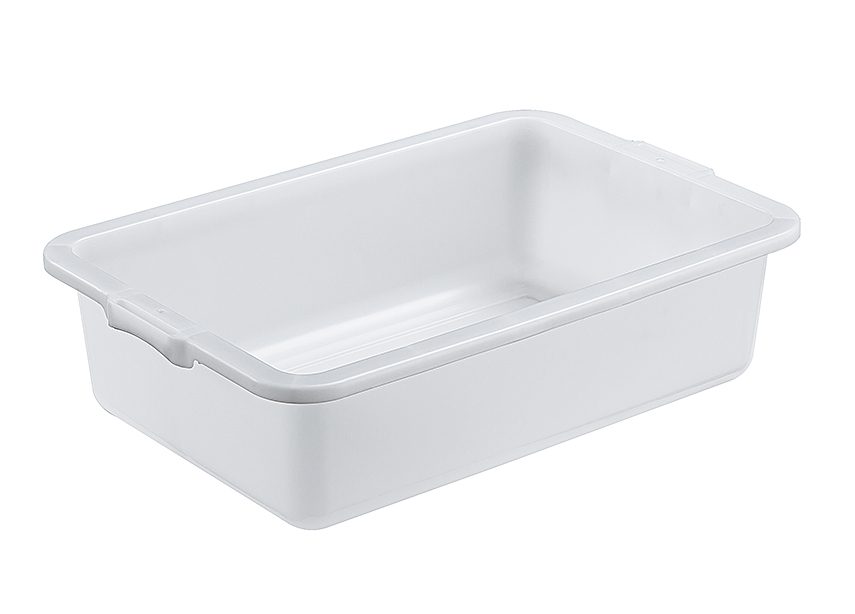
Plastic food containers – including food pans, storage bins, ingredient bins, and meal prep containers – are essential in commercial kitchens, cafeterias, and food processing facilities. Without proper cleaning and sanitization, these containers can harbor bacteria, develop persistent odors, and compromise food safety. This guide covers the complete cleaning protocol, chemical selection, common mistakes, and cleaning frequency by container type.
Step-by-Step Cleaning Protocol
The following table summarizes each step of the FDA-compliant cleaning process:
| Step | Action | Temperature | Duration |
|---|---|---|---|
| 1. Scrape | Remove food residue with a scraper or brush | Ambient | 30-60 sec per container |
| 2. Pre-Rinse | Rinse with warm water to loosen debris | 43C (110F) | 15-30 sec |
| 3. Wash | Scrub with detergent solution and non-abrasive pad | 60C (140F) | 30-60 sec |
| 4. Rinse | Rinse with clean, potable water | 49C (120F) | 10-15 sec |
| 5. Sanitize | Apply chlorine (200 ppm) or hot water (82C) rinse | 82C (180F) for hot water | 30 sec contact time |
Detailed Cleaning Steps
Step 1: Scrape and Pre-Rinse
Before washing, remove all visible food residue using a plastic scraper or brush. Do not use metal scrapers, as they can scratch the plastic surface, creating micro-grooves where bacteria can accumulate. Pre-rinse with warm water at 43C (110F) to soften and loosen remaining food particles. This step reduces the bacterial load by up to 90% before the wash cycle.
Step 2: Wash with Detergent
Wash each container with a food-safe detergent solution at 60C (140F). Use a non-abrasive sponge or nylon brush to scrub all surfaces, including corners, handles, and lid seals where food residue accumulates. The detergent should be an alkaline-based commercial kitchen cleaner (pH 11-12) that effectively breaks down grease and protein residues without degrading the plastic.
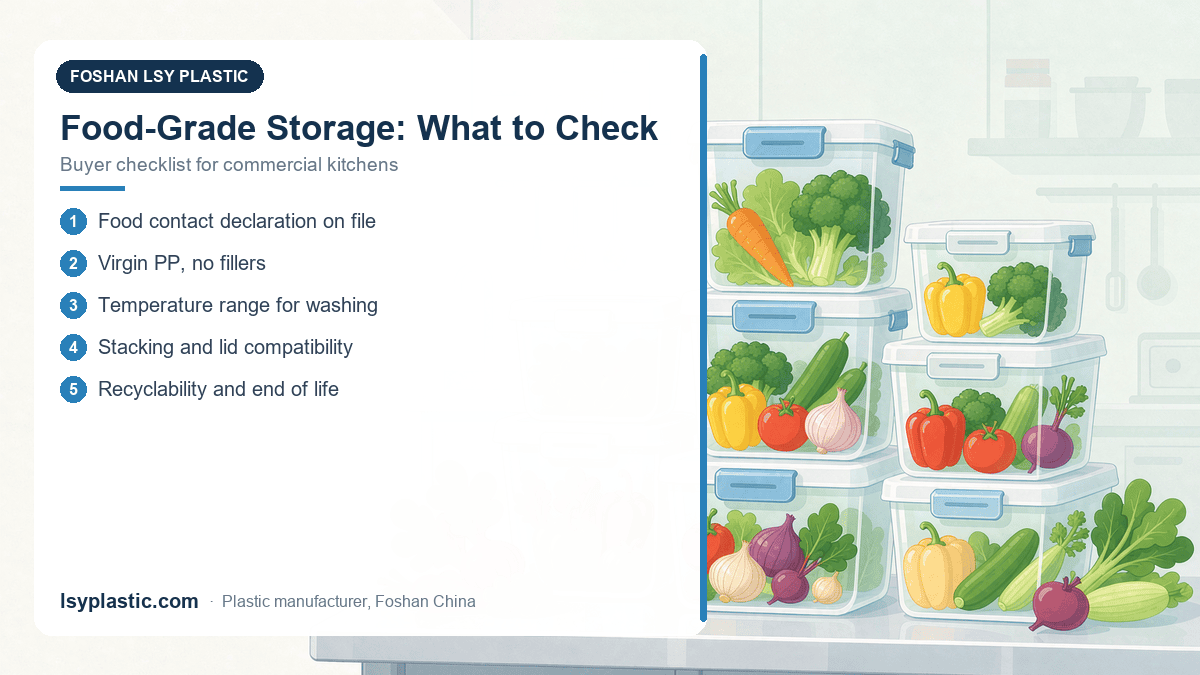
Avoid using steel wool or abrasive scouring pads, as these scratch HDPE and PP surfaces, creating harbor points for bacteria and shortening container lifespan.
Step 3: Rinse
Rinse thoroughly with clean, potable water at 49C (120F). The rinse should remove all visible detergent residue. Incomplete rinsing leaves chemical residues that can cause flavor transfer and skin irritation. For containers used with allergens (nuts, dairy, gluten), a second rinse is recommended.
Step 4: Sanitize
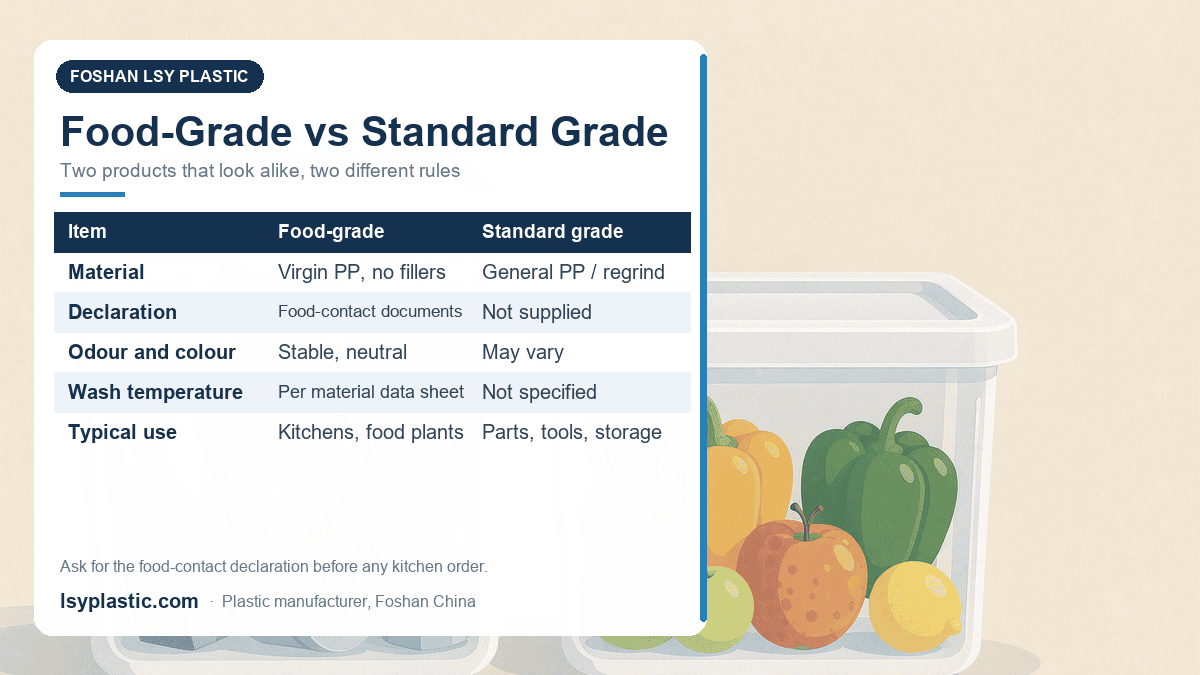
Sanitization is the critical step that kills remaining bacteria, viruses, and fungi. Two primary methods are approved by the FDA Food Code:
- Chemical sanitization: Submerge or spray with a 200 ppm chlorine (sodium hypochlorite) solution for at least 30 seconds contact time. The water temperature should be between 24C and 49C (75-120F) for optimal chlorine effectiveness.
- Hot water sanitization: Rinse with water at 82C (180F) for at least 30 seconds. This method requires a high-temperature sanitizing sink or dishwasher and eliminates chemical residue concerns.
Step 5: Air Dry
Allow containers to air dry on a clean, sanitized drying rack. Do not towel-dry, as towels can recontaminate sanitized surfaces. Air drying takes 15-30 minutes depending on humidity and airflow. Ensure containers are stored dry to prevent mold and bacterial growth during storage.
Choosing the Right Cleaning Chemicals
Chlorine Sanitizers (Sodium Hypochlorite)
Chlorine is the most common and cost-effective sanitizer. At 200 ppm concentration, it kills 99.9% of bacteria within 30 seconds. However, chlorine can degrade plastic over time if used at high concentrations. Maintain the correct dilution ratio and never exceed 200 ppm for food contact surfaces.
Quaternary Ammonium Compounds (Quats)
Quat sanitizers (200-400 ppm) are effective against a broader range of microorganisms and are less corrosive to plastic. However, they require a longer contact time (at least 60 seconds) and can leave a residual film. Quats are preferred for floors and walls but less ideal for direct food contact containers.
Hot Water Sanitization
For facilities with high-temperature dishwashers, hot water at 82C (180F) provides chemical-free sanitization. This method is ideal for plastic containers as it avoids chemical degradation entirely. However, ensure your containers are rated for high-temperature exposure. Our plastic storage bin temperature tolerance guide provides detailed ratings.
Common Cleaning Mistakes to Avoid
| Mistake | Consequence | Correct Practice |
|---|---|---|
| Using abrasive scouring pads | Scratches plastic, creates bacteria harbor points | Use nylon brushes or non-abrasive sponges |
| Skipping the pre-rinse step | Reduces sanitizer effectiveness by 50%+ | Always pre-rinse at 43C before washing |
| Towel drying sanitized containers | Recontaminates sanitized surfaces | Air dry on clean racks only |
| Using chlorine above 200 ppm | Degrades plastic, leaves chemical residue | Maintain 200 ppm for food contact surfaces |
| Not cleaning lid seals and gaskets | Bacteria build-up in crevices | Disassemble and clean all components |
Cleaning Frequency by Container Type
Different containers require different cleaning frequencies based on their use:
| Container Type | Recommended Cleaning Frequency | Sanitization Method |
|---|---|---|
| Food prep pans (daily use) | After every use (every 4 hours during service) | Chlorine 200 ppm or hot water |
| Bulk ingredient bins | Weekly, or when refilling | Chlorine 200 ppm |
| Meal prep / portion containers | After every use | Dishwasher with sanitize cycle |
| Transport containers | After each delivery cycle | Chlorine 200 ppm |
| Storage bins (dry goods) | Monthly, or when emptying | Detergent wash + air dry |
For food safety compliance, always follow the FDA and EU food-grade container safety standards when selecting and maintaining your containers.
Conclusion
Proper cleaning and sanitization of plastic food containers is a five-step process – scrape, pre-rinse, wash, rinse, sanitize, and air dry – that ensures food safety compliance and extends container lifespan. Using the right chemicals at correct concentrations, avoiding abrasive tools, and following recommended cleaning frequencies will keep your commercial kitchen running safely and efficiently.
LSY Plastic manufactures food-grade HDPE storage containers, ingredient bins, and meal prep containers designed for commercial kitchen durability. Our containers are compatible with all standard sanitization methods. Contact us on WhatsApp at +86 19311059570 or email fstyx01@lsyplastic.com for product catalogs and bulk pricing.
Explore more resources in our Plastic Storage Containers Hub, or read about stackable vs nestable container designs for optimizing your kitchen storage.
plastic storage containers buyers: our Commercial & Home Storage range covers the specifications outlined in this guide.
Frequently Asked Questions
What is the correct way to clean plastic food containers?
A five-step process: scrape and pre-rinse at 43C, wash with detergent at 60C, rinse with clean water, sanitise with a 200 ppm chlorine solution or an 82C hot-water final rinse, then air dry. This protocol meets FDA Food Code requirements.
What cleaning chemicals should I use?
Use a food-safe detergent and an approved sanitiser at the correct concentration, and test the sanitiser strength with test strips. Avoid abrasive cleaners that scratch plastic, because scratches trap soil and bacteria.
How often should food containers be cleaned?
Clean and sanitise after every use for food-contact items, and on a documented schedule for ingredient bins and bulk containers. Deep-clean storage bins between product changes to prevent cross-contamination.
What are common cleaning mistakes?
Skipping the pre-rinse, using water that is too cool, the wrong sanitiser concentration, air-drying upside down on a dirty surface, and using scratched or cracked containers. LSY moulds food containers from food-grade PP and HDPE; no MOQ for domestic orders, overseas orders ship FCL.